Romanticist masters, in order

100 Famous Romanticist Painters: The Definitive Ranking

The most famous Romanticist painter is Francisco Goya (1746–1828), known for The swing and La maja desnuda. . Madrid, Museo del Prado.. Next come Eugène Delacroix, J. M. W. Turner, Caspar David Friedrich and William Blake. This ranking of the 100 most famous Romanticist painters runs from Francesco Mochi (born 1580) to Maxfield Parrish (born 1870), across 19 countries.

How this list is ranked. Artists whose works our catalogue files under Romanticist, in the order of our fame ranking of artists. Artists without a Wikidata identifier born after 1955 are left out until verified. The Wikipedia figure next to each name is the number of our 32 languages in which Wikipedia has an article on the artist.

  1. The swing by Francisco Goya1Francisco Goya
  2. Liberty Leading the People by Eugène Delacroix2Eugène Delacroix
  3. The Fighting 'Temeraire' Tugged to Her Last Berth to be Broken Up by J. M. W. Turner3J. M. W. Turner

The essentials

Romanticist at a glance

  • 100Artists
  • 1580–1870Years of birth
  • 19Countries of birth
  • 1Women
  • 23,004Works in our catalogue
Cities with most births
Paris (9), London (5), Strasbourg (2), Stockbridge (2)
Museums holding the most key works
Metropolitan Museum of Art (11), The Louvre (9), National Gallery (5), Neue Pinakothek (5)
The women of this list
Henriette Ronner Knip

Ranked, with their masterpieces

The ranking: 100 Romanticist Painters and their key works

1of 100

Francisco Goya

Spanish Born in Fuendetodos ['Rococo', 'Romanticism', 'Modernism'] Wikipedia in 32/32 languages

Francisco Goya

By 1814, he had completed The Third of May 1808, a painting that captures the execution of defenders in Madrid. These murals, including Saturn Devouring His Son and Asmodea, deal with madness and existential dread. His influence reaches through the decades, appearing in the works of Édouard Manet and Pablo Picasso.

Key works · The 100 most famous works

2of 100

Eugène Delacroix

Born in Saint-Maurice Wikipedia in 31/32 languages

Eugène Delacroix

The trajectory of Delacroix’s career finds its anchor in the shadow of Charles-Maurice de Talleyrand-Périgord. As Talleyrand navigated the shifting political tides, serving both the Restoration and King Louis-Philippe, he ensured Delacroix remained positioned within the center of Parisian life. This passion for North African landscapes and traditions provided the essential spark for the Symbolist movement.

Where to see The traces of Delacroix’s life remain anchored in Paris.

Key works · The 100 most famous works

3of 100

J. M. W. Turner

British Born in Maiden Lane Romanticism Wikipedia in 31/32 languages

J. M. W. Turner

These early efforts showed a disciplined hand, yet a restless spirit was already beginning to stir beneath the surface of his technical proficiency. He sought to capture the very essence of storms, the sudden fury of seascapes, the massive presence of mountains, and the fleeting brilliance of a sunset. His ascent to widespread acclaim was aided by a significant turning point in 1840, when a prominent critic became his great champion.

Where to see The Tate Britain houses much of his life's work, allowing a viewer to trace his development through the decades.

Key works · The 100 most famous works

4of 100

Caspar David Friedrich

German Born in Greifswald Romanticism Wikipedia in 31/32 languages

Caspar David Friedrich

Born in the Baltic port city of Greifswald in 1774, Caspar David Friedrich’s early years were shaped by a profound sense of loss. His technical skills were further honed in Copenhagen, where he was exposed to landscape traditions that he would eventually transform into a medium for expressing inner emotional states. He died in Dresden in 1840, and for a time, his name faded from the forefront of the art world.

Key works · The 100 most famous works

5of 100

William Blake

British Born in London Romanticism Wikipedia in 32/32 languages

William Blake

Working alongside his wife, Catherine, who assisted in the printing and coloring, he managed the entire production from the initial etching to the final stitching of the books. His work was a labor of both hand and spirit, often produced in the quiet of his London home. As the decades passed, his influence moved through the Symbolist and Modernist movements, finding resonance in their shared interest in subjective experience and spiritual depth.

Where to see The physical remnants of Blake’s vision are scattered across several major institutions, reflecting the global reach of his influence.

Key works · The 100 most famous works

6of 100

Théodore Géricault

French Born in Rouen Romanticism Wikipedia in 30/32 languages

Théodore Géricault

While The Raft of the Medusa remains his most celebrated achievement, Géricault's artistic output extended beyond this singular masterpiece. His bronze figure reclines, brush in hand, on his tomb at Père Lachaise Cemetery in Paris, above a low-relief panel depicting the harrowing scene from The Raft of the Medusa, a fitting tribute to an artist who dedicated his life to capturing the complexities and contradictions of the human condition.

Key works · The 100 most famous works

7of 100

Jean-Baptiste-Camille Corot

French Born in Paris Neoclassicism, Realism, Impressionism Wikipedia in 30/32 languages

Jean-Baptiste-Camille Corot

He spent time sketching and making preliminary paintings directly in the landscape to capture the immediate light. Once the initial observations were gathered, he moved to his studio to perform the finishing work indoors. He moved away from the rigid structures of the past, favoring a way of painting that anticipated the plein-air innovations of the Impressionist movement.

Where to see To find his traces, one often looks to Paris.

Key works · The 100 most famous works

8of 100

John Constable

British Born in East Bergholt Romanticism Wikipedia in 30/32 languages

John Constable

He did not rely on the theatricality of bravura to make a point. This required a slow, methodical process of observation. The works of Claude Lorrain and Jacob van Ruisdael offered a way of seeing that moved away from the theatrical.

Where to see Tracing his presence across different collections reveals how his views of the English countryside have been gathered over time.

Key works · The 100 most famous works

9of 100

Gustave Doré

French Born in Strasbourg Romanticism Wikipedia in 30/32 languages

Gustave Doré

Strasbourg, France, provides the setting for the beginning of a life defined by visual precision. At fifteen, he enters the bustling, satirical atmosphere of the French journal Le Journal pour rire. The specific physical appearance of Don Quixote and Sancho Panza, as rendered in his 1860s illustrations, became the standard for subsequent readers and artists alike.

Where to see The physical remnants of Doré’s prolific output are scattered across several continents, preserved in institutions that hold his diverse range of media.

Key works · The 100 most famous works

10of 100

Ivan Aivazovsky

Russian Born in Feodosiia Russian Romanticism Wikipedia in 32/32 languages

Ivan Aivazovsky

Aivazovsky’s command over the medium stems from a refusal to rely on mere academic precision. As a Russian Romantic painter, he prioritized the visceral impact of light and movement over static accuracy. In 1845, he traveled to the Aegean Sea, the Ottoman capital Constantinople, and the Greek islands of Patmos and Rhodes.

Where to see Aivazovsky’s presence in modern collections remains substantial, ensuring his technical approach to light and water is still accessible to those studying marine art.

Key works · The 100 most famous works

11of 100

Jan Matejko

Polish Born in Free City of Kraków Romanticism, History painting Wikipedia in 30/32 languages

Jan Matejko

His father, Franciszek Ksawery Matejko, was a tutor and a music teacher who had traveled from the Czech lands. Ann's High School, the rigors of formal schooling proved difficult, and he left the institution in 1851 after struggling with his grades. He was remembered as Poland's most famous painter, a man who earned the title of "national painter" by turning the heavy weight of history into something the people could see and feel.

Where to see To follow the traces of his brush is to travel through the great halls of Europe, where his visions of the past remain held in trust.

Key works · The 100 most famous works

12of 100

Paul Delaroche

French Born in Paris Romanticism & Neoclassicism Wikipedia in 26/32 languages

Paul Delaroche

In the vibrant, turbulent landscape of nineteenth-century French art, few figures commanded the stage with as much dramatic presence as Hippolyte Paul Delaroche.

Pupil of Antoine-Jean Gros #14

Key works · The 100 most famous works

13of 100

Henry Fuseli

Swiss Born in Zurich Romanticism, Dark Romanticism Wikipedia in 27/32 languages

Henry Fuseli

In 1765, he arrived in England, finding ways to sustain himself through miscellaneous writing. It was during these years in Italy that he chose to change his name from Füssli to the more Italian-sounding Fuseli. One can see his shadow in the work of William Blake, who shared a similar interest in the visionary and the intense.

Key works · The 100 most famous works

14of 100

Antoine-Jean Gros

French Born in Paris Neoclassicism & Romanticism Wikipedia in 26/32 languages

Antoine-Jean Gros

His portraits, such as Equestrian Portrait of Prince Boris Yusupov, demonstrate a remarkable ability to capture both physical likeness and psychological depth. This stylistic evolution would profoundly influence subsequent generations of French painters, including Eugène Delacroix and Théodore Géricault, who embraced the emotional intensity and dramatic flair that Gros pioneered. In a tragic turn, Antoine-Jean Gros took his own life in 1835, leaving behind a legacy that continues to captivate and inspire.

Key works · The 100 most famous works

15of 100

Philipp Otto Runge

German Born in Wolgast Romanticism Wikipedia in 23/32 languages

Philipp Otto Runge

His formal training began later than most, initially through a commercial apprenticeship in Hamburg at his brother Daniel’s firm. However, the pull of artistic expression proved too strong, leading him to Copenhagen in 1799 to study painting under Jens Juel. Though his career was cut short by illness, Philipp Otto Runge’s impact on German Romanticism and the development of modern art is undeniable.

Key works · The 100 most famous works

16of 100

Anne-Louis Girodet

French Born in Montargis Neoclassicism & Romanticism Wikipedia in 23/32 languages

Anne-Louis Girodet

They can be found in prestigious museums such as the Musée Girodet in his hometown of Montargis, dedicated to his life and work, and the Louvre in Paris, ensuring that his legacy endures for generations to come.

Key works · The 100 most famous works

17of 100

Thomas Couture

French Born in Senlis Romanticism & Realism Wikipedia in 23/32 languages

Thomas Couture

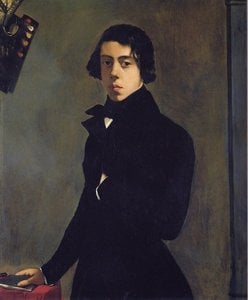
The scene pulsates with a sense of unrestrained indulgence, figures draped in luxurious fabrics amidst classical ruins—a deliberate juxtaposition meant to mirror the perceived decadence of contemporary French society under the Second Republic. Couture’s masterful use of tonal contrasts, employing rich dark hues punctuated by striking highlights, further intensified the dramatic impact and symbolic weight of the composition. Born in 1815 in Senlis, France, Thomas Couture emerged as a pivotal figure bridging Romanticism and Realism —a painter who dared to challenge academic convention while simultaneously mastering its techniques.

Pupil of Antoine-Jean Gros #14, Paul Delaroche #12

Key works · The 100 most famous works

18of 100

Joseph Wright of Derby

British Born in Derby Chiaroscuro, Romanticism Wikipedia in 23/32 languages

Joseph Wright of Derby

Notable Works: An Experiment on a Bird in the Air Pump, A Philosopher Lecturing on the Orrery, Dovedale by Moonlight.

Key works · The 100 most famous works

19of 100

Thomas Lawrence

British Born in Bristol Regency portraiture Wikipedia in 22/32 languages

Thomas Lawrence

His personal life was marked by tumultuous relationships, most notably with Sally and Maria Siddons, daughters of the celebrated actress Sarah Siddons.

Key works · The 100 most famous works

20of 100

George Stubbs

English Born in Liverpool Romantic movement Wikipedia in 19/32 languages

George Stubbs

By combining anatomical exactitude with expressive details, he moves beyond mere likeness to capture the mechanics of life. These depictions of a lion attacking a horse represent early and significant examples of the Romantic movement.

Where to see The legacy of Stubbs’s anatomical precision survives in the halls of major international institutions.

Key works · The 100 most famous works

21of 100

Ford Madox Brown

British Born in Calais Pre-Raphaelite Wikipedia in 22/32 languages

Ford Madox Brown

While the Pre-Raphaelites often focused on romanticized narratives or literary subjects, Brown frequently turned to contemporary life and moral themes, imbuing his paintings with a social consciousness rarely seen in Victorian art. Work, begun in 1852 and painstakingly completed over thirteen years, stands as perhaps his most ambitious and iconic achievement. Beyond his easel paintings, Ford Madox Brown’s artistic legacy is indelibly linked to the Manchester Murals.

Key works · The 100 most famous works

22of 100

Francesco Hayez

Italian Born in Venice Italian Romanticism Wikipedia in 27/32 languages

Francesco Hayez

He spent many hours within the Vatican Stanze, studying the works of Raphael to learn how to compose complex narratives. His formal education reached its conclusion through visits to the Galleria Farsetti in Venice, where he could observe the great traditions of his home city once more. He spent time studying the use of colour in classes held by Lattanzio Querena, a painter from Bergamo.

Where to see To walk through the halls of Milan is to encounter the spirit of Hayez in many forms.

Key works · The 100 most famous works

23of 100

Antoine-Louis Barye

French Born in Paris Romanticism Wikipedia in 17/32 languages

Antoine-Louis Barye

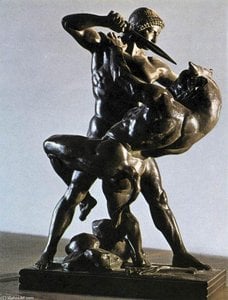
Early works like “Milo of Crotana Devoured by a Lion” (1819) and “Hercules with the Erymanthean Boar” (c. 1820), created while still a student, hinted at his emerging talent for dynamic composition and dramatic narrative. He honed these skills further under sculptors like François - Joseph Bosio and Baron Antoine-Jean Gros, absorbing classical principles while simultaneously developing a uniquely Romantic sensibility.

Key works · The 100 most famous works

24of 100

Akseli Gallen-Kallela

Finnish Born in Pori National Romanticism Wikipedia in 26/32 languages

Akseli Gallen-Kallela

He explored symbolism in works like Symposium (1894), a haunting depiction of Finnish artists engaged in intellectual discourse, subtly hinting at anxieties about national identity and cultural preservation. Even during periods of political turmoil, such as the Finnish Civil War in 1917-1918, Gallen-Kallela remained actively engaged, designing uniforms and decorations for the newly independent Finnish army. National Romanticism: Gallen-Kallela is considered a central figure in Finnish National Romanticism, an artistic movement that sought to celebrate Finland’s unique culture and identity.

Key works · The 100 most famous works

25of 100

Théodore Chassériau

French Born in El Limón Romanticism, Neoclassicism Wikipedia in 20/32 languages

Théodore Chassériau

Théodore Chassériau’s untimely death at the age of thirty-seven on October 8, 1856, cut short a promising career, but his impact on the art world was significant.

Key works · The 100 most famous works

26of 100

Karl Bryullov

Born in Saint Petersburg Wikipedia in 27/32 languages

Karl Bryullov

He felt a strong pull towards Italy from an early age, and his artistic development was significantly shaped by Italian Renaissance masters. After completing his studies, he moved to Rome in 1821, where he spent over a decade honing his skills. His work demonstrates influences from artists like Raphael, Michelangelo, and Caravaggio, particularly in their dramatic use of light and shadow and mastery of anatomical detail.

Key works · The 100 most famous works

27of 100

Edwin Landseer

British Born in London Victorian realism Wikipedia in 18/32 languages

Edwin Landseer

He skillfully blended realism with romanticism, creating scenes that were both visually stunning and emotionally engaging. Even his more satirical works, such as Laying Down the Law (1840), featuring a group of dogs engaged in human-like legal proceedings, reveal a keen observational wit and a subtle commentary on societal norms. A nervous breakdown in 1840 marked a turning point, casting a shadow over his final decades.

Key works · The 100 most famous works

28of 100

Horace Vernet

Born in Paris Wikipedia in 24/32 languages

Horace Vernet

Vernet quickly developed a preference for depicting contemporary life rather than adhering to the high-minded seriousness of academic Classicism. During Napoleon Bonaparte’s reign, he began portraying French soldiers with a newfound familiarity, diverging from the grand, Davidian approach. Émile Jean-Horace Vernet was born on June 30, 1789, in Paris, France – remarkably, within the Louvre Palace while his parents resided there during the French Revolution.

Key works · The 100 most famous works

29of 100

Joseph Vernet

French Born in Avignon Landscape, Seascape Wikipedia in 26/32 languages

Joseph Vernet

Beyond maritime scenes, Vernet also explored landscapes and hunting subjects, always maintaining a keen eye for detail and an understanding of animal anatomy—a skill honed in his youth.

Key works · The 100 most famous works

30of 100

John Martin

Born in Haydon Bridge Wikipedia in 19/32 languages

John Martin

In 1806, he moved to London, marrying at the age of nineteen and supporting himself through drawing lessons and commissions for watercolors and decorative work on china and glass. His early works show a developing interest in dramatic lighting and composition, foreshadowing his later signature style. He was awarded the Order of Leopold from Prince Leopold of Saxe-Coburg and Gotha, becoming the official historical painter to Prince Leopold.

Key works · The 100 most famous works

31of 100

Johan Christian Dahl

Norwegian, Danish-Norwegian Born in Bergen Romanticism Wikipedia in 23/32 languages

Johan Christian Dahl

Johan Christian Claussen Dahl emerged from a background far removed from the academic elite. By 1811, Dahl had moved beyond the local workshop to enter the Copenhagen Academy. He was a primary force behind the founding of the Norwegian National Gallery in Oslo and the Art Society in Oslo.

Where to see His presence in the public sphere remains significant, anchored by collections in Norway, Denmark, and Germany.

Key works · The 100 most famous works

32of 100

Hubert Robert

French Born in Paris Romanticism, Neoclassicism Wikipedia in 21/32 languages

Hubert Robert

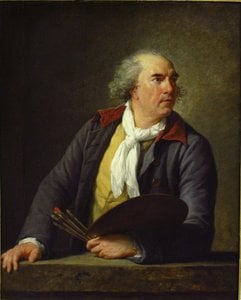
Born in Paris in 1733, Hubert Robert entered a world where his family's social standing was tied to the service of others. By 1751, he had completed his studies under the Jesuits, gaining a disciplined intellectual background before turning his attention to the visual arts.

Where to see The preservation of Robert’s prolific output is spread across several major international institutions, reflecting the reach of his influence during the late eighteenth century.

Key works · The 100 most famous works

33of 100

George Catlin

American Born in Wilkes-Barre Wikipedia in 18/32 languages

George Catlin

By including these elements, he moved beyond simple portraiture to create a comprehensive visual record of the American frontier. Mó-sho-la-túb-bee, He Who Puts Out and Kills, Chief of the Tribe (1834). He was inducted into the National Rivers Hall of Fame in 2001 and the Luzerne County Arts & Entertainment Hall of Fame in 2023.

Where to see Catlin’s visual record is scattered across several major institutions, making a comprehensive study of his output a matter of visiting specific collections.

Key works · The 100 most famous works

34of 100

Samuel Finley Breese Morse

American Born in Charlestown Romanticism Wikipedia in 32/32 languages

Samuel Finley Breese Morse

Samuel Finley Breese Morse, a name inextricably linked to the dawn of modern communication, was far more than just the inventor of the telegraph and Morse code. He was a gifted and ambitious artist whose canvases captured the spirit of early 19th-century America, reflecting both its burgeoning national identity and the lingering echoes of European artistic traditions. Morse secured funding from Congress for the construction of an experimental telegraph line between Washington D.C. and Baltimore, which successfully transmitted its first message – “What hath God wrought?” – in 1844.

Key works · The 100 most famous works

35of 100

Hans Gude

Norwegian Born in Christiania Romanticism Wikipedia in 20/32 languages

Hans Gude

His lineage – his father, Ove Gude, was a respected lawyer and politician, and his mother, Marie Elisabeth Brandt, fostered an early appreciation for artistic expression – provided a nurturing environment for his burgeoning talent. Later, from 1880 to 1901, he held a similar position at the Berlin Academy of Art, continuing to exert a profound influence on the artistic landscape.

Pupil of Andreas Achenbach #43

Key works · The 100 most famous works

37of 100

William Etty

British Born in York Romanticism Wikipedia in 23/32 languages

William Etty

He was the first English painter to focus so consistently on the human form, treating the body with anatomical precision rather than as a mere decorative element. As the first English painter to seriously engage with the genre, he applied the same sensitivity to texture and materiality to objects as he did to human anatomy. This momentum continued when the 2010 restoration of The Sirens and Ulysses revealed the actual brilliance of his technique, cementing a modern revival of his reputation.

Where to see Etty’s physical presence in modern collections remains significant, though his distribution is uneven.

Key works · The 100 most famous works

38of 100

Emanuel Leutze

German-American Born in Schwäbisch Gmünd Romanticism Wikipedia in 21/32 languages

Emanuel Leutze

It was during this period that he completed “Columbus Before the Council of Salamanca,” a work that garnered early acclaim and signaled his arrival as a significant artistic voice. Notable Works: Washington Crossing the Delaware, Columbus Before the Council of Salamanca, Angel on the Battlefield.

Key works · The 100 most famous works

39of 100

Pierre-Paul Prud'hon

French Born in Cluny Neoclassicism & Romanticism Wikipedia in 21/32 languages

Pierre-Paul Prud'hon

Napoleon's Court Painter: His talent attracted the attention of Napoleon Bonaparte, who commissioned him to paint portraits of both Joséphine de Beauharnais and Marie-Louise d’Autriche. Bridging Styles: Prud'hon skillfully navigated the evolving artistic trends of his time, incorporating elements of both Neoclassicism and Romanticism into his work. Justice and Divine Vengeance Pursuing Crime: A monumental masterpiece that anticipates the dramatic intensity of Géricault’s The Raft of the Medusa.

Key works · The 100 most famous works

40of 100

John Atkinson Grimshaw

British Born in Leeds Victorian, Nocturnes, Pre-Raphaelite Wikipedia in 18/32 languages

John Atkinson Grimshaw

He was particularly drawn to the way light behaves in the dark, focusing his efforts on nocturnal scenes of urban landscapes. By using a projector or lens to cast scenes onto his canvas, he could capture the exact perspective and intricate details of a street or a dockyard. His work continues to offer a window into the textures of the Victorian era, from the wet cobblestones of a London lane to the silhouetted masts of ships in a dockyard.

Where to see Finding his paintings in person allows for a closer look at the way he handled light on wet cobblestones and the subtle textures of a moonlit sky.

Key works · The 100 most famous works

41of 100

Henry Raeburn

Scottish Born in Stockbridge Portraiture, Realism Wikipedia in 17/32 languages

Henry Raeburn

He possessed an extraordinary ability to convey the personality, status, and even the mood of his subjects. Similarly, his portrait of Alexander Allan, a prominent figure in Scottish art, reveals a man of intellect and refinement. His appointment as Portrait Painter to King George IV in Scotland in 1822 – shortly before his death in 1823 – was the ultimate acknowledgment of his artistic achievements.

Key works · The 100 most famous works

42of 100

Nicolai Abildgaard

Danish Born in Copenhagen Neoclassical & Romanticism Wikipedia in 26/32 languages

Nicolai Abildgaard

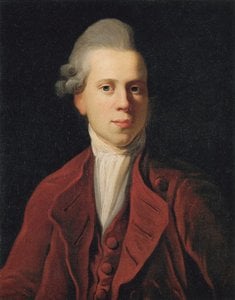
This familial influence proved foundational as Abildgaard embarked on his artistic journey, receiving initial training with a local painting master before formally enrolling at the New Royal Danish Academy of Art in 1764. His talent quickly became apparent; from 1764 to 1767, he consistently earned accolades and medallions recognizing his burgeoning skill. Throughout his career, he nurtured a generation of talented artists, including Asmus Jacob Carstens, Bertel Thorvaldsen, J.

Key works · The 100 most famous works

43of 100

Andreas Achenbach

German Born in Kassel Realism, Romanticism Wikipedia in 22/32 languages

Andreas Achenbach

The family’s relocation to Düsseldorf proved transformative, immersing young Andreas in a vibrant artistic community that ignited his passion for painting. He formally began his training at the prestigious Düsseldorf Academy of Painting in 1827, studying under the guidance of Friedrich Wilhelm Schadow and Heinrich Christoph Kolbe. Andreas Achenbach passed away in Düsseldorf in 1910, leaving behind a legacy that extended far beyond his own prolific output.

Teacher of Oswald Achenbach #59, Hans Gude #35

Key works · The 100 most famous works

44of 100

Carl Gustav Carus

German Born in Leipzig Romanticism Wikipedia in 18/32 languages

Carl Gustav Carus

Even in his more tranquil compositions, such as Morning Fog or A Gondola on the Elbe near Dresden, one can sense this profound harmony.

Key works · The 100 most famous works

45of 100

Henriette Ronner Knip

Dutch-Belgian Born in Amsterdam Romanticism Wikipedia in 12/32 languages

Henriette Ronner Knip

Ronner-Knip’s early artistic explorations weren't confined to the animal world. Initially, she painted landscapes, farms, and forests, working both in watercolor and oils. She received accolades such as the Order of Leopold and membership in the Order of Orange-Nassau, solidifying her position as a leading artist of her time.

Key works · The 100 most famous works

46of 100

Edward Lear

British Born in Highgate Victorian, Nonsense Wikipedia in 26/32 languages

Edward Lear

Edward Lear’s influence extends far beyond the realm of children's literature. He pioneered a new form of poetic expression, liberating verse from rigid structures and embracing playful experimentation. His paintings can be found in esteemed collections like The Ashmolean Museum, Oxford, a testament to his skill as a landscape artist.

Key works · The 100 most famous works

47of 100

Léon Cogniet

Born in Paris Wikipedia in 21/32 languages

Léon Cogniet

Cogniet’s early work demonstrated a classical foundation, influenced by his academic training. His time in Rome exposed him to Italian Renaissance art, shaping his style towards Romanticism.

Key works · The 100 most famous works

48of 100

Anselm Feuerbach

German Born in Speyer Neoclassical Wikipedia in 21/32 languages

Anselm Feuerbach

Anselm Feuerbach (1829-1880) stands as a monumental figure in the tapestry of German Romanticism and Neoclassicism, embodying a rare and harmonious fusion of these two powerful artistic currents. After honing his skills at the Munich Academy, Feuerbach sought inspiration beyond German borders, establishing himself in Antwerp to master the vibrant Venetian colorism under Gustave Wappers. By weaving together the structural rigor of Neoclassicism with the soulful lyricism of Romanticism, Feuerbach secured his place as one of the most significant painters of the 19th century, leaving behind a legacy that celebrates the eternal dialogue between humanity and myth.

Key works · The 100 most famous works

49of 100

Maxfield Parrish

American Born in Philadelphia Neo-classical, Illustration Wikipedia in 17/32 languages

Maxfield Parrish

Parrish’s career blossomed during what is often remembered as the Golden Age of American illustration, and he quickly became a dominant force within it. His early work graced the pages of prominent magazines like Harper’s Bazaar, Scribner's Magazine, and Collier’s, establishing his reputation for romanticized scenes and meticulous detail. Daybreak (1923), perhaps his most iconic creation, became one of the most successful art prints of the 20th century, solidifying his place in popular culture.

Key works · The 100 most famous works

50of 100

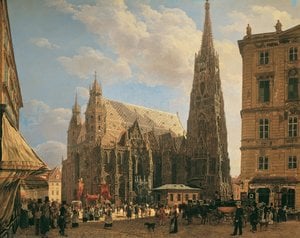
Rudolf von Alt

Austrian German Born in Vienna Romanticism; Impressionism Wikipedia in 20/32 languages

Rudolf von Alt

While his landscapes captured the wild beauty of Europe, von Alt’s architectural paintings offered a meticulous study of human achievement and historical permanence. His works often serve as windows into a bygone era, documenting the intricate facades and soaring spires of European landmarks with a reverence that borders on the poetic. The historical significance of Rudolf von Alt extends far beyond the borders of Austria.

Key works · The 100 most famous works

51of 100

Ary Scheffer

Dutch-French Born in Dordrecht Romanticism & Classicism Wikipedia in 21/32 languages

Ary Scheffer

His story is one of migration – not just geographically from Holland to Paris with his mother following his father’s death in 1809 – but also artistically, navigating between the meticulous detail inherited from his parents, both painters themselves, and the emotional intensity that defined the new aesthetic sensibility sweeping across Europe. Ary Scheffer's legacy lies not just in the beauty of his paintings but also in his ability to bridge worlds – between tradition and innovation, between reason and emotion, and between the Dutch artistic heritage and the vibrant cultural landscape of 19th-century France.

Key works · The 100 most famous works

53of 100

John Ruskin

British Born in London Victorian Art, Art Criticism

John Ruskin

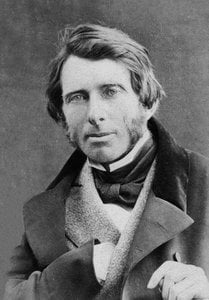
John Ruskin, born in London on February 8, 1819, was far more than simply an art critic; he was a Victorian polymath whose influence permeated the realms of aesthetics, social reform, political economy, and environmentalism.

Key works · The 100 most famous works

54of 100

Sebastian Pether

English Romantic Landscape Painting

Sebastian Pether

His notable works, such as the View from Chelsea Bridge of the Destruction of Drury Lane Theatre (1814), demonstrate his ability to merge urban drama with nocturnal atmosphere, turning a moment of destruction into a poetic study of light and shadow.

Key works · The 100 most famous works

55of 100

Thomas Sully

British-American Born in Horncastle Romanticism, Neoclassicism Wikipedia in 13/32 languages

Thomas Sully

A period of study in London with the esteemed Benjamin West, beginning in 1808, proved pivotal. He quickly established himself in Philadelphia, becoming a leading portraitist and capturing the likenesses of prominent figures like Thomas Jefferson, John Quincy Adams, and Andrew Jackson – men who shaped the nation's destiny. He was a dedicated teacher, mentoring numerous artists including Marcus Aurelius Root, who would later become a pioneer in photography.

Key works · The 100 most famous works

56of 100

Adalbert Stifter

Austrian Born in Horní Planá Biedermeier, Landscape Wikipedia in 25/32 languages

Adalbert Stifter

Authors like Hesse and Mann have acknowledged Stifter's profound impact on their work. Despite suffering from declining health in his later years – culminating in a tragic suicide in 1868 – Adalbert Stifter’s legacy endures. His writing style is notable for its meticulous detail and understated elegance, reflecting his Biedermeier sensibilities—a movement emphasizing simplicity, realism, and a focus on everyday life.

Key works · The 100 most famous works

57of 100

Konstantin Makovsky

Russian Born in Moscow Realism, Academic art Wikipedia in 22/32 languages

Konstantin Makovsky

Throughout his career, Makovsky’s art served as a window into Russian life, particularly its historical and cultural richness. The Russian Bride’s Attire (1889), also known as Beneath the Crown, stands as a prime example—a lavishly detailed portrayal of pre-wedding rituals, brimming with symbolism and vibrant color. Konstantin Makovsky’s influence extends beyond his impressive body of work.

Key works · The 100 most famous works

58of 100

Francesco Mochi

Italian Born in Montevarchi Baroque Sculpture

Francesco Mochi

His work serves as a vital bridge between the structured elegance of the late Renaissance and the explosive, theatrical grandeur of the Baroque era, foreshadowing the monumental style later perfected by Gian Lorenzo Bernini. Under the tutelage of the painter Santi di Tito, he embraced the principle of disegno —the primacy of line and form. His career was defined by several key milestones: The Fusion of Styles: Successfully blending Florentine disegno with Roman theatricality.

Key works · The 100 most famous works

59of 100

Oswald Achenbach

German Born in Düsseldorf Düsseldorf School, Romanticism Wikipedia in 21/32 languages

Oswald Achenbach

Achenbach’s path toward becoming a celebrated landscape artist wasn't predetermined by family tradition, though his brother Andreas would also achieve significant recognition. Remarkably, Achenbach entered the elementary class of the Kunstakademie Düsseldorf at the tender age of eight, circumventing the academy's usual age requirements—a clear indication of his precocious talent. The family’s movements between Munich and Düsseldorf during Oswald’s childhood likely instilled in him a sense of place and observation, qualities that would later define his work.

Pupil of Andreas Achenbach #43

Key works · The 100 most famous works

60of 100

David Roberts

Born in Stockbridge Wikipedia in 17/32 languages

David Roberts

Roberts' artistic development was shaped by a growing fascination with different cultures and landscapes. While initially focused on theatrical scenery, he gradually shifted towards more independent artistic pursuits. However, it was his extensive tours of Egypt and the Near East (1838-1840) that truly defined his career.

Key works · The 100 most famous works

61of 100

Herbert James Draper

British Born in London Neoclassical Wikipedia in 16/32 languages

Herbert James Draper

The Lament for Icarus, completed in 1898, stands as a testament to this burgeoning talent. Beyond canvas, Draper also lent his talents to decorative projects, notably contributing to the ceiling decoration of Drapers' Hall in London, showcasing his versatility as an artist. The sale of The Sea Maiden in 2010 sparked debate about the ethics of selling artworks to address financial difficulties, but also brought renewed attention to his artistic achievements.

Key works · The 100 most famous works

62of 100

William Powell Frith

English Born in Aldfield Genre painting, panoramic narrative Wikipedia in 17/32 languages

William Powell Frith

Notable Works: Ramsgate Sands (1854): Depicts a lively scene at the seaside resort of Ramsgate. The Derby Day (1858): Captures the atmosphere and social interactions at Epsom Downs Racecourse. Influence on Genre Painting: He significantly contributed to the development of genre painting in Britain, elevating it to a respected art form.

Key works · The 100 most famous works

63of 100

Jacob Philipp Hackert

German Born in Prenzlau Classicism, Romanticism Wikipedia in 15/32 languages

Jacob Philipp Hackert

His upbringing was steeped in artistry; his father, Philipp Hackert, practiced as both a portraitist and an animal painter, laying the initial groundwork for young Jacob’s creative journey. Formal training followed at the prestigious Prussian Academy of Arts in Berlin beginning in 1758, where he diligently developed the technical foundations that would later define his style. He passed away on April 28, 1807, in San Pietro di Careggi near Florence, leaving behind a substantial body of work that continues to inspire awe and admiration for its beauty, technical mastery, and enduring historical importance.

Key works · The 100 most famous works

65of 100

David Wilkie

Scottish Born in Fife Romanticism Wikipedia in 15/32 languages

David Wilkie

His appointment as Principal Painter in Ordinary to King William IV and Queen Victoria stands as a testament to this unparalleled skill, securing him prestigious commissions for royal portraits and historical scenes.

Key works · The 100 most famous works

66of 100

Wilhelm von Kaulbach

German Born in Bad Arolsen Düsseldorfs Schule Wikipedia in 15/32 languages

Wilhelm von Kaulbach

By bridging the gap between the academic rigor of the Düsseldorf School and the emotive power of Romanticism, he provided a visual language for a generation seeking identity in a changing Europe.

Key works · The 100 most famous works

67of 100

Jean-Jacques Henner

French Born in Bernwiller Academic realism Wikipedia in 16/32 languages

Jean-Jacques Henner

The sfumato technique—borrowed from Leonardo da Vinci —allowed him to soften edges and blend colors seamlessly, creating a sense of atmospheric depth. Works like “ Chaste Susanna ” (1865), now housed in the Musée d'Orsay, exemplify this approach—the figure of Susanna bathed in a soft, diffused light that emphasizes her vulnerability and innocence. His talent was formally recognized with numerous accolades, including being named a Knight of the Legion of Honor in 1873, an Officer in 1878, and a Commander in 1889.

Key works · The 100 most famous works

68of 100

Joseph Anton Koch

Austrian Born in Elbigenalp Neoclassicism & Romanticism Wikipedia in 15/32 languages

Joseph Anton Koch

Influenced by the monumental compositions of masters like Nicolas Poussin and Claude Lorrain, Koch developed a unique way of organizing space, where dramatic lighting and vast, rugged terrains created a sense of awe. This technique allowed him to bridge two eras: the ordered, rational world of the Enlightenment and the emotive, untamed spirit of Romanticism. His contributions can be summarized through several key artistic pillars: Synthesis of Styles: He successfully merged the formal discipline of Neoclassicism with the emotional depth of German Romanticism.

Key works · The 100 most famous works

69of 100

Józef Brandt

Born in Szczebrzeszyn Wikipedia in 17/32 languages

Józef Brandt

He focused intently on the military life of the 17th century, a period steeped in Polish glory and conflict. His most celebrated works center around the hussars, those iconic winged cavalrymen, and the fierce Cossack warriors, rendered with meticulous detail in their elaborate uniforms and dynamic poses. These paintings, along with others like “Zaporozhian Camp” and " Call to Arms ", are not merely historical records; they are powerful statements about identity, courage, and resilience.

Key works · The 100 most famous works

70of 100

Antoine Wiertz

Belgian Born in Dinant Romanticism Wikipedia in 19/32 languages

Antoine Wiertz

This period also saw the creation of "The Fall of the Rebellious Angels" (1841), a vast and chaotic canvas depicting the biblical expulsion from Heaven. The death of his mother in 1844 deeply affected him, prompting a move to Brussels where he would remain for the rest of his life. This ambition was realized posthumously; after his death in 1865, the Belgian state purchased land and constructed a hall specifically designed to house his monumental paintings, fulfilling Wiertz’s wish that his art remain accessible to the public within his studio.

Key works · The 100 most famous works

71of 100

Gabriel von Max

Austrian-German Born in Prague Secessionist, Mystical Allegories Wikipedia in 15/32 languages

Gabriel von Max

He wasn’t simply a painter; he was a collector of anthropological artifacts, a student of esoteric philosophies, and a meticulous observer of the human condition – all these facets profoundly shaped his unique artistic vision. Beyond his own artistic explorations, Max was deeply influenced by the Blue Rider movement, though he maintained a distinct identity within this broader circle of artists.

Key works · The 100 most famous works

73of 100

William Henry Davis

English Pastoral Painting

William Henry Davis

Davis's artistic journey began with formal training at the Royal Academy, where he honed his skills and established himself within the London art world. This influence is visible in the meticulous detail, vibrant color palettes, and narrative quality of paintings like A Spring Morning (1866). He began working on larger scales, drawing inspiration from artists like Rosa Bonheur and Sir Edwin Landseer – masters of animal painting who achieved widespread acclaim for their realistic depictions of wildlife.

Key works · The 100 most famous works

74of 100

Léon Comerre

French Born in Trélon Academic Painting Wikipedia in 12/32 languages

Léon Comerre

Léon François Comerre (1850-1916) stands as a prominent figure in French Academic painting, celebrated primarily for his exquisitely rendered portraits of women—particularly those embodying youthful beauty—and his evocative depictions of Oriental landscapes and figures. The historical significance of Léon François Comerre lies in his role as a custodian of the Academic tradition during a period of intense artistic experimentation.

Key works · The 100 most famous works

75of 100

Eugène Isabey

French Born in Paris Romanticism Wikipedia in 15/32 languages

Eugène Isabey

This patronage afforded him access to influential circles and fueled his artistic ambition, resulting in monumental canvases like “The Return of Napoleon from Elba,” commemorating Napoleon Bonaparte’s triumphant return from exile aboard the Belle Poule. Isabey’s contribution to French Romantic art transcends mere stylistic innovation; he embodies the spirit of the era's fascination with nature and its exploration of psychological depth.

Key works · The 100 most famous works

76of 100

Carl Rottmann

English Born in Heidelberg Romanticism, Neoclassicism Wikipedia in 11/32 languages

Carl Rottmann

His life and artistry were deeply intertwined with the shifting landscapes of 19th-century Europe, reflecting a period where the sublime beauty of nature met the burgeoning spirit of national identity. Cultural Documentation: Through his travels, he provided a visual record of the European landscapes that were central to the Romantic identity, particularly the Greek and Bavarian vistas.

Key works · The 100 most famous works

77of 100

Ludwig Richter

German Born in Friedrichstadt Romanticism & Biedermeier Wikipedia in 18/32 languages

Ludwig Richter

His achievements can be summarized through several key artistic contributions: Technical Versatility: A seamless transition from the precise, linear discipline of engraving to the expressive, textured freedom of oil painting. Cultural Legacy: Establishing a lasting aesthetic influence on 19th-century German art through his meticulous observation and romanticized vision of the natural world. Born in the cultural heart of Dresden in 1803, Adrian Ludwig Richter emerged as a defining voice of the German Romantic movement.

Key works · The 100 most famous works

78of 100

Anne François Louis Janmot

French Born in Lyon Romanticism & Symbolism

Anne François Louis Janmot

Janmot's artistic journey began with formal education at the Royal College of Lyon, where he encountered influential figures like Frederic Ozanam and absorbed the philosophical currents championed by Abbé Noirot. He quickly demonstrated a talent for art, earning the prestigious Golden Laurel at the École des Beaux-Arts de Lyon in 1832. He continued to create, even completing a fresco for a chapel in the Holy Land and continuing work on “The Poem of the Soul” until his death in 1892.

Key works · The 100 most famous works

80of 100

Achille Devéria

French Born in Paris Romanticism Wikipedia in 16/32 languages

Achille Devéria

Devéria’s artistic journey began in the heart of Paris, where he received rigorous instruction from masters such as Louis Lafitte and Anne-Louis Girodet -Trioson. His early years were characterized by a growing mastery over line and light, as he sought to find his own voice amidst the established traditions of Neoclassicism and the rising tide of Romanticism. When he passed away in Paris in 1857, he left behind a legacy defined by: Psychological Depth: An unparalleled ability to translate the inner lives of famous intellectuals onto canvas.

Pupil of Anne-Louis Girodet #16

Key works · The 100 most famous works

81of 100

William Bradford

American Born in Austerfield Romanticism

William Bradford

These paintings weren’t simply topographical records; they were imbued with a sense of realism that resonated deeply with the burgeoning commercial interests of New Bedford, a prominent whaling port. Becoming the first American painter to venture into and depict the frozen regions of the North, Bradford entered uncharted territory—both geographically and artistically. While not formally affiliated with the Hudson River School, William Bradford absorbed its core tenets—particularly the emphasis on depicting light’s interaction with water and atmospheric conditions.

Key works · The 100 most famous works

82of 100

Peder Balke

Norwegian Born in Helgøya Romantic Landscape Wikipedia in 14/32 languages

Peder Balke

Though born into a family of farmers, Balke’s innate talent was recognized by his community, who pooled resources to support his artistic education – a testament to the value placed on creativity even within modest means. Major exhibitions at prestigious institutions like the National Gallery in London (2014-2015) and the Metropolitan Museum of Art (2017) brought his paintings to a wider audience, sparking critical acclaim and scholarly interest.

Pupil of Johan Christian Dahl #31

Key works · The 100 most famous works

83of 100

William Brassey Hole

Born in Salisbury

William Brassey Hole

Early Travels: In 1869, Hole embarked on a six-month sketching tour of Italy, beginning in Genoa. Upon returning to Edinburgh, Hole attended the School of Design and subsequently gained admission to the life school of the Royal Scottish Academy in 1873.

Key works · The 100 most famous works

85of 100

Alphonse de Neuville

French Born in Saint-Omer Academic art Wikipedia in 14/32 languages

Alphonse de Neuville

De Neuville's artistic strength lay in his ability to transform historical events into emotionally resonant narratives. “The Charge of the Light Brigade” (1860), a poignant depiction of the disastrous Crimean War cavalry charge, exemplifies this approach. Early successes included depictions of battles from the Crimean War and scenes illustrating episodes from Garibaldi’s campaigns in Italy.

Key works · The 100 most famous works

86of 100

Moritz von Schwind

Austrian Born in Vienna German Romanticism Wikipedia in 17/32 languages

Moritz von Schwind

A key moment in his development occurred when he befriended Franz Schubert, whose songs provided a significant source of inspiration throughout Schwind’s career. Moving to Munich in 1828, following Schubert’s death, marked a pivotal shift. He returned to Vienna in 1847, where he created a cycle of paintings based on the legend of Melusine, showcasing his enduring talent.

Key works · The 100 most famous works

87of 100

Herman Herzog

German/American Born in Bremen Düsseldorf School, Hudson River School (influenced)

Herman Herzog

Born in Bremen, Germany, into a family with strong artistic leanings—his father was a renowned watercolorist—Herzog’s journey led him from the rigorous training of the Düsseldorf Academy to a prolific career spanning Europe and ultimately establishing himself as a respected landscape painter in America. Herzog's reputation soared in 1876 with his entry “ Sentinel Rock, Yosemite” at the Philadelphia Centennial Exhibition.

Key works · The 100 most famous works

88of 100

Joseph Noel Paton

Scottish Born in Dunfermline Pre-Raphaelite influences Wikipedia in 14/32 languages

Joseph Noel Paton

Born in the textile town of Dunfermline, Scotland, on December 13, 1821, Sir Joseph Noel Paton emerged as a unique voice within the Victorian art world. Two years later, he was knighted, a testament to his significant contributions to the arts and Scottish culture.

Key works · The 100 most famous works

89of 100

Alexander Nasmyth

Scottish Born in Edinburgh Romanticism Wikipedia in 11/32 languages

Alexander Nasmyth

Alexander Nasmyth was a pivotal figure in Scottish art history, renowned as both a portraitist and, more significantly, a landscape painter. He is often credited with being the "father of Scottish landscape painting," bridging the gap between traditional portraiture and the burgeoning Romantic movement's focus on natural scenery. Nasmyth's work helped establish landscape painting as a respected genre in Scotland and paved the way for later generations of Scottish landscape artists.

Key works · The 100 most famous works

92of 100

Washington Allston

American Born in Charleston Romanticism Wikipedia in 18/32 languages

Washington Allston

Travel throughout Europe – Paris and Italy especially – exposed him to a wealth of artistic heritage and fostered intellectual connections with luminaries like Washington Irving and Samuel Taylor Coleridge. These friendships were not merely social; they represented a confluence of Romantic thought that permeated Allston’s work, imbuing it with literary and philosophical depth. London became Allston’s crucible, where he entered the Royal Academy Schools under the tutelage of Sir Benjamin West, a prominent figure in British art and a key link between European traditions and American aspirations.

Key works · The 100 most famous works

94of 100

Richard Parkes Bonington

British Born in Arnold Romanticism Wikipedia in 17/32 languages

Richard Parkes Bonington

His mastery of light was particularly striking, reminiscent of Girtin but infused with a distinctly Romantic sensibility. Simultaneously, Bonington ventured into historical painting, creating dramatic compositions such as "Charles V. visits François Ier after the Battle of Pavia" (c. 1827). In his hometown of Arnold, a theatre and primary school bear his name, while a statue at Nottingham School of Art serves as a lasting memorial to this exceptional artist.

Key works · The 100 most famous works

95of 100

Vasily Andreevich Tropinin

Russian Born in Karpovo Romanticism Wikipedia in 20/32 languages

Vasily Andreevich Tropinin

Vasily Andreyevich Tropinin (19 March 1776 – 16 May 1857) remains a cornerstone of Russian Romanticism, an artist whose life story is as poignant and profound as the portraits he left behind.

Key works · The 100 most famous works

96of 100

Hans Thoma

German Born in Bernau im Schwarzwald Pre-Raphaelite Style Wikipedia in 16/32 languages

Hans Thoma

Born in Bernau bei Berlin in 1839, he embarked on an artistic journey marked by unwavering devotion to his homeland’s traditions and folklore. Whether through a black and white drawing like his Youthful Self Portrait or a vibrant, color-drenched landscape such as Autumn Tree in front of Wiesental, Thoma’s technical prowess remained centered on the pursuit of truth within nature.

Pupil of Hans Gude #35

Key works · The 100 most famous works

97of 100

Philip James de Loutherbourg

Franco-British Born in Strasbourg Romanticism Wikipedia in 9/32 languages

Philip James de Loutherbourg

Born in Strasbourg in 1740, Loutherbourg’s early life was shaped by his father, an engraver and miniaturist. Loutherbourg quickly demonstrated exceptional talent, gaining recognition at the Salon of 1763 with his landscape featuring figures and animals. His work can be found in numerous museums worldwide, including the National Maritime Museum and the British Museum.

Key works · The 100 most famous works

98of 100

Frederick Morgan

English Genre painting

Frederick Morgan

He drew inspiration from artists like Arthur John Elsley, whose own depictions of children shared a similar emphasis on sentimentality and idyllic beauty. Notably, Morgan often sought assistance from artists like Arthur John Elsley or Allen Sealey when depicting challenging subjects such as animals or pets, recognizing the importance of accurate representation in capturing the essence of his scenes.

Key works · The 100 most famous works

99of 100

Conrad Martens

British-Australian Born in London Romanticism

Conrad Martens

Born in London in 1801, his lineage was marked by international connections – his father, J.C.H. Following his father’s passing in 1816, Conrad dedicated himself to the pursuit of art, embarking on formal training under Copley Fielding, a celebrated watercolourist. Martens' artistic style was a fascinating synthesis of influences, drawing inspiration from the 17th-century landscapes of Claude Lorrain with their atmospheric perspective and idealized compositions, as well as the innovative use of light and color championed by JMW Turner.

Key works · The 100 most famous works

100of 100

Eugène Fromentin

French Born in La Rochelle Orientalism Wikipedia in 17/32 languages

Eugène Fromentin

Eugène Fromentin stands as a pivotal figure in French Orientalist painting, yet his legacy extends far beyond mere visual representation. Born in La Rochelle, France, in 1820, he embarked on an artistic journey marked by early exposure to landscape painting under the guidance of Louis Cabat.

Key works · The 100 most famous works

The paintings behind the names

Famous Romanticist works and the artists who made them

  1. The swing by Francisco Goya

    The swing

    Francisco Goya

    1784 · Palácio Nacional da Ajuda, Lisbon

  2. Liberty Leading the People by Eugène Delacroix

    Liberty Leading the People

    Eugène Delacroix

    1831 · The Louvre, Paris

  3. The Fighting 'Temeraire' Tugged to Her Last Berth to be Broken Up by J. M. W. Turner

    The Fighting 'Temeraire' Tugged to Her Last Berth to be Broken Up

    J. M. W. Turner

    1838 · National Gallery, London

  4. The Abbey in the Oakwood by Caspar David Friedrich

    The Abbey in the Oakwood

    Caspar David Friedrich

    1810 · Alte Nationalgalerie, Berlin

  5. The Ancient of Days by William Blake

    The Ancient of Days

    William Blake

    1794 · British Museum, London

  6. The Raft of the Medusa by Théodore Géricault

    The Raft of the Medusa

    Théodore Géricault

    1818 · The Louvre, Paris

  7. The Destruction of Sodom by Jean-Baptiste-Camille Corot

    The Destruction of Sodom

    Jean-Baptiste-Camille Corot

    1843 · Metropolitan Museum of Art, new york

Through time

A Romanticist timeline in masterpieces

  1. 1762
  2. 1781
  3. 1785
  4. 1794
  5. 1809
  6. 1812
  7. 1817
  8. 1819
  9. 1821
  10. 1831
  11. 1833
  12. 1838
  13. 1845
  14. 1850

In figures

By the numbers

All of them, in order

List of the 100 famous Romanticist painters

  1. 1Francisco GoyaFrancisco GoyaSpanish · 1746–1828
  2. 2Eugène DelacroixEugène Delacroix1798–1863
  3. 3J. M. W. TurnerJ. M. W. TurnerBritish · 1775–1851
  4. 4Caspar David FriedrichCaspar David FriedrichGerman · 1774–1840
  5. 5William BlakeWilliam BlakeBritish · 1757–1827
  6. 6Théodore GéricaultThéodore GéricaultFrench · 1791–1824
  7. 7Jean-Baptiste-Camille CorotJean-Baptiste-Camille CorotFrench · 1796–1875
  8. 8John ConstableJohn ConstableBritish · 1776–1837
  9. 9Gustave DoréGustave DoréFrench · 1832–1883
  10. 10Ivan AivazovskyIvan AivazovskyRussian · 1817–1900
  11. 11Jan MatejkoJan MatejkoPolish · 1838–1893
  12. 12Paul DelarochePaul DelarocheFrench · 1797–1856
  13. 13Henry FuseliHenry FuseliSwiss · 1741–1825
  14. 14Antoine-Jean GrosAntoine-Jean GrosFrench · 1771–1835
  15. 15Philipp Otto RungePhilipp Otto RungeGerman · 1777–1810
  16. 16Anne-Louis GirodetAnne-Louis GirodetFrench · 1767–1824
  17. 17Thomas CoutureThomas CoutureFrench · 1815–1879
  18. 18Joseph Wright of DerbyJoseph Wright of DerbyBritish · 1734–1797
  19. 19Thomas LawrenceThomas LawrenceBritish · 1769–1830
  20. 20George StubbsGeorge StubbsEnglish · 1724–1806
  21. 21Ford Madox BrownFord Madox BrownBritish · 1821–1893
  22. 22Francesco HayezFrancesco HayezItalian · 1791–1882
  23. 23Antoine-Louis BaryeAntoine-Louis BaryeFrench · 1795–1875
  24. 24Akseli Gallen-KallelaAkseli Gallen-KallelaFinnish · 1865–1931
  25. 25Théodore ChassériauThéodore ChassériauFrench · 1819–1856
  26. 26Karl BryullovKarl Bryullov1799–1852
  27. 27Edwin LandseerEdwin LandseerBritish · 1802–1873
  28. 28Horace VernetHorace Vernet1789–1863
  29. 29Joseph VernetJoseph VernetFrench · 1714–1789
  30. 30John MartinJohn Martin1789–1854
  31. 31Johan Christian DahlJohan Christian DahlNorwegian, Danish-Norwegian · 1788–1857
  32. 32Hubert RobertHubert RobertFrench · 1733–1808
  33. 33George CatlinGeorge CatlinAmerican · 1796–1872
  34. 34Samuel Finley Breese MorseSamuel Finley Breese MorseAmerican · 1791–1872
  35. 35Hans GudeHans GudeNorwegian · 1825–1903
  36. 36Taras ShevchenkoTaras ShevchenkoUkrainian · 1814–1861
  37. 37William EttyWilliam EttyBritish · 1787–1849
  38. 38Emanuel LeutzeEmanuel LeutzeGerman-American · 1816–1868
  39. 39Pierre-Paul Prud'honPierre-Paul Prud'honFrench · 1758–1823
  40. 40John Atkinson GrimshawJohn Atkinson GrimshawBritish · 1836–1893
  41. 41Henry RaeburnHenry RaeburnScottish · 1756–1823
  42. 42Nicolai AbildgaardNicolai AbildgaardDanish · 1743–1809
  43. 43Andreas AchenbachAndreas AchenbachGerman · 1815–1910
  44. 44Carl Gustav CarusCarl Gustav CarusGerman · 1789–1869
  45. 45Henriette Ronner KnipHenriette Ronner KnipDutch-Belgian · 1821–1909
  46. 46Edward LearEdward LearBritish · 1812–1888
  47. 47Léon CognietLéon Cogniet1794–1880
  48. 48Anselm FeuerbachAnselm FeuerbachGerman · 1829–1880
  49. 49Maxfield ParrishMaxfield ParrishAmerican · 1870–1966
  50. 50Rudolf von AltRudolf von AltAustrian German · 1812–1905
  51. 51Ary SchefferAry SchefferDutch-French · 1795–1858
  52. 52Luis Ricardo FaleroLuis Ricardo FaleroSpanish · 1851–1896
  53. 53John RuskinJohn RuskinBritish · 1819–1900
  54. 54Sebastian PetherSebastian PetherEnglish · 1790–1844
  55. 55Thomas SullyThomas SullyBritish-American · 1783–1872
  56. 56Adalbert StifterAdalbert StifterAustrian · 1805–1868
  57. 57Konstantin MakovskyKonstantin MakovskyRussian · 1839–1915
  58. 58Francesco MochiFrancesco MochiItalian · 1580–1654
  59. 59Oswald AchenbachOswald AchenbachGerman · 1827–1905
  60. 60David RobertsDavid Roberts1796–1864
  61. 61Herbert James DraperHerbert James DraperBritish · 1863–1920
  62. 62William Powell FrithWilliam Powell FrithEnglish · 1819–1909
  63. 63Jacob Philipp HackertJacob Philipp HackertGerman · 1737–1807
  64. 64Mariano Fortuny MarsalMariano Fortuny MarsalSpanish · 1838–1874
  65. 65David WilkieDavid WilkieScottish · 1785–1841
  66. 66Wilhelm von KaulbachWilhelm von KaulbachGerman · 1805–1874
  67. 67Jean-Jacques HennerJean-Jacques HennerFrench · 1829–1905
  68. 68Joseph Anton KochJoseph Anton KochAustrian · 1768–1839
  69. 69Józef BrandtJózef Brandt1841–1915
  70. 70Antoine WiertzAntoine WiertzBelgian · 1806–1865
  71. 71Gabriel von MaxGabriel von MaxAustrian-German · 1840–1915
  72. 72Theodor KittelsenTheodor KittelsenNorwegian · 1857–1914
  73. 73William Henry DavisWilliam Henry DavisEnglish · 1833–1914
  74. 74Léon ComerreLéon ComerreFrench · 1850–1916
  75. 75Eugène IsabeyEugène IsabeyFrench · 1803–1886
  76. 76Carl RottmannCarl RottmannEnglish · 1797–1850
  77. 77Ludwig RichterLudwig RichterGerman · 1803–1884
  78. 78Anne François Louis JanmotAnne François Louis JanmotFrench · 1814–1892
  79. 79Francois Auguste BiardFrancois Auguste BiardFrench · 1799–1882
  80. 80Achille DevériaAchille DevériaFrench · 1800–1857
  81. 81William BradfordWilliam BradfordAmerican · 1590–1657
  82. 82Peder BalkePeder BalkeNorwegian · 1804–1887
  83. 83William Brassey HoleWilliam Brassey Hole1846–1917
  84. 84Wilhelm MarstrandWilhelm MarstrandDanish · 1810–1873
  85. 85Alphonse de NeuvilleAlphonse de NeuvilleFrench · 1835–1885
  86. 86Moritz von SchwindMoritz von SchwindAustrian · 1804–1871
  87. 87Herman HerzogHerman HerzogGerman/American · 1832–1932
  88. 88Joseph Noel PatonJoseph Noel PatonScottish · 1821–1901
  89. 89Alexander NasmythAlexander NasmythScottish · 1758–1840
  90. 90Richard WilsonRichard Wilson1713–1782
  91. 91Juan LunaJuan LunaFilipino · 1857–1899
  92. 92Washington AllstonWashington AllstonAmerican · 1779–1843
  93. 93Ludwig Van BeethovenLudwig Van BeethovenGerman · 1770–1827
  94. 94Richard Parkes BoningtonRichard Parkes BoningtonBritish · 1802–1828
  95. 95Vasily Andreevich TropininVasily Andreevich TropininRussian · 1776–1857
  96. 96Hans ThomaHans ThomaGerman · 1839–1924
  97. 97Philip James de LoutherbourgPhilip James de LoutherbourgFranco-British · 1740–1812
  98. 98Frederick MorganFrederick MorganEnglish · 1847–1927
  99. 99Conrad MartensConrad MartensBritish-Australian · 1801–1878
  100. 100Eugène FromentinEugène FromentinFrench · 1820–1876

Your questions, answered

Frequently asked questions

Keep reading

Further reading on WahooArt.com

Other movements

Famous artists of other movements

Other periods

Famous artists of other periods

Famous paintings

Famous masterpieces by movement

More rankings

Explore more