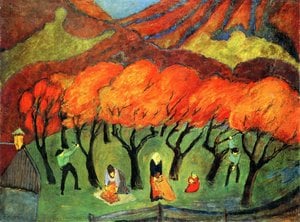
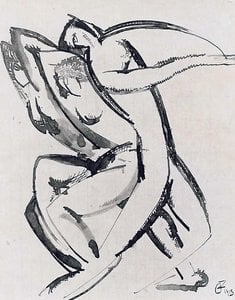
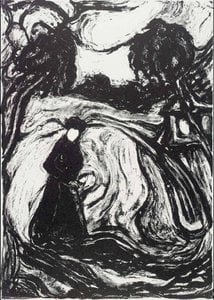
Expressionist painters, ranked

100 Famous Expressionist Painters: The Definitive Ranking

The most famous Expressionist painter is Wassily Kandinsky (1866–1944), known for Several Circles, Solomon R. G and Composition VIII. Next come Edvard Munch, Jean Michel Basquiat, Paul Klee and Jackson Pollock. This ranking of the 100 most famous Expressionist painters runs from Christian Rohlfs (born 1849) to Jean Michel Basquiat (born 1960), across 31 countries.

How this list is ranked. Artists whose works our catalogue files under Expressionist, in the order of our fame ranking of artists. Artists without a Wikidata identifier born after 1955 are left out until verified. The Wikipedia figure next to each name is the number of our 32 languages in which Wikipedia has an article on the artist.

  1. Several Circles, Solomon R. G by Wassily Kandinsky1Wassily Kandinsky
  2. The Scream by Edvard Munch2Edvard Munch
  3. Untitled - Skull, (Broad Collection, LA) by Jean Michel Basquiat3Jean Michel Basquiat

The essentials

Expressionist at a glance

  • 100Artists
  • 1849–1960Years of birth
  • 31Countries of birth
  • 10Women
  • 6Living artists
  • 16,739Works in our catalogue
Cities with most births
Vienna (3), Berlin (3), New York City (3), Dresden (2)

Ranked, with their masterpieces

The ranking: 100 Expressionist Painters and their key works

1of 100

Wassily Kandinsky

Russian Born in Moscow ['Expressionism', 'Abstract painting', 'Der Blaue Reiter'] Wikipedia in 32/32 languages

Wassily Kandinsky

Seeing Claude Monet’s “Haystacks” changed the way he perceived light and color. He sought out the Anton Ažbe School and the Academy of Fine Arts to learn the mechanics of his chosen craft.

Where to see His canvases are scattered across several major institutions, inviting a close look at how his use of color and form evolved.

Key works · The 100 most famous works

2of 100

Edvard Munch

Norwegian Born in Ådalsbruk ['Expressionism', 'Symbolism']

Edvard Munch

Instead, he sought to externalize his internal state, a method he called soul painting. He used distorted forms and rhythmic lines to communicate the tremors of human existence, turning psychological distress into a visible, tangible form. In Paris, he encountered the techniques of artists like Paul Gauguin and Vincent van Gogh.

Where to see The Munch Museum is the primary guardian of his legacy, housing a vast collection that spans the full range of his artistic output.

Key works · The 100 most famous works

3of 100

Jean Michel Basquiat

American Born in Park Slope Neo-Expressionism Wikipedia in 29/32 languages

Jean Michel Basquiat

By the early 1980s, Basquiat transitioned from graffiti to canvas, rapidly gaining recognition within the New York art world. His paintings weren’t easily categorized; they were a unique synthesis of influences ranging from Abstract Expressionism to tribal art, comic books, and historical painting. In the years since his death, Basquiat’s reputation has only grown.

Key works · The 100 most famous works

4of 100

Paul Klee

German and Swiss Born in Münchenbuchsee Expressionism, Cubism, Surrealism Wikipedia in 31/32 languages

Paul Klee

Klee was a natural draftsman who possessed a deep, almost scientific understanding of color theory. He was also a prolific printmaker, utilizing zinc-plate etchings and lithographs to expand his visual language.

Where to see To find the traces of his prolific output, one might travel to Bern, Switzerland.

Key works · The 100 most famous works

5of 100

Jackson Pollock

American Born in Cody Abstract Expressionism Wikipedia in 31/32 languages

Jackson Pollock

By 1947, a profound shift had taken hold in the way he approached the canvas. This change allowed him to stand over his work, becoming part of the creative act itself. He was among the first American painters to be recognized as a peer of the great 20th-century European masters, proving that a new, visceral language could emerge from the soil of the United States.

Where to see In New York City, the Museum of Modern Art holds several of his canvases, allowing viewers to stand before the sprawling, uncentered compositions that defined his era.

Key works · The 100 most famous works

6of 100

Amedeo Modigliani

Italian Born in Livorno Expressionism Wikipedia in 32/32 languages

Amedeo Modigliani

In 1906, the pull of Paris became too strong to resist. He became close friends with the Romanian sculptor Constantin Brâncuși, a relationship that would influence his own approach to form.

Where to see In the United States, the Metropolitan Museum of Art in New York holds significant pieces, including a portrait of Jeanne Hebuterne from 1918.

Key works · The 100 most famous works

7of 100

Egon Schiele

Austrian Born in Tulln an der Donau Austrian Expressionism Wikipedia in 32/32 languages

Egon Schiele

He moves through the city's artistic circles, eventually meeting Gustav Klimt. By 1909, he is actively challenging the established order, co-founding the Neues Wiener Kunstgruppe and the Neukunstgruppe. His departure from the decorative gold of the Secession movement toward a more visceral, psychological exploration of the human form changed the trajectory of figurative painting.

Where to see The weight of Schiele’s output is felt most heavily in Vienna.

Key works · The 100 most famous works

8of 100

Francis Bacon

Irish Born in Dublin Expressionism, Cubism, Surrealism Wikipedia in 30/32 languages

Francis Bacon

He worked with oils and large brushes, applying paint in a way that felt heavy and immediate. His colors were often smeared and violent, used to strip away any sense of decorative comfort.

Key works · The 100 most famous works

9of 100

Gerhard Richter

German Born in Dresden Wikipedia in 28/32 languages

Gerhard Richter

In 1951, he begins formal studies at the Dresden Academy of Fine Arts. From 1957 to 1961, he remains within the academy's structure, working as a master trainee. In 1972, he represented West Germany at the Venice Biennale, a moment that solidified his standing on the international stage.

Where to see The physical presence of Richter’s practice spans major institutional collections across Europe.

Key works · The 100 most famous works

10of 100

Willem de Kooning

Dutch-American Born in Rotterdam Abstract Expressionism Wikipedia in 30/32 languages

Willem de Kooning

At twelve years old, Willem de Kooning leaves formal schooling behind to enter the world of commercial art. This period of focused training provides the essential tools for the radical shifts that await him across the Atlantic. In New York, de Kooning finds a mentor in Arshile Gorky.

Key works · The 100 most famous works

11of 100

Jasper Johns

American Born in Augusta Wikipedia in 24/32 languages

Jasper Johns

The surface of a Johns painting often feels heavy and built up. This method allows for a physical depth that sits on the canvas, sometimes incorporating collage and newsprint directly into the wax. Later, in 2011, he received the Presidential Medal of Freedom.

Where to see To see his paintings and sculptures in person, one might travel to New York City.

Key works · The 100 most famous works

12of 100

Mark Rothko

American Born in Daugavpils ['Color Field painting', 'Abstract Expressionism']

Mark Rothko

The move to New York City in 1923 brought a shift in focus. He sought out the Art Students League to refine his practice. His shift toward large, luminous rectangles of color helped define the Abstract Expressionism movement and later influenced the Minimalist movement.

Where to see To stand before his canvases is to experience the weight of color in a quiet room.

Key works · The 100 most famous works

13of 100

Franz Marc

German Born in Kreuzstraße German Expressionism Wikipedia in 31/32 languages

Franz Marc

Marc’s early output reflects the heavy weight of academic painting and Impressionism. Robert Delaunay’s exploration of abstract forms and intense color palettes provided a blueprint for Marc’s own movement toward simplification. It was in Paris that he encountered the work of Vincent van Gogh.

Where to see The Franz Marc Museum in Kochel am See, Germany, functions as a primary site for his legacy, housing over 150 of his works.

Key works · The 100 most famous works

14of 100

Oskar Kokoschka

Austrian, Czech, British Born in Pöchlarn Expressionism, Viennese Avant-Garde Wikipedia in 29/32 languages

Oskar Kokoschka

He developed a nervously animated style, using bold lines and imagery that drew inspiration from Medieval compositions. He was a leading figure of the Expressionist movement, moving away from simple visual accuracy to capture something much deeper. In 1909, he wrote the short play Murderer, the Hope of Women, which is often recognized as one of the first Expressionist dramas.

Key works · The 100 most famous works

15of 100

Ernst Ludwig Kirchner

German Born in Aschaffenburg German Expressionism Wikipedia in 32/32 languages

Ernst Ludwig Kirchner

This transient existence saw the family living in Frankfurt/Main from 1886, following a period spent in Perlen near Lucerne, Switzerland, between 1887 and 1889. After obtaining his school-leaving certificate in 1901, he enrolled at the university in Dresden to study architecture. Kirchner remains a central figure of the German Expressionist movement, a presence that helped define the visual language of a transformative era.

Where to see The physical presence of Kirchner’s vision is scattered across several major institutions, reflecting the international reach of his influence.

Key works · The 100 most famous works

16of 100

Arshile Gorky

Armenian-American Born in Dilkaya Abstract Expressionism, Surrealism Wikipedia in 24/32 languages

Arshile Gorky

His early paintings show the influence of Impressionism and Post-Impressionism. One such early work, a self-portrait from about 1923–24, uses gestural marks to define the features of the face, focusing on the bridge of the nose and the weight of a collar. He acted as a bridge, connecting the Surrealist painters of Europe to the emerging American movement.

Where to see To see the physical traces of his hand, one might travel to Washington, D.C.

Key works · The 100 most famous works

17of 100

Emil Nolde

German-Danish Born in Nolde German Expressionism Wikipedia in 28/32 languages

Emil Nolde

His parents were Danish and Frisian peasants, and the rhythms of rural life shaped his early years. He later moved through studies in Karlsruhe and Munich, though the academic constraints of those institutions often felt restrictive. He looked toward the work of Paul Gauguin and found a way to move beyond simple representation.

Where to see Tracing his presence in public collections reveals a scattered but significant trail.

Key works · The 100 most famous works

18of 100

Otto Dix

German Born in Untermhaus ['Neue Sachlichkeit', 'Dadaism', 'Expressionism'] Wikipedia in 28/32 languages

Otto Dix

His father, Franz Dix, works in an iron foundry, a setting defined by heavy toil. Dix enters an apprenticeship under the painter Carl Senff, a period of study that lasts until 1910. His presence in the permanent collections of major institutions, such as the Museum of Modern Art in New York, confirms his lasting importance.

Where to see The physical presence of Dix’s vision remains scattered across major international institutions.

Key works · The 100 most famous works

19of 100

James Ensor

Belgian Born in Ostend ['Symbolism', 'Expressionism'] Wikipedia in 25/32 languages

James Ensor

James Ensor was born on April 13, 1860, in Ostend, Belgium. From 1877 to 1880, he attended the Académie Royale des Beaux-Arts in Brussels.

Where to see Ensor’s presence in major international collections confirms his lasting impact on the development of modernism.

Key works · The 100 most famous works

20of 100

Chaim Soutine

French Born in Smilavičy Expressionism Wikipedia in 26/32 languages

Chaim Soutine

While often categorized as an Expressionist, to label Soutine solely within this framework feels limiting. Landscapes, portraits, and still lifes became his preferred vehicles for this exploration, recurring themes like food and animals reflecting both personal experiences and his Jewish heritage.

Key works · The 100 most famous works

21of 100

Max Beckmann

German Born in Leipzig Expressionism, New Objectivity Wikipedia in 27/32 languages

Max Beckmann

Born into a middle-class family in Leipzig, Germany, Max Beckmann showed an early inclination toward drawing. As he matured, Beckmann found himself drawn to the Old Masters. While he often resisted the labels placed upon him, his work is widely considered a cornerstone of the German Expressionism movement.

Where to see Finding the physical traces of Beckmann's life requires traveling through the cities that shaped his exile and his later years.

Key works · The 100 most famous works

22of 100

Friedensreich Hundertwasser

Austrian Born in Vienna Organic architecture, Spiral art Wikipedia in 29/32 languages

Friedensreich Hundertwasser

Difficult Beginnings: Hundertwasser’s early life was marked by hardship, particularly during the Nazi era. The Spiral Motif: The spiral became a central motif in Hundertwasser’s work, symbolizing growth, harmony, and the cyclical nature of life – a direct contrast to the rigid geometry he despised. Advocacy for Constitutional Monarchy: Hundertwasser also expressed strong political views, advocating for a constitutional monarchy in Austria and criticizing the European Union's perceived disregard for regional peculiarities.

Key works · The 100 most famous works

24of 100

Lucian Freud

British Born in Berlin Realism, Figurative art Wikipedia in 23/32 languages

Lucian Freud

He favored large hogs-hair brushes, applying paint with a physicality mirroring the subject matter itself. This created a textured surface, almost sculptural in quality, where every brushstroke revealed the weight and substance of flesh. His paintings are held in major museums globally—the Tate in London, the Freud Museum London, and Goldsmiths’ College, University of London—enduring testaments to his artistic genius.

Key works · The 100 most famous works

25of 100

Käthe Kollwitz

German Born in Königsberg Expressionism Wikipedia in 28/32 languages

Käthe Kollwitz

Her father, Karl Schmidt, was a progressive political figure—a radical social democrat and mason—while her maternal grandfather, Julius Rupp, instilled in young Käthe a potent blend of religious conviction and socialist ideals. In 1919, she achieved a historic milestone by becoming the first woman elected to the Prussian Academy of Arts—a testament to her artistic achievements and growing influence.

Key works · The 100 most famous works

28of 100

David Alfaro Siqueiros

Mexican Born in Chihuahua City Social Realism, Muralism Wikipedia in 24/32 languages

David Alfaro Siqueiros

As one of the “big three” Mexican muralists – alongside Diego Rivera and José Clemente Orozco – he played an instrumental role in establishing Mexican muralism as a significant artistic movement, transforming public spaces into canvases for social commentary.

Key works · The 100 most famous works

29of 100

Helen Frankenthaler

American Born in Manhattan Abstract Expressionism, Color Field Wikipedia in 19/32 languages

Helen Frankenthaler

Throughout her career, Frankenthaler fearlessly explored diverse media, including ceramics, sculpture, tapestry, and printmaking – particularly woodcuts. She even ventured into theatrical design, creating sets and costumes for the Royal Ballet. Major retrospective exhibitions followed, including those at the Jewish Museum (1960), the Whitney Museum of American Art (1969), and a comprehensive traveling retrospective in 1989.

Pupil of Hans Hofmann #72

Key works · The 100 most famous works

30of 100

Cy Twombly

American Born in Lexington Abstract Expressionism, Postmodern Wikipedia in 21/32 languages

Cy Twombly

His early works, such as the North African Sketchbooks (1953), already hinted at his unique blend of abstract forms and poetic references. Cold Stream (1966), with its swirling loops and bold text, is a powerful example of this evocative style. He paved the way for painters like Jean-Michel Basquiat, Anselm Kiefer, Francesco Clemente, and Julian Schnabel, who embraced a similar spirit of experimentation and emotional intensity.

Pupil of Franz Kline #42, Robert Motherwell #41

Key works · The 100 most famous works

31of 100

Lyonel Feininger

German-American Born in New York City Expressionism, Cubism Wikipedia in 23/32 languages

Lyonel Feininger

Notable Works: Some of his significant works include " Werder I " (watercolor), " Gaberndorf II " (paper), and " Boats " (cubism, oil on canvas). Photographic Works: Between 1928 and the mid-1950s, Feininger produced a substantial body of photographic works, demonstrating his versatility as an artist. First Solo Exhibition: His first solo exhibition at the Sturm Gallery in Berlin (1917) was a pivotal moment, establishing him as a prominent figure in the art world.

Key works · The 100 most famous works

33of 100

František Kupka

Czech Born in Opočno ['Realism', 'Symbolism', 'Orphism', 'Cubism', 'Abstraction'] Wikipedia in 24/32 languages

František Kupka

The move to Paris in 1894 changed the direction of his work. He spent time at the Académie Julian before moving on to study with Jean-Pierre Laurens at the École des Beaux-Arts. His creative output is often viewed alongside the works of Piet Mondrian and Wassily Kandinsky, marking a shift toward a visual language that prioritized the interaction of color and shape over the depiction of the physical world.

Where to see To see his canvases in person, one might travel to New York City.

Key works · The 100 most famous works

34of 100

Paula Modersohn-Becker

German Born in Dresden Expressionism Wikipedia in 24/32 languages

Paula Modersohn-Becker

Paula Modersohn-Becker, a name that resonates with quiet power in the annals of early modern art, was an artist who dared to look inward. Immersing herself in the vibrant art scene of the French capital, she encountered the works of Paul Cézanne, Paul Gauguin, Vincent van Gogh, and other Post-Impressionist masters.

Key works · The 100 most famous works

35of 100

Julian Schnabel

American Born in Brooklyn Neo-Expressionism

Julian Schnabel

Ornamental Despair, The Student of Prague, and Fakires exemplify this early period, showcasing a bold rejection of minimalist austerity in favor of maximalist expression. While his success was swift, it wasn’t without controversy; critics like Robert Hughes famously dismissed his work as bombastic and self-indulgent, comparing it unfavorably to physical displays of strength rather than artistic merit. His works are now held in major museum collections worldwide, including the Metropolitan Museum of Art, MoMA, the Whitney Museum, Tate Modern, and the Centre Pompidou—a testament to his enduring impact on contemporary art.

Key works · The 100 most famous works

36of 100

Georg Baselitz

German Born in Deutschbaselitz Neo-Expressionism Wikipedia in 26/32 languages

Georg Baselitz

Throughout his prolific career, Baselitz’s artistic language has been a complex tapestry woven from myriad influences, ranging from the starkness of Socialist Realism and the dramatic tension of Mannerism to the primal rhythms of African sculpture.

Key works · The 100 most famous works

37of 100

Lee Krasner

American Born in Brooklyn Abstract Expressionism Wikipedia in 17/32 languages

Lee Krasner

Born Lena Krassner on October 27, 1908, in the vibrant streets of Brooklyn, New York, the woman who would become Lee Krasner emerged as a transformative force within the landscape of American modernism.

Key works · The 100 most famous works

38of 100

Karl Schmidt-Rottluff

German Born in Rottluff Expressionism Wikipedia in 25/32 languages

Karl Schmidt-Rottluff

Emotional Intensity: His work is characterized by a raw, visceral quality that reflects his deep engagement with the human condition. Landscape Focus: Throughout his career, he remained committed to depicting landscapes, often imbued with a sense of melancholy and isolation. His commitment to artistic innovation extended beyond his own practice; through an endowment established in 1964, he laid the foundation for the Brücke Museum in West Berlin, ensuring that the legacy of Die Brücke would endure for generations to come.

Key works · The 100 most famous works

39of 100

Hans Hartung

German-French Born in Leipzig Gestural Abstract Expressionism Wikipedia in 15/32 languages

Hans Hartung

Born in 1904 in the historic city of Leipzig, Germany, Hartung’s early consciousness was shaped by a deep reverence for the masters of light and shadow. His formative years were steeped in the emotive power of European Expressionism, drawing strength from the works of Rembrandt and the raw, visceral energy of German painters such as Lovis Corinth and Emil Nolde. Despite the profound disruptions caused by his experiences as a World War II veteran, he emerged with a renewed vigor, continuing to push the boundaries of abstract expression.

Key works · The 100 most famous works

40of 100

Frank Auerbach

British Born in Berlin School of London Wikipedia in 17/32 languages

Frank Auerbach

The 1950s saw Auerbach establishing his presence through exhibitions at the Beaux Arts Gallery in London. He didn’t shy away from portraying the harsh realities of post-war Britain, focusing on scenes of everyday existence—busy streets, anonymous figures, and the architectural fabric of the city. A major retrospective at the Hayward Gallery in 1978 cemented his reputation, followed by inclusion in the groundbreaking “A New Spirit in Painting” exhibition at the Royal Academy of Arts in 1981.

Key works · The 100 most famous works

41of 100

Robert Motherwell

American Born in Aberdeen Abstract Expressionism Wikipedia in 16/32 languages

Robert Motherwell

Early Education & Influences: Motherwell’s formative years were spent at Stanford University where he immersed himself in philosophy alongside fellow modernist Arthur Oncken Lovejoy and David Wite Prall. The Surrealist Encounter: A pivotal moment arrived in 1940 when Motherwell relocated to New York City and enrolled at Columbia University under Meyer Shapiro’s guidance.

Teacher of Cy Twombly #30

Key works · The 100 most famous works

42of 100

Franz Kline

American Born in Wilkes-Barre Abstract Expressionism Wikipedia in 17/32 languages

Franz Kline

His “Hot Jazz” mural series from 1940, commissioned for a Greenwich Village tavern, signaled a shift towards simplification, hinting at the bold forms to come. This experience proved revelatory for Kline; he began exploring large-scale abstractions characterized by dynamic black brushstrokes on white canvases. By the 1950s, Franz Kline had achieved significant recognition within the New York School—an informal group of artists including Jackson Pollock, Willem de Kooning, Robert Motherwell, and Lee Krasner who were redefining American art.

Teacher of Cy Twombly #30

Key works · The 100 most famous works

43of 100

Peter Doig

Scottish Born in Edinburgh Figurative painting

Peter Doig

Doig’s artistic journey wasn't one of immediate stylistic declaration but rather a gradual unfolding, an exploration of figurative painting that evolved into the distinctive, dreamlike quality for which he is now celebrated. The echoes of earlier masters are palpable—the melancholic landscapes of Edvard Munch, the raw intensity of H.C.

Key works · The 100 most famous works

44of 100

M.F. Husain

Indian Born in Pandharpur Cubist narrative paintings Wikipedia in 14/32 languages

M.F. Husain

His ability to synthesize the structural rigor of Western abstraction with the emotive richness of Eastern storytelling created a unique visual dialect that resonated across continents. Through his unwavering dedication to his vision, he ensured that the essence of Indian modernism would forever be etched into the global consciousness. Born in 1915 in the small town of Pandharpur, Maharashtra, his early years were steeped in the vibrant cultural textures of rural India.

Key works · The 100 most famous works

45of 100

August Macke

German Born in Meschede Expressionism, Fauvism, Orphism, Cubism Wikipedia in 28/32 languages

August Macke

This pursuit of light and color reached a peak during his travels to North Africa. His Tunisian watercolors from 1914 reveal an exceptional command of color, capturing the intense, shifting light of the region. This was no passing interest; he returned to Paris frequently between 1907 and 1912, allowing the atmosphere of the French capital to reshape his perception of the canvas.

Where to see To walk through the rooms where his spirit remains, one might travel to Bonn, Germany.

Key works · The 100 most famous works

46of 100

Alexej von Jawlensky

Russian Born in Torzhok Expressionism Wikipedia in 23/32 languages

Alexej von Jawlensky

The move to Munich in 1894 changed everything for Jawlensky. He was a key member of the Neue Künstlervereinigung München, a group that pushed the boundaries of what art could be. Alexej von Jawlensky left behind a body of work that helped define the direction of Expressionism.

Where to see Finding the traces of Jawlensky's life requires traveling through several European cities where his presence remains felt.

Key works · The 100 most famous works

47of 100

Philip Guston

Canadian-American Born in Montreal ['Abstract Expressionism', 'Neo-Expressionism'] Wikipedia in 15/32 languages

Philip Guston

Abstract Expressionism: By the 1950s, Guston achieved recognition for his abstract expressionist paintings, characterized by dynamic compositions and gestural brushwork. Shift to Figuration: In the mid-1960s, he dramatically renounced abstraction, pioneering a modified form of representational art known as neo-expressionism. He began drawing at a young age and attended Los Angeles Manual Arts High School, where he started painting in 1927.

Key works · The 100 most famous works

48of 100

Lovis Corinth

German Born in Gvardeysk Impressionism & Expressionism Wikipedia in 24/32 languages

Lovis Corinth

He didn’t simply adopt the broken color and fleeting light effects of Monet or Renoir; instead, he integrated these elements into his own unique vision, creating a style that blended impressionistic vibrancy with a distinctly German sensibility. A pivotal moment in Corinth’s life – and arguably in his artistic development – was a stroke he suffered in December 1911.

Key works · The 100 most famous works

49of 100

Alice Neel

American Born in Gladwyne Expressionism, Realism Wikipedia in 16/32 languages

Alice Neel

Style: Expressionistic use of line and color; psychological acuity; emotional intensity. Notable works include "Well Baby Clinic," a bleak portrayal of mothers and babies in a maternity clinic. Received a National Women’s Caucus for Art award from President Jimmy Carter in 1979.

Key works · The 100 most famous works

50of 100

Zao Wou-Ki

Born in Beijing ['1920s Art Deco', 'Expressionism', 'Abstract art'] Wikipedia in 12/32 languages

Zao Wou-Ki

While precise details regarding this artist's early life are limited, it’s reasonable to assume that the tumultuous years following World War I profoundly shaped their artistic trajectory. The influence of earlier movements such as Impressionism and Post-Impressionism is also likely present, providing a foundation upon which to build more radical departures. Furthermore, the burgeoning interest in psychology, spearheaded by figures like Sigmund Freud, fueled explorations into the hidden depths of the human psyche—a theme that would become increasingly prominent in their work.

Key works · The 100 most famous works

51of 100

Johannes Itten

Swiss Born in Wachseldorn Expressionism, Bauhaus Wikipedia in 21/32 languages

Johannes Itten

Undeterred, Itten established the “ontos weaving workshops” near Zurich in 1924, collaborating with Bauhaus weaver Gunta Stölzl. In 1926, he founded a small art and architecture school in Berlin, where Ernst Neufert, a former Bauhaus architect, also taught, continuing to disseminate his innovative pedagogical methods. Johannes Itten, born in 1888 in the tranquil Swiss village of Südern-Linden, was more than just a painter; he was a visionary educator who fundamentally reshaped the landscape of modern art instruction.

Key works · The 100 most famous works

52of 100

Stanisław Ignacy Witkiewicz

Polish Born in Warsaw Symbolism, Surrealism Wikipedia in 27/32 languages

Stanisław Ignacy Witkiewicz

Born in Warsaw in 1885 into an artistic family—his father, Stanisław Witkiewicz, was a noted painter, architect, and theorist—the younger Witkiewicz inherited not only a creative lineage but also a fertile intellectual environment that would profoundly shape his multifaceted career. A formative experience was an anthropological expedition to Australia in 1914 alongside Bronisław Malinowski.

Key works · The 100 most famous works

53of 100

Erich Heckel

German Born in Döbeln German Expressionism Wikipedia in 22/32 languages

Erich Heckel

Die Brücke’s Aims: The group aimed to bridge traditional neo-romantic German painting with modern Expressionist approaches. Influences: Heckel and the other members of Die Brücke were heavily influenced by Edvard Munch's expressive style and African sculpture, which they saw as embodying a raw, primitive power. Expressionist Pioneer: Erich Heckel is recognized as a key figure in the Expressionist movement, particularly for his contributions to Die Brücke.

Key works · The 100 most famous works

55of 100

Marianne von Werefkin

Russian-German-Swiss Born in Tula Expressionism, Symbolism Wikipedia in 21/32 languages

Marianne von Werefkin

While undergoing medical treatment in Germany, she encountered the burgeoning avant-garde movements of Western Europe, sparking a shift away from the constraints of Realism. The influence of artists like Paul Gauguin and Louis Anquetin, with their emphasis on flattened forms and bold color, became increasingly apparent in her work. She was not merely an associate of Kandinsky and Jawlensky; she was a driving force behind the movement’s intellectual and aesthetic innovations, a pioneering theorist who fostered artistic exchange through her influential salon in Munich.

Key works · The 100 most famous works

57of 100

Vilmos Aba-Novak

Hungarian Born in Budapest Modern Hungarian art Wikipedia in 18/32 languages

Vilmos Aba-Novak

Born in Budapest on March 15th, 1894, Vilmos Aba-Novák’s early life was marked by an exposure to the visual arts. He initially studied at the Budapest Art School until 1912, laying the groundwork for his future career. His legacy extends beyond individual artworks; he helped to establish a distinctly Hungarian modern style that blended influences from Expressionism, the Italian Novecento, and his own unique artistic vision.

Key works · The 100 most famous works

58of 100

Nadežda Petrović

Serbian Born in Čačak Expressionism & Fauvism Wikipedia in 27/32 languages

Nadežda Petrović

Nadežda Petrović (Serbian Cyrillic: Надежда Петровић; 11/12 October 1873 – 3 April 1915) was a Serbian painter and one of the women war photography pioneers in the region. Graduating in 1891, she taught there for a period beginning in 1893 before moving to Munich to study with Slovenian artist Anton Ažbe. Petrović’s relocation to Munich in 1901 proved transformative, exposing her to the burgeoning avant-garde movements of Expressionism and Fauvism.

Key works · The 100 most famous works

59of 100

Otto Mueller

German Born in Lubawka Expressionism Wikipedia in 19/32 languages

Otto Mueller

Mueller’s artistic process was as distinctive as his vision. He favored distemper – a water-based paint – applied to coarse canvas, creating a matte surface that lent his works an earthy, almost primal quality. After the war, he accepted a professorship at the Academy of Fine Arts in Breslau, dedicating himself to teaching until his death in 1930.

Key works · The 100 most famous works

61of 100

Jules Pascin

Born in Vidin Wikipedia in 18/32 languages

Jules Pascin

He quickly integrated into circles like “Les Dômiers” at Café le Dome. Early Style and Influences: His early Parisian works were influenced by Fauvism and Cézanne, focusing on portraits and nudes. School of Paris: Pascin was a prominent figure within the School of Paris – a collective of expatriate artists who shaped modern art in the early 20th century.

Key works · The 100 most famous works

62of 100

Christian Rohlfs

German Born in Groß Niendorf Expressionism Wikipedia in 15/32 languages

Christian Rohlfs

Notable works like “ Hilly Landscape in Late Autumn ” (1900) demonstrate an early sensitivity to atmospheric effects and a growing willingness to depart from strict realism. Patroclus in Soest ” (1912) reveal his fascination with architectural forms and their symbolic weight, while " The Temptation of Christ " (1914) showcases his exploration of religious narratives through an Expressionist lens. The Christian Rohlfs Museum in Hagen, established in 1929, stands as a lasting tribute to his enduring influence on German art and continues to inspire viewers with its powerful and evocative collection.

Key works · The 100 most famous works

64of 100

Ossip Zadkine

Russian-French Born in Vitebsk Cubism, Modernism Wikipedia in 23/32 languages

Ossip Zadkine

Early Influences: Russian folk art, European modernism, African sculpture, Greek antiquity. French Citizenship: Obtained in 1921, solidifying his commitment to France. The Musée Zadkine in Paris, housed in his former home and studio, and another in Les Arques, preserve and showcase his extensive body of work, ensuring that his legacy continues to inspire future generations.

Key works · The 100 most famous works

65of 100

Clyfford Still

American Born in Grandin Abstract Expressionism Wikipedia in 12/32 languages

Clyfford Still

Early works like PH-616 (1929) offer a glimpse into this transitional period, showcasing his initial exploration of rural life rendered with a muted palette and evocative symbolism. These paintings weren’t simply depictions; they were imbued with a sense of longing, a quiet contemplation of the human condition within the vastness of the American landscape. Perhaps one of his most significant legacies is The Clyfford Still Museum in Denver, Colorado, which houses an extraordinary collection of over 3,125 works – representing 93 percent of his lifetime output and complete archives.

Key works · The 100 most famous works

66of 100

Richard Gerstl

Austrian Born in Vienna Expressionism Wikipedia in 15/32 languages

Richard Gerstl

Born into a prosperous Jewish merchant family, Gerstl’s early life took an unexpected turn when he declared his intention to become an artist. In 1898, at fifteen, he entered the Academy of Fine Arts Vienna under the demanding Christian Griepenkerl. Following his departure from the Academy, Gerstl embarked on a period of self-directed study.

Key works · The 100 most famous works

67of 100

Richard Diebenkorn

American Born in Portland ['Abstract Expressionism', 'Bay Area Figurative', 'Lyrical Abstraction'] Wikipedia in 9/32 languages

Richard Diebenkorn

His family’s relocation to San Francisco when he was just two years old proved formative, imbuing his artistic sensibility with the light and atmosphere of California—a landscape that would become inextricably linked to his work. Richard Diebenkorn’s influence on postwar American art is undeniable.

Key works · The 100 most famous works

68of 100

John Marin

American Born in Rutherford Modernism, Watercolor Wikipedia in 16/32 languages

John Marin

John Marin, born in Rutherford, New Jersey, on December 23, 1870, experienced a childhood marked by early loss. He pursued formal training at both the Pennsylvania Academy of the Fine Arts in Philadelphia and the Art Students League of New York, absorbing the teachings of influential figures like Thomas Pollock Anshutz and William Merritt Chase. A pivotal moment in Marin’s artistic development arrived with his journey to Europe in 1905.

Key works · The 100 most famous works

69of 100

Charles Henry Sims

British Born in Islington Outsider art, Impressionism

Charles Henry Sims

Sims’ early work reflects the prevailing aesthetic tastes of the Edwardian era —refined portraits and idyllic landscapes characterized by delicate brushwork and a harmonious palette. He quickly gained recognition, exhibiting at the Royal Academy from 1894 onwards and becoming a sought-after portraitist among London society. Iris, Sunshine And Wind, and The Bathers are just a few examples of paintings that showcase his evolving style and captivating use of light and color.

Key works · The 100 most famous works

70of 100

Yannis Tsarouchis

Greek Born in Piraeus Surrealism

Yannis Tsarouchis

Born in Piraeus, Tsaroychis’s formative years were steeped in the traditions of Greek art history. He studied at the Athens School of Fine Arts, absorbing influences from Impressionism and Symbolism before gravitating towards Surrealism in the mid-1930s. His paintings serve as a poignant reminder of Greece's artistic past while simultaneously exploring universal themes of spirituality and contemplation—a legacy that ensures his place among the most distinctive figures of 20th-century Surrealism.

Key works · The 100 most famous works

71of 100

Aaron Siskind

American Born in New York Abstract Expressionism

Aaron Siskind

For twenty-five years, he balanced a career teaching English in New York’s public schools with the passionate pursuit of his photographic vision—a testament to his dedication and unwavering commitment to artistic expression. As a founding member of the Society for Photographic Education in 1963, he actively contributed to the growing recognition of photography as a legitimate art form.

Key works · The 100 most famous works

72of 100

Hans Hofmann

German-American Born in Weißenburg in Bayern Abstract Expressionism Wikipedia in 14/32 languages

Hans Hofmann

His works are now held in prestigious collections worldwide – The Metropolitan Museum of Art, Tate Modern, Germanisches Nationalmuseum, National Gallery of Art, and Art Institute of Chicago among them—ensuring that his vibrant vision continues to inspire generations to come.

Key works · The 100 most famous works

73of 100

Arthur Segal

Romanian Born in Iași ['Expressionism', 'Dadaism']

Arthur Segal

Segal’s formative years were spent in Romania, absorbing the artistic traditions of the region while simultaneously encountering the burgeoning avant-garde currents emanating from Berlin. A subsequent period in Paris and Italy allowed him to immerse himself in the vibrant artistic scene of the time, encountering the innovations of Post-Impressionism and early Modernism.

Key works · The 100 most famous works

74of 100

Albin Egger-Lienz

Born in Stribach Wikipedia in 13/32 languages

Albin Egger-Lienz

Key Influence: The artist Ferdinand Hodler significantly impacted Egger-Lienz's style, leading to a monumental expressiveness characterized by heroic figures in stage-like spaces. His artistic language evolved towards strongly outlined, massive forms painted with an almost monochromatic palette of earth colors.

Key works · The 100 most famous works

75of 100

Adolph Gottlieb

American Born in New York City Abstract Expressionism Wikipedia in 12/32 languages

Adolph Gottlieb

A crucial moment arrived in 1935 when Gottlieb joined forces with artists like Mark Rothko and John D. Graham to form “The Ten,” later known as the New York Artists Painters group. His work is now represented in major museum collections worldwide, including the Museum of Modern Art (MoMA) in New York City and the Tate Modern in London—a testament to its enduring power and influence.

Key works · The 100 most famous works

76of 100

Jean-Paul Riopelle

Canadian Born in Montreal Lyrical Abstraction Wikipedia in 14/32 languages

Jean-Paul Riopelle

Les Automatistes: Riopelle was a member of Les Automatistes in the 1940s, embracing Surrealist principles and exploring spontaneous creation. Move to Paris (1947): His relocation to Paris proved transformative, leading to his first solo exhibition at Galerie La Dragonne in 1949. Riopelle was the first Canadian painter since James Wilson Morrice to achieve widespread international recognition.

Key works · The 100 most famous works

77of 100

Gabriele Münter

German Born in Berlin Expressionism Wikipedia in 18/32 languages

Gabriele Münter

Gabriele Münter stands as a pivotal figure in the vibrant landscape of early 20th-century German art, a painter whose contributions to Expressionism were long overshadowed but are now rightfully celebrated. She joined his Phalanx school in 1901, where she absorbed the principles of Post-Impressionism and experimented with innovative techniques like using palette knives to apply paint—a method that would become a hallmark of her style.

Pupil of Wassily Kandinsky #1

Key works · The 100 most famous works

78of 100

Yoo Youngkuk

Korean Born in Ulchin Abstract painting

Yoo Youngkuk

Throughout the 1950s and early 60s, Yoo Youngkuk’s artistic style underwent a significant transformation. Often referred to as “the painter of mountains,” Yoo didn’t depict mountains in a literal sense; rather, he abstracted their essence—their solidity, their grandeur, their spiritual resonance—into powerful compositions of color and form. Exploring Yoo Youngkuk's masterpieces – such as “ Mountain ” or “ Work ”– at platforms like AllPaintingsStore.com offers a glimpse into the mind of a true pioneer, an artist who dared to break with tradition and forge a new path for Korean art.

Key works · The 100 most famous works

79of 100

Wojciech Weiss

Polish Born in Leorda Expressionism Wikipedia in 11/32 languages

Wojciech Weiss

Weiss's distinctive style is characterized by intense emotion conveyed through muted color palettes and dynamic brushstrokes—a hallmark of Expressionism. His canvases capture psychological states with remarkable sensitivity, reflecting the anxieties and uncertainties of his time. Furthermore, he engaged with Symbolist artists such as Edvard Munch and Gustav Klimt, incorporating evocative imagery and psychological depth into his compositions.

Key works · The 100 most famous works

80of 100

Ad Reinhardt

American Born in Buffalo Abstract Expressionism, Minimalism Wikipedia in 12/32 languages

Ad Reinhardt

He taught at numerous institutions—Brooklyn College, California School of Fine Arts, University of Wyoming, Yale University, and Hunter College—imparting his rigorous intellectual approach to aspiring artists.

Key works · The 100 most famous works

81of 100

Karl Blossfeldt

German Born in Schlēde German Expressionism

Karl Blossfeldt

This method created images where the textures and contours of the plants were revealed through latent impressions formed by ultraviolet radiation—a process that yielded strikingly surreal results. Blossfeldt’s meticulous attention to detail and his willingness to experiment with innovative methods cemented his place as one of the most influential artists of the Weimar Republic.

Key works · The 100 most famous works

82of 100

Max Kurzweil

Austrian Born in Bzenec Vienna Secession Wikipedia in 13/32 languages

Max Kurzweil

His relocation to Vienna in 1879 marked the beginning of a transformative era for both the artist and the city itself, as he moved from the quietude of his Czech origins toward the vibrant, pulsing energy of a burgeoning metropolis. While he achieved significant professional milestones—including being awarded the prestigious Villa Romana prize in 1905 and serving as a respected professor at the Frauenkunstschule —his personal existence was often shadowed by an innate sense of melancholy.

Key works · The 100 most famous works

83of 100

Bernard Buffet

French Born in Paris Expressionism

Bernard Buffet

By the late 1950s, shifting artistic tides toward total abstraction and criticisms regarding his prolific output and lavish lifestyle led to a period of professional alienation. Nevertheless, Buffet’s dedication to his craft never wavered. Despite his immense success, Buffet’s journey was not without its tribulations.

Key works · The 100 most famous works

84of 100

Heinrich Campendonk

German/Dutch Born in Krefeld Der Blaue Reiter Wikipedia in 13/32 languages

Heinrich Campendonk

The Blaue Reiter’s emphasis on symbolism, spirituality, and the connection between art and nature profoundly impacted Campendonk's work, leading him to incorporate elements of folklore, mythology, and dream imagery into his compositions.

Key works · The 100 most famous works

85of 100

Mark Tobey

American Born in Centerville Abstract Expressionism Wikipedia in 14/32 languages

Mark Tobey

Thompson introduced Tobey to the tenets of the Baháʼí Faith, a religion emphasizing the unity of all religions and humanity’s spiritual evolution. Tobey’s travels became increasingly frequent and purposeful, taking him across Europe, Palestine, Turkey, Lebanon, China, and Japan. He represented the United States at the Venice Biennale in 1958, further solidifying his position as a major figure in the art world.

Key works · The 100 most famous works

86of 100

John Bellany

Scottish Expressionism; Surrealism

John Bellany

During his formative years at the Edinburgh College of Art, he forged lasting bonds with contemporaries such as Alan Bold and Alexander Moffat, contributing to a movement dedicated to revitalizing Scottish art through a blend of local heritage and international influence. John Bellany’s contribution to British art history is marked by his ability to elevate regional Scottish identity to a universal stage.

Key works · The 100 most famous works

87of 100

Jan Sluijters

Dutch Born in 's-Hertogenbosch Expressionism, Luminism Wikipedia in 8/32 languages

Jan Sluijters

While renowned for his landscapes, Sluijters was also a prolific portrait painter. He produced a diverse collection of portraits, ranging from formal studio studies to informal snapshots of everyday life.

Key works · The 100 most famous works

89of 100

Paul Jenkins

American Born in Kansas City Abstract Expressionism

Paul Jenkins

In his works, such as the evocative Untitled (664) or the energetic Phenomena compass bearing, one can witness the breathtaking interplay of light and liquid. Lyrical Abstraction: The use of flowing color to evoke emotional responses rather than depicting physical objects. Born in Kansas City, Missouri, in 1923, his artistic journey began with formal training at the Art Students League of New York under the guidance of Yasuo Kuniyoshi.

Key works · The 100 most famous works

90of 100

Kerry James Marshall

American Born in Birmingham Neo-Expressionism Wikipedia in 8/32 languages

Kerry James Marshall

Born on October 17, 1955, in Birmingham, Alabama, Marshall’s early life was shaped by the profound social tremors of the American South and the subsequent migration to Los Angeles. From his tenure as a professor at the University of Illinois at Chicago to major retrospective exhibitions like Kerry James Marshall: Mastry at the Museum of Contemporary Art, Chicago, his influence permeates both the academy and the public consciousness.

Key works · The 100 most famous works

91of 100

Gustave De Smet

Belgian Born in Ghent Flemish Expressionism Wikipedia in 10/32 languages

Gustave De Smet

During his time in the Netherlands, his work was influenced by the Bergen School and the works of Henri Le Fauconnier. Despite facing financial hardships during the Great Depression, which led to the bankruptcy of the Galerie Le Centaure and the sale of many of his works, he remained dedicated to his craft.

Key works · The 100 most famous works

94of 100

Mary Ascher

British Biblical scenes, female figures

Mary Ascher

Her use of light and shadow was particularly masterful, imbuing her figures with a sense of depth and psychological complexity. Beyond the technical aspects, Ascher’s process involved a deep engagement with the source material. Her influence can be seen in later generations of artists who sought to infuse their work with personal meaning and social commentary.

Key works · The 100 most famous works

95of 100

Frits Van Den Berghe

Belgian Born in Ghent Expressionism, Surrealism Wikipedia in 10/32 languages

Frits Van Den Berghe

Notably, he collaborated on a comic strip series with Jean Ray, further demonstrating his versatility as an artist. His legacy endures as one of the most significant figures of the Belgian Expressionist movement. Van Hecke’s unwavering support provided Van den Berghe with crucial exposure and access to the artistic circles of Brussels and Ghent.

Key works · The 100 most famous works

96of 100

Ernst Barlach

Ernst Barlach

A pivotal trip to Russia in 1906 profoundly influenced his artistic direction, exposing him to new perspectives and a more expressive aesthetic. Financial support from art dealer Paul Cassirer allowed Barlach to develop his unique style, focusing on the emotional intensity of human figures.

Key works · The 100 most famous works

99of 100

Mstislav Dobuzhinsky

Russian-Lithuanian Born in Novgorod Expressionism, Cityscapes

Mstislav Dobuzhinsky

Born in Novgorod and carrying Lithuanian heritage, he carved out a unique artistic voice defined by a haunting exploration of urban decay, industrial landscapes, and the psychological toll of modernity. His work isn’t merely depictions of crumbling buildings; it's a visceral expression of isolation, anxiety, and the unsettling beauty found within the shadows of rapidly changing cities. Mstislav Dobuzhinsky’s work holds significant historical importance as a document of early 20th-century Russia.

Key works · The 100 most famous works

100of 100

Heinrich Nauen

German Born in Krefeld Expressionism Wikipedia in 10/32 languages

Heinrich Nauen

Unlike many artists who sought grand urban centers, Nauen found his creative haven in the Rhineland, a region steeped in folklore, rural beauty, and a deep connection to the land – influences that would irrevocably shape his distinctive style. Nauen’s formal training began at the Kunstakademie Düsseldorf in 1898, where he honed his skills under the tutelage of established masters. While Nauen’s work predates the formal establishment of German Expressionism, it undeniably shares many key characteristics with the movement.

Key works · The 100 most famous works

The paintings behind the names

Famous Expressionist works and the artists who made them

  1. Several Circles, Solomon R. G by Wassily Kandinsky

    Several Circles, Solomon R. G

    Wassily Kandinsky

    1926 · Solomon R. Guggenheim Museum, New York City

  2. The Scream by Edvard Munch

    The Scream

    Edvard Munch

    1893 · Nasjonalgalleriet, Oslo

  3. Untitled - Skull, (Broad Collection, LA) by Jean Michel Basquiat

    Untitled - Skull, (Broad Collection, LA)

    Jean Michel Basquiat

    1981

  4. Woman Knitting by Paul Klee

    Woman Knitting

    Paul Klee

    1915 · Boca Raton Museum of Art

  5. One. Number 31, 1950 by Jackson Pollock

    One. Number 31, 1950

    Jackson Pollock

  6. Nude Bust by Amedeo Modigliani

    Nude Bust

    Amedeo Modigliani

    1915

  7. Couple Embracing by Egon Schiele

    Couple Embracing

    Egon Schiele

Through time

A Expressionist timeline in masterpieces

  1. 1887
  2. 1893
  3. 1908
  4. 1911
  5. 1911
  6. 1915
  7. 1915
  8. 1917
  9. 1919
  10. 1926
  11. 1933
  12. 1936
  13. 1944
  14. 1949

In figures

By the numbers

All of them, in order

List of the 100 famous Expressionist painters

  1. 1Wassily KandinskyWassily KandinskyRussian · 1866–1944
  2. 2Edvard MunchEdvard MunchNorwegian · 1863–1944
  3. 3Jean Michel BasquiatJean Michel BasquiatAmerican · 1960–1988
  4. 4Paul KleePaul KleeGerman and Swiss · 1879–1940
  5. 5Jackson PollockJackson PollockAmerican · 1912–1956
  6. 6Amedeo ModiglianiAmedeo ModiglianiItalian · 1884–1920
  7. 7Egon SchieleEgon SchieleAustrian · 1890–1918
  8. 8Francis BaconFrancis BaconIrish · 1909–1992
  9. 9Gerhard RichterGerhard RichterGerman · born 1932
  10. 10Willem de KooningWillem de KooningDutch-American · 1904–1997
  11. 11Jasper JohnsJasper JohnsAmerican · born 1930
  12. 12Mark RothkoMark RothkoAmerican · 1903–1970
  13. 13Franz MarcFranz MarcGerman · 1880–1916
  14. 14Oskar KokoschkaOskar KokoschkaAustrian, Czech, British · 1886–1980
  15. 15Ernst Ludwig KirchnerErnst Ludwig KirchnerGerman · 1880–1938
  16. 16Arshile GorkyArshile GorkyArmenian-American · 1904–1948
  17. 17Emil NoldeEmil NoldeGerman-Danish · 1867–1956
  18. 18Otto DixOtto DixGerman · 1891–1969
  19. 19James EnsorJames EnsorBelgian · 1860–1949
  20. 20Chaim SoutineChaim SoutineFrench · 1893–1943
  21. 21Max BeckmannMax BeckmannGerman · 1884–1950
  22. 22Friedensreich HundertwasserFriedensreich HundertwasserAustrian · 1928–2000
  23. 23Anselm KieferAnselm KieferGerman · born 1945
  24. 24Lucian FreudLucian FreudBritish · 1922–2011
  25. 25Käthe KollwitzKäthe KollwitzGerman · 1867–1945
  26. 26Georges RouaultGeorges RouaultFrench · 1871–1958
  27. 27Alexander CalderAlexander CalderScottish-American · 1898–1976
  28. 28David Alfaro SiqueirosDavid Alfaro SiqueirosMexican · 1896–1974
  29. 29Helen FrankenthalerHelen FrankenthalerAmerican · 1928–2011
  30. 30Cy TwomblyCy TwomblyAmerican · 1928–2011
  31. 31Lyonel FeiningerLyonel FeiningerGerman-American · 1871–1956
  32. 32Barnett NewmanBarnett NewmanAmerican · 1905–1970
  33. 33František KupkaFrantišek KupkaCzech · 1871–1957
  34. 34Paula Modersohn-BeckerPaula Modersohn-BeckerGerman · 1876–1907
  35. 35Julian SchnabelJulian SchnabelAmerican · born 1951
  36. 36Georg BaselitzGeorg BaselitzGerman · 1938–2026
  37. 37Lee KrasnerLee KrasnerAmerican · 1908–1984
  38. 38Karl Schmidt-RottluffKarl Schmidt-RottluffGerman · 1884–1976
  39. 39Hans HartungHans HartungGerman-French · 1904–1989
  40. 40Frank AuerbachFrank AuerbachBritish · 1931–2024
  41. 41Robert MotherwellRobert MotherwellAmerican · 1915–1991
  42. 42Franz KlineFranz KlineAmerican · 1910–1962
  43. 43Peter DoigPeter DoigScottish · born 1959
  44. 44M.F. HusainM.F. HusainIndian · 1915–2011
  45. 45August MackeAugust MackeGerman · 1887–1914
  46. 46Alexej von JawlenskyAlexej von JawlenskyRussian · 1864–1941
  47. 47Philip GustonPhilip GustonCanadian-American · 1913–1980
  48. 48Lovis CorinthLovis CorinthGerman · 1858–1925
  49. 49Alice NeelAlice NeelAmerican · 1900–1984
  50. 50Zao Wou-KiZao Wou-Ki1920–2013
  51. 51Johannes IttenJohannes IttenSwiss · 1888–1967
  52. 52Stanisław Ignacy WitkiewiczStanisław Ignacy WitkiewiczPolish · 1885–1939
  53. 53Erich HeckelErich HeckelGerman · 1883–1970
  54. 54Arnold SchoenbergArnold SchoenbergAustrian-American · 1874–1951
  55. 55Marianne von WerefkinMarianne von WerefkinRussian-German-Swiss · 1860–1938
  56. 56Max PechsteinMax PechsteinSpanish · 1881–1955
  57. 57Vilmos Aba-NovakVilmos Aba-NovakHungarian · 1894–1941
  58. 58Nadežda PetrovićNadežda PetrovićSerbian · 1873–1915
  59. 59Otto MuellerOtto MuellerGerman · 1874–1930
  60. 60Constant PermekeConstant PermekeBelgian · 1886–1952
  61. 61Jules PascinJules Pascin1885–1930
  62. 62Christian RohlfsChristian RohlfsGerman · 1849–1938
  63. 63Wilhelm LehmbruckWilhelm LehmbruckGerman · 1881–1919
  64. 64Ossip ZadkineOssip ZadkineRussian-French · 1888–1967
  65. 65Clyfford StillClyfford StillAmerican · 1904–1980
  66. 66Richard GerstlRichard GerstlAustrian · 1883–1908
  67. 67Richard DiebenkornRichard DiebenkornAmerican · 1922–1993
  68. 68John MarinJohn MarinAmerican · 1870–1953
  69. 69Charles Henry SimsCharles Henry SimsBritish · 1873–1928
  70. 70Yannis TsarouchisYannis TsarouchisGreek · 1910–1989
  71. 71Aaron SiskindAaron SiskindAmerican · 1903–1991
  72. 72Hans HofmannHans HofmannGerman-American · 1880–1966
  73. 73Arthur SegalArthur SegalRomanian · 1875–1944
  74. 74Albin Egger-LienzAlbin Egger-Lienz1868–1926
  75. 75Adolph GottliebAdolph GottliebAmerican · 1903–1974
  76. 76Jean-Paul RiopelleJean-Paul RiopelleCanadian · 1923–2002
  77. 77Gabriele MünterGabriele MünterGerman · 1877–1962
  78. 78Yoo YoungkukYoo YoungkukKorean · 1916–2002
  79. 79Wojciech WeissWojciech WeissPolish · 1875–1950
  80. 80Ad ReinhardtAd ReinhardtAmerican · 1913–1967
  81. 81Karl BlossfeldtKarl BlossfeldtGerman · 1865–1932
  82. 82Max KurzweilMax KurzweilAustrian · 1867–1916
  83. 83Bernard BuffetBernard BuffetFrench · 1928–1999
  84. 84Heinrich CampendonkHeinrich CampendonkGerman/Dutch · 1889–1957
  85. 85Mark TobeyMark TobeyAmerican · 1890–1976
  86. 86John BellanyJohn BellanyScottish · 1942–2013
  87. 87Jan SluijtersJan SluijtersDutch · 1881–1957
  88. 88Wilhelm MorgnerWilhelm MorgnerGerman · 1891–1917
  89. 89Paul JenkinsPaul JenkinsAmerican · 1923–2012
  90. 90Kerry James MarshallKerry James MarshallAmerican · born 1955
  91. 91Gustave De SmetGustave De SmetBelgian · 1877–1943
  92. 92Armand SchonbergerArmand SchonbergerFrench · 1885–1974
  93. 93Werner PeinerWerner PeinerGerman · 1897–1984
  94. 94Mary AscherMary AscherBritish · 1900–1988
  95. 95Frits Van Den BergheFrits Van Den BergheBelgian · 1883–1939
  96. 96Ernst BarlachErnst Barlach1870–1938
  97. 97Etel AdnanEtel AdnanAmerican · 1925–2021
  98. 98Lynd WardLynd WardAmerican · 1905–1985
  99. 99Mstislav DobuzhinskyMstislav DobuzhinskyRussian-Lithuanian · 1875–1957
  100. 100Heinrich NauenHeinrich NauenGerman · 1880–1940

Your questions, answered

Frequently asked questions

Keep reading

Further reading on WahooArt.com

Other movements

Famous artists of other movements

Other periods

Famous artists of other periods

Famous paintings

Famous masterpieces by movement

More rankings

Explore more