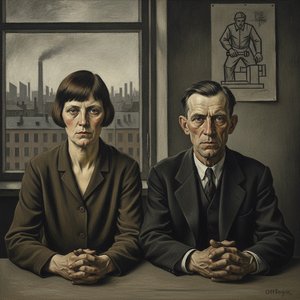
Oil On CanvasWallArtNeue Sachlichkeit
 1919Modern
 133.0 x 153.0 cm
 Kunstsammlung Nordrhein-Westfalen
Hand-painted oil on canvas in your size and frame, made to order by our artists. ( Switch to Print Switch to Digital Image)





























Pick from our preset sizes that match the artwork's original proportions.

You may enter your own dimensions to fit a specific frame or space. If your selected size does not match the original image's proportions, we will either crop the artwork or extend the painting with additional hand-painted elements. A digital mockup will be sent for your approval before production begins.
Please note that the on-screen preview does not reflect the actual cropping or extension. Only the mockup will accurately show the final composition.
While custom sizes are available, we recommend selecting a dimension from the predefined list to preserve the original proportions.
Worldwide Delivery () in 3/4 weeks instead of standard 5 weeks. (12 October). No compromise on quality.
The Night
Reproduction Size
The contrast level of "The Night" by Max Beckmann is statement.
The creation of "The Night" by Max Beckmann is dated 1919.
"The Night" was made in oil on canvas and measures 133 x 153 cm in its original form.
"The Night" by Max Beckmann is placed in the Neue Sachlichkeit movement, within the Modern era of its creator.
The earthy colors of "The Night" by Max Beckmann match its recommended space: a living room.
"The Night" by Max Beckmann is classified as iconic and belongs to the Neue Sachlichkeit movement.
"The Night" was created by Max Beckmann in the Neue Sachlichkeit style. Artist and movement identify the work's tradition.
The X-Ray view of "The Night" by Max Beckmann is on the artwork's X-Ray page: an interactive examination of the image through eleven optical layers.


1884 - 1950 , Germany
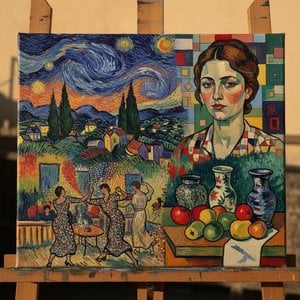
Unveil the profound revolution of Post-Impressionism. Explore how masters like Van Gogh and Cézanne utilized bold colors and emotional depth to transcend mere representation, laying the foundation for modern art. A sophisticated journey through history's most emotive brushstrokes.

Explore the transformative era of Post-Impressionism. Discover how masters like Cézanne and Matisse revolutionized color and form, moving beyond Impressionism to shape modern art history through structural innovation and expressive emotion.

Master the nuances of Impressionism vs. Post-Impressionism with our expert guide. Explore the revolutionary shift from Monet’s fleeting light to Van Gogh’s emotional depth. Discover how these iconic movements continue to inspire fine art collectors and modern interiors today.

Explore the vibrant evolution of Post-Impressionism. From Seurat's revolutionary Pointillism to the emotional depth of masters, discover how this movement redefined modern art history through color, structure, and unparalleled creative expression.

 Preview
 Send
Send Share
Share
 Details
 Guide
Guide

 Download
 Similars
 X-Ray
X-Ray Diaporama
 Stats
Stats Read More









 Glass option is only available in size under 110 CM