The Soul of the Room: Understanding the Emotional Resonance of Impressionism
 Capturing the Soul: The Most Emotionally Moving Impressionist and Post-Impressionist Masterpieces
The Luminous Revolution: How Impressionism Redefined the Art of Seeing Impressionistic Landscapes: 10 Masterpieces That Changed Art & Decor Introduction To gaze upon these ten canvases is to step directly into a world transformed by light, color, and...
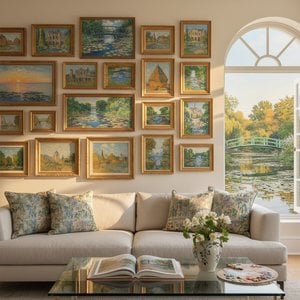
To step into a room adorned with Impressionist mastery is to abandon the rigid, shadowed certainties of the modern world and embrace a reality that breathes. For those of us who have spent decades finding solace in the flickering light of a Monet or the sun-drenched meadows of Giverny, we know that art is never merely decorative; it is a silent conversation with history and the self. The Impressionist movement, born from a radical rebellion against the somlamber dictates of the Académie des Beaux-Arts, sought to capture the ephemeral—that breathless moment before the light shifts and the shadows lengthen. When selecting a piece for your home, one must first ask what kind of conversation you wish to have with your walls. Do you seek the soft, luminous tranquility of a summer afternoon, or do you crave the rhythmic, pulsing energy of a soul in motion? The choice of an Impressionist canvas is, at its heart, an act of emotional curation, setting the very pulse of your living space.
Seeking Harmony: Using Soft Palettes and Light to Create Serenity
There is a profound peace to be found in the pursuit of visual harmony, where the art and the architecture exist in a seamless, luminous embrace. This is most beautifully achieved through works that emphasize the delicate interplay of light and atmosphere. Consider the intimate domesticity found in Jean-Édouard Vuillard’s
Sunlit Interior: Madame Vuillard's Room at La Closerie des Genêts. Here, the light is not a harsh intruder but a diffused, warm glow that bathes the personal space in a sense of quiet rhythm and memory. When decorating a sanctuary intended for contemplation, one should look for paintings that utilize a soft, broken palette—where colors are juxtaposed to allow the eye to mix them optically, creating a shimmering, ethereal effect. By choosing works where the light feels as though it is dancing across the surface, you can transform a room into a haven of stillness, much like the tranquil, sun-soaked landscapes of Renoir’s Provençal scenes, which offer a sense of contentment and respite from the world's complexities.
The Power of Contrast: Bold Post-Impressionist Textures for Dynamic Interiors
 Beyond Impressionism: How Post-Impressionist Texture and Emotion Transform Modern Interiors
The Soul of the Canvas: Moving from Impressionist Light to Post-Impressionist Emotion Post-Impressionism Post-Impressionism (also spelled Postimpressionism) was a predominantly French art movement which developed roughly between 1886 and 1905, from t...
For the collector who finds beauty in movement and intensity, the transition from Impressionism to Post-Impressionism offers a breathtakingly different emotional landscape. While the Impressionists captured the eye's first glance, the Post-Impressionists sought to capture the heart’s deepest vibrations. If your interior design leans toward the contemporary or the bold, you might find that harmony is less compelling than a purposeful contrast. Imagine the vibrant, somewhat chaotic energy of Wassily Kandinsky’s
Interior (My dining room), where bold colors and dynamic brushwork create a space that pulsative with life. Moving into this realm means embracing texture as a decorative element; the thick, tactile application of paint, known as impasto, adds a physical depth to a room that flat prints simply cannot replicate. A piece with heavy, expressive strokes can act as a magnificent centerpiece, providing a focal point that challenges the eye and injects a sense of psychological resonance and structural permanence into even the most minimalist of modern settings.
A Symphony of Color: Utilizing Complementary Hues to Anchor Your Decor
 Complementary colors
Complementary colors are pairs of colors which, when combined or mixed, cancel each other out (lose chroma) by producing a grayscale color like white or black. When two highly chromatic complementary colors are placed next to each other, they create ...
Color is the language through which an artist speaks directly to our subconscious, and mastering its use is essential for any connoisseur of fine art. To create a sophisticated interior, one must understand the delicate balance between complementary and analogous color schemes. Using complementary colors—those opposites on the color wheel, such as blue and orange or red and green—can create a striking, high-energy vibration that commands attention. This technique was often used by the masters to make certain elements of a landscape pop against the sky or foliage. Conversely, for a more cohesive and calming atmosphere, one might choose works that rely on a more unified palette, where colors flow into one another with subtle gradations. Whether you are looking to anchor a room with a bold splash of primary pigment or seeking the nuanced, tonal richness of a twilight scene, the strategic use of color in your chosen artwork can bridge the gap between the physical furniture and the ethereal spirit of the home.
Curating a Legacy: Selecting Masterpieces that Reflect Personal History
 Me In My Brown Denim Personal Panel
Andrea Zittel's "Me In My Brown Denim Personal Panel" (1998) captures a quiet moment, inviting reflection on identity and space through minimalist gouache & graphite art.
Art is perhaps the most enduring way to preserve a legacy, turning a house into a sanctuary of personal history. For many of us, our passion for these movements is intertwined with our own life journeys—the memories of travels, the appreciation of nature, or the quiet moments of a life well-lived. Selecting a piece should be an introspective process. Perhaps you are drawn to the maritime strength of a seascape that reminds you of a childhood summer, or perhaps a custom portrait, reimagined in the expressive style of Van Gogh, allows you to immortalize a loved one within the grand tradition of art history. This is the true luxury of collecting: the ability to "remix" history to reflect your own narrative. By choosing works that resonate with your personal milestones, you ensure that your collection is not just a display of aesthetic taste, but a profound reflection of your soul’s journey through time.
From Vision to Canvas: Tailoring Impressionist Art to Your Unique Architectural Space
 Mastering the Focal Point: A Connoisseur's Guide to Choosing Impressionist Art for Your Room's Centerpiece
The Soul of the Room: Understanding the Emotional Power of an Impressionist Centerpiece Modern Soul, Timeless Light: Bringing the Magic of Impressionist Masterpieces into Contemporary Interiors The Architecture of Light: How Impressionist Brushstroke...
The final step in the curation process is the physical integration of the masterpiece into your architectural environment. A great painting must respect the scale and the light of its surroundings. For wide, expansive walls or grand staircases, one might consider the modern trend of multi-panel group sets, where a single iconic landscape is split across three or five panels to create a sweeping, cinematic effect. For more intimate corners, a smaller, framed work can provide a window into another world without overwhelming the space. At WahooArt.com, we understand that every wall tells a story, which is why we offer professional digital mockups to help you visualize how a specific texture or color palette will interact with your existing decor. Whether it is a large-format mural for a hotel or a bespoke reproduction of a cherished memory, the goal is always the same: to create a seamless union between the artist's vision and your home's unique atmosphere, ensuring that every brushstroke contributes to a life lived in the light.



 Sunlit Interior: Madame Vuillard's Room at La Closerie des Genêts