Impressionist masters, in order

100 Famous Impressionist Painters: The Definitive Ranking

The most famous Impressionist painter is Vincent van Gogh (1853–1890), known for Starry Night (New York, MoMA) and The Potato Eaters. Next come Claude Monet, Paul Cézanne, Paul Gauguin and Édouard Manet. This ranking of the 100 most famous Impressionist painters runs from Charles-François Daubigny (born 1817) to Amrita Sher-Gil (born 1913), across 22 countries.

How this list is ranked. Artists whose works our catalogue files under Impressionist, in the order of our fame ranking of artists. Artists without a Wikidata identifier born after 1955 are left out until verified. The Wikipedia figure next to each name is the number of our 32 languages in which Wikipedia has an article on the artist.

  1. Starry Night (New York, MoMA) by Vincent van Gogh1Vincent van Gogh
  2. Impression, Sunrise by Claude Monet2Claude Monet
  3. The bathers Sun by Paul Cézanne3Paul Cézanne

The essentials

Impressionist at a glance

  • 100Artists
  • 1817–1913Years of birth
  • 22Countries of birth
  • 14Women
  • 38,001Works in our catalogue
Cities with most births
Paris (10), London (3), Zundert (2), Saint Petersburg (2)

Ranked, with their masterpieces

The ranking: 100 Impressionist Painters and their key works

1of 100

Vincent van Gogh

Born in Zundert Wikipedia in 32/32 languages

Vincent van Gogh

The city brought him into contact with the Impressionist and Post-Impressionist movements, shifting his focus away from the dark, heavy tones of his earlier years. He spent time absorbing the techniques of masters like Monet, Renoir, and Pissarro. His approach to color and form helped clear a path for Expressionism, moving art away from the need to mirror the physical world.

Where to see To see the physical traces of his brushwork, one can travel to several specific collections.

Key works · The 100 most famous works

2of 100

Claude Monet

French Born in Paris Impressionism Wikipedia in 32/32 languages

Claude Monet

As a founder of French Impressionism, Claude Monet acted as a key precursor to modernism. This pursuit was defined by plein air landscape painting, a method that required him to work directly on large-scale canvases out of doors. While studying under Charles Gleyre at the Académie Suisse, he was a classmate of Auguste Renoir, alongside Frédéric Bazille and Camille Pissarro.

Pupil of Eugène Louis Boudin #21, Johan Jongkind #27

Key works · The 100 most famous works

3of 100

Paul Cézanne

French Born in Aix-en-Provence Post-Impressionism Wikipedia in 32/32 languages

Paul Cézanne

This formal grounding continued at the École de dessin d'Aix-en-Provence, located within the Musée Granet, where he refined his ability to translate three-dimensional forms onto a flat surface. The rejection from the École des Beaux-Arts was a setback, yet it led him to the Académie Suisse, where he could continue his development away from the rigid constraints of the academy. Pablo Picasso and Georges Braque drew heavily from this method, finding in his work a way to organize space through volume rather than mere light.

Where to see The physical presence of his vision remains scattered across several major institutions, allowing the viewer to trace his evolution from the dark, expressive brushwork of his youth to the structured clarity of his later years.

Key works · The 100 most famous works

4of 100

Paul Gauguin

French Born in Paris ['Post-Impressionist', 'Symbolist', 'Synthetism', 'Primitivism'] Wikipedia in 32/32 languages

Paul Gauguin

During his time in Brittany, Gauguin began to move away from the immediate concerns of the Impressionists. While he had been influenced by the works of Camille Pissarro and Paul Cézanne, he found himself increasingly drawn toward the more structured and symbolic approaches of the Synthetists and Symbolist groups. As a leading figure of 19th-century Post-Impressionism, Gauguin altered the trajectory of Western painting by moving away from the mere observation of light.

Where to see In Paris, the Musée d'Orsay preserves a significant portion of his output, offering a glimpse into the evolution of his color and form.

Pupil of Camille Pissarro #11

Key works · The 100 most famous works

5of 100

Édouard Manet

French Born in former 10th arrondissement of Paris Realism, Impressionism, Avant-garde Wikipedia in 31/32 languages

Édouard Manet

The surface of a canvas reveals a deliberate departure from the polished, invisible finish required by the Salon. This approach prioritizes the physical reality of the paint itself. He looked toward the dramatic light of Caravaggio and the fluid, dark tones of Velázquez to find a way forward.

Teacher of Eva Gonzalès #50

Key works · The 100 most famous works

6of 100

Edgar Degas

French Born in Paris Realism Wikipedia in 32/32 languages

Edgar Degas

He prefers the term "Realist," a choice that dictates his entire approach to the canvas. Light in a Degas composition is rarely natural. The shift in late 19th-century art finds a central figure in Degas.

Where to see The traces of Degas's observation remain scattered across major institutions, preserved in the quiet halls of Paris and beyond.

Key works · The 100 most famous works

7of 100

Pierre-Auguste Renoir

French Born in Limoges Impressionism Wikipedia in 32/32 languages

Pierre-Auguste Renoir

His early years were defined by a preoccupation with the way light interacts with the physical world. By employing broken brushstrokes, he successfully mimicked the effect of sunlight filtering through leaves, creating a sense of movement across the canvas.

Where to see The distribution of his canvases across the globe reflects the widespread reach of his influence.

Key works · The 100 most famous works

8of 100

Georges Seurat

French Born in former 5th arrondissement of Paris ['Neo-Impressionism', 'Post-Impressionism', 'Pointillism', 'Divisionism', 'Chromoluminarism'] Wikipedia in 30/32 languages

Georges Seurat

Seurat replaced the spontaneous, intuitive brushwork of his predecessors with a calculated, systematic approach to light. This was not a decorative choice but a functional one. A Sunday Afternoon on the Island of La Grande Jatte.

Key works · The 100 most famous works

9of 100

Berthe Morisot

French Born in Bourges Impressionism Wikipedia in 30/32 languages

Berthe Morisot

Her father, Edmé Tiburce Morisot, held the position of prefect of the department of Cher. Her mother, Marie-Joseph-Cornélie Thomas, brought a connection to the Rococo tradition as the great-niece of Jean-Honoré Fragonard.

Where to see To see her brushwork in person, one might start in Paris.

Key works · The 100 most famous works

10of 100

Henri De Toulouse-Lautrec

French Born in Albi Post-Impressionism Wikipedia in 31/32 languages

Henri De Toulouse-Lautrec

This mastery of line was often paired with a flattened perspective and bold compositions, a stylistic choice heavily influenced by the aesthetic of Japanese woodblock prints. By rejecting traditional depth, he achieved a directness that mirrored the immediacy of the Parisian nightlife he inhabited. He occupies a central position in the Post- Impressionist movement, situated alongside figures such as Cézanne, Van Gogh, Gauguin, and Seurat.

Where to see The Musée Toulouse-Lautrec, housed within the Palais de la Berbie, maintains the most significant collection, containing over 1000 works that trace his evolution from an aristocratic youth to a chronicler of the Parisian night.

Key works · The 100 most famous works

11of 100

Camille Pissarro

Danish-French Born in Charlotte Amalie ['Impressionism', 'Neo-Impressionism', 'Post-Impressionism'] Wikipedia in 31/32 languages

Camille Pissarro

The transition from academic tradition to the open air marks a fundamental shift in his approach. This curiosity extends into his later years when he engages with Neo-Impressionism. Without his stabilizing presence and willingness to experiment—even venturing into the pointillist techniques of Neo-Impressionism —the development of Post-Impressionism might have taken a different shape.

Where to see The weight of Pissarro's influence is felt most heavily in Paris.

Teacher of Paul Gauguin #4

Key works · The 100 most famous works

12of 100

Alfred Sisley

British Born in former 4th arrondissement of Paris Impressionism Wikipedia in 31/32 languages

Alfred Sisley

This devotion to the immediate, lived experience of nature made him perhaps the most consistent of the Impressionists in his method. His life was deeply rooted in the French countryside, even though he held British citizenship. He acted as a vital link between the Barbizon school, with its grounded realism, and the full flowering of Impressionism.

Where to see In Paris, his presence is felt strongly within the Musée d'Orsay, which holds a significant number of his canvases.

Key works · The 100 most famous works

13of 100

John Singer Sargent

American Born in Florence Impressionism Wikipedia in 27/32 languages

John Singer Sargent

The unveiling of Madame X (Portrait of Madame Pierre Gautreau) at the 1884 Salon ignited a scandal that threatened his burgeoning career. This scandal eventually forced him to leave Paris and return to England, seeking a more receptive audience for his talents. By the time of his death on April 15, 1925, the scope of Sargent's output had reached a vast scale, encompassing roughly 900 oil paintings and over 2,000 watercolors.

Key works · The 100 most famous works

14of 100

Paul Signac

French Born in Paris Neo-Impressionism, Pointillism Wikipedia in 29/32 languages

Paul Signac

He moved away from the traditional method of mixing pigments on a palette, which he believed could dull the true intensity of color. In 1899, he articulated these complex theories in his writing, From Eugène Delacroix to Neo-Impressionism. The ripples of Signac’s experiments with light and color reached far beyond the quiet harbors of the Mediterranean.

Where to see The Musée d'Orsay holds nine of his works, offering a significant gathering of his vision.

Key works · The 100 most famous works

15of 100

Pierre Bonnard

French Born in Fontenay-aux-Roses Post-Impressionism, Intimism, Les Nabis Wikipedia in 27/32 languages

Pierre Bonnard

He became a founding member of Les Nabis, a group of artists who sought to move beyond mere representation. He was a leading figure in the transition from Impressionism to Modernism, navigating the space between the fleeting light of the previous generation and the more structured, subjective explorations of the new century. While his early years were defined by his membership in Les Nabis alongside Edouard Vuillard and Paul Serusier, his work eventually moved beyond the group's specific boundaries.

Where to see The physical presence of Bonnard’s vision remains scattered across several major institutions, allowing his specific approach to light and domesticity to be studied in various contexts.

Key works · The 100 most famous works

16of 100

Mary Cassatt

American Born in Allegheny Impressionism Wikipedia in 32/32 languages

Mary Cassatt

The move shifts her focus from the Pennsylvania Academy of the Fine Arts toward the rigorous academic traditions of France. She travels through Spain, Belgium, and Holland, moving between galleries and studios to study and copy the works of Velázquez, Rubens, and Hals. She actively encourages American collectors to acquire Impressionist works, bridging the gap between European innovation and American institutions.

Key works · The 100 most famous works

17of 100

Émile Bernard

Born in Lille Wikipedia in 28/32 languages

Émile Bernard

Key Relationship: A pivotal moment came in August 1886 when he met Paul Gauguin in Pont-Aven. He also associated with Vincent van Gogh, forming part of the “School of Petit-Boulevard” alongside Anquetin and Toulouse-Lautrec.

Key works · The 100 most famous works

18of 100

Frédéric Bazille

French Born in Montpellier Impressionism Wikipedia in 28/32 languages

Frédéric Bazille

Bazille's artistic style, though developing rapidly, possessed a unique character within the broader Impressionist aesthetic. He was deeply influenced by Eugène Delacroix, whose vibrant use of color resonated with his own artistic sensibilities, yet he moved beyond academic conventions to embrace a more modern sensibility. The blossoming career of Jean Frédéric Bazille was brutally interrupted by the Franco-Prussian War in 1870.

Key works · The 100 most famous works

19of 100

Gustave Caillebotte

French Born in Paris Realism and Impressionism Wikipedia in 26/32 languages

Gustave Caillebotte

Caillebotte’s approach to the canvas was defined by a refusal to adopt the loose, spontaneous brushwork favored by many of his Impressionist contemporaries. His technique often felt closer to the heavy, grounded depictions of Courbet or Millet than the atmospheric experiments of Monet or Morisot. A first comprehensive international retrospective in 1994–1995 finally solidified this standing, presenting his vision to a global audience on a scale that matched his historical importance.

Where to see The Musée d'Orsay holds a substantial portion of his output, including the large-scale Boating Party and the gritty, realistic The Floor Scrapers.

Key works · The 100 most famous works

20of 100

Joaquín Sorolla

Spanish Born in Valencia Luminism, Impressionism, Social Realism Wikipedia in 27/32 languages

Joaquín Sorolla

Sorolla had a way of working that felt as restless and alive as the Mediterranean itself. This commitment to working in the open air allowed him to confront the shifting elements head-on. The Return from Fishing; Hauling the Boat (1894).

Where to see For those wishing to walk through the spaces that shaped his life, the Museo Sorolla in Madrid offers a rare glimpse into his private world.

Key works · The 100 most famous works

21of 100

Eugène Louis Boudin

French Born in Honfleur Precursor to Impressionism Wikipedia in 26/32 languages

Eugène Louis Boudin

Born on 12 July 1824 in the port town of Honfleur, Normandy, France, Eugène Louis Boudin was a child of the sea. His formal path toward painting became clear when he earned a scholarship in 1850, which allowed him to leave Normandy for Paris. A significant shift in his direction occurred when he met the Dutch painter Johan Jongkind.

Where to see In Paris, the Musée d’Orsay preserves several of his canvases, allowing viewers to stand before the very brushstrokes that once inspired a generation of painters.

Key works · The 100 most famous works

22of 100

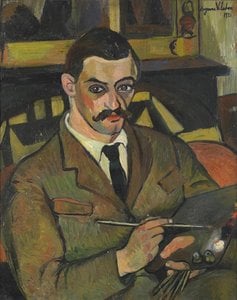
Suzanne Valadon

French Born in Bessines-sur-Gartempe Post-Impressionism Wikipedia in 27/32 languages

Suzanne Valadon

This period of modeling proved pivotal; Valadon wasn’t simply a passive subject but an active observer, dissecting the artistic gaze and internalizing its principles. She began to draw prolifically, initially focusing on scenes from her everyday life —her mother, her son Maurice Utrillo (whose paternity remains uncertain, though Miguel Utrillo later acknowledged him), and intimate domestic settings. In 1894, she became the first woman painter admitted to the prestigious Société Nationale des Beaux-Arts, a significant milestone in breaking down barriers for female artists.

Teacher of Maurice Utrillo #28

Key works · The 100 most famous works

23of 100

Maurice Denis

French Born in Granville Nabis, Symbolism Wikipedia in 26/32 languages

Maurice Denis

Throughout his career, Denis’s style underwent a fascinating evolution. Initially inspired by the vibrant colors and flattened forms of Gauguin and Japanese prints, he later turned towards the more structured compositions of Paul Cézanne, seeking a new form of classicism rooted in modern sensibilities. He was also a prolific writer and art critic, articulating his aesthetic theories in numerous essays and articles.

Key works · The 100 most famous works

24of 100

Édouard Vuillard

French Born in Cuiseaux Les Nabis, Intimism Wikipedia in 23/32 languages

Édouard Vuillard

Jean-Édouard Vuillard was born on 11 November 1868 in Cuiseaux, France. In 1885, he began taking courses at the Académie Julian, and he frequently frequented the studios of William-Adolphe Bouguereau and Robert-Fleury to refine his technique. As a pioneer of modernism, Jean-Édouard Vuillard helped dismantle the rigid boundaries of academic tradition.

Where to see The quiet, patterned interiors that defined his career are preserved in several major international collections.

Key works · The 100 most famous works

25of 100

Amrita Sher-Gil

Hungarian-Indian Born in Budapest Modern Indian art, Avant-garde Wikipedia in 20/32 languages

Amrita Sher-Gil

Amrita Sher-Gil’s style is instantly recognizable for its bold use of color, simplified forms, and expressive figures. She didn’t merely depict what she saw; she imbued her paintings with emotion, creating works that are both visually stunning and deeply moving. She is rightfully regarded as a pioneer of modern Indian painting, bridging Western artistic techniques with indigenous traditions and paving the way for future generations of artists.

Key works · The 100 most famous works

26of 100

Charles-François Daubigny

French Born in Paris Barbizon School, Impressionism precursor Wikipedia in 28/32 languages

Charles-François Daubigny

Charles-François Daubigny was born in Paris in 1817. In 1835, a small scholarship allowed him to leave Paris for Italy. His way of seeing the river and the sky left a mark on Claude Monet, who encountered his work and was moved by it.

Where to see Walking through the Musée d'Orsay in Paris, one finds much of his output.

Key works · The 100 most famous works

27of 100

Johan Jongkind

Dutch Born in Lattrop Impressionism forerunner Wikipedia in 19/32 languages

Johan Jongkind

He quickly gained recognition, exhibiting at the Salon as early as 1848, earning praise from influential critics like Charles Baudelaire and Émile Zola. Despite these struggles, he continued to paint prolifically, focusing on scenes of the Seine River, the bustling Parisian streets, and the atmospheric nuances of the surrounding countryside. His work can be found in prominent museums such as the Van Gogh Museum in Amsterdam and the Musée d'Orsay in Paris, testaments to his enduring artistic merit.

Key works · The 100 most famous works

28of 100

Maurice Utrillo

French Born in 18th arrondissement of Paris Post-Impressionism, School of Paris Wikipedia in 25/32 languages

Maurice Utrillo

Around 1909, Utrillo entered a distinctive phase of his work known as the "White Period." During these years, his approach to the canvas became deeply physical. This method allowed him to capture the weathered walls and timeworn facades of the Montmartre streets he knew so well. His presence in major international collections, such as the Hermitage Museum and the Musée d'Orsay, confirms the lasting importance of his perspective on the built environment.

Where to see To experience the quiet, textured streets of Montmartre through his eyes, one can travel to several major institutions.

Pupil of Suzanne Valadon #22

Key works · The 100 most famous works

29of 100

Anders Zorn

Swedish Born in Mora Parish Impressionism Wikipedia in 28/32 languages

Anders Zorn

While Zorn’s style is often categorized as Impressionistic, it was far from a simple imitation of French trends. His time spent with artists like Albert Edelfelt in Paris exposed him to new ideas and techniques, but he always remained true to his own artistic instincts. The luminosity of Spanish masters like Velázquez resonated in his handling of light and shadow, while the directness and realism of Scandinavian naturalism informed his approach to subject matter.

Key works · The 100 most famous works

30of 100

Félix Vallotton

Swiss and French Born in Lannes Post-Impressionism, Symbolism, Les Nabis

Félix Vallotton

His style blended elements of Post-Impressionism and Symbolism, often resulting in a look that felt both modern and strangely still. He used brushstrokes characteristic of Neo-Impressionism, layering pigment to create depth and luminosity. This quality made him a major figure within the French avant-garde group Les Nabis, even if he remained a somewhat distinct presence among his peers.

Where to see To encounter the quiet tension of Vallotton’s interiors, one might travel to the Cantonal Museum of Fine Arts in Lausanne, Switzerland, where The Red Room is kept.

Key works · The 100 most famous works

31of 100

Max Liebermann

German Born in Berlin Impressionism Wikipedia in 27/32 languages

Max Liebermann

Liebermann wasn't content to simply paint; he actively championed artistic innovation and independence. Recognizing the stifling constraints imposed by the traditional art establishment, he became a driving force behind the Berlin Secession in 1898, leading this avant-garde group for over a decade. His principled stance against discrimination led to his resignation from the Prussian Academy in 1933, a courageous act that signaled his refusal to compromise his values.

Key works · The 100 most famous works

32of 100

Lovis Corinth

German Born in Gvardeysk Impressionism & Expressionism Wikipedia in 24/32 languages

Lovis Corinth

He didn’t simply adopt the broken color and fleeting light effects of Monet or Renoir; instead, he integrated these elements into his own unique vision, creating a style that blended impressionistic vibrancy with a distinctly German sensibility. A pivotal moment in Corinth’s life – and arguably in his artistic development – was a stroke he suffered in December 1911.

Key works · The 100 most famous works

33of 100

Valentin Serov

Russian Born in Saint Petersburg Impressionism, Art Nouveau Wikipedia in 27/32 languages

Valentin Serov

While he continued to receive commissions from Russia’s aristocracy – portraits of Grand Duke Pavel Alexandrovich, S.M. From 1900 onwards, Serov’s work began to reflect a growing engagement with modernism, though he never fully abandoned his commitment to realism. Serov’s early period is marked by an extraordinary sensitivity to light and atmosphere, evident in works like Girl with Peaches (1887) and Girl Covered by the Sun (1888).

Key works · The 100 most famous works

34of 100

Peder Severin Krøyer

Danish Born in Stavanger Realism, Impressionism Wikipedia in 24/32 languages

Peder Severin Krøyer

While he may not have achieved the same international renown as some of his Impressionist peers, Peder Severin Krøyer remains a towering figure in Scandinavian art.

Key works · The 100 most famous works

35of 100

Giovanni Boldini

Italian Born in Ferrara Impressionism, Belle Époque Wikipedia in 20/32 languages

Giovanni Boldini

He frequently combined short, staccato marks with smooth, flowing legato passages, creating a surface that seemed to vibrate with the movement of his subjects. The physical texture of his work often mirrored the social dynamism of the Belle Époque. This kinetic energy earned him the nickname "Master of Swish," a title that reflected the fluid, gestural nature of his brushwork.

Where to see In Ferrara, Italy, the Museo Giovanni Boldini resides within the Palazzo Massari.

Key works · The 100 most famous works

36of 100

Tom Thomson

Canadian Born in Claremont Canadian Modernism Wikipedia in 18/32 languages

Tom Thomson

Before dedicating himself to art, Thomson explored various trades: he worked at an iron foundry, briefly attended business college, and even ventured west to Seattle where he honed his skills as a commercial artist. However, it was the discovery of Algonquin Park in 1912 that truly ignited Thomson’s artistic passion. Though he died before the formal establishment of the Group of Seven in 1920, Thomson is widely considered an unofficial member – a foundational influence whose artistic vision paved the way for their groundbreaking work.

Key works · The 100 most famous works

37of 100

Winston Churchill

Born in Blenheim Palace Wikipedia in 32/32 languages

Winston Churchill

Born in 1874, Churchill didn’t begin painting until relatively late in life, at the age of forty-one. A chance encounter with Sir John Lavery, who encouraged him to pick up a brush during a holiday in France, ignited a lifelong pursuit that would see him create over 500 canvases. He found inspiration in the countryside estates of friends and family, notably Chartwell, his beloved home in Kent.

Key works · The 100 most famous works

38of 100

Anna Ancher

Danish Born in Skagen Impressionism, Nordic art Wikipedia in 22/32 languages

Anna Ancher

She spent three years at the Vilhelm Kyhn College of Painting in Copenhagen, honing her skills in drawing and developing a distinctive style characterized by sensitive observation and a nuanced understanding of color. This exposure to new techniques and perspectives proved invaluable, yet she always remained true to her Nordic roots. The Anchers’ home in Skagen has been preserved as a museum, Anchers Hus, offering visitors a unique opportunity to step back in time and experience the world that inspired their art.

Key works · The 100 most famous works

39of 100

Jean Béraud

French Born in Saint Petersburg Impressionism Wikipedia in 21/32 languages

Jean Béraud

As the 19th century gave way to the 20th, Béraud’s work remained a steadfast anchor for the aesthetic values of his time. While newer, more radical movements began to deconstruct form entirely, Béraud continued to refine his ability to convey psychological depth through gesture and gaze.

Key works · The 100 most famous works

41of 100

Emily Carr

Canadian Born in Victoria Modernism, Post-Impressionism

Emily Carr

Initially influenced by Post-Impressionism, Carr gradually moved away from conventional techniques, developing a style characterized by bold colors, dynamic brushstrokes, and an almost visceral energy. A pivotal moment in her development came through her encounters with the First Nations communities along the British Columbia coast. Beyond her artistic achievements, Carr was also a gifted writer, chronicling her experiences and observations in the acclaimed autobiography Klee Wyck, which won the Governor General’s Literary Award for non-fiction in 1941.

Key works · The 100 most famous works

42of 100

Childe Hassam

American Born in Dorchester American Impressionism Wikipedia in 15/32 languages

Childe Hassam

His path took him through the United Kingdom, the Netherlands, France, Italy, Switzerland, and Spain. By 1886, his commitment to formalizing his craft led him to Paris for a three-year stint of study. By doing so, he helped establish American Impressionism as a distinct artistic movement, one that was no longer merely a derivative of French practice but a way to interpret the specific light and energy of the United States.

Where to see The physical presence of Hassam’s vision remains scattered across several significant American institutions.

Key works · The 100 most famous works

43of 100

Felix Ziem

French Born in Beaune Barbizon School & Orientalist art Wikipedia in 18/32 languages

Felix Ziem

He stood at the crossroads of several movements, absorbing the naturalism of the Barbizon painters while anticipating the light-centric revolutions of Impressionism. His ability to transport the viewer to a different time and place—whether it be a misty morning on a Dutch river or a sun-soaked afternoon in the Mediterranean—remains undiminished. Born Félix François Georges Philibert Ziem in 1821 in the historic town of Beaune, Burgundy, his early life was marked by a tension between structure and spirit.

Key works · The 100 most famous works

44of 100

Giovanni Segantini

Italian Born in Arco Symbolism, Divisionism Wikipedia in 19/32 languages

Giovanni Segantini

Training at the Brera Academy: Segantini attended classes at the prestigious Brera Academy in Milan, where he encountered influential figures of the Scapigliatura movement. Key Influences: His work was significantly influenced by Anton Mauve and Jean-François Millet, introduced to him through Vittorio Grubicy de Dragon, who became his advisor and dealer.

Key works · The 100 most famous works

45of 100

Paul Sérusier

French Born in Paris Post-Impressionism, Nabis, Synthetism Wikipedia in 21/32 languages

Paul Sérusier

His technical execution relied heavily on Cloisonnism, a style characterized by bold, flat forms separated by dark, heavy outlines. In works like Celtic Tale (1894), this method produces an arresting visual effect through the use of intensified colors.

Where to see It holds The Talisman, the work that defined his early departure from academicism.

Key works · The 100 most famous works

46of 100

Vanessa Bell

British Born in London Bloomsbury Group, Modernism Wikipedia in 17/32 languages

Vanessa Bell

Daughter to Sir Leslie Stephen, a renowned Victorian man of letters, and Julia Prinsep Duckworth, an artist herself with connections to the pre-Raphaelite circle through her mother, Vanessa inherited a rich intellectual and artistic lineage. The Stephen household at 22 Hyde Park Gate became a salon for thinkers and artists, laying the groundwork for the unconventional life Vanessa would embrace. She was also a gifted portraitist, creating insightful portrayals of Virginia Woolf – three in 1912 alone – as well as Aldous Huxley and David Garnett.

Key works · The 100 most famous works

47of 100

Konstantin Korovin

Russian Born in Moscow Impressionism Wikipedia in 23/32 languages

Konstantin Korovin

Korovin's initial academic training provided a solid foundation, but it was a brief sojourn at the Imperial Academy of Arts in St. Finding the academy’s methods stifling and outdated, he returned to Moscow and continued his studies under Vasily Polenov. He continued teaching at the Moscow School of Painting, Sculpture and Architecture from 1909 to 1913, imparting his knowledge and passion to a new generation of artists.

Key works · The 100 most famous works

48of 100

Henri Edmond Cross

French Born in Douai Neo-Impressionism Wikipedia in 21/32 languages

Henri Edmond Cross

However, the Parisian art scene of the 1880s was abuzz with new ideas, and Cross found himself increasingly drawn to the revolutionary principles of Neo-Impressionism —a movement spearheaded by Georges Seurat and Paul Signac. His first individual exhibition at the Galerie Druet in 1905, followed by a retrospective organized by Félix Fénéon at the Galerie Bernheim-Jeune in 1908, cemented his reputation as a leading figure in Neo-Impressionism.

Key works · The 100 most famous works

49of 100

Emile Claus

Belgian Born in Sint-Eloois-Vijve Luminism, Impressionism Wikipedia in 15/32 languages

Emile Claus

Inspired by the vibrant colors and fleeting effects of light championed by Claude Monet, Claus began to experiment with new techniques, gradually shifting away from strict realism towards a more subjective and atmospheric style. This transition was further solidified through his association with other prominent intellectuals and artists of the time, including sculptor Auguste Rodin, writer Émile Zola, and Belgian novelists Cyriel Buysse, Emile Verhaeren, Pol de Mont, and Maurice Maeterlinck.

Key works · The 100 most famous works

50of 100

Eva Gonzalès

French Born in Paris Impressionism Wikipedia in 20/32 languages

Eva Gonzalès

Her painting Une loge aux théâtre italiens (1874), rejected by the Salon jury for its "masculine vigor" – ironically questioning its authenticity as a woman's work – demonstrates a boldness and compositional strength that defied expectations. Maria Deraismes championed Gonzalès for challenging conventional views of female painters, recognizing her contribution to the evolving Parisian art scene. Her paintings, such as Nanny and Baby and Portrait of Jeanne Gonzalès in Profile, continue to captivate viewers with their intimate charm and subtle power, reminding us that the story of Impressionism is richer and more complex than often portrayed.

Pupil of Édouard Manet #5

Key works · The 100 most famous works

51of 100

Bruno Liljefors

Swedish Born in Uppsala Cathedral Assembly Impressionism, Wildlife art Wikipedia in 17/32 languages

Bruno Liljefors

Exposure to diverse artistic currents, particularly in France, ignited a shift towards Impressionism. He found himself drawn to the loose brushwork, vibrant colors, and emphasis on capturing fleeting moments of light that characterized the work of artists like Claude Monet and Pierre-Auguste Renoir. He remains an iconic figure in Swedish art and culture, celebrated for his ability to capture the essence of the natural world with both scientific precision and poetic grace.

Key works · The 100 most famous works

52of 100

William Merritt Chase

American Born in Nineveh American Impressionism Wikipedia in 13/32 languages

William Merritt Chase

Chase’s technical evolution reveals a deliberate shift from the heavy, dark tonalities of his Munich training toward the light-filled clarity of French Impressionism. As a co-founder of the Society of American Painters in Pastel, he demonstrated a sophisticated understanding of the medium's capacity for light and immediacy. This was most evident at the Shinnecock Hills Summer School of Art, which he opened on Long Island in 1891.

Where to see Chase’s presence in major American collections remains substantial, ensuring his technical influence is physically accessible to anyone studying the evolution of American Impressionism.

Key works · The 100 most famous works

53of 100

Armand Guillaumin

French Born in Paris Impressionism Wikipedia in 22/32 languages

Armand Guillaumin

Born Jean-Baptiste Armand Guillaumin on February 16, 1841, in Paris, the man who would become known as Ferdinand Guillaumin spent his early years balancing labor with a quiet interest in drawing. It was within these walls that his path crossed with Paul Cézanne and Camille Pissarro. Guillaumin moved within the core of the Impressionist circle, participating in six of the eight exhibitions held by the Société anonyme des artistes peintres, sculpteurs et graveurs between 1874 and 1886.

Key works · The 100 most famous works

54of 100

Louis Anquetin

French Born in Étrépagny Cloisonnism & Rubensian Style Wikipedia in 19/32 languages

Louis Anquetin

Born in the coastal atmosphere of Etretat, Normandy, in 1861, Louis Émile Anquetin emerged as a singular force within the turbulent landscape of late nineteenth-century French painting. The most revolutionary chapter of Anquetin’s career arrived with the birth of Cloisonnism, a technique he pioneered in collaboration with Émile Bernard. Alongside his contemporary Henri de Toulouse-Lautrec, he navigated the vibrant, often chaotic art circles of Paris, shaped by the mentorship of Fernand Cormon, yet he always maintained a stylistic independence that would eventually redefine the boundaries of modern composition.

Key works · The 100 most famous works

55of 100

Theo van Rysselberghe

Belgian Born in Ghent Neo-Impressionism Wikipedia in 19/32 languages

Theo van Rysselberghe

The true turning point in van Rysselberghe’s artistic development arrived with his encounter with Georges Seurat's A Sunday on La Grande Jatte at the eighth Impressionist exhibition in Paris in 1886. His works are now held in prominent museum collections worldwide, including the Musée du Luxembourg in Paris and the Museum voor Schone Kunsten in Ghent, ensuring that his contribution to the history of art continues to be celebrated and appreciated by generations to come.

Key works · The 100 most famous works

56of 100

Frank Weston Benson

American Born in Salem American Impressionism Wikipedia in 14/32 languages

Frank Weston Benson

He moves between the rigorous academic realism of his training and the loose, bright brushstrokes of American Impressionism. He is a leading figure of the Boston School movement, often translating the energy of leisure activities and wildlife into structured compositions. He does not merely replicate European trends; instead, he adapts the techniques of French Impressionism to forge a distinct, fresh American feeling.

Where to see Benson's canvases reside in various museums and private collections, scattered across the landscape of American art.

Key works · The 100 most famous works

58of 100

Elin Danielson-Gambogi

Finnish Born in Noormarkku Realism and Impressionism Wikipedia in 15/32 languages

Elin Danielson-Gambogi

Eschewing the grand, often detached narratives of mythology or historical epic, she turned her gaze toward the intimate corners of Finnish society. Her canvases serve as windows into domestic interiors and rural landscapes, where the mundane is elevated to the level of high art through her masterful command of color and texture. Born in 1861 in Normarkku, Finland, her artistic identity was deeply rooted in a lineage of creativity.

Key works · The 100 most famous works

59of 100

John Lavery

Irish Born in Belfast Impressionism Wikipedia in 10/32 languages

John Lavery

He was particularly influenced by James McNeill Whistler, adopting a sense of tonal harmony that brought a refined, quiet elegance to his compositions. Rather than following a single school of thought, he found a way to weave together the broken color of Impressionism and the structural sensibilities of Post-Impressionism into a style that was entirely his own. This was most visibly seen in his influence on Irish identity; an allegorical figure of Ireland, which he had painted, appeared on Irish banknotes from 1928 until 1975.

Where to see In London, the National Portrait Gallery holds several of his studies and portraits, capturing the faces of the people who moved through his social circles.

Key works · The 100 most famous works

60of 100

Roger Fry

British Born in London Post-Impressionism Wikipedia in 19/32 languages

Roger Fry

Roger Eliot Fry, a name synonymous with the introduction of modern art to Britain, was far more than simply a painter or critic; he was a cultural catalyst. Though initially directed towards the sciences at Cambridge University – where he engaged with freethinking societies like the Conversazione Society – Fry's true calling lay in the realm of visual expression.

Key works · The 100 most famous works

62of 100

John Fraser

British Realistic Landscape Painting

John Fraser

John Arthur Fraser began his days in London, England, born on January 9th, 1838. His father, a tailor from Portsoy, Scotland, carried the political weight of the Chartist movement into their home, while his maternal grandparents had settled in Stanstead, Lower Canada, years earlier. His paintings of the Rockies, such as Fishing Camp, the Rockies, captured the heavy presence of mountains like Mt.

Key works · The 100 most famous works

63of 100

Tivadar Csontváry Kosztka

Hungarian Born in Sabinov Post-Impressionism, Expressionism Wikipedia in 19/32 languages

Tivadar Csontváry Kosztka

He embarked upon a period of intense preparation, fueled by unwavering self-belief and a relentless pursuit of artistic mastery. However, it wasn't merely technical proficiency that drove him; Csontváry sought something deeper, a unique visual language to express his inner world. He struggled to gain recognition in Hungary, finding greater appreciation among critics in Western Europe, particularly in Paris where he exhibited in 1907.

Key works · The 100 most famous works

64of 100

Marie Bracquemond

French Born in Landunvez Impressionism Wikipedia in 19/32 languages

Marie Bracquemond

Initially painted in an academic style influenced by Ingres. Embraced en plein air painting, capturing fleeting moments and light effects in her garden at Sèvres. Continued painting until her death in 1916, despite declining health.

Key works · The 100 most famous works

65of 100

Maximilien Luce

French Born in Paris Neo-Impressionism, Pointillism Wikipedia in 16/32 languages

Maximilien Luce

Luce's oeuvre is a compelling chronicle of late 19th and early 20th-century France. The Seine River, winding its way through Paris and its surrounding countryside, became a recurring motif in his work—a symbol of both natural beauty and human activity. Maximilien Luce’s contributions to the art world extend beyond his individual paintings.

Key works · The 100 most famous works

66of 100

Olga Boznańska

Polish Born in Kraków Impressionism Wikipedia in 21/32 languages

Olga Boznańska

Her technical repertoire was as diverse as her emotional range, encompassing several key elements of her artistic language: The Use of Tonalism: Rather than relying on high-contrast colors, she utilized a sophisticated range of mid-tones to create atmosphere and depth. Psychological Portraiture: Her subjects often possess an introspective gaze, inviting the viewer into their private emotional landscapes. As a prominent figure within the Young Poland movement, Boznańska played a vital role in elevating Polish art to the international stage during a period of significant national transition.

Key works · The 100 most famous works

67of 100

Willem Witsen

Dutch Born in Amsterdam Amsterdam Impressionism

Willem Witsen

There, he encountered the work of James Abbott McNeill Whistler, an encounter that would profoundly alter his aesthetic sensibilities.

Key works · The 100 most famous works

68of 100

Louise Abbéma

French Born in Étampes Belle Époque, Impressionism Wikipedia in 18/32 languages

Louise Abbéma

Louise Abbéma’s career reflects the evolving role of women in 19th-century art. In recent decades, a renewed interest in the contributions of women artists has led to a reevaluation of Abbéma’s work.

Key works · The 100 most famous works

70of 100

Achille Laugé

French Neo-Impressionism

Achille Laugé

However, it’s clear that he was deeply affected by the prevailing artistic currents of late 19th-century France. Artists like Camille Corot and Jean-François Millet, who focused on rural life and landscapes, likely served as inspiration for Lauge’s subject matter and approach to painting. The burgeoning Impressionist movement also left its mark, though Lauge never fully embraced the radical techniques of Monet or Renoir.

Key works · The 100 most famous works

73of 100

Jacques-Émile Blanche

French Born in 16th arrondissement of Paris Impressionism Wikipedia in 13/32 languages

Jacques-Émile Blanche

Blanche rejects the meticulous realism of academic tradition. Instead, he prioritizes the transmission of emotion and atmosphere over the pursuit of precise detail. These gatherings bring together a constellation of celebrities, including figures like Hector Berlioz and Camille Corot.

Where to see His presence in the art world persists through the physical remains of his canvases, held in various public institutions across Europe.

Key works · The 100 most famous works

74of 100

Hendrik Willem Mesdag

Dutch Born in Groningen Marine Painting Wikipedia in 14/32 languages

Hendrik Willem Mesdag

In 1880, commissioned by a Belgian company, he embarked on the Herculean task of creating Panorama Mesdag. His generosity toward his homeland was unparalleled; in 1903, he bequeathed his grand residence on Laan van Meerdervoort, along with his extensive collection of paintings, to the Netherlands.

Key works · The 100 most famous works

75of 100

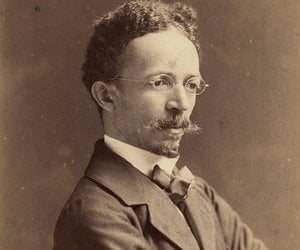
Henry Ossawa Tanner

American Born in Pittsburgh Realism, Symbolism Wikipedia in 12/32 languages

Henry Ossawa Tanner

Paintings such as Christ Walking on the Water, The Resurrection of Lazarus, and The Good Shepherd are not merely depictions of scripture; they are profound meditations on spirituality, rendered with masterful control of light, composition, and emotional nuance. Henry Ossawa Tanner stands as a monumental figure in American art history, not only for his artistic achievements but also for his pioneering role in breaking down racial barriers.

Key works · The 100 most famous works

77of 100

Alfred Émile Léopold Stevens

Alfred Émile Léopold Stevens

Stevens’s early work demonstrated a mastery of conventional naturalistic style, heavily influenced by 17th-century Dutch genre painting. He meticulously studied the works of artists like Gerard ter Borch and Gabriel Metsu, absorbing their techniques for depicting domestic interiors and everyday life.

Key works · The 100 most famous works

78of 100

Cecilia Beaux

American Born in Philadelphia Impressionism, Portraiture Wikipedia in 14/32 languages

Cecilia Beaux

It was during this period that Beaux began to establish herself as a skilled portraitist, winning several Mary Smith Prizes at the Pennsylvania Academy exhibitions between 1885 and 1892 – accolades that signaled her rising talent and recognition within the artistic community.

Key works · The 100 most famous works

79of 100

Fritz von Uhde

German Born in Wolkenburg Impressionism Wikipedia in 15/32 languages

Fritz von Uhde

Born in Wolkenburg, Saxony, Uhde’s familial background instilled within him a deep appreciation for artistic pursuits. His father, a part-time painter himself, and his maternal grandfather, director of the Royal Museums in Dresden, nurtured an environment rich in visual culture. Fritz von Uhde (born Friedrich Hermann Carl Uhde; 22 May 1848 – 25 February 1911) was a German painter of genre and religious subjects.

Key works · The 100 most famous works

80of 100

George Inness

American Born in Newburgh American Impressionism Wikipedia in 14/32 languages

George Inness

His later works became increasingly influenced by the theology of Emanuel Swedenborg, which introduced a deeper layer of spiritualism into his mature compositions. Philosophical Depth: The integration of spiritual and transcendentalist ideas into the very fabric of his landscapes. Throughout a prolific career spanning more than forty years and encompassing over 1,000 paintings, Inness’s oeuvre remains a cornerstone of American art history.

Key works · The 100 most famous works

81of 100

George Hendrik Breitner

Dutch Born in Rotterdam Early 20th Century Realism Wikipedia in 14/32 languages

George Hendrik Breitner

Under the mentorship of Willem Maris, a pivotal figure in the Hague School, Breitner began to master the nuances of tonal harmony and atmospheric perspective. However, his spirit was too restless for the confines of strict academicism; his radical, sometimes brusque behavior even led to his expulsion from the Academy of Visual Arts in 1880. The historical significance of George Hendrik Breitner lies in his ability to bridge the gap between the traditional realism of the Hague School and the burgeoning modernism of the 20th century.

Key works · The 100 most famous works

82of 100

Lilla Cabot Perry

American Born in Boston American Impressionism Wikipedia in 16/32 languages

Lilla Cabot Perry

Key Influences: Claude Monet, Camille Pissarro, Japanese art aesthetics. Notable Paintings: The Red Hat: Exemplifies her use of bold colors and free-form brushstrokes. Museum Holdings: Paintings are featured in prominent collections including the Toledo Museum of Art and Wadsworth Atheneum Museum of Art.

Key works · The 100 most famous works

83of 100

William Henry Holmes

American Born in Harrison County Scientific Illustration Wikipedia in 11/32 languages

William Henry Holmes

A " Renaissance Man" with diverse talents and interests.

Key works · The 100 most famous works

84of 100

Edward Henry Potthast

American Born in Cincinnati Impressionism

Edward Henry Potthast

This exposure to European academic traditions, particularly the influence of artists like Carl Marr, initially manifested in works characterized by subdued colors and dramatic contrasts – a far cry from the luminous palettes he would later embrace. His election to full membership in the National Academy in 1906 solidified his standing as a leading figure in American art.

Key works · The 100 most famous works

86of 100

William Brymner

Canadian Born in Greenock Impressionism & Naturalism

William Brymner

William Brymner, born in Greenock, Scotland in 1855, stands as a pivotal figure in the development of Canadian art —a bridge between the established traditions of academic painting and the burgeoning currents of modernism. Pieces like “Two Girls Reading” (1898) exemplify this early mastery, showcasing his ability to capture fleeting moments and imbue them with quiet emotion.

Key works · The 100 most famous works

87of 100

Janis Rozentāls

Latvian Born in Saldus Impressionism, Art Nouveau Wikipedia in 15/32 languages

Janis Rozentāls

Krause's Elementary School in Saldus and later attended Kuldīga District School, but it was a burning desire for artistic expression that propelled him towards Riga at the age of fifteen. This marked the beginning of formal training, culminating in studies at the prestigious Saint Petersburg Academy of Arts starting in 1888. Janis Rozentāls died on December 26, 1916, in Helsinki, Finland, but was later reburied in Forest Cemetery, Riga, in 1920.

Key works · The 100 most famous works

88of 100

Theodore Robinson

American Born in Irasburg Impressionism Wikipedia in 13/32 languages

Theodore Robinson

Robinson's significance extends beyond his individual paintings; he served as a crucial conduit between the European avant-garde and the burgeoning American art scene. His influence is evident in the work of many artists who visited Giverny, helping to establish an American Impressionist style that was both indebted to French innovations and uniquely its own. Returning to America in 1892, Robinson sought to apply his Impressionist vision to the landscapes of his native country.

Key works · The 100 most famous works

89of 100

Tom Roberts

Australian Born in Dorchester Impressionism Wikipedia in 13/32 languages

Tom Roberts

Beyond these iconic paintings, Roberts also made significant contributions as a portraitist and, in 1903, completed The Big Picture, a monumental work commissioned to commemorate the opening of the first Australian Parliament—a visual record of a nation’s birth.

Key works · The 100 most famous works

90of 100

Jack Butler Yeats

Irish Born in London Expressionism Wikipedia in 14/32 languages

Jack Butler Yeats

Beyond painting, he was a prolific writer, producing novels—including The Careless Flower and The Amaranthers—plays performed at the Abbey Theatre, and insightful essays.

Key works · The 100 most famous works

91of 100

Joos Vincent De Vos

Dutch Born in Zundert Romanesque art

Joos Vincent De Vos

Born in Zundert, Netherlands, in 1853, Joos Vincent de Vos’s early life remains somewhat shrouded in mystery. Notably, De Vos’s artistic development was significantly influenced by the burgeoning interest in natural history illustration during this period, providing him with valuable skills in rendering detail and capturing the essence of his subjects. Furthermore, there’s a discernible connection to the Dutch Golden Age painters like Nicolaes Berchem, whose idyllic landscapes and meticulous rendering of objects share similarities with De Vos’s compositions.

Key works · The 100 most famous works

92of 100

Pekka Halonen

Finnish Born in Lapinlahti National Romanticism Wikipedia in 14/32 languages

Pekka Halonen

While his roots were firmly planted in Finnish soil, Halonen’s artistic horizons expanded far beyond the borders of his birthplace. His arrival in Paris in 1890 marked a pivotal metamorphosis in his style. A cornerstone of the National Romantic era, Halonen possessed a rare ability to capture not just the physical geography of his homeland, but its very spirit.

Key works · The 100 most famous works

93of 100

Duncan Grant

Scottish Born in Aviemore Post-Impressionism Wikipedia in 13/32 languages

Duncan Grant

Duncan James Corrowr Grant, born in 1885 amidst the rugged beauty of Rothiemurchus Forest District in Scotland, embarked on a life that would indelibly mark the landscape of British art. His early years were far from conventional, shaped by his father’s military service and extended periods spent in India and Burma. He was a key member of the Bloomsbury Group alongside Vanessa Bell, Virginia Woolf, and Lytton Strachey.

Key works · The 100 most famous works

94of 100

Moïse Kisling

Polish-French Born in Kraków Post-Impressionism, Expressionism Wikipedia in 19/32 languages

Moïse Kisling

Early works hinted at the structural innovations of Paul Cézanne and the bold chromaticism of André Derain, with subtle Cubist tendencies emerging – as evidenced in pieces like Portrait of Andre Salmon (1912). Large Nude Josan on Red Couch, painted in 1953, stands as a powerful example of his mature style – a sensual masterpiece showcasing vibrant colors and expressive brushwork.

Key works · The 100 most famous works

95of 100

Edward Seago

British Impressionism

Edward Seago

His ability to document the beauty of the English coast and rural life resonated deeply with the British Royal Family. The prestige of being collected by figures such as Queen Elizabeth The Queen Mother and Prince Philip solidified his standing as a premier chronicler of the British landscape. While he was largely a self-taught artist, his path was illuminated by the guidance of luminaries such as Sir Alfred Munnings and Bertram Priestman.

Key works · The 100 most famous works

96of 100

Charles Henry Sims

British Born in Islington Outsider art, Impressionism

Charles Henry Sims

Sims’ early work reflects the prevailing aesthetic tastes of the Edwardian era —refined portraits and idyllic landscapes characterized by delicate brushwork and a harmonious palette. He quickly gained recognition, exhibiting at the Royal Academy from 1894 onwards and becoming a sought-after portraitist among London society. Iris, Sunshine And Wind, and The Bathers are just a few examples of paintings that showcase his evolving style and captivating use of light and color.

Key works · The 100 most famous works

97of 100

Federico Zandomeneghi

Italian Born in Venice Impressionism Wikipedia in 14/32 languages

Federico Zandomeneghi

Works such as At the Café (Femme au bar) offer compelling glimpses into late 19th-century Parisian society, capturing not just the physical appearance of the subjects but also their mood and interactions. The artist’s use of color was often muted and atmospheric, prioritizing mood over precise representation. He found kinship with artists like Telemaco Signorini, Giovanni Fattori, and Giuseppe Abbati, learning to translate the immediacy of outdoor scenes onto canvas.

Key works · The 100 most famous works

98of 100

Max Slevogt

German Born in Landshut Impressionism Wikipedia in 16/32 languages

Max Slevogt

Exposed to the revolutionary ideas championed by masters like Édouard Manet, Slevogt’s vision was propelled toward a bolder approach that prioritized direct observation of the natural world.

Key works · The 100 most famous works

100of 100

Adolphe Joseph Thomas Monticelli

French Born in Marseille Romanticism, Pre-Impressionism Wikipedia in 14/32 languages

Adolphe Joseph Thomas Monticelli

A pivotal moment in Monticelli’s artistic evolution arrived with his encounter with Narcisse Diaz, a member of the Barbizon School, in 1855. Their shared passion for landscape painting led to frequent collaborations in the Fontainebleau Forest, where they painted en plein air, capturing the fleeting effects of light and atmosphere. Paul Cézanne also befriended Monticelli in the 1860s, recognizing the older artist’s unique vision and incorporating elements of his style into his early works.

Key works · The 100 most famous works

The paintings behind the names

Famous Impressionist works and the artists who made them

  1. Starry Night (New York, MoMA) by Vincent van Gogh

    Starry Night (New York, MoMA)

    Vincent van Gogh

    1889 · MOMA - Museum of Modern Art, New York City

  2. Impression, Sunrise by Claude Monet

    Impression, Sunrise

    Claude Monet

    1872 · Musée Marmottan Monet, Paris

  3. The bathers Sun by Paul Cézanne

    The bathers Sun

    Paul Cézanne

  4. Children in the Pasture (also known as Orchard below Bihorel Church) by Paul Gauguin

    Children in the Pasture (also known as Orchard below Bihorel Church)

    Paul Gauguin

    1884 · Thyssen-Bornemisza Museum, Madrid

  5. Olympia by Édouard Manet

    Olympia

    Édouard Manet

    1863 · Musée d'Orsay, Paris

  6. Dancers in Pink by Edgar Degas

    Dancers in Pink

    Edgar Degas

    1885 · Hill-Stead Museum, Farmington

  7. Luncheon of the Boating Party by Pierre-Auguste Renoir

    Luncheon of the Boating Party

    Pierre-Auguste Renoir

    1881 · The Phillips Collection, Washington, D.C.

Through time

A Impressionist timeline in masterpieces

  1. 1851
  2. 1864
  3. 1867
  4. 1872
  5. 1872
  6. 1881
  7. 1882
  8. 1884
  9. 1886
  10. 1887
  11. 1889
  12. 1889
  13. 1893
  14. 1897

In figures

By the numbers

All of them, in order

List of the 100 famous Impressionist painters

  1. 1Vincent van GoghVincent van Gogh1853–1890
  2. 2Claude MonetClaude MonetFrench · 1840–1926
  3. 3Paul CézannePaul CézanneFrench · 1839–1906
  4. 4Paul GauguinPaul GauguinFrench · 1848–1903
  5. 5Édouard ManetÉdouard ManetFrench · 1832–1883
  6. 6Edgar DegasEdgar DegasFrench · 1834–1917
  7. 7Pierre-Auguste RenoirPierre-Auguste RenoirFrench · 1841–1919
  8. 8Georges SeuratGeorges SeuratFrench · 1859–1891
  9. 9Berthe MorisotBerthe MorisotFrench · 1841–1895
  10. 10Henri De Toulouse-LautrecHenri De Toulouse-LautrecFrench · 1864–1901
  11. 11Camille PissarroCamille PissarroDanish-French · 1830–1903
  12. 12Alfred SisleyAlfred SisleyBritish · 1839–1899
  13. 13John Singer SargentJohn Singer SargentAmerican · 1856–1925
  14. 14Paul SignacPaul SignacFrench · 1863–1935
  15. 15Pierre BonnardPierre BonnardFrench · 1867–1947
  16. 16Mary CassattMary CassattAmerican · 1844–1926
  17. 17Émile BernardÉmile Bernard1868–1941
  18. 18Frédéric BazilleFrédéric BazilleFrench · 1841–1870
  19. 19Gustave CaillebotteGustave CaillebotteFrench · 1848–1894
  20. 20Joaquín SorollaJoaquín SorollaSpanish · 1863–1923
  21. 21Eugène Louis BoudinEugène Louis BoudinFrench · 1824–1898
  22. 22Suzanne ValadonSuzanne ValadonFrench · 1865–1938
  23. 23Maurice DenisMaurice DenisFrench · 1870–1943
  24. 24Édouard VuillardÉdouard VuillardFrench · 1868–1940
  25. 25Amrita Sher-GilAmrita Sher-GilHungarian-Indian · 1913–1941
  26. 26Charles-François DaubignyCharles-François DaubignyFrench · 1817–1878
  27. 27Johan JongkindJohan JongkindDutch · 1819–1891
  28. 28Maurice UtrilloMaurice UtrilloFrench · 1883–1955
  29. 29Anders ZornAnders ZornSwedish · 1860–1920
  30. 30Félix VallottonFélix VallottonSwiss and French · 1865–1925
  31. 31Max LiebermannMax LiebermannGerman · 1847–1935
  32. 32Lovis CorinthLovis CorinthGerman · 1858–1925
  33. 33Valentin SerovValentin SerovRussian · 1865–1911
  34. 34Peder Severin KrøyerPeder Severin KrøyerDanish · 1851–1909
  35. 35Giovanni BoldiniGiovanni BoldiniItalian · 1842–1931
  36. 36Tom ThomsonTom ThomsonCanadian · 1877–1917
  37. 37Winston ChurchillWinston Churchill1874–1965
  38. 38Anna AncherAnna AncherDanish · 1859–1935
  39. 39Jean BéraudJean BéraudFrench · 1849–1935
  40. 40Frits ThaulowFrits ThaulowNorwegian · 1847–1906
  41. 41Emily CarrEmily CarrCanadian · 1871–1945
  42. 42Childe HassamChilde HassamAmerican · 1859–1935
  43. 43Felix ZiemFelix ZiemFrench · 1821–1911
  44. 44Giovanni SegantiniGiovanni SegantiniItalian · 1858–1899
  45. 45Paul SérusierPaul SérusierFrench · 1864–1927
  46. 46Vanessa BellVanessa BellBritish · 1879–1961
  47. 47Konstantin KorovinKonstantin KorovinRussian · 1861–1939
  48. 48Henri Edmond CrossHenri Edmond CrossFrench · 1856–1910
  49. 49Emile ClausEmile ClausBelgian · 1849–1924
  50. 50Eva GonzalèsEva GonzalèsFrench · 1849–1883
  51. 51Bruno LiljeforsBruno LiljeforsSwedish · 1860–1939
  52. 52William Merritt ChaseWilliam Merritt ChaseAmerican · 1849–1916
  53. 53Armand GuillauminArmand GuillauminFrench · 1841–1927
  54. 54Louis AnquetinLouis AnquetinFrench · 1861–1932
  55. 55Theo van RysselbergheTheo van RysselbergheBelgian · 1862–1926
  56. 56Frank Weston BensonFrank Weston BensonAmerican · 1862–1951
  57. 57Walter SickertWalter SickertBritish · 1860–1942
  58. 58Elin Danielson-GambogiElin Danielson-GambogiFinnish · 1861–1919
  59. 59John LaveryJohn LaveryIrish · 1856–1941
  60. 60Roger FryRoger FryBritish · 1866–1934
  61. 61Thomas ThompsonThomas ThompsonCanadian · 1877–1917
  62. 62John FraserJohn FraserBritish · 1838–1898
  63. 63Tivadar Csontváry KosztkaTivadar Csontváry KosztkaHungarian · 1853–1919
  64. 64Marie BracquemondMarie BracquemondFrench · 1840–1916
  65. 65Maximilien LuceMaximilien LuceFrench · 1858–1941
  66. 66Olga BoznańskaOlga BoznańskaPolish · 1865–1940
  67. 67Willem WitsenWillem WitsenDutch · 1860–1923
  68. 68Louise AbbémaLouise AbbémaFrench · 1853–1927
  69. 69Richard Edward MillerRichard Edward MillerAmerican · 1875–1943
  70. 70Achille LaugéAchille LaugéFrench · 1861–1944
  71. 71John Peter RussellJohn Peter RussellAustralian · 1858–1930
  72. 72Henry Scott TukeHenry Scott TukeEnglish · 1858–1929
  73. 73Jacques-Émile BlancheJacques-Émile BlancheFrench · 1861–1942
  74. 74Hendrik Willem MesdagHendrik Willem MesdagDutch · 1831–1915
  75. 75Henry Ossawa TannerHenry Ossawa TannerAmerican · 1859–1937
  76. 76Willard MetcalfWillard MetcalfAmerican · 1858–1925
  77. 77Alfred Émile Léopold StevensAlfred Émile Léopold Stevens1823–1906
  78. 78Cecilia BeauxCecilia BeauxAmerican · 1855–1942
  79. 79Fritz von UhdeFritz von UhdeGerman · 1848–1911
  80. 80George InnessGeorge InnessAmerican · 1825–1894
  81. 81George Hendrik BreitnerGeorge Hendrik BreitnerDutch · 1857–1923
  82. 82Lilla Cabot PerryLilla Cabot PerryAmerican · 1848–1933
  83. 83William Henry HolmesWilliam Henry HolmesAmerican · 1846–1933
  84. 84Edward Henry PotthastEdward Henry PotthastAmerican · 1857–1927
  85. 85Luigi LoirLuigi LoirFrench · 1845–1916
  86. 86William BrymnerWilliam BrymnerCanadian · 1855–1925
  87. 87Janis RozentālsJanis RozentālsLatvian · 1866–1916
  88. 88Theodore RobinsonTheodore RobinsonAmerican · 1852–1896
  89. 89Tom RobertsTom RobertsAustralian · 1856–1931
  90. 90Jack Butler YeatsJack Butler YeatsIrish · 1871–1957
  91. 91Joos Vincent De VosJoos Vincent De VosDutch · 1853–1890
  92. 92Pekka HalonenPekka HalonenFinnish · 1865–1933
  93. 93Duncan GrantDuncan GrantScottish · 1885–1978
  94. 94Moïse KislingMoïse KislingPolish-French · 1891–1953
  95. 95Edward SeagoEdward SeagoBritish · 1910–1974
  96. 96Charles Henry SimsCharles Henry SimsBritish · 1873–1928
  97. 97Federico ZandomeneghiFederico ZandomeneghiItalian · 1841–1917
  98. 98Max SlevogtMax SlevogtGerman · 1868–1932
  99. 99Albert LebourgAlbert LebourgFrench · 1849–1928
  100. 100Adolphe Joseph Thomas MonticelliAdolphe Joseph Thomas MonticelliFrench · 1824–1886

Your questions, answered

Frequently asked questions

Keep reading

Further reading on WahooArt.com

Other movements

Famous artists of other movements

Other periods

Famous artists of other periods

Famous paintings

Famous masterpieces by movement

More rankings

Explore more