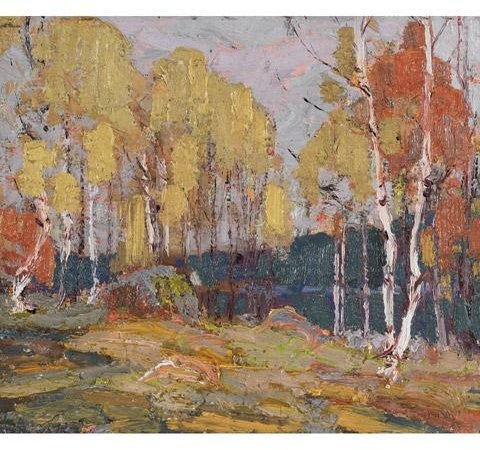
Thomas Thompson, 1877 – 1917

Thomas Thompson Paintings: The 100 Most Famous Works, Ranked

Thomas Thompson's most famous painting is Trees And Stump Above A Shore. With Landscape With Storm Clouds (1913) and Snow Pillars In The Sky, it completes the three works everyone recognises. Our catalogue lists 112 works by Thomas Thompson; the 100 below are the ones the world looks at most, each with its year, the museum that holds it and why it matters.

Ranked by our popularity score, which combines the searches, visits and orders for each work. Updated October 2026. Every masterpiece on this page can be ordered as a museum-quality, hand-painted oil reproduction or a fine art print, at the size you choose.

Portrait of Thomas Thompson
Thomas Thompson · 1877 – 1917
Born · died
1877 – 1917, Claremont
Movement
Impressionism
Works in our catalogue
112
Most famous
Trees And Stump Above A Shore
Most works at
National Gallery of Canada

The 10 most famous Thomas Thompson paintings

Trees And Stump Above A Shore by Thomas Thompson
1

Trees And Stump Above A Shore

Oil On Board

In this work, titled Trees And Stump Above A Shore, we encounter a quiet moment from the Canadian wilderness. The artist, Thomas Thompson, captured this scene in 1916, a period when his connection to the rugged landscapes of the north was deeply established. It is a piece that reflects a specific, intimate observation of the natural world.

Landscape With Storm Clouds (1913) by Thomas Thompson
2

Landscape With Storm Clouds

1913

Thomas Thompson's Landscape with Storm Clouds, painted in 1913, is a captivating piece that embodies the dramatic and powerful essence of nature. This oil painting, available as a handmade reproduction on AllPaintingsStore.com, offers a unique blend of serenity and turmoil, making it a fascinating subject for art enthusiasts. The Composition The painting features a serene landscape with storm clouds looming in the sky above a body of water. The background…

Thomas Thompson, paintings 11 to 100

Thomas Thompson's paintings by period

The subjects Thomas Thompson painted most

The four subjects that return most often among these masterpieces, with the finest example of each.

Where to see Thomas Thompson's paintings

The 2 museums that hold the most of the paintings on this page.

Museum City Works by Thomas Thompson Paintings from this list
National Gallery of Canada, OttawaNational Gallery of Canada Ottawa 21 Hillside, Smoke Lake, The Opening Of The Rivers, Parry Sound Harbour
Metropolitan Museum of Art, New YorkMetropolitan Museum of Art New York 1 The U. S. Ship Franklin, with a View of the Bay of New York

Thomas Thompson's most famous paintings, year by year

All of Thomas Thompson's dated works on this page come from 1913: here are the most famous of them.

  1. 1913
    Landscape With Storm Clouds (1913) by Thomas Thompson
    No. 2 of 100

    Landscape With Storm Clouds

    Age 36

    Thomas Thompson's Landscape with Storm Clouds, painted in 1913, is a captivating piece that embodies the dramatic and powerful essence of nature. This oil painting, available as a…

Questions about Thomas Thompson's paintings

What is Thomas Thompson's most famous painting?Show the answer

Trees And Stump Above A Shore. Next come Landscape With Storm Clouds (1913) and Snow Pillars In The Sky.

What are the top 10 paintings by Thomas Thompson?Show the answer

Trees And Stump Above A Shore, Landscape With Storm Clouds, Snow Pillars In The Sky, Hillside, Smoke Lake, The Opening Of The Rivers, Fall Woods, Algonquin Park, Parry Sound Harbour, The U. S. Ship Franklin, with a View of the Bay of New York, Sketchbook and Decorated Pannikin. The ranking above gives the year and the museum of each.

How many paintings did Thomas Thompson make?Show the answer

Our catalogue lists 112 works by Thomas Thompson.

Where are Thomas Thompson's most famous paintings?Show the answer

Most of them are in National Gallery of Canada (Ottawa) and Metropolitan Museum of Art (New York). The table above lists the museums one by one.

What did Thomas Thompson paint most often?Show the answer

Lakes (12), Landscape (10) and Sunset (8), among the 100 works on this page.

Which art movement does Thomas Thompson belong to?Show the answer

Impressionism, as the paintings on this page show.

Which Thomas Thompson paintings can I see at the National Gallery of Canada?Show the answer

Hillside, Smoke Lake, The Opening Of The Rivers and Parry Sound Harbour are among the 17 works on this page held by the National Gallery of Canada, Ottawa.

Can I buy a reproduction of a Thomas Thompson painting?Show the answer

Yes. Every painting on this page can be ordered as a museum-quality, hand-painted oil reproduction or a fine art print, in the size you choose, from the painting's own page.

About Thomas Thompson

The Soul of the Ontario Wilderness

Thomas Thomson stands as a pivotal figure in Canadian art history—a painter who profoundly shaped the aesthetic sensibilities of his time and cemented the legacy of the Group of Seven. Born in Claremont, Ontario, amidst a family steeped in farming traditions, Thomson’s artistic journey began with an instinctive fascination for the natural world, particularly the rugged beauty of Algonquin Park. Unlike many artists of his era who pursued formal training, Thomson honed his craft largely through self-teaching and observation—a method that instilled in him a unique perspective on capturing the essence of Ontario's wilderness.

Thomson’s childhood was marked by hardship and rural simplicity, yet it nurtured within him an appreciation for craftsmanship and detail—qualities that would later translate into his distinctive painting style. He worked various jobs before enrolling in a business college, acquiring skills in penmanship and copperplate writing, demonstrating a pragmatic approach to life alongside burgeoning artistic inclinations. Crucially, Thomson’s formative years coincided with the influence of William Brodie, a naturalist who instilled in him a deep respect for scientific observation and encouraged him to immerse himself in the intricacies of Ontario's flora and fauna. This early exposure would prove instrumental in shaping his artistic vision—a vision characterized by an unwavering commitment to portraying nature with uncompromising honesty and emotional resonance.

A Mastery of Texture and Light

Thomson’s artistic style is instantly recognizable through its expressive power and tactile presence. His work is defined by expansive brushstrokes combined with a liberal application of paint—a technique known as impasto—which became his unmistakable trademark. Rejecting the rigid academic conventions of the late 19th century, he prioritized the conveyance of feeling over precise realism. In masterpieces such as Snow In The Woods (ii), one can observe how his heavy, textured application of paint evokes a profound sense of isolation and melancholy, turning a simple winter forest scene into a deeply psychological landscape.

His ability to manipulate light and atmosphere allowed him to capture the fleeting drama of the Canadian elements. Whether depicting the turbulent energy of a Stormy Sky or the heavy, brooding presence of Landscape With Storm Clouds, Thomson utilized a textured impasto and often a muted palette to communicate the raw power of nature. His work does not merely represent the landscape; it embodies the very movement of the wind and the weight of the clouds, inviting the viewer to experience the sensory reality of the North.

Legacy and Historical Significance

Though his life was tragically short, ending in 1917, the impact of Thomas Thomson on the trajectory of Canadian art remains immeasurable. He served as a vital precursor and inspiration for the Group of Seven, providing a blueprint for how the Canadian identity could be expressed through a rugged, non-European aesthetic. By moving away from the soft, pastoral traditions of colonial landscape painting, he paved the way for a nationalistic style that celebrated the untamed, often harsh, beauty of the Canadian Shield.

Today, Thomson is remembered not just as a painter of scenery, but as a poet of the earth. His contributions can be summarized through several enduring legacies:

  • The Development of a National Style: He helped shift the focus of Canadian art from European-inspired landscapes to an authentic representation of the local wilderness.
  • Technical Innovation: His use of bold colors and heavy impasto revolutionized the way texture was used to convey emotion in North American landscape painting.
  • Spiritual Connection to Nature: Through his work, he transformed the rugged terrain of Algonquin Park into a symbol of the Canadian spirit, blending scientific observation with deep emotional resonance.

All 112 works by Thomas Thompson →