The most famous Surrealism paintings are Salvador Dalí's The Disintegration of Persistence of Memory (n.d.), René Magritte's False Mirror (1928), Frida Kahlo's The Two Fridas (1939), René Magritte's The Son of Man (1964) and Salvador Dalí's The Elephants (1948). This ranking lists the 100 best-known Surrealism paintings, painted between 1913 and 1972 by 26 artists, with the museum where each one hangs today.
No. 1 · Salvador DalíThe Disintegration of Persistence of Memory
100paintings, ranked by fame
26painters · Giorgio de Chirico – Joseph Cornell
33museums in 15 cities
8at the MOMA - Museum of Modern Art alone
The ranking
The 100 most famous paintings of the Surrealism
Ranked by how widely each painting is known. The artist, the date, the size of the original, the museum that holds it today — and one detail to look for.
The coast stretches out in muted ochre and brown, a desolate expanse where the solid world begins to fray. In this scene, time does not pass; it leaks. Soft, melting clocks drape themselves over a rigid tree branch and a geometric block, their surfaces losing the strength to hold a shape. A fish lies scattered among the debris, its form caught in the same slow decay as the landscape itself.
Emerging from the post-World War I artistic landscape, Surrealism sought to unlock the power of the subconscious mind. Executed with exceptional skill, likely using oil paints on canvas, the artwork showcases Magritte’s mastery of realism.
Look foreye reflecting a landscapesky within the irisdark circular shape
This deeply affected her sense of self and prompted intense introspection regarding her heritage and emotional state. One Frida, adorned in traditional Tehuana attire – representing her connection to Mexican culture and Rivera's preference – appears resolute.
This compelling piece presents a formally dressed man, complete with dark coat, suit, and bowler hat, yet obscures his face with a vibrant green apple. At its heart, this artwork is rich in symbolism.
Emerging in the aftermath of World War I, Surrealism sought to unlock the creative potential of the unconscious mind. Dalí quickly became its most recognizable proponent, employing meticulous technique to depict illogical scenes and bizarre juxtapositions.
This artwork exemplifies Kahlo's signature style—a compelling blend of realism, surrealist undertones, and vibrant Mexican folk art traditions. The 1940s also saw increasing recognition of Mexicanidad – a nationalistic movement celebrating indigenous culture – which deeply influenced Kahlo’s artistic identity.
Look forjungle foliagemonkeysbird of paradise flower
However, unlike purely abstract works, “Catalan Landscape (The Hunter)” retains a connection to recognizable forms – albeit highly stylized – hinting at natural elements like land, sky, flora, and fauna. The title, “The Hunter,” adds another layer of intrigue, hinting at a narrative element that remains elusive yet compelling.
Look forabstract shapessymbolic imagerybiomorphic forms
Kahlo presents herself frontally, meeting the viewer's gaze with unwavering intensity. A dense backdrop of lush foliage frames Kahlo, creating both a protective enclosure and a feeling of claustrophobia. Created shortly after her divorce from Diego Rivera, this self-portrait is often interpreted as a reflection on Kahlo's emotional state during that tumultuous period.
Created in a period leading up to World War II, this artwork can be interpreted as reflecting anxieties about encroaching modernity and impending upheaval. Commissioned by Edward James, a prominent Surrealist patron, the painting was intended to create a specific effect within his home – Magritte envisioned it “stabbing” guests ascending a staircase.
Look forclockmirrorlocomotive emerging from fireplace
High above the tranquil waters of Catalonia, a figure of Christ floats, suspended in an extreme angle that defies the usual perspective of the crucifixion. It is a scene born from a cosmic dream experienced in 1950, where the image appeared as the very nucleus of an atom. Every line in this 1951 oil painting follows a deliberate, almost clinical precision.
Rejecting strict representation, Chagall employs a flattened perspective and simplified forms to create a sense of otherworldly beauty. Created during a period of significant upheaval following the Russian Revolution, this painting can be interpreted as an expression of hope and liberation amidst turmoil.
Look forflightconnection between figuresdreamlike quality
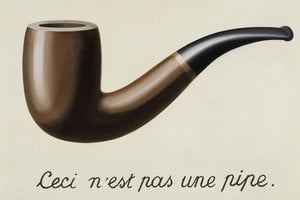
Magritte's style in this piece is a unique blend of realism and surrealism. "The Treachery of Images" was created in 1948 during Magritte's mature period. The symbolism in "The Treachery of Images" lies in its exploration of the gap between an object and its representation.
The central figure, seated on a stool and holding a red baton or conductor's stick, dominates the composition, creating a sense of intrigue and wonder. The headless mannequin wearing a surgical glove introduces mythological connotations, possibly referencing the abduction of Europa by Zeus disguised as a bull.
Look forsurreal and whimsical scene with vintage aesthetic
Swans Reflecting Elephants (1937) is a quintessential example of Salvador Dalí's surrealist genius. However, upon closer inspection, the reflections transform into a group of elephants, their elongated trunks and bodies emerging from the water's surface. Created in 1937, Swans Reflecting Elephants is part of Dalí's paranoiac-critical period, a time when he was at the height of his creative powers.
Look forsurreal landscapedouble imagesdistorted forms
Joan Miró's "Harlequin's Carnival" (1925) is a vibrant and intricate composition that captures the essence of surrealism. The painting is bustling with a variety of objects, figures, and abstract elements, creating a dynamic and playful atmosphere. The carnival theme may refer to Mardi Gras, the celebration that occurs before the fasting of Lent begins.
Look forblack triangle representing the Eiffel Towerharlequin with a checkered costume and hole in his stomachanthropomorphized objects like a ladder with an ear and eyegreen sphere representing the globe
Though firmly rooted in Surrealism, this piece displays elements reminiscent of naive art – a deliberate simplification of form and a bold application of color. Created in 1953, this work reflects Magritte's ongoing fascination with challenging perceptions of reality. Following World War II, many artists grappled with themes of alienation and uncertainty; Magritte addressed these concerns through his enigmatic imagery.
Look forimpasto texturemonochromatic blue paletteturbulent seasimplified ship design
Kahlo's unique style merges surrealist elements with traditional Mexican folk art, creating a richly detailed composition that is both dreamlike and deeply personal. Created during a period of intense physical and emotional turmoil, "Tree of Hope" reflects Kahlo's ongoing battle with chronic pain and disability.
Look forreclining figure on a bedsurreal landscape with sunmoonvibrant colors
1928Oil on canvas (presumed)54 × 73 cmMuseum of Modern Art, New York City
Executed during Magritte’s pivotal Surrealist period, this work exemplifies his signature style: a meticulous rendering of ordinary objects placed in unexpected contexts. Created in Paris during a period of artistic experimentation and societal upheaval, “The Lovers” reflects the anxieties and uncertainties of the interwar years.
Look forveiled facesanonymous figuresred architectural element
Dalí's meticulous technique and vivid imagination create a composition that is both intriguing and thought-provoking. The opened drawers in the blue female figure, known as "Femme-coccyx," are inspired by Sigmund Freud's psychoanalytical methods, which Dalí admired. This painting is part of a series that includes "The Invention of Monsters," where Dalí explores themes of transformation and destruction.
Look forburning giraffefemale figures with drawersphallic shapes
To understand Breasts, one must navigate the turbulent waters of the Dada and Surrealist movements in which Picabia was a central provocateur. These creatures act as anchors to a wilder, more untamed reality, mirroring the way Picabia himself moved between different artistic identities, from Cubism to the Machine Age aesthetic.
The central focus of "The Entire City" is a towering, stepped pyramid-like structure bathed in the soft glow of a full moon. The composition is meticulously balanced, with the pyramid dominating the vertical space and drawing the eye upward toward the celestial body. Max Ernst, a pioneer of Dadaism and Surrealism, employs his signature surrealistic style in this artwork. As Nazism rose in his native Germany, Ernst's pessimism and disillusionment with the modern world found expression in his art. The pyramid in "The Entire City" symbolizes knowledge, mystery, and the passage of time.
Look forfull moonintricate vines and flowers in the foregrounddeep blues, warm browns, and vibrant greensstepped pyramid-like structure
Surrounding these figures are abstracted, insect-like or mechanical forms, suggesting intrusion, decay, or transformation. Created in 1946, this work emerges in the aftermath of World War II, a period marked by societal upheaval and existential questioning. The work’s raw, unfiltered style captures the anxieties of a fractured world, making it a significant piece within mid-20th-century modern art.
Look forsurreal imagerybold brushworksymbolic motifscrucifixion scene
This piece occupies a pivotal position in Miró’s artistic development, showcasing his unique ability to synthesize diverse influences. Created during a period of significant artistic experimentation following World War I, this work reflects Miró’s deep connection to his native Catalonia.
The composition unfolds within a pale peach-colored room, presenting five figures arranged in a deliberately staged manner. Emerging in the aftermath of World War I, Surrealism sought to liberate thought, language, and human experience from the constraints of reason. Inspired by the psychoanalytic theories of Sigmund Freud, artists like Magritte explored the realm of dreams, the subconscious, and the irrational.
Look formen in bowler hatsshadowy figureswoman on chaise loungegramophone horn
Executed with oil on canvas (173 x 199 cm), Delvaux employs a refined technique characterized by smooth blending and meticulous detail. Created during World War II in Brussels, a city under bombardment, this work reflects the psychological turmoil of the era.
Created in 1923 during his first French period, this oil on canvas painting exemplifies Ernst's innovative approach to art, blending dreamlike imagery with symbolic depth. Created in 1923, "Of This Men Shall Know Nothing" reflects the influence of Giorgio de Chirico and mail-order catalogues on Ernst's work.
Look forfigure lying on the groundmuted color palette with earthy tones and blue spheresuse of vertical lines and organic shapes
hr giger passage XXIV is a work by H.R. This piece belongs to the artist's exploration of the subconscious and the mechanical-erotic. Giger, who died in 2014, utilized a distinctive biomechanical aesthetic.
Forever Always depicts a life well-lived, with the faces of an elderly couple facing each other. Surrealism has had a significant influence on Ocampo's work, as evidenced by his use of unexpected juxtapositions and dreamlike imagery. For more information on Octavio Ocampo and his artwork, visit Wahoo Art. For more information on the artist and his work, visit Wikipedia or Wahoo Art.
This oil on masonite (60 x 49 cm) captures the tragic end of American socialite Dorothy Hale, who took her own life by jumping from the Hampshire House building in New York City. Kahlo's distinctive style blends elements of Surrealism with her signature folk art influences.
Look forhuman figures in a cloudy atmospheredreamlike imageryarchitectural elements
The violinist, with his green face, appears to float or dance above the rooftops of a misty village, creating a sense of weightlessness and otherworldliness. The Green Violinist was completed following Chagall's return to Paris after a long visit to his homeland of Russia.
The artwork presents a surreal and abstract depiction of a figure carrying an intricate, mechanical structure on its back. The central focus is the elongated human form, which dominates the vertical space of the canvas.
Look forearthy tones with muted highlightssurreal and abstract depictionfusion of organic and inorganic forms
Miró presents a seemingly commonplace arrangement – bottles, fruit resembling a squash or pumpkin, and most notably, an aged and worn shoe. However, these familiar forms are far from traditionally rendered. This artwork exemplifies Miró’s unique position within 20th-century art.
Executed in oil on canvas (51 x 78 cm), the work showcases Dalí's exceptional technical skill. Created during Dalí’s “paranoiac-critical period,” The Metamorphosis of Narcissus reflects his deep engagement with the psychoanalytic theories of Sigmund Freud. In fact, Dalí met Freud in 1938 specifically to discuss this painting and its connection to narcissism.
While often associated with Surrealism, Kahlo herself resisted the label, preferring to describe her work as an expression of her own reality. This piece blends elements of Surrealist imagery – the fractured body, symbolic landscape – with a distinctly Mexican folk art sensibility.
De Chirico's unique style blends elements of classical art with the avant-garde, creating a composition that is both visually striking and intellectually stimulating. The central figure of the painting is a classical-style statue with a blank, circular head placed on a green surface.
Look forpile of bananasarchitectural elements and landscape backgroundstatue of a woman with a blank circular head
This enigmatic painting presents a dreamlike scene of an open window revealing a serene landscape beyond. The central focus of the artwork is a large, arched window that dominates the image. "The Human Condition" was created during Magritte's surrealist period, a time when he explored themes of perception, reality, and the subconscious mind.
Look forserene landscape with rolling hills and a solitary treemuted yet vibrant color palettelarge arched window as the central focustwo easels positioned symmetrically inside the window frame
The canvas titled Goethe or the metamorphosis of plants was brought into being by the hand of André Masson. In 1940, the artist captured a vision of organic change, translating the concept of botanical transformation into a visual language. This work exists now within the walls of The Israel Museum in Jerusalem, Israel.
Dalí's signature surrealist style is evident in this piece, blending realistic elements with fantastical ones to challenge perception. The painting employs meticulous detail and precise draftsmanship, characteristic of Dalí's technique.
Look forlarge shallow dish or plate at the centerumbrella, lightbulb, hat, fish or sea creaturemuted color palette with shades of gray, black, and whitefluid lines and organic shapes
Picasso deliberately layered symbolism into “Night Fishing at Antibes,” reflecting his preoccupation with existential themes. Painted just before World War II, “Night Fishing at Antibes” captures the pervasive sense of dread that gripped Europe in those turbulent years.
Painted in 1928, this artwork exemplifies Miró's unique ability to merge bold colors, intricate shapes, and imaginative symbolism into a cohesive and emotionally resonant composition. The artwork is a vibrant and complex composition that exudes movement and energy.
Look fordynamic shapes and lineslarge white shape with red accentsinterplay of organic and geometric formsvibrant color palette
The painting was created as a birthday gift for her husband, the writer Oswald de Andrade. The title of the work, Abaporu, is a Tupi-Guarani term. In 1984, Raul de Souza Dantas Forbes purchased the piece for $250,000. The ownership changed again in 1995 when the painting was auctioned at Christie's in New York City.
Within her form resides another woman cradling an infant – a potent image of nested generations, birth, and the cyclical nature of life. Created during a period of personal turmoil for Kahlo —marked by physical pain and a complex relationship with Diego Rivera —this painting reflects her lifelong exploration of identity, the female body, and Mexican national identity.
In the vast landscape of twentieth-century modernism, few artists possessed the ability to weave the fabric of memory and myth as seamlessly as Marc Chagall. Rooted in the Surrealist movement championed by André Breton, the painting utilizes elements of automatism—the spontaneous creation of imagery to access the subconscious.
The Eye of Silence is a painting by German dadaist and surrealist Max Ernst, created in 1943-44. Born in 1891, Max Ernst was a pioneering figure in the dada and surrealist movements. The museum houses an impressive collection of Danish and international art, including works by Max Ernst.
"Personal Values" challenges the viewer's perception of reality and space, creating an emotional impact that is both intriguing and thought-provoking. "Personal Values" is a prime example of Magritte's ability to transform ordinary objects into extraordinary compositions.
Look forlarge comb leaning against the wallglass or vase in the foregroundmirror reflecting part of the roombrush resting on top of the mirror
Born in Greece but deeply rooted in Italian culture, de Chirico's art is a fusion of his Mediterranean heritage and European influences. This artwork exemplifies de Chirico's signature style, blending realism with surrealism to create a scene that is both hauntingly familiar and eerily alien.
Look forshirtless man with closed eyesarchitectural columns and wallsopen book with an orange cover
The Birth of Day Maqueta per a la sèrie Els gossos 2 Carota Miró’s artworks are part of several prestigious museum collections, including the Museu d'Art Contemporani de Barcelona (MACBA) in Spain. For more information on Miró’s contributions to contemporary art and his presence in museums worldwide, visit Museu d'Art Contemporani (Barcelona, Spain) - A Comprehensive Guide at AllPaintingsStore.com.
Isabel Rawsthorne was a pivotal figure in Bacon’s life and work. Bacon’s work emerged from the aftermath of World War II, grappling with themes of trauma, alienation, and the fragility of human existence. While Bacon resisted explicit symbolic interpretations, the painting is rich in suggestive imagery.
The artwork is densely packed with intricate details, creating a sense of frenetic energy that draws the viewer in. Grosz's style in "The Agitator" is unmistakably surrealistic, infused with elements of fantasy and whimsy. The color palette of "The Agitator" is predominantly pastel, featuring soft hues of pinks, blues, and yellows, contrasted with more vivid colors like red and green. Created during the Weimar Republic era, "The Agitator" reflects the social and political turmoil of the time. Grosz was a key figure in the Berlin Dada and New Objectivity movements, known for his satirical paintings that critiqued society, politics, and the rise of fascism.
Look forvibrant and chaotic compositionpastel color palette with splashes of brighter colorsdense and intricate detailingsurreal and dreamlike atmosphere
The painting depicts a haunting tableau featuring a man adorned with horns and skeletal facial features, gripping onto a woman suspended in mid-air. As demonstrated in works such as “Flowers of Seashells” and “Fishbone Forest,” Frottage allowed Ernst to tap into latent visual information hidden beneath the surface—a deliberate effort to bypass conscious thought and access the realm of dreams.
The scene unfolds within what appears to be a luxurious train station waiting room or parlor car. Three figures dominate the composition: a reclining nude male, seemingly lost in unconsciousness; a detached woman behind a counter; and another female figure draped in lace, her gaze fixed upon the prone man with an unsettling ambiguity.
At first glance, the scene is remarkably straightforward: a central watermelon dominates the canvas, its crimson flesh sliced open to reveal the speckled black seeds within. Watermelons, particularly in Mexican culture, hold deep significance, often associated with fertility, abundance, and the cyclical nature of life and death—themes intimately linked to the Day of the Dead celebrations.
Created in 1955 during Dalí’s post-World War II "Nuclear Mysticism" period, this piece reflects his fascination with science, religion, and the infinite. The landscape in the background, reminiscent of Catalonia, grounds the scene in Dalí’s personal and cultural heritage, adding layers of meaning and emotional resonance.
Look foremotional depthluminous central figuresymbolic landscapegeometric shapes
To fully appreciate Reclining Woman, it's crucial to understand its roots within the broader context of surrealism. Spearheaded by André Breton and fueled by the theories of Sigmund Freud, Surrealism aimed to tap into the realm of the unconscious mind – exploring dreams, fantasies, and irrational impulses.
The scene unfolds within the surreal realm of The other clock 3, a painting that pulls the viewer into a dreamlike state. Her life, which spanned until 1963, was marked by a constant movement through different landscapes, yet her internal world remained anchored in a singular, focused intensity.
1961Oil on canvas270 × 355 cmMusée National d'Art Moderne, Centre Pompidou
Against this serene backdrop, an elongated red shape on the left side and a series of black circles create a dynamic interplay of color and form. Despite its simplicity, "Blue II" conveys a deep emotional resonance, reflecting Miró's fascination with dreamscapes and infinite space.
Look forseries of black circles receding into the distancevast expanse of blue backgroundelongated red shape on the left side
The central focus of this artwork is a large bird composed entirely of clouds, set against a backdrop of a gradient green sky and a body of water. The bird's expansive wingspan dominates the scene, creating a sense of awe and wonder. Created in 1963, "The Big Family" reflects Magritte's mature period as a Surrealist artist.
Look forcloud-filled bird as the central focusgradient green skytextured waves or ocean foam
Birds circle overhead and perch precariously on branches, while a colossal, dragon-like beast dominates the periphery, creating an asymmetrical composition that pulls the eye through a landscape of psychological turbulence. The symbolism within the piece is as potent as it is enigmatic: The Crimson Blanket: Representing both the warmth of life and the visceral, often bloody, nature of human passion and sacrifice.
The structure of this entity includes various arms and legs that appear integrated into its primary mass. In the background, smaller figures are visible, though they remain secondary to the central organism.
Balthus's style in this piece is a harmonious fusion of realism and subtle surrealism. The meticulous attention to detail in the girl's features and the cat's fur contrasts with the loose, expressive brushwork of the background, creating a dreamlike atmosphere.
Look forpresence of a catmuted yet vibrant color paletterelaxed pose of the girldirect gaze
Historical Context Produced during the height of Surrealism’s influence, “Diana in the Autumn Wind” aligns with the broader artistic movement’s preoccupation with dreams, subconsciousness, and irrationality. Legacy & Significance Currently housed at Kunstmuseum St. Gallen in Switzerland, “Diana in the Autumn Wind” represents not only Klee’s personal artistic vision but also a pivotal moment in 20th-century art history.
A woman sits beneath a massive, circular object, her hands raised as if to shield herself from an unseen force. At first glance, the scene appears to be a quiet, perhaps even festive, gathering.
De Chirico's work blends elements of Cubism and Futurism, characterized by its emphasis on geometric abstraction and fragmented forms. The artwork's dreamlike quality and symbolic imagery have made it a cornerstone of 20th-century avant-garde art.
Look fortall, geometric figureurban backdropmuted color palettegeometric shapes
The central subject is an egg, cracked open to reveal a nascent figure emerging from within. Created during World War II, “Geopolitical Child Watching the Birth of the New Man” reflects the anxieties and uncertainties of a world grappling with conflict. Dive deeper into the life and art of Salvador Dalí.
The genesis of Dancer lies in Miró’s fascination with a performance he witnessed at Eden Concert in Barcelona. Miró’s influence extends far beyond Surrealism, impacting generations of artists working in Abstract Expressionism and Color Field painting.
The painting features a dense arrangement of abstract shapes and forms, creating a sense of clutter and disarray. Tanguy was introduced to the circle of surrealist artists around André Breton in 1924, which significantly influenced his unique painting style. This openness makes "The Ribbon of Excess" a fascinating conversation starter and a source of personal reflection.
Look forchaotic arrangement of abstract shapesearthy tones with splashes of bright colorsrough, textured surface with visible brushstrokes
The composition presents two stylized profiles positioned side-by-side, facing in opposite directions. The background remains indistinct, a muted expanse that pushes the figures toward the viewer, ensuring the focus remains entirely on the tension between the two faces.
At its core, two nude women engage in an intimate yet confrontational interaction, their contrasting appearances emphasizing themes of identity, transformation, and societal roles. Dominating the scene is a commanding figure cloaked in a voluminous red garment, symbolizing authority, tradition, or societal constraints.
Created during a period of immense emotional turmoil following a devastating miscarriage, this oil-on-Masonite canvas offers a rare and unfiltered glimpse into Kahlo's inner world – a world marked by physical suffering, artistic expression, and an unwavering determination to confront her pain. At first glance, the scene presents Frida lying naked on a hospital bed, her body contorted in a posture of vulnerability. It's significant to note that this was one of the first paintings Kahlo created using sheet metal as a support, a technique she pioneered with her husband, Diego Rivera, who encouraged her to experiment with new materials and approaches.
1947Oil or tempera on canvas148 × 189 cmKunstmuseum, Basel
Central to the composition is a fiery, winged figure that appears to be falling or ascending, evoking themes of spiritual conflict, transformation, and divine intervention. Created in 1947, this work exemplifies a powerful blend of expressionism and surrealism. The artist, Marc Chagall, was deeply influenced by his Belarusian Jewish heritage, Eastern European folklore, and the tumultuous events of the 20th century.
1930Oil on canvas50 × 65 cmMuseum Santa Maria del Parto
Pablo Ruiz y Picasso, born October 25, 1881, in Málaga, Spain, demonstrated artistic talent from infancy. The family moved to A Coruña and later Barcelona after the tragic loss of Picasso’s sister. In Barcelona, he attended the School of Fine Arts but often clashed with traditional academic instruction, preferring to study masters like Velázquez and Goya independently.
The central focus of this artwork is an oversized, yellow rock formation with intricate cut-out patterns that dominate the composition. This period marked a significant shift in his artistic style, as he moved closer to Surrealism and joined the Surrealist group.
This striking photogram—a technique pioneered by Ray himself—captures an intimate moment frozen in time, transforming commonplace objects into symbols of desire and connection. Unlike traditional painting, where artists meticulously render form and color, Ray embraced chance and spontaneity, trusting the unpredictable interplay of light and shadow to reveal hidden truths about human experience.
The Dream is a surrealist artwork by Wifredo Lam. Created in 1947, this oil on canvas captures a fractured reality through its specific dimensions of 77 x 102 cm. Wifredo Lam used this medium to navigate the space between the seen and the felt.
The artist employs a meticulous technique, using precise brushstrokes to create a sense of depth and realism. Inspired by the works of John Atkinson Grimshaw and William Degouve de Nuncques, this artwork is part of a series that explores the paradoxical image of a nocturnal landscape beneath a sunlit sky.
Look forreflections on the groundbalanced compositioncontrast between light and dark
Miró's "The Birth of the World" is a prime example of his surrealist style, characterized by its dreamlike quality and playful use of geometric shapes. This piece is part of a series of "dream paintings" that Miró produced in the 1920s, which rejected traditional painting methods in favor of a more experimental approach.
Look foryellow lineblack trianglewhite circlered circle
Created in 1942, this piece exemplifies the distinctive style of Surrealism, characterized by meticulous detail, sophisticated use of color, and a hyper-realistic finish.
The presence of these figures, caught in moments of stillness or distortion, heightens the sense of a world stripped of its pretenses, leaving only the raw, visceral pulse of survival.
It's a scene brimming with figures engaged in various activities: musicians playing instruments, dancers swirling, and guests mingling, all contributing to an atmosphere of lively festivity, yet subtly underscored by a melancholic undercurrent. The inclusion of various figures engaged in diverse activities—dancing, playing instruments, conversing—reflects the richness and complexity of Jewish life and community.
1933Oil painting and collage46 × 55 cmHoover Gallery, San Francisco
Painted during Kahlo's time in New York City with her husband Diego Rivera, "My Dress Hangs There" reflects her complex feelings about American capitalism and her longing for Mexico. The background features skyscrapers, an overflowing trashcan, the Statue of Liberty, and other symbols of America, critiquing capitalism and industrialization. By adding Frida Kahlo's "My Dress Hangs There
The central focus is a large, distorted face or head that dominates the foreground, surrounded by smaller elements such as hands, rocks, and organic shapes. The artwork reflects the influence of Freud's theories on the subconscious mind, which were central to the Surrealist movement.
Look fordistorted face or head in the foregroundhands, rocks, and other organic shapeslandscape background with rolling hills and a cloudy sky
This isn’t a realistic depiction of an industrial machine; it’s a stylized, almost abstracted vision – a premonition of the mechanical age filtered through a surreal lens. Created on the eve of World War I, Chocolate Grinder reflects a period of rapid industrialization and societal upheaval.
1925Oil on canvas130 × 97 cmMusée National Picasso, Paris
“The Kiss” aligns seamlessly with Picasso’s broader oeuvre during his Surrealist period, alongside pieces like “Untitled (102)” and “Greek Woman.” These artworks demonstrate Picasso’s unwavering dedication to investigating psychological complexities—a characteristic that distinguishes him from many of his contemporaries. “The Kiss” remains an indelible symbol of love and desire within the annals of 20th-century art.
De Chirico's unique style merges elements of surrealism with abstract expressionism, resulting in a composition that is both chaotic and deliberate. The artwork features multiple layers and frames within the painting, each containing different images and objects. De Chirico's artwork is imbued with symbolic elements that reflect his affinity for the philosophy of Arthur Schopenhauer and Friedrich Nietzsche.
The complexity of his earlier years gave way to a raw, essentialist power where every line carries the weight of destiny. Using a technique reminiscent of ancient hieroglyphics, he cleverly wove the German word "Tod" —meaning death—into the composition's structural elements.
At first glance, "Melting Watch" presents a bizarre scene: a pocket watch seemingly draped over a branch or ledge, appearing to melt and droop like soft cheese. Dalí’s mastery of oil painting is evident throughout "Melting Watch." He utilized a meticulous technique, employing precise brushstrokes to create an illusion of hyperrealism.
Finally, positioned near the bottom left corner is a pair of scissors—a jarring element that introduces an unsettling suggestion of fragmentation and disruption, mirroring the fractured realities of Picasso’s artistic vision. The Berardo Collection Museum in Lisbon, Portugal, houses an impressive assemblage of modern and contemporary art —a space dedicated to showcasing groundbreaking movements like Cubism.
The painting exemplifies Ernst's pivotal role in both Dadaism and Surrealism, movements dedicated to challenging artistic conventions and exploring the depths of the unconscious mind. Max Ernst (1891-1976) was a restless innovator who experimented with various techniques throughout his career, including frottage and collage.
Untitled is a photograph created in 1928 by Claude Cahun and Marcel Moore. Across the torso, the handwritten text “Training Don’t Kiss Me” is visible, introducing a direct, textual element into the visual field. This is seen in the photomontage Untitled and the 1926 work Entre nous.
The painting presents a neoclassical edifice, dominated by a looming clock tower that anchors the composition with a sense of heavy, inescapable permanence. Bathed in a palette of muted pastels—soft ochres, pale yellows, and ethereal lavenders—the scene possesses a haunting luminosity.
Magritte is, of course, a cornerstone of the Surrealist movement, and Clairvoyance exemplifies his signature style. The work shares stylistic kinship with other Surrealist masters like Salvador Dalí, particularly in its exploration of illogical juxtapositions and symbolic imagery. Born in 1898, René Magritte navigated a period of immense social and artistic upheaval.
At first glance, the viewer is confronted by an open maw, a yawning void that suggests both hunger and exhaustion. The historical context of Giger’s work, deeply rooted in his contributions to cinematic masterpieces like Alien, provides a rich backdrop for appreciating this piece.
The painting utilizes masonite as its substrate, reflecting Kahlo's preference for economical materials that allowed her to focus entirely on conveying emotion rather than technical prowess—a hallmark of her primitivist style. The portrait was created in honor of Dr. Eloesser, whom Kahlo had undergone surgery with, symbolizing gratitude for medical care and highlighting the importance of human connection amidst suffering.
The teacher has thrown the girl across her lap, pulling her black dress up over her waist. The girl is naked from her navel to her knees, though her lower legs are covered by white socks.
90 of the 100 are oil paintings, 2 use tempera and 0 are frescoes; 0 are painted on wood and 73 on canvas.
Can I own a copy of a famous Surrealism painting?
Answer
19 of these 100 paintings are available hand-painted in oil, from $181, and 19 as a canvas print, from $47.
How was this list of Surrealism paintings ranked?
Answer
Each painting is ranked by how widely it is known: the number of Wikipedia language editions with an article on it (Wikidata sitelinks), its place in our catalogue's manual ranking and the visits its page receives. The same painting catalogued several times counts once, and details, copies and studies are left out.
Bring one home
19 of the 100 as hand-painted oil reproductions
19 paintings of this list can be ordered as museum-grade, hand-painted oil reproductions, from $181.
We started with every Surrealism painting in our catalogue and ranked them by how famous they are. Three clues decide the order: in how many languages Wikipedia has an article about the painting, where our curators place it, and how often people open its page on our site. Each painting appears only once, and details, copies and studies are left out.