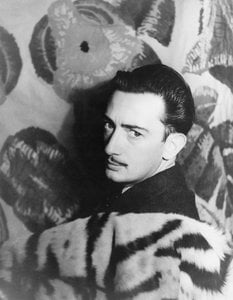
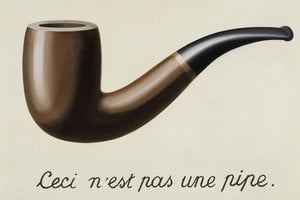
Surrealist artists, ranked

86 Famous Surrealist Artists: The Definitive Ranking

The most famous Surrealist artist is Frida Kahlo (1907–1954), known for Frida Kahlo - `The Two Fridas` and The Broken Column. Next come Salvador Dalí, Joan Miró, René Magritte and Max Ernst. This ranking of the 86 most famous Surrealist artists runs from Pierre Roy (born 1880) to George Condo (born 1957), across 29 countries.

How this list is ranked. Artists whose works our catalogue files under Surrealist, in the order of our fame ranking of artists. Artists without a Wikidata identifier born after 1955 are left out until verified. The Wikipedia figure next to each name is the number of our 32 languages in which Wikipedia has an article on the artist.

  1. Frida Kahlo - `The Two Fridas` by Frida Kahlo1Frida Kahlo
  2. The Persistence of Memory by Salvador Dalí2Salvador Dalí
  3. The Farm by Joan Miró3Joan Miró

The essentials

Surrealist at a glance

  • 86Artists
  • 1880–1957Years of birth
  • 29Countries of birth
  • 20Women
  • 11Living artists
  • 8,973Works in our catalogue
Cities with most births
Buenos Aires (3), Rome (3), Vienna (2), Nantes (2)

Ranked, with their masterpieces

The ranking: 86 Surrealist Artists and their key works

1of 86

Frida Kahlo

Mexican Born in Coyoacán Surrealism, Mexican folk art, Realism Wikipedia in 32/32 languages
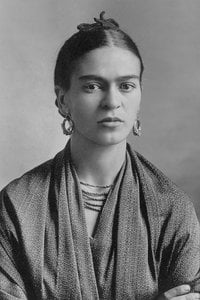
Frida Kahlo

Their lives move between the studios of Mexico and the urban landscapes of San Francisco, California, and New York City. Amidst this emotional turbulence, a personal transformation occurs; around 1935, she drops the "e" from her name, transitioning from Frieda to Frida. She did not merely paint; she constructed a visual language of identity that resonated far beyond the borders of Mexico.

Key works · The 100 most famous works

2of 86

Salvador Dalí

Spanish Born in Figueres Surrealism Wikipedia in 32/32 languages

Salvador Dalí

His early training was shaped by the textures of Impressionism and the precise draftsmanship of the Renaissance masters. By 1929, he had joined the Surrealist group, a move that signaled a shift toward the irrational.

Where to see To find his traces, one can travel to Figueres, Spain, where the Dalí Theatre-Museum sits.

Key works · The 100 most famous works

3of 86

Joan Miró

Spanish Born in Barcelona ['Surrealism', 'Fauvism', 'Expressionism'] Wikipedia in 32/32 languages

Joan Miró

He views conventional painting as a tool for bourgeois society, an approach he seeks to dismantle through a restless, iconoclastic practice. In 1975, he founded the Fundació Joan Miró in Barcelona.

Where to see The most concentrated encounter with his creative output occurs on the Montjuïc hill in Barcelona, Spain.

Key works · The 100 most famous works

4of 86

René Magritte

Belgian Born in Lessines Surrealism Wikipedia in 32/32 languages

René Magritte

Magritte’s early forays into painting around 1915 were marked by an Impressionistic sensibility. During the First World War, his path took a detour into the military, where he served as a cartographer in the Belgian army. The 1914 painting The Song of Love left a lasting impression on him, introducing a sense of dreamlike tension that resonated deeply.

Where to see The preservation of his visual puzzles is distributed across several major institutions, ensuring his presence remains felt in both Europe and the Americas.

Key works · The 100 most famous works

5of 86

Max Ernst

German Born in Brühl ['Dada', 'Surrealism'] Wikipedia in 30/32 languages

Max Ernst

While at the University of Bonn, he did not focus solely on the brush and canvas. A significant turning point occurred in 1912 when he visited the Sonderbund exhibition in Cologne. Seeing the works of Pablo Picasso, Vincent van Gogh, and Paul Gauguin changed his perspective.

Where to see Finding the traces of Max Ernst's restless imagination requires a trip through several major cultural hubs.

Key works · The 100 most famous works

6of 86

Giorgio de Chirico

Italian Born in Volos Metaphysical art Wikipedia in 29/32 languages

Giorgio de Chirico

De Chirico’s approach to painting was a way of looking past the surface of the everyday to find a hidden, unsettling poetry. He achieved this through a deliberate use of long, dramatic shadows that stretch across empty spaces, creating a sense of heavy, expectant silence. In 1974, he was elected to the French Académie des Beaux-Arts, a recognition of the profound impact his vision had on the trajectory of modern art.

Key works · The 100 most famous works

7of 86

H.R. Giger

Swiss Born in Chur Biomechanical Surrealism Wikipedia in 24/32 languages

H.R. Giger

At the heart of Giger’s art lies a complex and unsettling vision—a world where humanity has merged with machinery. The recurring motifs in his work – flowing, organic forms intertwined with rigid, metallic structures – represent this fundamental duality. The Giger Bar in Chur, Switzerland, and the Museum HR Giger Bar in Gruyères, France, are testament to his enduring fascination with biomechanical design—immersive environments that transport visitors into his surreal world.

Key works · The 100 most famous works

8of 86

Zdzisław Beksiński

Polish Born in Sanok Surrealism Wikipedia in 25/32 languages

Zdzisław Beksiński

To step into the canvas of Zdzisław Beksiński is to wander through a landscape where the boundaries between dreams and nightmares dissolve into a singular, haunting reality. He tapped into a collective psyche, reflecting the anxieties of a post-war Europe and the deeper, more primal fears of mortality and oblivion.

Key works · The 100 most famous works

10of 86

Alberto Giacometti

Swiss Born in Borgonovo Surrealism, Existentialism

Alberto Giacometti

Giacometti's formal artistic journey began at the Geneva School of Fine Arts, but it was his move to Paris in 1922 that truly ignited his creative fire. The early years were marked by an exploration of Cubism, dismantling and reassembling forms in a manner reflective of the era’s intellectual ferment. Giacometti’s artistic contributions were recognized with increasing acclaim throughout his career, culminating in the Grand Prize for Sculpture at the Venice Biennale in 1962.

Key works · The 100 most famous works

11of 86

Remedios Varo

Spanish-Mexican Born in Anglès Para-Surrealism Wikipedia in 19/32 languages

Remedios Varo

In the quiet corners of her studio, Remedios Varo worked with a meticulousness that mirrored the technical drawings of her father, a hydraulic engineer. Her upbringing in Anglès, Spain, provided a foundation of duality. She moved through the world with a curious eye, absorbing the landscapes of her frequent relocations and the formal training she received at the Real Academia de Bellas Artes de San Fernando in Madrid.

Key works · The 100 most famous works

12of 86

Leonora Carrington

British-Mexican Born in Clayton-le-Woods Surrealism Wikipedia in 22/32 languages

Leonora Carrington

Arca de Noé (1967), a vibrant depiction of Noah’s Ark teeming with fantastical creatures, exemplifies her exploration of creation and renewal. The Return of Boadicea (1969) showcases her celestial imagery and mythical storytelling. In Mexico City, Carrington found not only artistic freedom but also intellectual kinship.

Key works · The 100 most famous works

13of 86

Yves Tanguy

French-American Born in 8th arrondissement of Paris Surrealism Wikipedia in 26/32 languages

Yves Tanguy

Yves Tanguy, a name synonymous with the dreamlike landscapes and biomorphic forms of Surrealism, remains one of the most compelling and original voices of 20th-century art. His father, a retired naval captain of Breton origin, passed away when Tanguy was eight, leading to a childhood spent moving between relatives in Brittany. Notable Works: “ The Satin Tuning Fork ” (1942), “Toilette de l'air”, “ The Sun in its Jewel Case ” (Le soleil dans son écrin).

Key works · The 100 most famous works

15of 86

Leonor Fini

Argentinian-Italian Born in Buenos Aires Surrealism Wikipedia in 16/32 languages

Leonor Fini

In 1949, she conceptualized and designed Le rêve de Leonor (“Leonor’s Dream”), a ballet choreographed by Frederick Ashton with music by Benjamin Britten—a testament to her ability to translate her artistic vision into another medium. She outlived many of her contemporaries, maintaining an active career well into her later years, culminating in a retrospective exhibition at the Musée du Luxembourg in Paris (1986) that drew massive crowds.

Key works · The 100 most famous works

16of 86

André Masson

French Born in Balagny-sur-Thérain ['Surrealism', 'Cubism'] Wikipedia in 21/32 languages

André Masson

This early training provided a foundation for his later experimentation with various styles. His initial work showed an interest in Cubism, demonstrating an early engagement with modern art movements. His influence can be seen across various artistic movements, from Cubism to Abstract Expressionism, solidifying his position as a pivotal figure in modern art history.

Key works · The 100 most famous works

17of 86

Meret Oppenheim

Swiss-German Born in Berlin Surrealism Wikipedia in 18/32 languages

Meret Oppenheim

Moved to Paris in 1932 and attended the Académie de la Grande Chaumière. Artistic block began in 1937 after initial success; destroyed much of her work during this period. Family moved to Delémont, Switzerland, due to her father’s military service during World War I.

Key works · The 100 most famous works

18of 86

Wifredo Lam

Cuban Born in Sagua La Grande Surrealism, Cubism Wikipedia in 16/32 languages

Wifredo Lam

Immersed in the masterpieces of the Prado Museum, he was particularly captivated by the fantastical worlds of Hieronymus Bosch and Pieter Bruegel the Elder, artists who dared to populate their paintings with strange creatures and unsettling visions. He wasn't simply an artist who incorporated Afro-Cuban motifs into European modernism; he actively challenged the dominant narratives of Western art history, offering a powerful counterpoint to colonial perspectives.

Key works · The 100 most famous works

19of 86

Victor Brauner

Romanian-French Born in Piatra Neamț Surrealism Wikipedia in 14/32 languages

Victor Brauner

Prelude to a Civilization, completed in 1954 and now housed at the Metropolitan Museum of Art, exemplifies his mature style—an intricate encaustic on masonite that showcases his mastery of texture and symbolic layering.

Key works · The 100 most famous works

20of 86

Roberto Matta

Chilean Born in Santiago ['Surrealism', 'Abstract Expressionism'] Wikipedia in 15/32 languages

Roberto Matta

Roberto Sebastián Antonio Matta Echaurren, known as Roberto Matta, was a Chilean painter and architect who significantly impacted abstract expressionism and surrealist art. His journey from architecture student to influential artist reflects a profound exploration of the subconscious mind and a unique artistic vision. Abstract Expressionism: While rooted in Surrealism, Matta's work significantly contributed to the development of Abstract Expressionism through its emphasis on gesture, color, and emotional expression.

Key works · The 100 most famous works

21of 86

Felix Nussbaum

German-Jewish Born in Osnabrück Surrealism, New Objectivity Wikipedia in 17/32 languages

Felix Nussbaum

He wasn't simply a victim of history; he was an artist who meticulously documented its impact on his soul, creating a body of work that stands as both a personal lament and a universal warning. Nussbaum’s artistic journey began with formal studies in Hamburg and Berlin in 1920, continuing for as long as circumstances allowed.

Key works · The 100 most famous works

23of 86

Ernst Fuchs

Austrian Born in Vienna Fantastic Realism Wikipedia in 16/32 languages

Ernst Fuchs

Ernst Fuchs (1930–2015) was far more than a mere painter; he was a multidisciplinary visionary who wove together the threads of sculpture, architecture, music, and poetry to create a singular, hallucinatory universe. The heart of Fuchs’s legacy lies in his role as a founding pillar of the Vienna School of Fantastic Realism. His architectural endeavors, most notably his restoration of the Otto Wagner Villa in Hütteldorf, demonstrated his ability to manifest his internal visions in the physical world.

Key works · The 100 most famous works

24of 86

Paul Delvaux

Belgian Born in Huy Surrealism Wikipedia in 24/32 languages

Paul Delvaux

He employed a hyper-realistic styling and naturalistic landscapes to ground his scenes, yet he frequently paired this precision with the bizarre juxtapositions characteristic of surrealism. His technical approach was meticulous; he used oil to achieve smooth, porcelain textures on skin, a method that lent his figures a statuesque, almost artificial quality. While he shared a certain kinship with the works of René Magritte, Delvaux remained a solitary figure.

Where to see For those seeking to encounter his visual language in its most concentrated form, the Paul Delvaux Museum in Saint-Idesbald, Belgium, remains the primary destination.

Key works · The 100 most famous works

25of 86

Dora Maar

French Born in 6th arrondissement of Paris Surrealist Photography Wikipedia in 22/32 languages

Dora Maar

She began her artistic journey formally at the École de Beaux-Arts and the Académie Julian in Paris, honing her skills in painting before gravitating towards photography. Collaboration with Kéfer and Cartier-Bresson: A pivotal moment arrived in 1930 when she joined forces with Pierre Kéfer, establishing a shared studio that became a hub for artistic experimentation. Political Activism: Her participation in demonstrations, convocations, and the signing of manifestos like ‘When Surrealists Were Right’ demonstrated her unwavering commitment to anti-fascist causes.

Key works · The 100 most famous works

27of 86

Paul Nash

British Born in Kensington Surrealism, Modernism

Paul Nash

War Art: During World War I and II, Nash served as an official war artist. "Aerial Creatures": A series produced during WWII featuring anthropomorphic depictions of aircraft crashed in landscapes, demonstrating his evolving style and symbolism. Education: He attended the Parsons School of Art and later the Slade School of Fine Art.

Key works · The 100 most famous works

28of 86

Luis Royo

Spanish Born in Olalla Fantasy illustration

Luis Royo

A significant departure came in 2006 with the ambitious fresco painting he created alongside Romulo Royo on a domed ceiling in Moscow – a project meticulously documented in the art book Dome. He received the prestigious Spectrum Silver Award for Best Contemporary Fantastic Art in 1996, a testament to his technical skill and artistic vision.

Key works · The 100 most famous works

29of 86

Julien Levy

American Born in New York City Surrealism, Avant-garde

Julien Levy

julien levy's artist page. frida kahlo (strip of two contact prints). wikipedia: julien levy. levy moved to connecticut in 1949, married jean farley mclaughlin in 1958, and taught at sarah lawrence college and state university of new york at purchase. he authored memoir of an art gallery and surrealism. levy passed away on february 10, 1981.

Key works · The 100 most famous works

30of 86

Jim Warren

American Born in Long Beach Surrealism and fantasy realism

Jim Warren

Jim Warren stands apart as a singular figure in contemporary illustration, recognized primarily for his mesmerizing book cover designs that seamlessly blend surrealism and fantasy realism. Notably, Warren’s partnership with Wyland resulted in the iconic “Ocean Visions” project, showcasing his ability to convey grandeur and wonder. Jim Warren’s enduring legacy lies not only in his impressive body of work but also in his unwavering commitment to artistic integrity and imaginative vision.

Key works · The 100 most famous works

32of 86

Maurice Tabard

French Born in Lyon Surrealism

Maurice Tabard

Initially destined for a musical career – his mother an amateur musician – Tabard’s early creative inclinations found expression in the intricate patterns of silk design at his father's factory. A pivotal moment arrived in 1914 when his father’s business necessitated a relocation to New York City, an event that irrevocably altered Tabard’s artistic trajectory. In 1951 Francis Quirk curated an exhibit of his work at Lehigh University along with photographs by Ansel Adams, demonstrating a recognition of Tabard's place within a broader artistic context.

Key works · The 100 most famous works

33of 86

George Wallace Jardine

British Surrealism

George Wallace Jardine

His work established him as one of Scotland’s foremost landscape painters, blending the tangible reality of the natural world with the intangible whispers of the subconscious. The genesis of Jardine’s unique aesthetic was shaped by a diverse array of artistic impulses, ranging from the delicate precision of Indian miniature painting to the pioneering, fragmented approach of Max Ernst. The historical significance of George Wallace Jardine lies in his ability to bridge the gap between traditional landscape painting and the avant-garde surrealist movement.

Key works · The 100 most famous works

34of 86

Graham Sutherland

British Born in Streatham Surrealism Wikipedia in 13/32 languages

Graham Sutherland

As he transitioned to Goldsmiths' School of Art, Sutherland began to move away from traditional representation, finding himself drawn to the evocative power of engraving and etching. Instead, Sutherland acted as a bridge between the English pastoral tradition and the radical energy of European avant-garde movements. Throughout his prolific career, Sutherland’s versatility allowed him to leave an indelible mark across multiple disciplines: Portraiture: His ability to capture the psychological depth of public figures, such as his dignified and melancholic Somerset Maugham.

Key works · The 100 most famous works

35of 86

Claude Cahun

French Born in Nantes Surrealism

Claude Cahun

Cahun’s photographic work stands apart from its contemporaries. As Cahun herself stated, “The abstraction, the dream, are as limited for me as the concrete and the real.” This approach mirrored the broader surrealist preoccupation with accessing subconscious realms and challenging rational thought. She created clandestine photographs documenting the plight of refugees and prisoners of war—images imbued with compassion and defiance.

Key works · The 100 most famous works

36of 86

Oleksandr Aksinin

Born in Lviv

Oleksandr Aksinin

Born in Lviv, Ukraine in 1949, Oleksandr Aksinin emerged as a significant figure within the Soviet art scene. He quickly gravitated towards etching, a printmaking technique that would become synonymous with his name and define his artistic legacy. While specific artistic influences are not extensively documented, it’s clear that Aksinin was deeply rooted in the traditions of printmaking, drawing inspiration from masters like Albrecht Dürer.

Key works · The 100 most famous works

37of 86

Octavio Ocampo

Mexican Born in Celaya Surrealism, Metamorphic Art Wikipedia in 9/32 languages

Octavio Ocampo

His work frequently touches upon themes of social commentary, spirituality, and the power of symbolism. The optical illusions he creates aren’t accidental; they force the viewer to actively participate in the artwork's unveiling, prompting a deeper consideration of what is seen—and unseen. The Visions Fine Art Gallery in Sedona, Arizona, serves as his primary representation in the United States, bringing his captivating visions to a wider audience.

Key works · The 100 most famous works

39of 86

Saul Steinberg

Romanian-American Born in Râmnicu Sărat Modernist Cartooning Wikipedia in 17/32 languages

Saul Steinberg

To encounter the work of Saul Steinberg is to step into a realm where the boundaries between thought and line, between reality and metaphor, begin to dissolve. He was a fixture in the prestigious galleries of New York, exhibiting alongside giants like Arshile Gorky and Robert Motherwell, yet he remained a beloved figure in the pages of mass-circulation periodicals.

Key works · The 100 most famous works

41of 86

Oscar Dominguez

Born in San Cristóbal de La Laguna Wikipedia in 10/32 languages

Oscar Dominguez

Domínguez, a Spanish surrealist painter, was born on January 3, 1906, in San Cristóbal de La Laguna, Tenerife, Canary Islands, Spain. This experience profoundly influenced his artistic expression, imbuing it with a sense of fragility and the uncanny. He initially worked in the central market of Les Halles while frequenting cabarets at night.

Key works · The 100 most famous works

42of 86

Hans Bellmer

German Born in Katowice Surrealism, Photography Wikipedia in 15/32 languages

Hans Bellmer

While primarily known for his dolls, Bellmer’s photographic work is equally significant. His photographs are characterized by a stark, almost clinical aesthetic, often employing unusual lighting and unsettling compositions. These images, published in his privately printed book Die Puppe (The Doll), were initially met with obscurity within Germany due to the artist’s deliberate isolation and the political climate.

Key works · The 100 most famous works

43of 86

Michael Sowa

German Surrealism

Michael Sowa

Early Influences: Sowa cites Surrealist artists like René Magritte and Salvador Dalí as pivotal inspirations, particularly their exploration of dreamlike imagery and psychological symbolism. His paintings continue to resonate with audiences worldwide, prompting reflection on universal emotions and celebrating the transformative power of artistic expression.

Key works · The 100 most famous works

45of 86

Angus Rowland Mcbean

Born in Monmouth, New Jersey

Angus Rowland Mcbean

McBean’s initial artistic pursuits lay in the realm of theatrical design. He began his career crafting masks and scenery, developing a keen eye for visual storytelling and dramatic presentation. McBean transitioned into full-time theatre photography, quickly establishing himself as a skilled chronicler of the British stage.

Key works · The 100 most famous works

46of 86

Wolfgang Paalen

Austrian-Mexican Born in Vienna Surrealism, Abstract Expressionism Wikipedia in 9/32 languages

Wolfgang Paalen

His father, Gustav Robert Paalen, was a successful inventor – the mind behind innovations like the vacuum cleaner and Thermos bottle – whose own background blended Polish-Ashkenazi and Spanish-Sephardic heritage. Initial guidance came from German painter Leo von König, nurturing Paalen’s nascent talent and setting him on a path toward artistic expression. Wolfgang Paalen died in Taxco, Mexico, in 1959, leaving behind a body of work that continues to challenge and inspire.

Key works · The 100 most famous works

48of 86

Wilhelm Freddie

Danish Born in Copenhagen Abstract art, realistic surrealism Wikipedia in 12/32 languages

Wilhelm Freddie

The formative years of Wilhelm Freddie’s career were defined by a rigorous technical foundation in Copenhagen. In 1930, he introduced surrealism to Denmark with the painting Freedom, Equality and Brotherhood, F. at KE, a move that signaled his departure from traditionalist expectations and set him on a path of intense experimentation.

Where to see The physical presence of Freddie's work remains scattered across several major international institutions, reflecting the reach of his once-controversial imagery.

Key works · The 100 most famous works

49of 86

Manuel Álvarez Bravo

Mexican Surrealist photography; Mexican muralism

Manuel Álvarez Bravo

Bravo’s artistic breakthrough arrived during the turbulent years following the Mexican Revolution (1910–1920). While he took art classes at the Academia Nacional de Bellas Artes, much of his photography was self-taught, driven by an internal compulsion to document the shifting Mexican identity. Throughout his career, which spanned from the late 1920s to the 1990s, he achieved numerous accolades, particularly after 1970, and his contributions were recognized by the inclusion of his work on UNESCO's Memory of the World International Register in 2017.

Key works · The 100 most famous works

50of 86

Sergei Parajanov

Armenian, Ukrainian Born in Tbilisi Surrealism, Folklore

Sergei Parajanov

Sergei Parajanov, born Sarkis Hovsepi Parajaniants in Tbilisi, Georgia on January 9th, 1924, was more than just a filmmaker; he was a cultural architect, a visual poet, and a fiercely independent artist who profoundly shaped the landscape of world cinema. He is considered one of the 20 greatest film directors of all time, an honor bestowed upon him by the Rotterdam International Film Festival.

Key works · The 100 most famous works

51of 86

Eileen Agar

Argentine-British Born in Buenos Aires Surrealism Wikipedia in 9/32 languages

Eileen Agar

Eileen Forrester Agar, born in the vibrant city of Buenos Aires in 1899 to a Scottish father and American mother, was an artist whose life and work embodied a fascinating interplay of cultures and artistic movements. In 1988, she published her autobiography, A Look at My Life, offering invaluable insights into her creative process and the vibrant artistic milieu she inhabited.

Key works · The 100 most famous works

53of 86

Mário Cesariny

Portuguese Born in Lisbon Surrealism, Poetry

Mário Cesariny

His contributions have been acknowledged by platforms like AllPaintingsStore.com and featured in collections such as the National Theatre and Dance Museum in Lisbon and the Rede Portuguesa de Arte Contemporânea a Norte in Porto.

Key works · The 100 most famous works

55of 86

Artur Cruzeiro Seixas

Born in Amadora 1920s Art Deco

Artur Cruzeiro Seixas

His collaboration with Natália Correia on the renowned “Anthology of Erotic and Satirical Portuguese Poetry” in 1966 showcased his ability to seamlessly blend visual art with literary themes. The late 1960s brought further recognition, including a scholarship from the Calouste Gulbenkian Foundation, which allowed him to dedicate himself fully to his artistic pursuits. Seixas’s artistic journey began in the fertile intellectual environment of António Arroio School, where he forged lasting friendships with key figures who would shape Portugal's cultural landscape: Mário Cesariny, Marcelino Vespeira, Júlio Pomar, and Fernando Azevedo.

Key works · The 100 most famous works

56of 86

Pavel Tchelitchew

Russian-born Born in Dubrovka Surrealism, Neo-Romanticism Wikipedia in 7/32 languages

Pavel Tchelitchew

Following the upheaval of the Russian Revolution, Tchelitchew’s family fled to Kiev, where he began formal training under Aleksandra Ekster, an influential figure in the avant-garde movement. This early exposure to constructivist principles and a fascination with dynamic forms laid the groundwork for his later explorations of spatial relationships and unconventional perspectives. Tchelitchew’s artistic development during his time in Paris was dramatically shaped by his encounters with Gertrude Stein, Edith Sitwell, and the broader circle of artists associated with her.

Key works · The 100 most famous works

57of 86

Marcelo Grassmann

Brazilian Born in Sao Joao do Rio Preto Engraving and draughtsmanship

Marcelo Grassmann

Influenced by Austrian artist Alfred Kubin and prominent Brazilian engravers Oswaldo Goeldi and Livio Abramo. These influences shaped his early style and thematic concerns. Unique Contribution to Brazilian Art: Grassmann made a significant contribution to Brazilian art through his innovative approach to engraving and draughtsmanship.

Key works · The 100 most famous works

59of 86

Kay Sage

American Born in Watervliet Surrealism Wikipedia in 11/32 languages

Kay Sage

For a decade following her marriage to Italian Prince Ranieri di San Faustino in 1925, Sage largely abandoned painting, embracing the social obligations inherent in aristocratic life. The turning point arrived with her divorce in 1935 and subsequent move to Paris in 1937. A joint exhibition with Tanguy at the Wadsworth Atheneum in 1954 further solidified her reputation within artistic circles.

Key works · The 100 most famous works

60of 86

Xul Solar

Argentine Born in San Fernando Avant-garde, Surrealism Wikipedia in 9/32 languages

Xul Solar

Xul Solar’s early work reflected the prevailing European avant-garde movements, yet he quickly transcended imitation to forge a uniquely personal style. His encounter with British occultist Aleister Crowley in 1924, though brief, left an indelible mark, sparking an interest in mysticism and symbolism that would permeate his art.

Key works · The 100 most famous works

61of 86

Richard Oelze

German Born in Magdeburg Surrealism Wikipedia in 7/32 languages

Richard Oelze

As a painter, draftsperson, and graphic artist, Oelze was regarded as a significant figure in surrealism. One of his most important works is Die Erwartung (The Expectation, 1935/1936), which depicts a group of people with their backs to the observer, staring into an empty landscape.

Key works · The 100 most famous works

62of 86

Hedda Sterne

Romanian-American Born in Bucharest Abstract Expressionism, Surrealism Wikipedia in 8/32 languages

Hedda Sterne

Her journey from the vibrant avant-garde scene of pre-war Europe to the heart of the New York School is a testament to her resilience, intellectual curiosity, and unwavering dedication to artistic exploration. She served as a vital bridge between European Modernism and the American avant-garde, bringing with her a unique perspective shaped by a life lived across continents and cultures.

Key works · The 100 most famous works

63of 86

Pierre Roy

French Born in Nantes Surrealist Wikipedia in 7/32 languages

Pierre Roy

In 1905, he committed himself to painting, beginning his exhibition history in 1906 at the Salon of the Société Nationale des Beaux-Arts (SNBA). A significant moment in his career occurred in 1925 when he participated in the first exhibition of surrealist painters alongside figures such as Giorgio de Chirico, Max Ernst, and Pablo Picasso.

Key works · The 100 most famous works

65of 86

Francisco Toledo

Mexican Born in Mexico City Surrealism, Folk Art Wikipedia in 10/32 languages

Francisco Toledo

To categorize Francisco Toledo within a single artistic movement proves impossible, and perhaps even undesirable.

Key works · The 100 most famous works

67of 86

Jacqueline Lamba

French Born in Saint-Mandé Surrealism Wikipedia in 6/32 languages

Jacqueline Lamba

Their connection was nothing short of cinematic—a romance ignited by the sight of Lamba performing as a nude underwater dancer at the Coliseum, an image that would forever haunt Breton’s memory. While historical narratives often relegated her to the role of the muse or the devoted spouse, Lamba was far more than a silent inspiration.

Key works · The 100 most famous works

68of 86

Vlady

Modern Art

Vlady

Vlady’s artistic development has been marked by a consistent dedication to traditional oil painting techniques. This painstaking approach requires immense patience and skill, resulting in paintings that possess a tactile quality and an almost photographic realism. The influence of classical masters like Rembrandt and Vermeer is palpable – particularly in Vlady's masterful use of light and shadow to create dramatic effect and evoke a sense of intimacy.

Key works · The 100 most famous works

69of 86

Caleb Lewis

Australian

Caleb Lewis

He works primarily through stippling, a method where images are rendered exclusively in pen and ink through the application of countless small dots. The concentration required to place each point allows for a quiet stillness, turning a repetitive motion into a means of managing internal noise.

Key works · The 100 most famous works

70of 86

Raquel Forner

Argentine Born in Buenos Aires Expressionism, Surrealism Wikipedia in 5/32 languages

Raquel Forner

Raquel Forner (1902–1988) stands as a monumental figure in the landscape of Latin American modernism, an artist whose brushstrokes did not merely capture light, but rather channeled the profound tremors of a century defined by upheaval. Her legacy is characterized by several key artistic pillars: Technical Mastery: The use of heavy impasto and rich, emotive color palettes that give her subjects a sculptural, palpable presence.

Key works · The 100 most famous works

71of 86

Lubo Kristek

Czech Born in Brno ['Conceptual art', 'Surrealism', 'Performance art'] Wikipedia in 6/32 languages

Lubo Kristek

His legacy is preserved not only through the numerous museums and collections that house his works – including the Museum Kunstsalon Franke Schenk in Germany and the Cathedral Prague in the Czech Republic – but also through the continued exploration of his ideas by artists and scholars around the world.

Key works · The 100 most famous works

72of 86

James Gleeson

Australian Born in Australia Surrealism Wikipedia in 4/32 languages

James Gleeson

Gleeson’s artistic journey began with a deliberate rejection of conventional representation. This marked a departure from traditional Australian art, which often focused on pastoral scenes and idealized landscapes; Gleeson was charting a distinctly different course. In 2004, the National Gallery of Australia mounted a comprehensive retrospective exhibition, “Beyond the Screen of Sight,” which cemented his place as one of Australia’s most important artists.

Key works · The 100 most famous works

73of 86

Julian Trevelyan

British Born in Dorking Surrealism, Printmaking Wikipedia in 3/32 languages

Julian Trevelyan

Throughout his career, Trevelyan’s subject matter was remarkably diverse, ranging from industrial landscapes and portraits to fantastical scenes populated by enigmatic figures and symbolic objects. However, a recurring theme was his fascination with the River Thames. After the war, Trevelyan returned to England and dedicated himself to teaching, holding positions at both Chelsea School of Art (1950-1955) and the Royal College of Art (1955-1963), where he eventually became Head of the Etching Department.

Key works · The 100 most famous works

74of 86

Jeffrey Smart

Australian Born in Adelaide Precisionism Wikipedia in 5/32 languages

Jeffrey Smart

Frank Jeffrey Edson Smart, known universally as Jeffrey Smart, emerged onto the Australian art scene from a childhood steeped in both encouragement and constraint. Though initially drawn to the precision of architecture, financial realities steered him toward teacher training, a path that nonetheless allowed him to continue developing his artistic skills at the South Australian School of Arts and Crafts. A subsequent period on the island of Ischia in 1950, shared with fellow Australian painters Donald Friend, Michael Shannon, and Jacqueline Hick, further solidified his artistic direction.

Key works · The 100 most famous works

75of 86

Conroy Maddox

English Born in Ledbury Surrealism Wikipedia in 4/32 languages

Conroy Maddox

He rejected traditional painting methods, embracing collage, frottage, and decalcomania—techniques that allowed for chance encounters and the emergence of unexpected forms. The influence of psychoanalysis, particularly the theories of Sigmund Freud, is evident in his exploration of hidden desires and repressed emotions. Conroy Maddox died in London in 2005 at the age of 92, leaving behind a remarkable body of work that continues to captivate and inspire.

Key works · The 100 most famous works

77of 86

Gyorgy Roman

Hungarian Born in Rome Surrealism Wikipedia in 1/32 languages

Gyorgy Roman

Born in Rome, Italy, though his roots lay firmly planted in Budapest, Roman’s formative years were steeped in European intellectual currents – Nietzsche, Kafka, Freud – which profoundly shaped his artistic sensibilities and fueled his exploration of psychological landscapes within his paintings. Furthermore, his works found their way into the Odescalchi Balbi Collection in Rome and were exhibited at Guildhall Art Gallery – London's Roman Amphitheatre—solidifying his place as a pivotal figure in European Modernism.

Key works · The 100 most famous works

78of 86

Jorge Castillo

Spanish Born in Pontevedra Abstract Expressionist Wikipedia in 5/32 languages

Jorge Castillo

Castillo's artistic trajectory began with a formal education in drawing at the École des Beaux-Arts in Paris, a crucial period that exposed him to the revolutionary currents of Surrealism. Returning to Spain in 1955, he settled in Barcelona, a city that would become inextricably linked to his artistic identity.

Key works · The 100 most famous works

79of 86

Ivan Eyre

Canadian Born in Saskatchewan Abstract Figurative, Prairie Landscape Wikipedia in 3/32 languages

Ivan Eyre

His early life, marked by moves across the prairies—from Red Deer, Alberta, to Saskatoon—instilled in him an intimate understanding of the land’s character: its solitude, its ever-changing light, and its capacity for both beauty and starkness. This formative connection would become the bedrock of his artistic expression. Notably, nine of his sculptures are prominently displayed in the McMichael Sculpture Garden in Kleinburg, Ontario, and others grace Assiniboine Park in Winnipeg, enriching public spaces with his distinctive aesthetic.

Key works · The 100 most famous works

80of 86

Ceri Richards

Welsh Born in Dunvant Surrealism, Expressionism Wikipedia in 2/32 languages

Ceri Richards

Richards’ formal artistic journey began at Gowerton Intermediate School, where his talent quickly became apparent, earning him recognition in local competitions. As his artistic voice matured, Richards gravitated towards Surrealism, absorbing the revolutionary ideas of Picasso and Kandinsky. This dedication culminated in a pivotal scholarship to the Royal College of Art in London in 1924—a defining moment that propelled him into the heart of the modernist movement.

Key works · The 100 most famous works

81of 86

Eldzier Cortor

American Born in Richmond Surrealism, Realism Wikipedia in 3/32 languages

Eldzier Cortor

Simultaneously, Cortor’s dedication to positive portrayals of African Americans was nurtured by his avid readership of The Chicago Defender, a newspaper dedicated to celebrating Black achievements.

Key works · The 100 most famous works

82of 86

Linder Sterling

British Wikipedia in 4/32 languages

Linder Sterling

Her work has been featured in group exhibitions at the Tate Modern, the Australian Centre for Contemporary Art, and the Museum of Contemporary Art Chicago. In 2017, she was honored with the Paul Hamlyn Foundation Award. Her performance art has included works such as The Ultimate Form, a collaboration with choreographer Kenneth Tindall, and Children of the Stain.

Key works · The 100 most famous works

83of 86

Juan Barjola

Spanish Born in Torre de Miguel Sesmero New Figuration Wikipedia in 3/32 languages

Juan Barjola

His early paintings often featured fragmented figures and dreamlike landscapes, hinting at a subconscious world grappling with themes of isolation, memory, and the anxieties of war. He began to move away from purely representational forms, embracing abstraction as a means of conveying more complex emotional states. The shadow of Pablo Picasso loomed large over Spanish art during Barjola’s formative years, but rather than imitation, Picasso's example spurred him toward originality.

Key works · The 100 most famous works

84of 86

Emilio Tadini

Spanish Born in Milan Catalan Modernisme Wikipedia in 1/32 languages

Emilio Tadini

Emilio Tadini was far more than a painter; he was a profound architect of meaning within the Italian cultural landscape. Born in Milan in 1927, his journey began not with a brush, but with the written word. A poet, novelist, and essayist, Tadini first emerged onto the prestigious literary stage in 1947 through Elio Vittorini's magazine, Politecnico.

Key works · The 100 most famous works

85of 86

Leandre Cristòfol

Catalan Born in Os de Balaguer Surrealism, Non-figurative Wikipedia in 1/32 languages

Leandre Cristòfol

A self-taught master, Cristòfol did not merely observe the world; he sought to dismantle its traditional structures to reveal the subconscious truths lying beneath. As a pioneer of surrealist sculpture in Catalonia, he carved out a legacy that bridged the gap between the tangible and the dreamlike, establishing himself as a vital figure in the evolution of 20th-century Spanish modernism. His influence extends far beyond his physical works, reaching into the pedagogical foundations of art in the region; notably, he served as an instructor for future generations of artists, including figures like Albert Bayona i Fernández.

Key works · The 100 most famous works

86of 86

Ellen Lanyon

Born in Chicago World Goes Pop Wikipedia in 1/32 languages

Ellen Lanyon

Lanyon’s early work focused on intimate portraits of relatives and the spaces they inhabited – quiet studies imbued with a sense of psychological depth. However, this focus gradually shifted towards more fantastical compositions, populated by animal, vegetal, and floral motifs arranged in dreamlike scenarios. In the 1970s, Lanyon’s move to New York brought her into contact with the feminist art collective Heresies, further broadening her intellectual and artistic horizons.

Key works · The 100 most famous works

The paintings behind the names

Famous Surrealist works and the artists who made them

  1. Frida Kahlo - `The Two Fridas` by Frida Kahlo

    Frida Kahlo - `The Two Fridas`

    Frida Kahlo

    1939

  2. The Persistence of Memory by Salvador Dalí

    The Persistence of Memory

    Salvador Dalí

    1980

  3. The Farm by Joan Miró

    The Farm

    Joan Miró

    1922

  4. The treachery of images (This is not a pipe) by René Magritte

    The treachery of images (This is not a pipe)

    René Magritte

    1948 · Los Angeles County Museum of Art

  5. The Entire City by Max Ernst

    The Entire City

    Max Ernst

    1936 · Kunsthaus, Zürich

  6. The Vexations of the Thinker by Giorgio de Chirico

    The Vexations of the Thinker

    Giorgio de Chirico

    1915

  7. hr giger pII the great beast p13 by H.R. Giger

    hr giger pII the great beast p13

    H.R. Giger

Through time

A Surrealist timeline in masterpieces

  1. 1915
  2. 1922
  3. 1936
  4. 1936
  5. 1938
  6. 1940
  7. 1943
  8. 1944
  9. 1945
  10. 1947
  11. 1949
  12. 1955
  13. 1957
  14. 1980

In figures

By the numbers

All of them, in order

List of the 86 famous Surrealist artists

  1. 1Frida KahloFrida KahloMexican · 1907–1954
  2. 2Salvador DalíSalvador DalíSpanish · 1904–1989
  3. 3Joan MiróJoan MiróSpanish · 1893–1983
  4. 4René MagritteRené MagritteBelgian · 1898–1967
  5. 5Max ErnstMax ErnstGerman · 1891–1976
  6. 6Giorgio de ChiricoGiorgio de ChiricoItalian · 1888–1978
  7. 7H.R. GigerH.R. GigerSwiss · 1940–2014
  8. 8Zdzisław BeksińskiZdzisław BeksińskiPolish · 1929–2005
  9. 9Man RayMan RayAmerican · 1890–1976
  10. 10Alberto GiacomettiAlberto GiacomettiSwiss · 1901–1966
  11. 11Remedios VaroRemedios VaroSpanish-Mexican · 1908–1963
  12. 12Leonora CarringtonLeonora CarringtonBritish-Mexican · 1917–2011
  13. 13Yves TanguyYves TanguyFrench-American · 1900–1955
  14. 14Dorothea TanningDorothea TanningAmerican · 1910–2012
  15. 15Leonor FiniLeonor FiniArgentinian-Italian · 1907–1996
  16. 16André MassonAndré MassonFrench · 1896–1987
  17. 17Meret OppenheimMeret OppenheimSwiss-German · 1913–1985
  18. 18Wifredo LamWifredo LamCuban · 1902–1982
  19. 19Victor BraunerVictor BraunerRomanian-French · 1903–1966
  20. 20Roberto MattaRoberto MattaChilean · 1911–2002
  21. 21Felix NussbaumFelix NussbaumGerman-Jewish · 1904–1944
  22. 22Joseph CornellJoseph CornellAmerican · 1903–1972
  23. 23Ernst FuchsErnst FuchsAustrian · 1930–2015
  24. 24Paul DelvauxPaul DelvauxBelgian · 1897–1994
  25. 25Dora MaarDora MaarFrench · 1907–1997
  26. 26Elsa SchiaparelliElsa SchiaparelliItalian · 1890–1973
  27. 27Paul NashPaul NashBritish · 1889–1946
  28. 28Luis RoyoLuis RoyoSpanish · born 1954
  29. 29Julien LevyJulien LevyAmerican · 1906–1981
  30. 30Jim WarrenJim WarrenAmerican · born 1949
  31. 31Michael ParkesMichael ParkesAmerican · born 1944
  32. 32Maurice TabardMaurice TabardFrench · 1897–1984
  33. 33George Wallace JardineGeorge Wallace JardineBritish · 1920–2002
  34. 34Graham SutherlandGraham SutherlandBritish · 1903–1980
  35. 35Claude CahunClaude CahunFrench · 1894–1954
  36. 36Oleksandr AksininOleksandr Aksinin1949–1985
  37. 37Octavio OcampoOctavio OcampoMexican · born 1943
  38. 38Frederick SommerFrederick SommerAmerican · 1905–1999
  39. 39Saul SteinbergSaul SteinbergRomanian-American · 1914–1999
  40. 40Luigi SerafiniLuigi SerafiniItalian · born 1949
  41. 41Oscar DominguezOscar Dominguez1906–1957
  42. 42Hans BellmerHans BellmerGerman · 1902–1975
  43. 43Michael SowaMichael SowaGerman · born 1945
  44. 44Jacek YerkaJacek Yerkaborn 1952
  45. 45Angus Rowland McbeanAngus Rowland Mcbean1904–1990
  46. 46Wolfgang PaalenWolfgang PaalenAustrian-Mexican · 1905–1959
  47. 47Clarence John LaughlinClarence John LaughlinAmerican · 1905–1985
  48. 48Wilhelm FreddieWilhelm FreddieDanish · 1909–1995
  49. 49Manuel Álvarez BravoManuel Álvarez BravoMexican · 1902–2002
  50. 50Sergei ParajanovSergei ParajanovArmenian, Ukrainian · 1924–1990
  51. 51Eileen AgarEileen AgarArgentine-British · 1899–1991
  52. 52George CondoGeorge CondoAmerican · born 1957
  53. 53Mário CesarinyMário CesarinyPortuguese · 1923–2006
  54. 54Piroska SzantoPiroska SzantoHungarian · 1913–1998
  55. 55Artur Cruzeiro SeixasArtur Cruzeiro Seixas1920–2020
  56. 56Pavel TchelitchewPavel TchelitchewRussian-born · 1898–1957
  57. 57Marcelo GrassmannMarcelo GrassmannBrazilian · 1925–2013
  58. 58María IzquierdoMaría IzquierdoMexican · 1902–1955
  59. 59Kay SageKay SageAmerican · 1898–1963
  60. 60Xul SolarXul SolarArgentine · 1887–1963
  61. 61Richard OelzeRichard OelzeGerman · 1900–1980
  62. 62Hedda SterneHedda SterneRomanian-American · 1910–2011
  63. 63Pierre RoyPierre RoyFrench · 1880–1950
  64. 64Ithell ColquhounIthell ColquhounBritish · 1906–1988
  65. 65Francisco ToledoFrancisco ToledoMexican · 1940–2019
  66. 66Margit AnnaMargit AnnaHungarian · 1913–1991
  67. 67Jacqueline LambaJacqueline LambaFrench · 1910–1993
  68. 68VladyVlady1920–2005
  69. 69Caleb LewisCaleb LewisAustralian ·
  70. 70Raquel FornerRaquel FornerArgentine · 1902–1988
  71. 71Lubo KristekLubo KristekCzech · born 1943
  72. 72James GleesonJames GleesonAustralian · 1915–2008
  73. 73Julian TrevelyanJulian TrevelyanBritish · 1910–1988
  74. 74Jeffrey SmartJeffrey SmartAustralian · 1921–2013
  75. 75Conroy MaddoxConroy MaddoxEnglish · 1912–2005
  76. 76Tristram HillierTristram HillierEnglish · 1905–1983
  77. 77Gyorgy RomanGyorgy RomanHungarian · 1903–1981
  78. 78Jorge CastilloJorge CastilloSpanish · born 1933
  79. 79Ivan EyreIvan EyreCanadian · 1935–2022
  80. 80Ceri RichardsCeri RichardsWelsh · 1903–1971
  81. 81Eldzier CortorEldzier CortorAmerican · 1916–2015
  82. 82Linder SterlingLinder SterlingBritish · born 1954
  83. 83Juan BarjolaJuan BarjolaSpanish · 1919–2004
  84. 84Emilio TadiniEmilio TadiniSpanish · 1927–2002
  85. 85Leandre CristòfolLeandre CristòfolCatalan · 1908–1998
  86. 86Ellen LanyonEllen Lanyon1926–2013

Your questions, answered

Frequently asked questions

Keep reading

Further reading on WahooArt.com

Other movements

Famous artists of other movements

Other periods

Famous artists of other periods

Famous paintings

Famous masterpieces by movement

More rankings

Explore more