Man Ray, 1890 – 1976

The 100 Most Famous Paintings by Man Ray

The painting that made Man Ray famous is La Galerie Surréaliste, rue Jacques Callot; it hangs in the Oscar Niemeyer Museum, Curitiba. Pisces (1938) and Rayograph (The Kiss) (1922) follow it in the hearts of collectors and museum visitors. Of the 142 works by Man Ray in our catalogue, these 100 are the most admired, each presented with its date, its museum and what sets it apart.

Ranked by our popularity score, which combines the searches, visits and orders for each work. Updated October 2026.

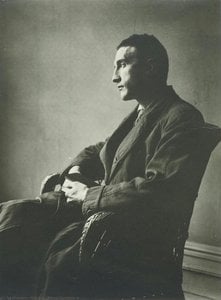
Portrait of Man Ray
Man Ray · 1890 – 1976
Born · died
1890 – 1976, Philadelphia
Movement
Surrealism
Works in our catalogue
142
Most famous
La Galerie Surréaliste, rue Jacques Callot
Most works at
Oscar Niemeyer Museum

Man Ray: the ten masterpieces

La Galerie Surréaliste, rue Jacques Callot by Man Ray
1

La Galerie Surréaliste, rue Jacques Callot

Acrylic On Canvas · Oscar Niemeyer Museum, Curitiba

La Galerie Surréaliste et l'Étoile Scellée : Un Voyage au Cœur de la Créativité Dadaiste La Galerie Surréaliste, située rue Jacques Callot à Paris, fut bien plus qu’une simple adresse artistique ; elle incarnait les aspirations radicales d’une génération marquée par les bouleversements du début du XXe siècle. Fondée en 1926 et dirigée avec passion par Marcel Duchamp et Sophie Babet, cette galerie devint un véritable laboratoire d'expérimentation esthétique et…

Pisces (1938) by Man Ray
2

Pisces

1938 · Oil

Introduction to Man Ray and Surrealism Man Ray, born Emmanuel Radnitzky in 1890, was an American visual artist who spent most of his career in France. He was a significant contributor to the Dada and Surrealist movements, although his ties to each were informal. Man Ray produced major works in a variety of media but considered himself a painter above all. Surrealism is an art movement that emerged in the…

Rayograph (The Kiss) (1922) by Man Ray
3

Rayograph (The Kiss)

1922 · Black and White Photography · MOMA - Museum of Modern Art, New York City

A Dance Between Light and Shadow: Exploring Man Ray’s “The Kiss” Man Ray's "The Kiss," created in 1922 during the heady days of Dada and Surrealism, transcends mere photographic representation; it embodies a radical reimagining of artistic process and perception. This striking photogram—a technique pioneered by Ray himself—captures an intimate moment frozen in time, transforming commonplace objects into symbols of desire and connection. Unlike traditional painting, where artists meticulously render…

Solarisation (1931) by Man Ray
4

Solarisation

1931 · Black and White Photography

In this 1931 black and white photograph, titled Solarisation, Man Ray presents us with a quiet, intimate moment of repose. The subject is a man lying down, his head resting upon his arm in a state of sleep or deep rest. There is a profound sense of stillness here, a pause in time captured through the lens of a man who sought to redefine how we perceive the physical form.

The Pavillion of Elegance by Man Ray
5

The Pavillion of Elegance

Black and White Photography · Oscar Niemeyer Museum, Curitiba

To gaze upon this image is to step directly into the shimmering, slightly unsettling dreamscape of 1925 Paris. It captures not merely a moment in time, but an entire cultural sensibility—the breathless anticipation surrounding modern fashion and the burgeoning power of the photographic gaze. The subject, a woman draped in what appears to be an ocean green Georgette crepe, moves with an almost choreographed grace down a sun-dappled thoroughfare or…

Tristan Tzara and Jean Cocteau by Man Ray
6

Tristan Tzara and Jean Cocteau

Black and White Photography · Oscar Niemeyer Museum, Curitiba

This evocative black and white photograph transports us directly into the vibrant, often bewildering intellectual ferment of the early 20th century. It captures a moment steeped in the spirit of Dadaism and the burgeoning currents of Surrealism—movements that dared to dismantle the very definition of reality. The composition itself feels less like a mere documentation and more like a carefully staged dream sequence, inviting the viewer to question what they…

Nusch eluard with mirror (1935) by Man Ray
7

Nusch eluard with mirror

1935 · Black and White Photography · Kobe Fashion Museum, Kyoto

In the hauntingly beautiful monochrome of "Nusch Eluard with Mirror," captured in 1935, we are invited into a private, ephemeral moment that transcends the boundaries of traditional portraiture. The photograph features Nusch Eluard, a woman who was not only a muse but a profound presence in the Surrealist circle, draped in a delicate veil that clings to her form like a soft shadow. As she holds a mirror before her…

Indestructible Object (or Object to Be Destroyed) (1923) by Man Ray
8

Indestructible Object (or Object to Be Destroyed)

1923 · Photography · MOMA - Museum of Modern Art, New York City

In the annals of modern art, few images possess the unsettling, magnetic pull of Man Ray’s 1923 masterpiece, Indestructible Object (often known as Object to Be Destroyed). To gaze upon this work is to step directly into the fractured psyche of the Surrealist movement, where the boundaries between the living and the mechanical begin to dissolve. The composition presents a disconcerting tableau: a stark, wooden structure that serves as a…

Veiled Erotica by Man Ray
9

Veiled Erotica

Black and White Photography · Oscar Niemeyer Museum, Curitiba

Born in Philadelphia to Russian Jewish immigrant parents, Emmanuel Radnitzky—known universally as Man Ray—was a restless spirit who defied easy categorization. His formative years coincided with the tumultuous period of Dadaism, born from disillusionment with World War I’s horrors and fueled by an uncompromising critique of bourgeois values. Marcel Duchamp's provocative embrace of “ready-made” objects – like *The Gift* – served as a catalyst for Dada artists to dismantle accepted…

(Untitled) by Man Ray
10

(Untitled)

Black and White Photography · Oscar Niemeyer Museum, Curitiba

In the quiet, evocative realm of Man Ray’s photography, we encounter a profound dialogue between the mundane and the metaphysical. This stark black and white composition, often associated with the enigmatic spirit of “The Gift,” transcends mere documentation to become a window into the avant-garde mind. At first glance, the viewer is presented with an abstract arrangement of draped fabric—perhaps a heavy wool—rendered in exquisite detail against a textured surface.…

More Man Ray masterpieces, 11 to 100

The Enigma of Isidore Ducasse (1920) by Man Ray
#11

The Enigma of Isidore Ducasse

1920 · National Gallery of Australia

The Enigma of Isidore Ducasse is an assemblage created by the artist Man Ray. This work originated in 1920 and was later remade in 1972. The object consists…

Nusch with Mirror by Man Ray
#12

Nusch with Mirror

Oscar Niemeyer Museum

In the hauntingly beautiful photograph Nusch with Mirror, the boundaries between reality and illusion dissolve into a singular, breathtaking moment of modernist introspection. Captured by the legendary American…

Dada Portrait by Man Ray
#13

Dada Portrait

Oscar Niemeyer Museum

In the realm of early twentieth-century avant-garde, few names resonate with as much transformative power as Man Ray. His 1923 masterpiece, Dada Portrait, stands as a profound testament…

Natalie Paley Wearing a Sequined Gown by Lelong by Man Ray
#14

Natalie Paley Wearing a Sequined Gown by Lelong

Oscar Niemeyer Museum

Ultimately, “Natalie Paley Wearing a Sequined Gown by Lelong” stands as an enduring emblem of artistic experimentation—a captivating portrait that exemplifies Man Ray’s visionary genius and cements his…

Marcel Duchamp by Man Ray
#15

Marcel Duchamp

Oscar Niemeyer Museum

The photograph by Man Ray of Marcel Duchamp, captured in 1920-21, isn't merely a portrait; it’s a carefully constructed tableau of intellectualism and quiet contemplation. More than just…

Rayograph - 1925 (1925) by Man Ray
#17

Rayograph - 1925

1925 · Museum Boijmans Van Beuningen

Rayograph - 1925 is a Dadaist photogram photographic print created by the artist Man Ray in 1925. This work belongs to the Dadaist movement, a period characterized by…

Café Man Ray by Man Ray
#18

Café Man Ray

Oscar Niemeyer Museum

Café Man Ray: A Surrealist Reverie Revisited The American artist Man Ray (1890-1976) fundamentally reshaped the perception of photography, elevating it from mere documentation to an expressive art…

Dust Breeding (detail) by Man Ray
#19

Dust Breeding (detail)

Oscar Niemeyer Museum

In the hauntingly beautiful detail of Man Ray’s 1920 masterpiece, Dust Breeding, we are invited into a world where the boundaries between reality and dream dissolve into a…

Noire et Blanche by Man Ray
#23

Noire et Blanche

Oscar Niemeyer Museum

Man Ray’s evocative photograph, Noire et Blanche, immediately draws the viewer into a realm where identity blurs and cultural narratives collide. This piece is more than a mere…

Georges Braque by Man Ray
#24

Georges Braque

Oscar Niemeyer Museum

This striking black and white photograph transports us into a moment suspended between the familiar and the avant-garde. At its heart stands a commanding figure, whose direct gaze…

The couple (1914) by Man Ray
#25

The couple

1914 · Sezon Museum of Modern Art

Born Emmanuel Radnitzky in 1890 in Philadelphia, Man Ray was a leading artist of 20th century America. Man Ray awakened to the European avant-garde art at Armory Show…

Pablo Picasso at the Count Étienne de Beaumont’s Ball by Man Ray
#26

Pablo Picasso at the Count Étienne de Beaumont’s Ball

Oscar Niemeyer Museum

Man Ray's captivating photograph, "Pablo Picasso at the Count Étienne de Beaumont’s Ball," isn’t merely a snapshot; it’s a meticulously constructed tableau vivant, a frozen moment brimming with…

Gertrude Stein by Man Ray
#27

Gertrude Stein

Oscar Niemeyer Museum

In the quiet, monochromatic depths of Man Ray’s portrait of Gertrude Stein, we encounter more than just a photographic likeness; we enter a profound dialogue between light and…

Count Étienne de Beaumont by Man Ray
#28

Count Étienne de Beaumont

Oscar Niemeyer Museum

Man Ray’s portrait of Count Étienne de Beaumont isn't merely a likeness; it’s a carefully constructed tableau vivant, a frozen moment capturing the essence of 1920s Parisian high…

ABC by Man Ray
#29

ABC

Oscar Niemeyer Museum

Man Ray's “ABC,” created in 1947, isn’t merely a photograph; it’s an invitation to deconstruct visual language and embrace the inherent ambiguity of perception. Born Emmanuel Radnitzky, later…

Square by Man Ray
#30

Square

Oscar Niemeyer Museum

The Enigma of the Spiral In the quiet intensity of Man Ray’s Square, one is immediately drawn into a rhythmic, swirling dance of typography and form. Created during…

Magnolia by Man Ray
#32

Magnolia

Oscar Niemeyer Museum

In the quiet intersection of reality and dreamscape lies Man Ray’s Magnolia, a breathtaking monochrome study that transcends the boundaries of traditional photography. At first glance, the viewer…

(Untitled) by Man Ray
#33

(Untitled)

Oscar Niemeyer Museum

In the quiet, evocative realm of Man Ray’s “Untitled,” we encounter a profound dialogue between the mundane and the metaphysical. At first glance, the viewer is presented with…

Untitled (D2X7S9) (1916) by Man Ray
#35

Untitled (D2X7S9)

1916 · Metropolitan Museum of Art

A Dance Frozen in Time: Examining Man Ray’s “The Mime” Man Ray's "The Mime," painted in 1916, transcends mere representation; it embodies the spirit of Surrealism and captures…

Self-Portrait by Man Ray
#37

Self-Portrait

Oscar Niemeyer Museum

Man Ray's "Self-Portrait," painted in 1927, isn’t merely a depiction of an individual; it’s a carefully constructed meditation on identity, the gaze, and the very act of representation.…

Glass Tears by Man Ray
#38

Glass Tears

Oscar Niemeyer Museum

Man Ray's "Glass Tears," created between 1930 and 1932, isn’t merely a photograph; it’s a distilled emotion captured in stark black and white. The image, a close-up of…

Butterflies by Man Ray
#39

Butterflies

Oscar Niemeyer Museum

Man Ray’s “Butterflies,” created between 1930 and 1935, isn't merely a photograph; it’s a shimmering portal into the heart of Surrealism. This arresting image, captured during a pivotal…

Serious Man, or The Serious One by Man Ray
#40

Serious Man, or The Serious One

Oscar Niemeyer Museum

Serious Man, or The Serious One The American artist Man Ray (1890-1976) fundamentally reshaped photography’s role—shifting it from mere documentation of reality into an expressive art form itself.…

Kiki in Mechanical Ballet, by Fernand Léger by Man Ray
#44

Kiki in Mechanical Ballet, by Fernand Léger

Oscar Niemeyer Museum

Fernand Léger’s “Kiki in Mechanical Ballet,” painted in 1924, isn't merely a depiction of a woman dancing; it’s an immersive plunge into the heart of early 20th-century anxieties…

Lee Miller by Man Ray
#46

Lee Miller

Oscar Niemeyer Museum

In this mesmerizing black and white photograph, the boundaries between reality and dreamscape dissolve, inviting the viewer into the intimate world of Man Ray and his muse, Lee…

Dora Maar by Man Ray
#47

Dora Maar

Oscar Niemeyer Museum

Man Ray’s Dora Maar: A Portrait of Surrealist Intensity Dora Maar, Picasso's muse and enigmatic collaborator, occupies a singular place in the canon of 20th-century art. Man Ray’s…

Yves Tanguy by Man Ray
#49

Yves Tanguy

Oscar Niemeyer Museum

Yves Tanguy: A Surrealist Landscape of Inner Consciousness Yves Tanguy’s “The J. Paul Getty Museum Collection” isn't merely a depiction of an artist; it’s a portal into the…

Untitled (Aztec figurine of the goddess Tlazoteotl) (1932) by Man Ray
#50

Untitled (Aztec figurine of the goddess Tlazoteotl)

1932 · MOMA - Museum of Modern Art

To gaze upon this photograph is to encounter a profound dialogue across millennia—a conversation between the vibrant spiritual life of ancient Mesoamerica and the experimental, shadow-drenched vision of…

Reflections by Man Ray
#51

Reflections

Oscar Niemeyer Museum

Man Ray’s “Reflections,” painted in 1931, stands as a testament to the burgeoning surrealist movement’s fascination with exploring subconscious landscapes and challenging conventional perceptions of reality. Created during…

Arnold Schönberg by Man Ray
#54

Arnold Schönberg

Oscar Niemeyer Museum

Man Ray's 1924 photograph of Arnold Schoenberg isn’t merely a likeness; it’s a carefully constructed tableau, a visual embodiment of the composer’s complex and revolutionary spirit. Captured during…

Kiki by Man Ray
#55

Kiki

Oscar Niemeyer Museum

Man Ray's Kiki de Montparnasse: A Portrait of Liberation The photograph by Man Ray, titled “Kiki de Montparnasse,” transcends mere documentation; it’s an emblem of the exuberant spirit…

Flying Dutchman (1920) by Man Ray
#73

Flying Dutchman

1920 · Metropolitan Museum of Art

In the realm of early twentieth-century modernism, few works capture the ephemeral boundary between reality and imagination as hauntingly as Man Ray’s Flying Dutchman. Created in 1920, this…

Landscape (Paysage Fauve) (1913) by Man Ray
#75

Landscape (Paysage Fauve)

1913 · Smithsonian American Art Museum

We are looking at Landscape (Paysage Fauve), a painting by Man Ray. Created in 1913, this work captures the artist during a formative period of his early career.…

Me, She (1934) by Man Ray
#76

Me, She

1934

A Surreal Encounter: Exploring Man Ray's "Me, She" Man Ray’s “Me, She,” created in 1934, is a captivating example of surrealist photography that continues to intrigue and inspire.…

The Coat Stand (1920) by Man Ray
#77

The Coat Stand

1920

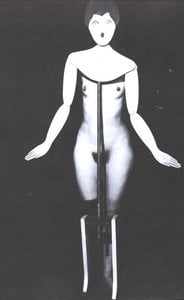
A Surreal Encounter: Deconstructing Identity in Man Ray's "The Coat Stand" Man Ray’s “The Coat Stand” (1920) is a striking black and white photograph that encapsulates the spirit…

Juan Gris by Man Ray
#78

Juan Gris

Oscar Niemeyer Museum

Juan Gris: A Geometric Vision of Surrealism Juan Gris (José Victoriano González-Pérez), born in Madrid in 1887, stands as an enigmatic figure within the vibrant tapestry of early…

Percolator (1917) by Man Ray
#79

Percolator

1917 · Art Institute of Chicago

The work, titled Percolator, is an oil on board painting dating from 1917. It presents a non-representational arrangement of geometric and organic shapes. A vertical, pole-like element occupies…

Departure of Summer (1914) by Man Ray
#80

Departure of Summer

1914 · Art Institute of Chicago

The canvas holds the tension of a moment frozen in 1914. In this oil on canvas work, titled Departure of Summer, the artist Man Ray explores a world…

The Mime (1916) by Man Ray
#87

The Mime

1916 · Metropolitan Museum of Art

Man Ray's paintings by period

The subjects Man Ray painted most

The four subjects that return most often among these masterpieces, with the finest example of each.

Where to see Man Ray's paintings

The 8 museums that hold the most of the paintings on this page.

Museum City Works by Man Ray Paintings from this list
Oscar Niemeyer Museum, CuritibaOscar Niemeyer Museum Curitiba 40 La Galerie Surréaliste, rue Jacques Callot, The Pavillion of Elegance, Tristan Tzara and Jean Cocteau
MOMA - Museum of Modern Art, New York CityMOMA - Museum of Modern Art New York City 3 Rayograph (The Kiss), Indestructible Object (or Object to Be Destroyed), Untitled (Aztec figurine of the goddess Tlazoteotl)
Metropolitan Museum of Art, New YorkMetropolitan Museum of Art New York 3 Untitled (D2X7S9), Flying Dutchman, The Mime
Museum Boijmans Van Beuningen, RotterdamMuseum Boijmans Van Beuningen Rotterdam 2 Rayograph - 1925, The Riddle of Isidore Ducasse
Smithsonian American Art Museum, Washington, D.C.Smithsonian American Art Museum Washington, D.C. 2 Tableau (Untitled), Landscape (Paysage Fauve)
Art Institute of Chicago, ChicagoArt Institute of Chicago Chicago 2 Percolator, Departure of Summer
Israel Museum, JerusalemIsrael Museum Jerusalem 4 The Village
Sezon Museum of Modern Art, KaruizawaSezon Museum of Modern Art Karuizawa 2 The couple

Man Ray, decade by decade: the defining painting of each

  1. 1900s
  2. 1910s
    The couple (1914) by Man Ray
    #25 of 100

    The couple

    Age 20 – 29 · Sezon Museum of Modern Art

    Born Emmanuel Radnitzky in 1890 in Philadelphia, Man Ray was a leading artist of 20th century America. Man Ray awakened to the European avant-garde art at Armory Show…

  3. 1920s
    Rayograph (The Kiss) (1922) by Man Ray
    #3 of 100

    Rayograph (The Kiss)

    Age 30 – 39 · MOMA - Museum of Modern Art

    A Dance Between Light and Shadow: Exploring Man Ray’s “The Kiss” Man Ray's "The Kiss," created in 1922 during the heady days of Dada and Surrealism, transcends mere…

  4. 1930s
    Pisces (1938) by Man Ray
    Rank 2 / 100

    Pisces

    Age 40 – 49

    Introduction to Man Ray and Surrealism Man Ray, born Emmanuel Radnitzky in 1890, was an American visual artist who spent most of his career in France. He was…

  5. 1940s
  6. 1960s
  7. 1970s
    Cadeau (1972) by Man Ray
    No. 48 of 100

    Cadeau

    Age 80 – 86

Man Ray's masterpieces: questions and answers

Which painting is Man Ray best known for?Show the answer

La Galerie Surréaliste, rue Jacques Callot, Oscar Niemeyer Museum, Curitiba. Next come Pisces (1938) and Rayograph (The Kiss) (1922).

What are Man Ray's ten greatest paintings?Show the answer

La Galerie Surréaliste, rue Jacques Callot, Pisces, Rayograph (The Kiss), Solarisation, The Pavillion of Elegance, Tristan Tzara and Jean Cocteau, Nusch eluard with mirror, Indestructible Object (or Object to Be Destroyed), Veiled Erotica and (Untitled). The ranking above gives the year and the museum of each.

How many works did Man Ray paint?Show the answer

Our catalogue lists 142 works by Man Ray, dated from 1908 to 1972.

In which museums can I see Man Ray's masterpieces?Show the answer

Most of them are in Oscar Niemeyer Museum (Curitiba), MOMA - Museum of Modern Art (New York City) and Metropolitan Museum of Art (New York). The table above lists the museums one by one.

When did Man Ray paint the masterpieces?Show the answer

In 1910s: 19 of the 100 works on this page date from then, among them The couple.

What are the first and last famous paintings of Man Ray?Show the answer

The earliest on this page is Untitled (1908), the latest Cadeau (1972).

What were Man Ray's favourite subjects?Show the answer

Photography (27), Black and white (10) and Woman (7), among the 100 works on this page.

Which technique did Man Ray favour?Show the answer

Acrylic On Canvas: 17 of the 100 works on this page.

What art movement is Man Ray part of?Show the answer

Surrealism and Dadaism, as the paintings on this page show.

Which masterpieces by Man Ray hang at the Oscar Niemeyer Museum?Show the answer

La Galerie Surréaliste, rue Jacques Callot, The Pavillion of Elegance and Tristan Tzara and Jean Cocteau are among the 35 works on this page held by the Oscar Niemeyer Museum, Curitiba.

The life of Man Ray

A Life Illuminated by Shadows

Emmanuel Radnitzky, known to the world as Man Ray, was a restless spirit who defied easy categorization. Born in 1890 in Philadelphia to Russian Jewish immigrant parents, his journey from aspiring painter to pioneering photographer and filmmaker embodies the radical artistic ferment of the early 20th century. The shift from “Manny” Radnitzky to the enigmatic “Man Ray” itself speaks volumes about an artist determined to forge a new identity, one unbound by convention. His family’s move to New York City proved pivotal, exposing him to the burgeoning modernist scene and instilling in him a lifelong fascination with experimentation. Early influences included the European avant-garde showcased at Alfred Stieglitz's 291 gallery, and the gritty realism of the Ashcan School – a blend that would subtly inform his later work. Though initially dedicated to painting, it was photography that ultimately became Ray’s most potent medium for exploring the boundaries of perception and reality. He wasn't merely capturing images; he was inventing new ways of *seeing*. His early artistic endeavors were marked by a desire to break from traditional styles, influenced by his exposure to both European modernism and the raw energy of New York City life. The Ferrer Centre, with its anarchist leanings and emphasis on free expression, proved particularly formative during this period, fostering an environment where experimentation was not just encouraged but expected.

Dada, Surrealism, and the Pursuit of the Impossible

Man Ray's artistic trajectory took a dramatic turn with his encounter with Marcel Duchamp in New York around 1915. This meeting sparked a shared fascination with challenging traditional notions of art, leading to explorations of “ready-mades” – ordinary manufactured objects elevated to the status of artwork. This rebellious spirit propelled Ray into the heart of the Dada movement, an anti-art protest born from the disillusionment of World War I. In 1921, he made the momentous decision to relocate to Paris, becoming a central figure in both the Dada and Surrealist circles that flourished there. While never fully aligning himself with any rigid artistic dogma, Ray embraced the Surrealists’ exploration of the unconscious mind, dreams, and the irrational. His work during this period is characterized by a dreamlike quality, often unsettling yet undeniably captivating. He wasn't interested in depicting reality as it *is*, but rather as it *feels* – fragmented, distorted, and imbued with hidden meanings. This embrace of the subconscious allowed him to move beyond mere representation towards an exploration of psychological states and emotional resonance within his art. His collaborations with other Surrealist artists, like Salvador Dalí, further solidified his position within the movement, though he always maintained a degree of independence in his artistic vision.

Rayographs and the Alchemy of Light

Perhaps Man Ray is most celebrated for his invention of the “rayograph,” a cameraless photographic technique he stumbled upon almost by accident. These images—created by placing objects directly onto light-sensitive paper and exposing them to light—resulted in ethereal, ghostly compositions that defied conventional photographic representation. The rayograph wasn't simply an alternative method; it was a philosophical statement about the nature of photography itself. By eliminating the camera lens, Ray stripped away the illusion of objectivity, revealing the inherent subjectivity of the medium. These weren't representations *of* things, but rather direct imprints *from* them, imbued with a sense of mystery and otherworldliness. Beyond rayographs, his photographic portraits – particularly those of artists like Lee Miller (who would become both his muse and collaborator) – are renowned for their striking compositions and psychological depth. He experimented relentlessly with solarization, multiple exposures, and darkroom manipulation, pushing the boundaries of what photography could achieve. Solarization, in particular, became a signature technique, creating dramatic reversals of tone that added an element of the uncanny to his portraits.

Beyond Stillness: Film and a Lasting Legacy

Man Ray’s artistic curiosity extended beyond still images into the realm of filmmaking. His experimental films, such as *Le Retour à la Raison* (1923) and *L'Étoile de Mer* (1928), were characterized by their surreal imagery, unconventional editing techniques, and rejection of narrative conventions. These weren’t stories told in a traditional sense; they were visual poems, explorations of form, rhythm, and the subconscious. He often employed innovative techniques like stop-motion animation and superimposition to create disorienting and dreamlike effects. Though his film work remained relatively small in volume, it was profoundly influential on subsequent generations of avant-garde filmmakers. Throughout his long career, Man Ray continued to challenge artistic norms, refusing to be confined by labels or expectations. He died in Paris in 1976, leaving behind a body of work that continues to inspire and provoke. His legacy lies not only in his technical innovations but also in his unwavering commitment to artistic freedom and his relentless pursuit of the impossible—a true pioneer who forever altered our perception of art and reality. His influence can be seen across various disciplines, from contemporary photography and film to fashion and design, demonstrating the enduring power of his vision.

A Continuing Influence

  • Photography: Man Ray’s techniques, particularly rayography and solarization, continue to be explored by contemporary photographers.
  • Surrealism: His contributions solidified the movement's visual language and inspired countless artists across disciplines.
  • Experimental Film: His pioneering work in film laid the groundwork for future generations of avant-garde filmmakers.
  • Fashion Photography: Ray’s innovative approach to portraiture and composition influenced the development of modern fashion photography.
Man Ray's impact extends far beyond his own lifetime, continuing to resonate with artists and audiences today. His willingness to experiment, his rejection of convention, and his unwavering commitment to artistic freedom serve as a powerful inspiration for those who seek to push the boundaries of creative expression. He remains a pivotal figure in 20th-century art, whose work continues to challenge, provoke, and delight.

All 142 works by Man Ray →