
Famous paintings · Expressionism

The 100 Most Famous Expressionism Paintings

1888 – 1973

Edvard Munch's The Scream (1893, Nasjonalgalleriet), George Grosz's The Pillars of Society (1926, Staatliche Museen zu Berlin), Wassily Kandinsky's Composition VII (1913, Tretyakov Gallery), August Macke's Woman in a Green Jacket (1913, Museum Ludwig) and Edvard Munch's Madonna (1894, Munch Museum): these are the most famous Expressionism paintings. The list runs to 100 paintings by 32 artists, from 1888 to 1973, each with the collection that holds it today.

The Scream by Edvard Munch, 1893, Nasjonalgalleriet — famous Expressionism painting
No. 1 · Edvard MunchThe Scream1893 · Nasjonalgalleriet, Oslo
100paintings, ranked by fame
32painters · James Ensor – Francis Bacon
52museums in 29 cities
4at the Nasjonalgalleriet alone

The ranking

The 100 most famous paintings of the Expressionism

Ranked by how widely each painting is known. The artist, the date, the size of the original, the museum that holds it today — and one detail to look for.

  1. The Scream by Edvard Munch, 1893, Nasjonalgalleriet
    1

    Edvard MunchExpressionism

    The Scream

    1893Oil and tempera91 × 73 cmNasjonalgalleriet, Oslo

    A gaunt, androgynous figure dominates the foreground, hands pressed against its cheeks, mouth agape in what many perceive as a silent cry. The figure is not emitting a sound, but rather reacting to an overwhelming sensation—a great, infinite scream of nature that Munch himself described in his diary.

    Oil reproduction from $181 Canvas print from $47

  2. The Pillars of Society by George Grosz, 1926, Staatliche Museen zu Berlin
    2

    1926Oil on canvas108 × 200 cmStaatliche Museen zu Berlin

    The composition is dense and dynamic, with a sense of movement and tension. Created during the Weimar Republic, "The Pillars of Society" reflects the social and political unrest of the time. Grosz, a key figure in Berlin Dada and New Objectivity, used his art to critique society, politics, and the rise of fascism.

    Look forexaggerated mask-like facesnewspapers and printed materialsurban architectural elements

    About this painting

  3. Composition VII by Wassily Kandinsky, 1913, Tretyakov Gallery
    3

    1913Oil on canvas200 × 300 cmTretyakov Gallery, Moscow

    Emerging from the fertile artistic landscape of early 20th-century Europe, this painting reflects Kandinsky’s growing rejection of traditional subject matter. Influenced by Theosophy, music (particularly Wagner), and a desire to connect art with the spiritual realm, he sought to liberate color and form from their descriptive roles.

    Look forenergetic linesvibrant colorslayering of formsswirling shapes

    Oil reproduction from $181 Canvas print from $47

  4. Woman in a Green Jacket by August Macke, 1913, Museum Ludwig
    4

    1913Oil on canvas44 × 44 cmMuseum Ludwig, Cologne

    It reflects Macke's evolving style, influenced by Fauvism and, crucially, his encounter with Robert Delaunay’s Orphic Cubism – a synthesis visible in the painting’s dynamic interplay of shapes and hues. Created just before the outbreak of World War I, this artwork captures a fleeting moment of peace and prosperity in Europe.

    Oil reproduction from $356 Canvas print from $47

  5. Madonna by Edvard Munch, 1894, Munch Museum
    5

    Edvard MunchExpressionism

    Madonna

    1894Lithograph (implied from description)90 × 68 cmMunch Museum, Oslo

    Munch eschews traditional artistic conventions, employing swirling lines, distorted forms, and a deliberately jarring color palette to convey inner turmoil. Created during a period of intense psychological struggle for the artist, this work reflects not only universal themes of grief and anxiety but also Munch’s own internal demons.

    Look forthemes of motherhoodlossdistorted figuresintense colors

    Oil reproduction from $181 Canvas print from $47

  6. The Large Blue Horses by Franz Marc, 1911, Walker Art Center
    6

    Franz MarcGerman Expressionism

    The Large Blue Horses

    1911Oil on canvas104 × 181 cmWalker Art Center, Minneapolis

    The artwork features three large blue horses set against a vibrant backdrop of rolling red hills and lush greenery. Created during his time as a founding member of Der Blaue Reiter (The Blue Rider), this painting reflects the group's emphasis on color symbolism and emotional expression.

    Look forthick impasto technique creating a textured surfacedynamic background with swirling lines and vibrant colors

    Oil reproduction from $181 Canvas print from $47

  7. Melancholy (Laura) by Edvard Munch, 1894, Nasjonalgalleriet
    7

    1894Oil on canvas81 × 101 cmNasjonalgalleriet, Oslo

    The scene depicts a solitary figure seated on a shoreline, lost in contemplation. This individual, positioned prominently on the right side of the canvas, dominates roughly one-third of the space, emphasizing their emotional presence against the vastness of the landscape.

    Look forshorelineturbulent waterdistorted formssomber color palette

    Oil reproduction from $181 Canvas print from $47

  8. The Self-Seers II (Death and Man) by Egon Schiele, 1911, Leopold Museum
    8

    1911Oil on canvas81 × 80 cmLeopold Museum, Vienna

    Schiele's signature style is immediately apparent in this piece: distorted forms, angular lines, and a raw emotional intensity that breaks from traditional representation. Created in Vienna during a period of societal upheaval and artistic innovation, this artwork reflects the anxieties of a rapidly changing world.

    Look forskeletal handdistorted formssomber colorshaunting expression

    Oil reproduction from $181 Canvas print from $47

  9. Three Studies for Figures at the Base of a Crucifixion by Francis Bacon, 1944
    9

    1944Oil on sundeala fibre board

    The three panels present distorted, almost unrecognizable figures set against a searing orange backdrop, creating an atmosphere of claustrophobia and unease. Created during the final years of World War II, this work reflects the pervasive atmosphere of trauma and uncertainty gripping Europe.

    About this painting

  10. Reclining Nude with Blue Cushion by Amedeo Modigliani, 1916
    10

    1916Oil on canvas60.1 × 92.1 cm

    Created during a period of radical artistic experimentation in early 20th-century Paris, this painting reflects the influence of both Cubism and Expressionism, yet remains uniquely Modigliani’s own.

    Look forabstract backgroundblue cushionelongated forms

    Oil reproduction from $181 Canvas print from $47

  11. The Bride of the Wind by Oskar Kokoschka, 1914, Kunstmuseum
    11

    1914Oil on canvas180.4 × 220.2 cmKunstmuseum, Basel

    The figure is rendered with bold, sweeping strokes that suggest both flesh and fabric, seamlessly blending into the turbulent background. Created in 1914, this piece exemplifies the powerful emotional language of Expressionism.

    Look forlayered texturessymbolic undertonesvigorous brushworkcontrasting color palette

    About this painting

  12. Four Trees by Egon Schiele, 1917, Austrian Gallery Belvedere
    12

    Egon SchieleExpressionism

    Four Trees

    1917Oil on canvas110 × 141 cmAustrian Gallery Belvedere, Vienna

    Vienna at the turn of the century was ablaze with artistic innovation. Egon Schiele’s influence extends far beyond the confines of Vienna, establishing him as a pivotal figure in modern art —particularly Expressionism.

    Oil reproduction from $181 Canvas print from $47

  13. The Family by Egon Schiele, 1917, Austrian Gallery Belvedere
    13

    Egon SchieleExpressionism

    The Family

    1917Oil on canvas152 × 162 cmAustrian Gallery Belvedere, Vienna

    In The Family, this manifests through jagged, angular lines that seem to vibrate with tension. A gallery wall: Paired with other Expressionist works, The Family will create a powerful visual statement.

    Oil reproduction from $231 Canvas print from $47

  14. Landscape with Yellow Birds by Paul Klee, 1923
    14

    1923Oil painting

    Paul Klee was a Swiss-born German artist who played a pivotal role in the development of modern art. For those interested in exploring more of Klee’s works, Paul Klee: Landscape with Yellow Birds is available on AllPaintingsStore.com. For a comprehensive understanding of 20th-century Western painting, refer to 20th-Century Western Painting.

    Oil reproduction from $181 Canvas print from $47

  15. Child with Dove by Pablo Picasso, 1901, University of Iowa
    15

    1901Oil on canvas73 × 54 cmUniversity of Iowa

    “Child with Dove” is firmly rooted within Picasso's Blue Period, a time marked by somber tones and themes of poverty, suffering, and isolation. While "Child with Dove" is firmly within the Blue Period, it also foreshadows the revolutionary developments that would soon emerge from Picasso’s studio.

    Look forballdove

    About this painting

  16. The Judgement of Paris by Ernst Ludwig Kirchner
    16

    Oil on canvas

    The central figure stands upright, while the other two figures are positioned to the left and right, their bodies intertwined. As a co-founder of the artists group Die Brücke ("The Bridge"), Kirchner was at the forefront of the Expressionist movement in 20th-century art.

    Look forwarm color palette with yellow, orange, redabstract background with contrasting cool tonesthick, visible brushstrokes and impasto techniquetriangular formation of figures

    Oil reproduction from $231 Canvas print from $47

  17. Triptych by Francis Bacon, 1973
    17

    Francis BaconExpressionism

    Triptych

    1973Oil on canvas

    The composition centers on a solitary figure, seated within what appears to be an ornate doorway or architectural recess. Bacon’s style is immediately recognizable for its raw energy and expressive brushwork. triptych, may -june, 1973 a exemplifies this perfectly. Painted in 1973, this triptych is inextricably linked to Bacon’s personal tragedy.

    Look forimpasto techniquedirectional lightingisolationintrospection

    About this painting

  18. Dance (II) by Henri Matisse, 1910, Hermitage Museum
    18

    Henri MatisseFauvist Expressionism

    Dance (II)

    1910Oil on canvas260 × 391 cmHermitage Museum, Saint Petersburg

    When one first encounters this work, it is impossible not to be swept up in the rhythmic cadence of the figures. As a leader of the Fauves—the "wild beasts"— Matisse abandoned the subtle tonal gradations and academic precision of his predecessors.

    Oil reproduction from $181 Canvas print from $47

  19. Mother with Two Children by Egon Schiele, 1917, Austrian Gallery Belvedere
    19

    1917Oil on canvas150 × 160 cmAustrian Gallery Belvedere, Vienna

    The composition is deceptively simple yet powerfully effective. Painted in 1917, during the height of WWI, Mother with Two Children is deeply rooted in its historical context.

    Look forelongated figuresmuted color palette with vibrant accentstriangular composition

    Oil reproduction from $231 Canvas print from $47

  20. Death and the Masks by James Ensor, 1897, La Boverie
    20

    1897Oil on canvas78.5 × 100 cmLa Boverie, Liège

    James Ensor was a Belgian artist who played a significant role in the development of Expressionism. The style of James Ensor was influenced by various art movements, including Fauvism and Symbolism. For more information on James Ensor and his works, visit the AllPaintingsStore website.

    Oil reproduction from $181 Canvas print from $47

  21. The White Cat (also known as Tom Cat on Yellow Pillow) by Franz Marc, 1912, Staatliche Galerie Moritzburg
    21

    1912Oil on panel50 × 60 cmStaatliche Galerie Moritzburg, Germany

    Marc’s distinctive style is immediately apparent in The White Cat.

    Look forwhite cat reclining on a yellow pillow against a red couch

    Oil reproduction from $181 Canvas print from $47

  22. Triptych, May-June 1973 by Francis Bacon, 1973
    22

    1973Oil on canvas

    The year 1973 was pivotal for Bacon. On the eve of his major retrospective at the Grand Palais in Paris, he received the devastating news of Dyer’s death. Some scholars suggest the central panel alludes to a funerary scene, while others see it as a depiction of Bacon’s own internal struggle with guilt and grief.

    About this painting

  23. The Iron Bridge (View of Frankfurt) by Max Beckmann, 1922, Kunstsammlung Nordrhein-Westfalen
    23

    1922Oil on canvas42 × 25 cmKunstsammlung Nordrhein-Westfalen, Duesseldorf

    Max Beckmann's "The Iron Bridge (View of Frankfurt)" captures the pulsating energy of an industrial cityscape. The artwork exemplifies German Expressionism, characterized by its emotional intensity and distorted forms. Painted in the aftermath of World War I, "The Iron Bridge (View of Frankfurt)" reflects Beckmann's altered vision of humanity and urban life.

    Look forsuspension bridge as central focususe of strong diagonal lines for depth and perspective

    Oil reproduction from $181 Canvas print from $47

  24. Near the bed of death (fever) by Edvard Munch, 1915, Munch Museum
    24

    1915Oil on canvas60 × 80 cmMunch Museum, Oslo

    Created in 1915, this powerfully emotive painting by Edvard Munch is a cornerstone of Expressionist art, offering a raw and unflinching depiction of grief, mortality, and the psychological weight of loss. It reflects a broader cultural preoccupation with illness, loss, and the fragility of life that permeated early 20th-century Europe.

    Look forswirling backgrounddistorted figuressomber colorsemotional intensity

    Oil reproduction from $231 Canvas print from $47

  25. Orange and Red on Red by Mark Rothko
    25

    Mark RothkoColor Field Expressionism

    Orange and Red on Red

    Oil on canvas

    The canvas breathes with layers of luminous pigment, where shades of orange and red intermingle and subtly clash against a dominant crimson ground. There are no discernible shapes or figures, only the interplay of color itself, creating an immersive experience for the viewer. Mark Rothko’s influence on modern art is undeniable.

    About this painting

  26. Strong Dream by Paul Klee, 1929
    26

    Paul KleeExpressionism

    Strong Dream

    1929Gouache21 × 26 cm

    Paul Klee (1879-1940), born in Switzerland but deeply connected to the German art scene, was a truly unique figure. Key Works by Paul Klee: View onto a Square, 1912 – A foundational work demonstrating Klee’s early experimentation with geometric abstraction. Young Woman in the Armchair, 1913 – A compelling example of Klee’s ability to blend realism with abstract elements.

    Oil reproduction from $181 Canvas print from $47

  27. Mujer y perro cara a la luna by Joan Miró, 1936, Museo Nacional Centro de Arte Reina Sofía
    27

    Joan MiróSurrealist Expressionism

    Mujer y perro cara a la luna

    1936Oil on canvasMuseo Nacional Centro de Arte Reina Sofía

    Born in Barcelona in 1893, Miró’s formative years were steeped in the vibrant atmosphere of Gaudí’s architectural legacy. This fascination for organic forms would permeate his artistic endeavors, shaping his distinctive style characterized by biomorphic shapes, simplified lines, and a palette dominated by earthy hues punctuated with bursts of color.

    About this painting

  28. Fruit Harvest in a Mountain Orchard by Marianne von Werefkin, 1912, Berlinische Galerie
    28

    1912Oil on panelBerlinische Galerie

    Werefkin’s formative years were steeped in familial tradition – her father, General Vladimir Werefkin, commanded respect as a military leader, while her mother, Yelizaveta Daragan, possessed an innate artistic sensibility herself. From the outset, young Marianna demonstrated an exceptional aptitude for visual representation, commencing her artistic pursuits at fourteen following a debilitating illness.

    Oil reproduction from $181 Canvas print from $47

  29. Self-Portrait with Bonito by Frida Kahlo, 1941
    29

    Frida KahloSurrealist Expressionism

    Self-Portrait with Bonito

    1941Oil on canvas

    Painted during a period marked by significant physical and emotional turmoil – including a devastating bus accident in 1925 – ‘Self-Portrait with Bonito’ offers a poignant glimpse into Frida Kahlo's inner landscape. Alternatively, exploring resources like the Frida Kahlo Foundation (https://www.fridakahlo.org/) offers invaluable insights into her artistic process and symbolism.

    Look formustachebonito

    Oil reproduction from $181 Canvas print from $47

  30. All Saints Day I by Wassily Kandinsky, 1911
    30

    1911Oil paint50 × 64 cm

    This dynamic composition bursts with energy, featuring bold colors, overlapping figures, and symbolic elements that create a sense of movement and celebration. Created during Kandinsky's formative years in Munich, "All Saints Day I" reflects his transition from representational art to abstraction. Experience the transformative power of "All Saints Day I" by Wassily Kandinsky.

    Look forflowersgeometric shapesvibrant color palettedynamic composition

    Oil reproduction from $281 Canvas print from $47

  31. Portrait of Wally by Egon Schiele, 1912, Leopold Museum
    31

    1912Oil on panel327 × 398 cmLeopold Museum, Vienna

    The subject is Walburga “Wally” Neuzil, Schiele’s lover and frequent muse. Vienna in 1912 was a hotbed of artistic and intellectual ferment. Schiele, alongside Gustav Klimt, challenged the conservative norms of the Viennese art establishment.

    Oil reproduction from $181 Canvas print from $47

  32. The Dance of Life by Edvard Munch, 1899, Nasjonalgalleriet
    32

    1899Oil on canvas49 × 75 cmNasjonalgalleriet, Oslo

    The central figures—a man in dark clothing and a woman in a striking red dress —command attention against a backdrop of muted tones and lush greenery. Created during a period of intense personal and artistic exploration, "The Dance of Life" reflects Munch's fascination with the human condition.

    Oil reproduction from $306 Canvas print from $47

  33. The Hat Shop by August Macke, 1913, Museum Folkwang
    33

    August MackeExpressionism

    The Hat Shop

    1913Oil on canvasMuseum Folkwang, Essen

    The scene is thoughtfully composed, with the woman positioned on the left, her contemplative posture guiding viewers’ eyes toward the display of hats in the shop window. The artist’s focus on the act of choosing accessories highlights themes of personal style, identity, and the fleeting moments of daily routine.

    Look forvibrant colorsexpressive brushstrokessimplified formsbold shapes

    Oil reproduction from $181 Canvas print from $47

  34. Figure with Meat by Francis Bacon, 1954, Edwin A. Ulrich Museum
    34

    1954Oil on canvasEdwin A. Ulrich Museum

    The painting’s power lies not in beauty or harmony, but in its raw, unflinching depiction of vulnerability, fear, and the unsettling proximity of life and death. The genesis of “Figure with Meat” lies in Diego Velázquez's renowned portrait of Pope Innocent X, a work celebrated for its depiction of papal authority and serene composure.

    Look forraw meatwings

    About this painting

  35. Grazing Horses IV by Franz Marc, 1911
    35

    Franz MarcGerman Expressionism

    Grazing Horses IV

    1911Oil on canvas121 × 183 cm

    Franz Marc's "Grazing Horses IV" (also known as "The Red Horses") is a vibrant and dynamic painting that epitomizes the spirit of German Expressionism. Franz Marc was a key figure in the German Expressionism movement and co-founder of Der Blaue Reiter, an influential artists' group.

    Look forbold colorsdynamic compositionexpressive brushwork

    Oil reproduction from $181 Canvas print from $47

  36. Forest Painting by Hans Emmenegger, 1936
    36

    1936Oil on canvas61 × 41 cm

    The Forest Painting by Hans Emmenegger emerges from the canvas as a quiet moment captured in 1936. This oil on canvas work presents a specific slice of the natural world, held within a frame measuring 61 x 41 cm. Every inch of the surface carries the weight of the artist's hand, translating a sense of place into a tangible, physical presence.

    Oil reproduction from $181 Canvas print from $47

  37. Skeletons Warming Themselves by James Ensor, 1889, Kimbell Art Museum
    37

    James EnsorSymbolist Expressionism

    Skeletons Warming Themselves

    1889Oil on canvas74 × 60 cmKimbell Art Museum, Fort Worth

    Interestingly, X-radiographs revealed that Skeletons Warming Themselves was created over an earlier painting: a bust-length portrait of a young girl. This layering of images speaks volumes about Ensor’s artistic process and his personal circumstances at the time. The decision to rework an existing canvas suggests a period of economic hardship, a common struggle for many artists in late 19th-century Europe.

    Look forstovemasksskeletons

    Oil reproduction from $181 Canvas print from $47

  38. The Falling Angel by Marc Chagall, 1947, Kunstmuseum
    38

    Marc ChagallExpressionism/Surrealism

    The Falling Angel

    1947Oil or tempera on canvas148 × 189 cmKunstmuseum, Basel

    Central to the composition is a fiery, winged figure that appears to be falling or ascending, evoking themes of spiritual conflict, transformation, and divine intervention. Created in 1947, this work exemplifies a powerful blend of expressionism and surrealism. The artist, Marc Chagall, was deeply influenced by his Belarusian Jewish heritage, Eastern European folklore, and the tumultuous events of the 20th century.

    Look forsymbolic imagerydynamic compositionallegorical figures

    About this painting

  39. Adrienne (Woman with Bangs) by Amedeo Modigliani, 1917, National Gallery of Art
    39

    1917Oil55.3 × 38.1 cmNational Gallery of Art, Washington

    The focus on the upper body and face creates an intimate connection, drawing viewers into her quiet, reflective mood. Created in 1917, this artwork exemplifies Amedeo Modigliani’s signature modernist approach, characterized by stylized forms and bold, expressive brushwork. The stylization and abstraction emphasize mood over realism, aligning with the modernist and expressionist movements of the early 20th century.

    Look forsimplifiedstylized featuresboldexpressive brushwork

    Oil reproduction from $181 Canvas print from $47

  40. Legend of the Nile by Paul Klee, 1937, Kunstmuseum Bern
    40

    1937Oil on canvasKunstmuseum Bern

    Inspired by the legendary Nile, the piece weaves a narrative of water, life, and spirituality through abstract motifs and symbolic forms. Employing a synthesis of Expressionism, Cubism, and Surrealism, Klee's distinctive style is characterized by geometric shapes, fluid lines, and layered textures.

    Look forlayered texturesgeometric shapessymbolic motifs

    Oil reproduction from $181 Canvas print from $47

  41. Ashes by Edvard Munch, 1894, National Museum of Art, Architecture and Design
    41

    Edvard MunchExpressionism

    Ashes

    1894Oil on canvas120 × 141 cmNational Museum of Art, Architecture and Design, Oslo

    "Ashes" (1894) is a hauntingly beautiful artwork by Norwegian master Edvard Munch, renowned for his deeply emotional and psychologically charged paintings. This piece exemplifies Munch's distinctive style, blending elements of Symbolism and Expressionism to create a scene that is both visually striking and emotionally resonant. The painting depicts a mysterious forest scene with two central figures: a standing woman with long red hair and a flowing white dress, and a prone figure lying on the ground. The composition draws the viewer's eye upward through tall trees, creating a sense of depth and verticality. Created in 1894, "Ashes" reflects Munch's preoccupation with themes of love, fear, death, melancholia, and anxiety.

    Look forprone figure on the grounddense forest backgroundstanding woman with long red hair and white dress

    Oil reproduction from $181 Canvas print from $47

  42. Military Policeman arresting the spirit by Yannis Tsarouchis, 1965
    42

    1965

    About this painting

  43. La tristesse du roi by Henri Matisse, 1907, Musée National d'Art Moderne
    43

    Henri MatisseFauvist Expressionism

    La tristesse du roi

    1907Gouache on paperMusée National d'Art Moderne

    The painting depicts three figures—a man seated with his hands raised, a woman holding an umbrella, and a musician playing a violin—creating a tableau of quiet contemplation amidst a vibrant landscape. Matisse’s Fauvist approach prioritizes expressive color over realistic depiction. “La Tristesse du Roi” emerged during a period of artistic ferment in France—the Fauvist movement spearheaded by Matisse and André Derain.

    Oil reproduction from $181 Canvas print from $47

  44. Great Scene of Agony by Max Beckmann, 1906, Bavarian State Painting Collections
    44

    1906Oil on canvas141 × 131 cmBavarian State Painting Collections, Munich

    While predating the full horrors of World War I, it anticipates the disillusionment and existential questioning that would characterize the post-war period.

    Look forimpasto techniqueambiguous scenedistorted figuressomber color palette

    Oil reproduction from $206 Canvas print from $47

  45. View of Murnau with train and castel by Wassily Kandinsky, 1909, Stadtische Galerie in Lenbach
    45

    1909Oil36 × 49 cmStadtische Galerie in Lenbach, Munich

    The artwork is a prime example of Expressionism, characterized by its bold colors, fluid shapes, and emotional resonance. During this period, Kandinsky was deeply influenced by the landscapes around Murnau, where he lived with his partner, artist Gabriele Münter.

    Look fordynamic compositionsilhouetted figuresvibrant sunset colors

    Oil reproduction from $181 Canvas print from $47

  46. Dans mon pays by Marc Chagall, 1943, Galleria Civica di Arte Moderna e Contemporanea Torino
    46

    Marc ChagallSurrealist Expressionism

    Dans mon pays

    1943Oil on canvasGalleria Civica di Arte Moderna e Contemporanea Torino, Turin

    Chagall’s signature style—characterized by flattened perspectives, fantastical figures rendered in vibrant hues—is powerfully evident here. Chagall's departure from Vitebsk followed the escalating persecution faced by Jewish communities across Europe under Nazi rule. Dominating the composition is a solitary man standing amidst the snow, clutching a bucket—a potent emblem of labor and domesticity—representing Chagall's connection to his family and homeland.

    About this painting

  47. Self-portrait with Model by Ernst Ludwig Kirchner, 1910, Hamburger Kunsthalle
    47

    1910Oil on canvas150.4 × 100 cmHamburger Kunsthalle

    Kirchner does not seek to replicate reality through the lens of academic perfection, but rather to distill the very essence of human experience—the tension, the isolation, and the vibrant, often clashing, energies of modern life. Emerging from the shadows of World War I, Kirchner’s work reflects the widespread societal upheaval and the fragmentation of identity that defined early 20th-century Europe.

    Oil reproduction from $181 Canvas print from $47

  48. Nudo rosso by Amedeo Modigliani, 1917, Nakanoshima Museum of Art
    48

    1917Oil on canvas60 × 92 cmNakanoshima Museum of Art, Osaka

    Notably, Modigliani's stylistic choices align with broader trends in Expressionism, mirroring the movement’s preoccupation with conveying inner emotion through distorted forms and vibrant hues. The artwork's inclusion in Modigliani’s inaugural exhibition at Galerie Berthe Weill—a venture tragically shuttered by police intervention—highlights the artist’s defiance of societal norms and his unwavering commitment to artistic freedom.

    Oil reproduction from $181 Canvas print from $47

  49. Self-portrait of a 'Degenerate Artist' by Oskar Kokoschka, 1937
    49

    1937Oil on canvas110 × 85 cm

    The artwork encapsulates the anxieties and defiance felt by artists branded as “degenerate” by the regime, offering a poignant glimpse into a turbulent period in history. Bold, visible brushstrokes dominate the canvas, creating a textured surface that vibrates with energy. In 1937, the Nazis staged the infamous “Degenerate Art” exhibition in Munich, showcasing works they deemed subversive and immoral.

    Look fordepiction of alienationintense color palettevisible brushstrokesemotional intensity

    About this painting

  50. Women by Paul Klee, 1921, Aichi Prefectural Museum of Art
    50

    Paul KleeExpressionism

    Women

    1921Watercolor/ink52 × 41 cmAichi Prefectural Museum of Art, Nagoya

    This work, rendered primarily in shades of charcoal, gray, and deep green punctuated by flashes of red and yellow, immediately arrests the viewer with its fragmented composition and ambiguous subject matter. The painting feels less like a representation of reality and more like a distillation of emotion, memory, and perhaps even the subconscious.

    Look forfragmented forms

    Oil reproduction from $181 Canvas print from $47

  51. Le Dent Du Midi from Leysin, Switzerland by Sir William Rothenstein, 1930
    51

    1930Oil on canvas

    The mountain peaks of Switzerland rise to meet the eye in Le Dent Du Midi From Leysin, Switzerland. The work dates to about 1930, a period when the artist's hand moved with a specific, seasoned intent. Sir William Rothenstein brings a sense of quiet presence to this scene.

    Oil reproduction from $181 Canvas print from $47

  52. Self-Portrait with Masks by James Ensor, 1899, Philadelphia Museum of Art
    52

    1899Oil on canvas120 × 80 cmPhiladelphia Museum of Art

    This striking self-portrait by James Ensor captures the artist in a moment of introspection, surrounded by an array of masks that seem to emerge from his subconscious. The composition centers on Ensor himself, depicted with a contemplative gaze, holding a palette and brush, symbolizing his identity as a creator.

    Look forfacesmasks

    Oil reproduction from $231 Canvas print from $47

  53. La tertulia del café de Pombo by José Gutiérrez Solana
    53

    Oil on canvas

    A group of men occupies a dining table within a bar or restaurant setting, caught in a moment of shared conversation. The scene is rendered in a monochromatic palette, emphasizing the stark interplay of light and shadow across the figures. The work reflects an intersection of Expressionism and Realism, utilizing a subdued tone to portray everyday life.

    Oil reproduction from $181 Canvas print from $47

  54. Mystical Head: Meditation by Alexej von Jawlensky, 1918, Lenbachhaus
    54

    1918Oil40.1 × 30.8 cmLenbachhaus, Munich

    Created in 1918 by the renowned Russian artist Alexej von Jawlensky, this piece exemplifies the modernist movement, blending elements of Expressionism and Fauvism. The year 1918 situates this piece amidst the tumult of post-World War I Europe, where artists turned inward, seeking solace and meaning through bold color and symbolic forms.

    Look forsimplified formsexpressive linessymbolic abstractionbold colors

    Oil reproduction from $181 Canvas print from $47

  55. The Poetess by Joan Miró, 1940
    55

    Joan MiróSurrealist Expressionism

    The Poetess

    1940Gouache

    Joan Miró, a renowned Spanish artist, is celebrated for his contributions to the Surrealist movement. "The Poetess" is characterized by its vibrant colors and intricate patterns, typical of Miró's surrealist approach. Additionally, the Centre Pompidou in Paris houses a significant collection of his works, including "Constellations," which can be found at Centre Pompidou.

    About this painting

  56. The old blind guitarist by Pablo Picasso, 1903, Art Institute of Chicago
    56

    1903Oil on canvas121 × 82 cmArt Institute of Chicago

    The early 20th century witnessed significant shifts in artistic expression. This period was deeply personal for Picasso, reflecting his own struggles with poverty and the emotional impact of losing a close friend, Carlos Casagemas, to suicide.

    About this painting

  57. Passion (Jealousy) by Edvard Munch, 1895, Bergen Kunstmuseum
    57

    1895Oil on canvas48 × 58 cmBergen Kunstmuseum

    The artwork presents a dreamlike scene featuring three central figures arranged in a triangular formation. Munch's distinctive Expressionist style is evident in "Jealousy." The painting emphasizes emotional experience over physical reality, characterized by fluid, somewhat indistinct lines and loosely defined shapes.

    Look fordreamlike quality and emotional intensityearthy tones contrasted with vibrant splashes of redvibrant red dress of the central figure

    Oil reproduction from $206 Canvas print from $47

  58. Bathing Girls with Town in the Background by August Macke, 1913, Staatsgalerie Moderner Kunst
    58

    1913100 × 80 cmStaatsgalerie Moderner Kunst, Munich

    Influenced by Fauvism and Orphism, he employs a rich palette of greens, yellows, reds, and blues to create a vibrant and dreamlike atmosphere. This painting is a prime example of how Macke integrated influences from French Impressionism, Fauvism, and Orphism into his own unique style.

    Look forbold colorsexpressive linesdynamic composition

    Oil reproduction from $306 Canvas print from $47

  59. Death and the Maiden by Egon Schiele, 1915, Austrian Gallery Belvedere
    59

    1915Oil on canvasAustrian Gallery Belvedere, Vienna

    Schiele's use of color in "Death and the Maiden" is striking. Created during World War I, "Death and the Maiden" reflects Schiele's personal experiences and the broader societal anxieties of the time. "Death and the Maiden" is a powerful exploration of human emotions.

    Look forcontrast between dark and light figuresvibrant colors on the lighter figure's garmentchaotic background suggesting a turbulent environment

    Oil reproduction from $206 Canvas print from $47

  60. Jeanne Hebuterne with Hat and Necklace by Amedeo Modigliani, 1917
    60

    1917Oil on canvas164 × 137 cm

    This work exemplifies Modigliani's signature style – a graceful elongation of form, inspired by African sculpture and Renaissance portraiture. Departing from traditional representation, he simplifies features, particularly the face and neck, creating an elegant austerity.

    Oil reproduction from $181 Canvas print from $47

  61. New Angel by Paul Klee, 1920, Israel Museum
    61

    Paul KleeCubist Expressionism

    New Angel

    1920Oil31.8 × 24.2 cmIsrael Museum, Jerusalem

    Created in 1920, New Angel by Paul Klee offers a glimpse into the artist's singular vision. In 1915, he produced Woman Knitting, a piece that captures a sense of quiet, rhythmic movement. The 1925 work Fish Magic demonstrates his ability to use simple shapes to suggest something much more complex. By 1927, in Ships in the Dark, he showed a particular skill at balancing light and shadow to create a sense of space. Comedians' Handbill, produced in 1938, features thicker lines and more generalized forms, marking a departure from the precision of his Bauhaus years.

    Oil reproduction from $181 Canvas print from $47

  62. Portrait of Isabel Rawsthorne Standing in Soho by Francis Bacon, 1967, Neue Nationalgalerie
    62

    1967Oil on canvasNeue Nationalgalerie, Berlin

    This piece firmly establishes Bacon as a pivotal figure within Expressionism, mirroring his broader exploration of human vulnerability and confronting viewers with uncomfortable truths about the human condition. Bacon’s fascination with Freud's psychoanalytic theories fueled his desire to depict inner turmoil—a stylistic hallmark shared with Surrealists like René Magritte and Salvador Dalí.

    About this painting

  63. Space Concept ,Waiting by Lucio Fontana, 1965, Sezon Museum of Modern Art
    63

    Lucio FontanaSpatial Expressionism

    Space Concept ,Waiting

    1965Canvas & paintSezon Museum of Modern Art, Karuizawa

    Born in Rosario, Argentina, in 1899, Fontana embarked on a lifelong pursuit of artistic innovation, initially honing his skills in sculpture before gravitating towards the groundbreaking canvases that would cement his legacy. The canvas itself is deceptively simple: a rectangular expanse painted uniformly white.

    About this painting

  64. Tibet stronghold (Potala) by Nicholas Roerich, 1939
    64

    1939Tempera91 × 152 cm

    In his earlier years, he turned his gaze toward the architectural identity of Russia, capturing the Walls of Kremlin in Novgorod in 1903. In 1928, he painted the Stupa near Sharugen, focusing on a sacred Buddhist structure atop a rocky hill. This spiritual focus continues in his 1933 work, Tibet.

    Oil reproduction from $181 Canvas print from $47

  65. The Man of Sorrows by James Ensor, 1891, Koninklijk Museum voor Schone Kunsten
    65

    James EnsorSymbolic Expressionism

    The Man of Sorrows

    1891Oil on panel20 × 15.5 cmKoninklijk Museum voor Schone Kunsten, Antwerp

    Ensor’s style is undeniably theatrical, characterized by a jarring blend of realism and grotesque distortion. Painted during a period marked by intellectual and social upheaval—the waning years of the Belle Époque —"The Man of Sorrows" reflects anxieties surrounding societal decay and spiritual disillusionment. Ensor’s artistic sensibilities were deeply influenced by Symbolist ideas, which prioritized subjective experience and psychological exploration over objective observation.

    Oil reproduction from $181 Canvas print from $47

  66. Slow Swirl at the Edge of the Sea by Mark Rothko, 1944, MoMA
    66

    1944Oil on canvasMoMA, New York City

    This early experience of loss, coupled with the challenges of finding his place in a new land, fueled a lifelong quest for meaning – a search that finds its most potent expression in works like Slow Swirl.

    About this painting

  67. Moses with the Burning Bush by Marc Chagall, 1966
    67

    1966Oil on canvas195 × 312 cm

    “Moses with the Burning Bush” resides firmly within the broader context of Modern Art movements like Naive Art (Primitivism). For those seeking to experience the beauty and power of “Moses with the Burning Bush” firsthand, high-quality oil painting reproductions are available at AllPaintingsStore.com.

    About this painting

  68. Retrato de Juanita Obrador by Joan Miró, 1918, Art Institute of Chicago
    68

    Joan MiróSurrealist Expressionism

    Retrato de Juanita Obrador

    1918Oil on canvasArt Institute of Chicago

    The painting immediately draws the eye to its central figure – a woman presented in a striking black dress against a backdrop that seems both familiar and utterly alien.

    Look forclockvase

    About this painting

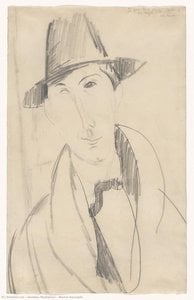
  69. Marios Varvoglis by Amedeo Modigliani, 1920, MOMA - Museum of Modern Art
    69

    1920Pencil on paperMOMA - Museum of Modern Art, New York City

    The drawing depicts a man wearing a hat and coat, positioned centrally within a minimalist composition that prioritizes facial detail above all else. The elongated proportions characteristic of “Marios Varvoglis” are undeniably rooted in Modigliani's fascination with Egyptian art and African sculpture, reflecting a broader artistic impulse to simplify forms while amplifying expressive power.

    Oil reproduction from $181 Canvas print from $47

  70. White Black Arch by Wassily Kandinsky
    70

    Oil painting

    However, it’s crucial to remember that these are merely suggestions; the true power of “White Black Arch” lies in its ambiguity and openness to interpretation. Guggenheim Museum in New York City proudly display his masterpieces, ensuring that his legacy endures for generations to come.

    Look forcirclestriangleslineschairs

    Oil reproduction from $181 Canvas print from $47

  71. The Child and Death by Edvard Munch, 1899, Kunsthalle Bremen
    71

    1899100 × 90 cmKunsthalle Bremen

    The composition centers on a young girl, positioned prominently in the foreground, her hands clasped tightly over her ears. The Child and Death exemplifies Munch's signature Expressionist style. The gesture of covering one's ears is a recurring motif in Munch’s oeuvre, most famously seen in The Scream.

    Look forthree Male Heads)double canvas with hidden painting underneath (Girl

    Oil reproduction from $206 Canvas print from $47

  72. Thinking About Death by Frida Kahlo, 1943, Museo Dolores Olmedo
    72

    Frida KahloSurrealist Expressionism

    Thinking About Death

    1943Masonite45 × 37 cmMuseo Dolores Olmedo, Mexico City

    This striking self-portrait captures Kahlo at a moment of introspective contemplation, her gaze directed inward as if grappling with the inescapable realities of life’s fragility. Painted during Kahlo’s convalescence following a debilitating bus accident that shattered her spine and left her with lifelong physical limitations, “Thinking About Death” speaks directly to the pervasive anxieties surrounding illness and suffering prevalent in Mexican culture.

    Oil reproduction from $181 Canvas print from $47

  73. The honeymooners by Lyonel Feininger
    73

    Oil on canvas

    Feininger’s practice was marked by a deep engagement with modernism. He remained active in his creative pursuits until his death in 1956.

    Oil reproduction from $181 Canvas print from $47

  74. Berlin Street by Ernst Ludwig Kirchner, 1913, Neue Galerie
    74

    Ernst Ludwig KirchnerGerman Expressionism

    Berlin Street

    1913Oil on canvasNeue Galerie, NYC

    This oil on canvas, now housed within the Neue Galerie in New York, plunges us directly into the heart of Berlin’s burgeoning modernity, a period marked by rapid industrialization, social upheaval, and a growing sense of displacement. The painting’s diagonal thrust, created by the receding street and the arrangement of figures, immediately draws the eye into its chaotic core.

    Look fordistorted figures

    Oil reproduction from $231 Canvas print from $47

  75. Bust of Nude Woman by Pablo Picasso, 1906, Art Institute of Chicago
    75

    1906Oil on canvasArt Institute of Chicago

    Simultaneously, the nascent theories of Cubism, spearheaded by Georges Braque, were beginning to challenge the traditional single-point perspective and the illusion of depth in painting. Picasso’s “Bust of Nude Woman” perfectly encapsulates this transitional moment, blending elements of Expressionist intensity with the geometric fragmentation that would soon define his groundbreaking Cubist works.

    Look fordistorted forms

    About this painting

  76. Entry of Christ Into Brussels by James Ensor, 1888, Getty Center
    76

    1888Oil253 × 431 cmGetty Center, Los Angeles

    The artwork depicts a bustling scene filled with grotesque figures wearing masks, clowns, and other fantastical characters. Despite its controversial reception, the painting is now considered a precursor to Expressionism and a significant influence on modern art.

    Look forChrist figure almost hidden in the center

    Oil reproduction from $731 Canvas print from $47

  77. Pregnant Woman and Death by Egon Schiele, 1911, National Gallery
    77

    1911Oil on canvas100 × 100 cmNational Gallery, Prague

    “Pregnant Woman and Death” is firmly rooted in the Expressionist movement. The early 20th century witnessed significant social anxieties, including concerns about population growth and mortality rates. "Pregnant Woman and Death" can be interpreted as a reflection of these broader societal fears, but also as a deeply personal exploration of grief and the fragility of life.

    Oil reproduction from $206 Canvas print from $47

  78. Para David Fernández Miró by Joan Miró, 1964
    78

    Joan MiróSurrealist Expressionism

    Para David Fernández Miró

    1964

    To encounter Joan Miró's “Para David Fernández Miró 1” is to step through a portal into the very architecture of the subconscious.

    About this painting

  79. Three Studies of Lucian Freud by Francis Bacon, 1969
    79

    1969Oil on canvas

    The artwork presents a striking portrait of Lucian Freud, seated in a contemplative or distressed state. The composition is dominated by the figure, which is framed within a simple geometric structure resembling a room with a triangular roof and vertical support beam. The chaotic brushstrokes on Freud's face symbolize inner turmoil and emotional distress, adding a layer of complexity to the piece.

    About this painting

  80. Interior with Egyptian Curtain by Henri Matisse, 1948, The Phillips Collection
    80

    1948Oil on canvas116 × 89 cmThe Phillips Collection, Washington, D.C.

    Furthermore, Matisse's work shares intriguing parallels with Mihai Olos’ “Curtain,” a contemporary conceptual piece that similarly investigates the symbolic potential of this fundamental architectural element. The painting resides within the University of Iowa Museum of Art’s impressive collection of modern and contemporary art, alongside works by Henri Matisse himself and other prominent artists.

    Look forwindowcurtainoranges

    Oil reproduction from $181 Canvas print from $47

  81. Columbine by Max Beckmann, 1950, Saint Louis Art Museum
    81

    Max BeckmannExpressionism

    Columbine

    1950Oil on canvas381 × 500 cmSaint Louis Art Museum

    This large-scale oil on canvas captures a seated female figure adorned with a mask, surrounded by bold architectural elements and vibrant colors. The painting exemplifies Beckmann's signature style, characterized by distorted figures, rich symbolism, and emotional intensity. The central subject of "Columbine" is a masked female figure engaged in an enigmatic activity involving cards or play. Beckmann's style in "Columbine" is deeply rooted in Expressionism, with influences from Fauvism evident in the bold, unnatural color palette.

    Look forarchitectural elements in the backgroundbold, unnatural colorsexpressive brushworkmasked figure

    Oil reproduction from $181 Canvas print from $47

  82. Animal Legend by Franz Marc, 1912
    82

    Franz MarcGerman Expressionism

    Animal Legend

    1912Oil on canvas34 × 24 cm

    Eschewing the pursuit of anatomical perfection, Marc utilizes the hallmarks of Expressionism —flattened planes of color and stylized, simplified forms—to prioritize the movement of the spirit over the accuracy of the eye.

    Oil reproduction from $181 Canvas print from $47

  83. Villaggio con viottoli blu by Ernst Ludwig Kirchner
    83

    Oil on canvas

    Oil reproduction from $181 Canvas print from $47

  84. On Two Banks by Marc Chagall, 1956
    84

    Marc ChagallNaive Expressionism

    On Two Banks

    1956Oil on canvas148 × 102 cm

    Surrounding her are figures engaged in quiet activity: two men walking alongside each other, adding to the sense of intimacy and connection within the composition. Painted during a period marked by significant political upheaval – specifically amidst the shadow of Soviet repression – “On Two Banks” represents a defiant assertion of artistic freedom.

    About this painting

  85. Portrait of Jeanne Hébuterne by Amedeo Modigliani, 1919, Metropolitan Museum of Art
    85

    1919Oil on canvasMetropolitan Museum of Art, New York

    In Portrait of Jeanne Hébuterne, these characteristics are strikingly evident. Painted in 1919, this portrait emerged during a period of significant artistic experimentation following World War I. Tragically, both Modigliani and Jeanne died within days of each other in 1920, adding another layer of poignancy to this already moving portrait.

    Oil reproduction from $181 Canvas print from $47

  86. Cree (casein on cardboard) 2 by Edvard Munch, 1893, National Museum of Art, Architecture and Design
    86

    1893Tempera91 × 73.5 cmNational Museum of Art, Architecture and Design, Oslo

    This casein-on-cardboard painting showcases the artist's mastery of capturing raw emotion, making it a significant work in the Expressionist movement. Edvard Munch's work was heavily influenced by his personal struggles with mental health and relationships. For more information on Edvard Munch's life and work, visit his page on AllPaintingsStore.com.

    Oil reproduction from $181 Canvas print from $47

  87. The Rights of Man by René Magritte, 1947, Musées Royaux des Beaux-Arts
    87

    René MagritteSurrealist Expressionism

    The Rights of Man

    1947Oil on canvasMusées Royaux des Beaux-Arts

    Instead, it presents a deliberately unsettling tableau—a clay statue holding a pipe in its mouth, positioned beside a fire hydrant against a backdrop of two simple cups. Born in Lessines, Belgium, in 1898, he experienced a deeply formative event at the age of thirteen: the suicide of his mother. “The Rights of Man” exemplifies this approach perfectly.

    Look forpipefire hydrant

    About this painting

  88. Woman at Table in Strong Light by Richard Diebenkorn
    88

    About this painting

  89. Taranto Harbour, Swordfish from 'Illustrious'... by Charles David Cobb, 1940
    89

    1940Oil on canvas44 × 75 cm

    The oil on canvas titled Taranto Harbour, Swordfish from 'Illustrious' Cripple the Italian Fleet, 11 November 1940 captures a specific moment of naval conflict. It was painted by Charles David Cobb, an artist born in 1921 who lived until 2014. The work fixes the date of 11 November 1940 within its layers of pigment.

    About this painting

  90. The Pit by George Grosz, 1946
    90

    George GroszExpressionism

    The Pit

    1946Oil paint153 × 94 cm

    Grosz's use of overlapping layers creates a sense of depth, drawing viewers into a world that feels both tumultuous and deeply emotional. Grosz's style in "The Pit" is highly expressive and abstract, with influences from movements like Expressionism and Surrealism. Grosz, a key figure in the Berlin Dada and New Objectivity movements, was known for his satirical critiques of society and politics.

    Look forbold colors, dynamic lines, thick texturesfiery atmosphere with deep reds, oranges, and yellowsreligious or mythological imageryrichly textured and deeply layered composition

    About this painting

  91. In the Blue by Wassily Kandinsky, 1925, Kunstsammlung Nordrhein-Westfalen
    91

    1925Oil on canvas80 × 110 cmKunstsammlung Nordrhein-Westfalen, Duesseldorf

    The painting reflects the burgeoning interest in spirituality and inner experience that characterized early 20th-century thought, mirroring a desire to move beyond the limitations of depicting the external world and tap into realms of subjective feeling. Classifying “In the Blue” within the Expressionist movement offers a crucial lens through which to understand its emotional intensity.

    Look forcolorgeometric shapes

    Oil reproduction from $181 Canvas print from $47

  92. Selbstbildnis als Kranker by Ernst Ludwig Kirchner, 1917, Staatsgalerie Moderner Kunst
    92

    1917Oil on canvas57 × 66 cmStaatsgalerie Moderner Kunst, Munich

    Kirchner was a founding member of Die Brücke (The Bridge), an influential group of German Expressionist artists who sought to break away from traditional artistic conventions and express raw emotion through bold colors and distorted forms. In 1914, Kirchner volunteered for military service during World War I but soon experienced a severe mental breakdown and was discharged.

    Oil reproduction from $181 Canvas print from $47

  93. Autumn Trees by Egon Schiele, 1911
    93

    Egon SchieleExpressionism

    Autumn Trees

    1911Oil on canvas79 × 80 cm

    "Autumn Trees" presents a stylized landscape dominated by three slender trees silhouetted against a hazy background. The composition is structured around horizontal bands of color, contributing to a sense of flatness and abstraction characteristic of Expressionism.

    Oil reproduction from $181 Canvas print from $47

  94. The Bad Doctors by James Ensor, 1892, Fin-de-Siècle Museum
    94

    1892Oil on panel50 × 61 cmFin-de-Siècle Museum, Brussels

    To behold this work is to experience the raw power of early Expressionism.

    Oil reproduction from $181 Canvas print from $47

  95. Moonlight by Edvard Munch, 1895, Nasjonalgalleriet
    95

    Edvard MunchExpressionism

    Moonlight

    1895Oil on canvas93 × 110 cmNasjonalgalleriet, Oslo

    This duality—the peaceful surface concealing a deeper emotional complexity—is characteristic of Munch’s style and reflects his own personal struggles and the influence of Symbolism. Munch’s artistic development was significantly shaped by his time in Paris, where he encountered and drew inspiration from artists like Paul Gauguin, Vincent van Gogh, and Henri de Toulouse-Lautrec.

    Oil reproduction from $181 Canvas print from $47

  96. Young Woman in a Shirt by Amedeo Modigliani, 1918, Albertina
    96

    1918Oil on canvas100 × 65 cmAlbertina, Vienna

    Modigliani, a master of synthesis, weaves together the geometric abstraction found in African sculpture with the idealized elegance of Italian Renaissance portraiture.

    Oil reproduction from $181 Canvas print from $47

  97. Tyrol by Franz Marc, 1914, Staatsgalerie Moderner Kunst
    97

    Franz MarcExpressionism

    Tyrol

    1914Oil on canvas135 × 144 cmStaatsgalerie Moderner Kunst, Munich

    Marc's style in "Tyrol" blends elements of Expressionism, Cubism, and Futurism. The artwork features fragmented forms, dynamic lines, and a rich, varied color palette. Franz Marc (1880–1916) was a pioneering figure in German Expressionism and co-founder of the influential artist group Der Blaue Reiter (The Blue Rider).

    Look forthick impasto brushstrokesfragmented compositionbold colorsdynamic shapes

    Oil reproduction from $181 Canvas print from $47

  98. The Concert by Marc Chagall, 1957
    98

    Marc ChagallNaive Expressionism

    The Concert

    1957Oil on canvas140 × 239 cm

    Measuring an impressive 140 x 239 cm, the work commands attention through its sheer scale and its ability to transport the observer into a dreamlike realm. The scene unfolds with a sense of cosmic movement, where figures dance and musicians play amidst a sea of azure and a sky ablaze with celestial fire.

    About this painting

  99. Fish Magic by Paul Klee, 1925, Philadelphia Museum of Art
    99

    Paul KleeSurrealist Expressionism

    Fish Magic

    1925Oil on panel98 × 77 cmPhiladelphia Museum of Art

    Klee's style is often described as a fusion of various movements, including expressionism, cubism, and surrealism. In 'Fish Magic', he employs a distinctive visual language that combines abstract forms with representational elements. The composition of 'Fish Magic' is carefully balanced, with a strong emphasis on symmetry and repetition.

    Oil reproduction from $181 Canvas print from $47

  100. Visitors to the sun by Ossip Zadkine, 1956
    100

    1956

    About this painting

By movement

Famous Expressionism paintings by movement

Plan your visit

Where to see the most famous Expressionism paintings

Oslo leads with 8 of the 100; the Nasjonalgalleriet alone holds 4.

The painters

The most famous Expressionism painters in the list

Portrait of Edvard Munch

Edvard Munch

1863–1944 · Norway · 10

Norwegian Expressionist known for soul painting and rhythmic lines depicting existential dread.

1. The Scream, 5. Madonna, 7. Melancholy (Laura), 24. Near the bed of death (fever), 32. The Dance of Life, 41. Ashes, 57. Passion (Jealousy), 71. The Child and Death, 86. Cree (casein on cardboard) 2, 95. Moonlight

Portrait of Egon Schiele

Egon Schiele

1890–1918 · Austria · 8

Austrian Expressionist known for raw, contorted figures and nervous, expressive line work.

8. The Self-Seers II (Death and Man), 12. Four Trees, 13. The Family, 19. Mother with Two Children, 31. Portrait of Wally, 59. Death and the Maiden, 77. Pregnant Woman and Death, 93. Autumn Trees

Portrait of Paul Klee

Paul Klee

1879–1940 · Switzerland · 6

Swiss-German Bauhaus artist of rhythmic abstraction, delicate watercolors, and musical forms.

14. Landscape with Yellow Birds, 26. Strong Dream, 40. Legend of the Nile, 50. Women, 61. New Angel, 99. Fish Magic

Portrait of James Ensor

James Ensor

1860–1949 · Belgium · 6

Belgian Expressionist known for grotesque carnival masks and chaotic, brightly colored processions.

20. Death and the Masks, 37. Skeletons Warming Themselves, 52. Self-Portrait with Masks, 65. The Man of Sorrows, 76. Entry of Christ Into Brussels, 94. The Bad Doctors

Portrait of Wassily Kandinsky

Wassily Kandinsky

1866–1944 · Russia · 5

Russian pioneer of abstract art and the Blue Rider movement known for spiritual, colorful forms.

3. Composition VII, 30. All Saints Day I, 45. View of Murnau with train and castel, 70. White Black Arch, 91. In the Blue

+25more painters in the list Famous Expressionism Artists The painters, ranked

Questions & answers

Questions about Expressionism paintings

Hover over a question to read the answer.

Were Expressionism paintings done in oil?

Of the 100 paintings, 84 are in oil, 4 in tempera or tempera and oil, and 0 are frescoes painted on the wall. 6 are on wooden panels and 67 on canvas.

Can I own a copy of a famous Expressionism painting?

Yes: 70 of the 100 can be ordered as a hand-painted oil reproduction, from $181, and 70 as a canvas print, from $47.

How is this ranking made?

Each painting is ranked by how widely it is known: the number of Wikipedia language editions with an article on it (Wikidata sitelinks), its place in our catalogue's manual ranking and the visits its page receives. The same painting catalogued several times counts once, and details, copies and studies are left out.

Bring one home

70 of the 100 as hand-painted oil reproductions

70 paintings of this list can be ordered as museum-grade, hand-painted oil reproductions, from $181.

The Scream by Edvard MunchThe Pillars of Society by George GroszComposition VII by Wassily KandinskyWoman in a Green Jacket by August MackeMadonna by Edvard Munch

Browse all Expressionism paintings

How this ranking is made

We started with every Expressionism painting in our catalogue and ranked them by how famous they are. Three clues decide the order: in how many languages Wikipedia has an article about the painting, where our curators place it, and how often people open its page on our site. Each painting appears only once, and details, copies and studies are left out.

Famous paintings of other movements

Famous paintings by period