Abstract Expressionist artists, ranked

The 76 Most Famous Abstract Expressionist Artists

The most famous Abstract Expressionist artist is Jackson Pollock (1912–1956), known for One. Number 31, 1950 and Convergence. Next come Gerhard Richter, Willem de Kooning, Jasper Johns and Mark Rothko. This ranking of the 76 most famous Abstract Expressionist artists runs from George Edgar Ohr (born 1857) to Ian Davenport (born 1966), across 22 countries.

How this list is ranked. Artists whose works our catalogue files under Abstract Expressionist, in the order of our fame ranking of artists. Artists without a Wikidata identifier born after 1955 are left out until verified. The Wikipedia figure next to each name is the number of our 32 languages in which Wikipedia has an article on the artist.

  1. One. Number 31, 1950 by Jackson Pollock1Jackson Pollock
  2. Motorboat by Gerhard Richter2Gerhard Richter
  3. Woman I by Willem de Kooning3Willem de Kooning

The essentials

Abstract Expressionist at a glance

  • 76Artists
  • 1857–1966Years of birth
  • 22Countries of birth
  • 13Women
  • 10Living artists
  • 3,800Works in our catalogue
Cities with most births
New York City (3), Pittsburgh (2), Cody (1), Dresden (1)

Ranked, with their masterpieces

The ranking: 76 Abstract Expressionist Artists and their key works

1of 76

Jackson Pollock

American Born in Cody Abstract Expressionism Wikipedia in 31/32 languages

Jackson Pollock

By 1947, a profound shift had taken hold in the way he approached the canvas. This change allowed him to stand over his work, becoming part of the creative act itself. He was among the first American painters to be recognized as a peer of the great 20th-century European masters, proving that a new, visceral language could emerge from the soil of the United States.

Where to see In New York City, the Museum of Modern Art holds several of his canvases, allowing viewers to stand before the sprawling, uncentered compositions that defined his era.

Key works · The 100 most famous works

2of 76

Gerhard Richter

German Born in Dresden Wikipedia in 28/32 languages

Gerhard Richter

In 1951, he begins formal studies at the Dresden Academy of Fine Arts. From 1957 to 1961, he remains within the academy's structure, working as a master trainee. In 1972, he represented West Germany at the Venice Biennale, a moment that solidified his standing on the international stage.

Where to see The physical presence of Richter’s practice spans major institutional collections across Europe.

Key works · The 100 most famous works

3of 76

Willem de Kooning

Dutch-American Born in Rotterdam Abstract Expressionism Wikipedia in 30/32 languages

Willem de Kooning

At twelve years old, Willem de Kooning leaves formal schooling behind to enter the world of commercial art. This period of focused training provides the essential tools for the radical shifts that await him across the Atlantic. In New York, de Kooning finds a mentor in Arshile Gorky.

Key works · The 100 most famous works

4of 76

Jasper Johns

American Born in Augusta Wikipedia in 24/32 languages

Jasper Johns

The surface of a Johns painting often feels heavy and built up. This method allows for a physical depth that sits on the canvas, sometimes incorporating collage and newsprint directly into the wax. Later, in 2011, he received the Presidential Medal of Freedom.

Where to see To see his paintings and sculptures in person, one might travel to New York City.

Key works · The 100 most famous works

5of 76

Mark Rothko

American Born in Daugavpils ['Color Field painting', 'Abstract Expressionism']

Mark Rothko

The move to New York City in 1923 brought a shift in focus. He sought out the Art Students League to refine his practice. His shift toward large, luminous rectangles of color helped define the Abstract Expressionism movement and later influenced the Minimalist movement.

Where to see To stand before his canvases is to experience the weight of color in a quiet room.

Key works · The 100 most famous works

6of 76

Arshile Gorky

Armenian-American Born in Dilkaya Abstract Expressionism, Surrealism Wikipedia in 24/32 languages

Arshile Gorky

His early paintings show the influence of Impressionism and Post-Impressionism. One such early work, a self-portrait from about 1923–24, uses gestural marks to define the features of the face, focusing on the bridge of the nose and the weight of a collar. He acted as a bridge, connecting the Surrealist painters of Europe to the emerging American movement.

Where to see To see the physical traces of his hand, one might travel to Washington, D.C.

Key works · The 100 most famous works

8of 76

Helen Frankenthaler

American Born in Manhattan Abstract Expressionism, Color Field Wikipedia in 19/32 languages

Helen Frankenthaler

Throughout her career, Frankenthaler fearlessly explored diverse media, including ceramics, sculpture, tapestry, and printmaking – particularly woodcuts. She even ventured into theatrical design, creating sets and costumes for the Royal Ballet. Major retrospective exhibitions followed, including those at the Jewish Museum (1960), the Whitney Museum of American Art (1969), and a comprehensive traveling retrospective in 1989.

Pupil of Hans Hofmann #20

Key works · The 100 most famous works

9of 76

Cy Twombly

American Born in Lexington Abstract Expressionism, Postmodern Wikipedia in 21/32 languages

Cy Twombly

His early works, such as the North African Sketchbooks (1953), already hinted at his unique blend of abstract forms and poetic references. Cold Stream (1966), with its swirling loops and bold text, is a powerful example of this evocative style. He paved the way for painters like Jean-Michel Basquiat, Anselm Kiefer, Francesco Clemente, and Julian Schnabel, who embraced a similar spirit of experimentation and emotional intensity.

Pupil of Franz Kline #15, Robert Motherwell #14

Key works · The 100 most famous works

11of 76

František Kupka

Czech Born in Opočno ['Realism', 'Symbolism', 'Orphism', 'Cubism', 'Abstraction'] Wikipedia in 24/32 languages

František Kupka

The move to Paris in 1894 changed the direction of his work. He spent time at the Académie Julian before moving on to study with Jean-Pierre Laurens at the École des Beaux-Arts. His creative output is often viewed alongside the works of Piet Mondrian and Wassily Kandinsky, marking a shift toward a visual language that prioritized the interaction of color and shape over the depiction of the physical world.

Where to see To see his canvases in person, one might travel to New York City.

Key works · The 100 most famous works

12of 76

Lee Krasner

American Born in Brooklyn Abstract Expressionism Wikipedia in 17/32 languages

Lee Krasner

Born Lena Krassner on October 27, 1908, in the vibrant streets of Brooklyn, New York, the woman who would become Lee Krasner emerged as a transformative force within the landscape of American modernism.

Key works · The 100 most famous works

13of 76

Hans Hartung

German-French Born in Leipzig Gestural Abstract Expressionism Wikipedia in 15/32 languages

Hans Hartung

Born in 1904 in the historic city of Leipzig, Germany, Hartung’s early consciousness was shaped by a deep reverence for the masters of light and shadow. His formative years were steeped in the emotive power of European Expressionism, drawing strength from the works of Rembrandt and the raw, visceral energy of German painters such as Lovis Corinth and Emil Nolde. Despite the profound disruptions caused by his experiences as a World War II veteran, he emerged with a renewed vigor, continuing to push the boundaries of abstract expression.

Key works · The 100 most famous works

14of 76

Robert Motherwell

American Born in Aberdeen Abstract Expressionism Wikipedia in 16/32 languages

Robert Motherwell

Early Education & Influences: Motherwell’s formative years were spent at Stanford University where he immersed himself in philosophy alongside fellow modernist Arthur Oncken Lovejoy and David Wite Prall. The Surrealist Encounter: A pivotal moment arrived in 1940 when Motherwell relocated to New York City and enrolled at Columbia University under Meyer Shapiro’s guidance.

Teacher of Cy Twombly #9

Key works · The 100 most famous works

15of 76

Franz Kline

American Born in Wilkes-Barre Abstract Expressionism Wikipedia in 17/32 languages

Franz Kline

His “Hot Jazz” mural series from 1940, commissioned for a Greenwich Village tavern, signaled a shift towards simplification, hinting at the bold forms to come. This experience proved revelatory for Kline; he began exploring large-scale abstractions characterized by dynamic black brushstrokes on white canvases. By the 1950s, Franz Kline had achieved significant recognition within the New York School—an informal group of artists including Jackson Pollock, Willem de Kooning, Robert Motherwell, and Lee Krasner who were redefining American art.

Teacher of Cy Twombly #9

Key works · The 100 most famous works

16of 76

Zao Wou-Ki

Born in Beijing ['1920s Art Deco', 'Expressionism', 'Abstract art'] Wikipedia in 12/32 languages

Zao Wou-Ki

While precise details regarding this artist's early life are limited, it’s reasonable to assume that the tumultuous years following World War I profoundly shaped their artistic trajectory. The influence of earlier movements such as Impressionism and Post-Impressionism is also likely present, providing a foundation upon which to build more radical departures. Furthermore, the burgeoning interest in psychology, spearheaded by figures like Sigmund Freud, fueled explorations into the hidden depths of the human psyche—a theme that would become increasingly prominent in their work.

Key works · The 100 most famous works

17of 76

Clyfford Still

American Born in Grandin Abstract Expressionism Wikipedia in 12/32 languages

Clyfford Still

Early works like PH-616 (1929) offer a glimpse into this transitional period, showcasing his initial exploration of rural life rendered with a muted palette and evocative symbolism. These paintings weren’t simply depictions; they were imbued with a sense of longing, a quiet contemplation of the human condition within the vastness of the American landscape. Perhaps one of his most significant legacies is The Clyfford Still Museum in Denver, Colorado, which houses an extraordinary collection of over 3,125 works – representing 93 percent of his lifetime output and complete archives.

Key works · The 100 most famous works

18of 76

Richard Diebenkorn

American Born in Portland ['Abstract Expressionism', 'Bay Area Figurative', 'Lyrical Abstraction'] Wikipedia in 9/32 languages

Richard Diebenkorn

His family’s relocation to San Francisco when he was just two years old proved formative, imbuing his artistic sensibility with the light and atmosphere of California—a landscape that would become inextricably linked to his work. Richard Diebenkorn’s influence on postwar American art is undeniable.

Key works · The 100 most famous works

19of 76

Aaron Siskind

American Born in New York Abstract Expressionism

Aaron Siskind

For twenty-five years, he balanced a career teaching English in New York’s public schools with the passionate pursuit of his photographic vision—a testament to his dedication and unwavering commitment to artistic expression. As a founding member of the Society for Photographic Education in 1963, he actively contributed to the growing recognition of photography as a legitimate art form.

Key works · The 100 most famous works

20of 76

Hans Hofmann

German-American Born in Weißenburg in Bayern Abstract Expressionism Wikipedia in 14/32 languages

Hans Hofmann

His works are now held in prestigious collections worldwide – The Metropolitan Museum of Art, Tate Modern, Germanisches Nationalmuseum, National Gallery of Art, and Art Institute of Chicago among them—ensuring that his vibrant vision continues to inspire generations to come.

Key works · The 100 most famous works

21of 76

Adolph Gottlieb

American Born in New York City Abstract Expressionism Wikipedia in 12/32 languages

Adolph Gottlieb

A crucial moment arrived in 1935 when Gottlieb joined forces with artists like Mark Rothko and John D. Graham to form “The Ten,” later known as the New York Artists Painters group. His work is now represented in major museum collections worldwide, including the Museum of Modern Art (MoMA) in New York City and the Tate Modern in London—a testament to its enduring power and influence.

Key works · The 100 most famous works

22of 76

Jean-Paul Riopelle

Canadian Born in Montreal Lyrical Abstraction Wikipedia in 14/32 languages

Jean-Paul Riopelle

Les Automatistes: Riopelle was a member of Les Automatistes in the 1940s, embracing Surrealist principles and exploring spontaneous creation. Move to Paris (1947): His relocation to Paris proved transformative, leading to his first solo exhibition at Galerie La Dragonne in 1949. Riopelle was the first Canadian painter since James Wilson Morrice to achieve widespread international recognition.

Key works · The 100 most famous works

23of 76

Yoo Youngkuk

Korean Born in Ulchin Abstract painting

Yoo Youngkuk

Throughout the 1950s and early 60s, Yoo Youngkuk’s artistic style underwent a significant transformation. Often referred to as “the painter of mountains,” Yoo didn’t depict mountains in a literal sense; rather, he abstracted their essence—their solidity, their grandeur, their spiritual resonance—into powerful compositions of color and form. Exploring Yoo Youngkuk's masterpieces – such as “ Mountain ” or “ Work ”– at platforms like AllPaintingsStore.com offers a glimpse into the mind of a true pioneer, an artist who dared to break with tradition and forge a new path for Korean art.

Key works · The 100 most famous works

24of 76

Ad Reinhardt

American Born in Buffalo Abstract Expressionism, Minimalism Wikipedia in 12/32 languages

Ad Reinhardt

He taught at numerous institutions—Brooklyn College, California School of Fine Arts, University of Wyoming, Yale University, and Hunter College—imparting his rigorous intellectual approach to aspiring artists.

Key works · The 100 most famous works

25of 76

Mark Tobey

American Born in Centerville Abstract Expressionism Wikipedia in 14/32 languages

Mark Tobey

Thompson introduced Tobey to the tenets of the Baháʼí Faith, a religion emphasizing the unity of all religions and humanity’s spiritual evolution. Tobey’s travels became increasingly frequent and purposeful, taking him across Europe, Palestine, Turkey, Lebanon, China, and Japan. He represented the United States at the Venice Biennale in 1958, further solidifying his position as a major figure in the art world.

Key works · The 100 most famous works

26of 76

Paul Jenkins

American Born in Kansas City Abstract Expressionism

Paul Jenkins

In his works, such as the evocative Untitled (664) or the energetic Phenomena compass bearing, one can witness the breathtaking interplay of light and liquid. Lyrical Abstraction: The use of flowing color to evoke emotional responses rather than depicting physical objects. Born in Kansas City, Missouri, in 1923, his artistic journey began with formal training at the Art Students League of New York under the guidance of Yasuo Kuniyoshi.

Key works · The 100 most famous works

28of 76

Richard Art Hambleton

Canadian Born in Tofino Street art, Conceptual art

Richard Art Hambleton

Crucially, he established Pumps Centre for Alternative Art in Vancouver, a space that served as both a gallery and performance venue – a testament to his early commitment to challenging conventional artistic boundaries. This environment fostered experimentation and provided a platform for emerging artists, mirroring the ethos he would later embody through his public interventions. His work laid the groundwork for interventions by artists like Banksy and Shepard Fairey, demonstrating the potential of art to disrupt urban landscapes and engage with social commentary.

Key works · The 100 most famous works

29of 76

George Ștefănescu-Râmnic

Romanian-German Born in Pǎlăneşti Expressionism, Fauvism, Abstract Expressionism

George Ștefănescu-Râmnic

By drawing inspiration from the folk arts of Romania while embracing the avant-garde movements of Europe, he created a body of work that remains a testament to the power of color to communicate the unspoken depths of the human experience.

Key works · The 100 most famous works

30of 76

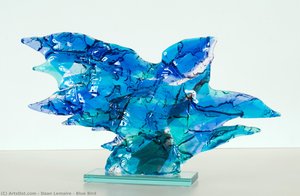
Daan Lemaire

Dutch Born in Naarden Abstract Expressionism

Daan Lemaire

Following his expulsion from the academy, Lemaire’s artistic practice underwent a significant transformation. Initially influenced by surrealist principles—a legacy of his early encounters with Willy Boers —Lemaire gradually moved towards a more purely abstract approach in the late 1970s and early 1980s. While he may not be as widely recognized as some of his contemporaries—such as Karel Appel or Barnett Newman —his work possesses a quiet intensity and a profound emotional resonance that continues to captivate viewers.

Key works · The 100 most famous works

31of 76

George Edgar Ohr

American Born in Biloxi Abstract Expressionism

George Edgar Ohr

George Edgar Ohr, a name synonymous with innovation and eccentricity in the world of American ceramics, was born on July 12, 1857, in the coastal city of Biloxi, Mississippi. His parents, German immigrants seeking new opportunities, instilled in him a strong work ethic and perhaps a touch of the Old World’s artistic sensibility. After a restless youth spent trying various trades in New Orleans, he found himself apprenticed to Joseph Fortune Meyer, a potter with connections to the burgeoning Arts & Crafts movement.

Key works · The 100 most famous works

32of 76

William Baziotes

American Born in Pittsburgh Abstract Expressionism Wikipedia in 8/32 languages

William Baziotes

Through his involvement with the Works Progress Administration (WPA), particularly the easel project between 1938 and 1940, he found the freedom to experiment with large-scale canvases that demanded a more visceral, gestural approach. It was during this era that he began to weave together the disparate threads of European Surrealism and the burgeoning American Abstract Expressionism. His 1944 debut solo exhibition at Peggy Guggenheim’s legendary Art of This Century gallery served as a definitive arrival, placing him at the epicenter of the modern art world.

Key works · The 100 most famous works

33of 76

David Smith

United States Born in Decatur Abstract expressionism Wikipedia in 12/32 languages

David Smith

During the Great Depression, he participated in the Works Progress Administration’s Federal Art Project. During World War II, he worked as a welder for the American Locomotive Company in Schenectady, New York.

Key works · The 100 most famous works

34of 76

Theodoros Stamos

Greek-American Born in New York City Abstract Expressionism Wikipedia in 8/32 languages

Theodoros Stamos

The works of Arthur Dove and Georgia O’Keeffe served as early touchstones, guiding his exploration of abstraction and organic form. The influence of East Asian aesthetics, particularly Zen Buddhism and calligraphy, is evident in his Tea House Series, demonstrating an openness to non-Western traditions and their minimalist principles.

Key works · The 100 most famous works

35of 76

Shakir Hassan Al-Said

Born in Baghdad

Shakir Hassan Al-Said

Sufism, with its mystical and philosophical underpinnings, profoundly influenced his artistic vision. His early style was initially figurative but gradually transitioned towards an emphasis on Arabic calligraphy as a central artistic element. Upon returning to Baghdad, Al Said immersed himself in the study of Yahya ibn Mahmud al-Wasiti’s work, a significant figure in Islamic miniature painting.

Key works · The 100 most famous works

37of 76

Ruth Asawa

American Born in Norwalk Modernism, Sculpture Wikipedia in 11/32 languages

Ruth Asawa

Initially intending to become a teacher, she enrolled at Milwaukee State Teachers College (now University of Wisconsin–Milwaukee) in 1943, only to encounter discrimination that prevented her from completing student teaching requirements due to her Japanese ancestry. This conviction led her to co-found the San Francisco School of the Arts in 1982, later renamed the Ruth Asawa San Francisco School of the Arts in 2010 – a testament to her dedication to arts education.

Key works · The 100 most famous works

38of 76

Rochelle Reznik Blumenfeld

American Born in Pittsburgh Abstract Art

Rochelle Reznik Blumenfeld

She was famously drawn to large canvases, finding a unique joy in the expansive reach required to manipulate paint across such vast surfaces. Through these motifs, she explored how light plays upon surfaces, creating works like Skylights, where shadows and sudden illumination evoke the dramatic tension of a mountain landscape under a passing storm. As we reflect on her life and contributions, several key elements define her historical significance: The Fusion of Disciplines: Her unique ability to synthesize the rhythmic energy of dance with the organic structures of nature.

Key works · The 100 most famous works

39of 76

Requena Nozal

Spanish Born in Zaragoza Encaustic & Abstract Expressionism

Requena Nozal

Requena Nozal, born in Zaragoza, Spain in 1947, stands as a singular figure within the landscape of contemporary Spanish art. The Embrace of Encaustic Technique: Unlike many artists of his era who favored oil paints, Nozal championed encaustic, a process involving fusing beeswax mixed with pigments onto prepared wood panels. Although he remains largely unknown outside specialist circles, Nozal’s artworks continue to captivate collectors and critics alike, cementing his place as a significant voice within the Spanish artistic landscape.

Key works · The 100 most famous works

40of 76

Alma Thomas

Born in Columbus Wikipedia in 6/32 languages

Alma Thomas

Early Style: Thomas’s early work was representational, but her style evolved towards abstraction through studies with Herring and Lois Mailou Jones. Her exposure to the work of the New York School and Abstract Expressionism at American University significantly impacted her artistic direction.

Key works · The 100 most famous works

41of 76

Grace Hartigan

American Born in Newark Abstract Expressionism Wikipedia in 8/32 languages

Grace Hartigan

The “Brides” series, inspired by the mannequins in bridal shop windows along Grand Street in Manhattan, emerged as a powerful exploration of societal expectations surrounding women and marriage, culminating in celebrated works like “Grand Streets Brides” (1954). Grace Hartigan stands as a key figure in the second generation of American Abstract Expressionists, building upon the foundations laid by earlier pioneers while simultaneously forging her own unique path.

Key works · The 100 most famous works

44of 76

Geta Brătescu

Romanian Born in Ploiesti Conceptual art, Performance art

Geta Brătescu

For Brătescu, the line wasn't merely a formal element; it was a fundamental tool for definition, measurement, and conveying movement—a way to map both physical space and inner states. Her exploration extended beyond static representation into performative realms, using the line to delineate space and trace the boundaries of selfhood. In 2015, she had her first UK solo exhibition at Tate Liverpool, bringing her work to an international audience, culminating in representing Romania at the 57th Venice Biennale in 2017—a landmark moment in her career.

Key works · The 100 most famous works

45of 76

Hedda Sterne

Romanian-American Born in Bucharest Abstract Expressionism, Surrealism Wikipedia in 8/32 languages

Hedda Sterne

Her journey from the vibrant avant-garde scene of pre-war Europe to the heart of the New York School is a testament to her resilience, intellectual curiosity, and unwavering dedication to artistic exploration. She served as a vital bridge between European Modernism and the American avant-garde, bringing with her a unique perspective shaped by a life lived across continents and cultures.

Key works · The 100 most famous works

46of 76

Alan Davie

Scottish Born in Grangemouth Zen Painting Style, Surrealism, Abstract Expressionism Wikipedia in 7/32 languages

Alan Davie

James Alan Davie (September 28, 1920 – April 5, 2014) was a Scottish painter and musician whose distinctive style fused abstract expressionism with influences from Zen Buddhism and surrealist art. Zen Buddhism’s Impact: A pivotal moment arrived when Davie encountered Eugen Herrigel's book “Zen in the Art of Archery,” sparking an interest in Zen philosophy. He remains an influential artist whose work continues to inspire contemporary artists and collectors alike, embodying a spirit of experimentation and unwavering devotion to conveying profound symbolic meaning.

Key works · The 100 most famous works

47of 76

George Stefanescu

George Stefanescu

This shift can be seen as a response to the socio-political climate of Romania during his formative years, a period marked by significant change and upheaval. Rather than directly addressing these issues, Stefanescu turned inward, seeking solace and meaning in the natural world. Early works reveal an engagement with Impressionism and Post-Impressionism – particularly the luminous palettes of Monet and Renoir, and the expressive brushwork of Van Gogh.

Key works · The 100 most famous works

48of 76

Sam Gilliam

American Born in Tupelo Color Field Painting Wikipedia in 3/32 languages

Sam Gilliam

The emotional intensity of German Expressionists like Emil Nolde and Paul Klee resonated with him, as did the work of Nathan Oliveira from the Bay Area figurative school. Even Paul Cézanne’s exploration of form and space left its mark on his evolving style. Harris Prize from the Art Institute of Chicago and received an Artist's Fellowship from the Washington Gallery of Modern Art.

Key works · The 100 most famous works

49of 76

James Brooks

American Born in St. Louis Abstract Expressionism Wikipedia in 6/32 languages

James Brooks

Shifted towards Abstract Expressionism, influenced by Surrealist principles. Often used numbers and letters to identify paintings, incorporating nonsense syllables as titles (e.g., Pask, Burwak, Jondol). His work is held in prominent collections including the Art Institute of Chicago, The Museum of Modern Art, Tate Gallery, and National Gallery of Art.

Key works · The 100 most famous works

50of 76

Abraham Rattner

American Born in Poughkeepsie Expressionism, Surrealism Wikipedia in 4/32 languages

Abraham Rattner

Army's American Camouflage Corps, he served in France, a formative experience that would indelibly mark his artistic vision. Following the war, a Cresson Traveling Fellowship provided Rattner with the opportunity to return to France, this time not as a soldier, but as an artist seeking inspiration and honing his craft. The looming threat of Nazism forced Rattner's return to New York City in 1940.

Key works · The 100 most famous works

51of 76

Jack Armstrong

Jack Armstrong

Armstrong’s early career focused on commercial art, creating illustrations for magazines, advertisements, and packaging. However, he found himself increasingly drawn to subjects beyond the demands of client briefs. American Regionalism: The focus on distinctly American subjects and landscapes connects him to artists like Grant Wood and Thomas Hart Benton.

Key works · The 100 most famous works

52of 76

Milton Resnick

American Born in Bratslav Abstract Expressionism Wikipedia in 5/32 languages

Milton Resnick

Throughout his career, Milton Resnick exhibited widely in prominent galleries including the Poindexter Gallery, Howard Wise Gallery, Max Hutchinson, and Robert Miller, gaining critical acclaim for his unique vision.

Pupil of Hans Hofmann #20

Key works · The 100 most famous works

53of 76

Alice Rahon

French/Mexican Born in Chenecey-Buillon Surrealism, Abstract Expressionism Wikipedia in 6/32 languages

Alice Rahon

What began as an intended brief respite from the looming shadow of World War II evolved into a decades-long exile from Europe, leading the couple to Mexico City. Initially experimenting with leftover paints from Paalen’s palette, she quickly developed a distinctive style characterized by textured surfaces and dreamlike compositions. She established close friendships with many prominent modern artists, dedicating works like Celestial Shadow (to Giorgio de Chirico) and The Ballad for Frida Kahlo as tributes to her peers.

Key works · The 100 most famous works

56of 76

Norman Lewis

American Born in Harlem Abstract Expressionism Wikipedia in 4/32 languages

Norman Lewis

Norman Wilfred Lewis, born in Harlem, New York City, in 1909, emerged as a pivotal figure in the American art landscape of the mid-20th century. This early commitment led him to the Savage Studio of Arts and Crafts in Harlem, where Augusta Savage, a pioneering sculptor and teacher, became a crucial mentor. These journeys to South America and the Caribbean exposed him to diverse cultures and artistic traditions, expanding his visual vocabulary and challenging his preconceived notions.

Key works · The 100 most famous works

57of 76

Chu Teh-Chun

Chinese-French Born in Baytu Abstract Expressionism Wikipedia in 4/32 languages

Chu Teh-Chun

In 1935, he enrolled at the National School of Fine Arts in Hangzhou (now China Academy of Art), a pivotal moment that set him on the path to becoming a professional artist. A landmark exhibition at the Carnegie Museum of Art in Pittsburgh in 1964 propelled him onto the global stage, leading to acquisitions of his work by over fifty museums worldwide.

Key works · The 100 most famous works

59of 76

Tomie Ohtake

Japanese-Brazilian Born in Kyoto Informal abstractionism Wikipedia in 8/32 languages

Tomie Ohtake

tomie ohtake was the mother of architects ruy ohtake and ricardo ohtake. she passed away on february 12, 2015, at the age of 101, leaving behind a legacy in the world of visual art.

Key works · The 100 most famous works

61of 76

Nicola De Maria

Italian Born in Foglianise Transavanguardia Wikipedia in 5/32 languages

Nicola De Maria

His 1980 Venice Biennale contribution, “Space Paintings,” further solidified his reputation as a pioneer in this medium. These works, characterized by their dynamic composition and layered textures, demonstrated De Maria's ability to manipulate space and create a sense of movement within the confines of a two-dimensional surface. His art is held in prestigious collections worldwide, including those of the Castello di Rivoli Museo d'Arte Contemporanea in Turin and the Stedelijk Museum in Amsterdam.

Key works · The 100 most famous works

62of 76

Ian Davenport

English Born in Sidcup Abstract painter Wikipedia in 4/32 languages

Ian Davenport

Born in Sidcup, United Kingdom, Davenport has carved out a singular space in the art world through a practice that masterfully marries chance and control. Notable achievements include: The Southwark Bridge Commission: A large-scale public work entitled Poured Lines: Southwark, unveiled beneath the arches of the bridge.

Key works · The 100 most famous works

64of 76

Melvin Edwards

American Born in Houston Abstract Sculpture Wikipedia in 3/32 languages

Melvin Edwards

As he moved through the integrated landscapes of Ohio and eventually to California in 1955, Edwards began a transformative journey that would lead him from the foundational disciplines of painting at UCLA to the rugged, industrial mastery of welding and steel assemblage.

Key works · The 100 most famous works

66of 76

John Hoyland

British Born in Sheffield Abstract Expressionism Wikipedia in 3/32 languages

John Hoyland

His first solo exhibition at Marlborough New London Gallery in 1964 was followed by a significant museum show at the Whitechapel Art Gallery in 1967, curated by Bryan Robertson. Major retrospectives at the Serpentine Gallery (1979), the Royal Academy (1999), and Tate St Ives (2006) cemented his position as a leading figure in British art. A turning point arrived with a bursary from the Peter Stuyvesant Foundation that enabled him to travel to New York in 1964.

Key works · The 100 most famous works

67of 76

Carl Gustaf Nelson

American Born in Hörby Abstract sculpture, Assemblage Wikipedia in 1/32 languages

Carl Gustaf Nelson

Nevelson studied at the Art Students League of New York, learning from instructors like Hans Hofmann and Chaim Gross. Her signature style emerged in the late 1950s: monumental, monochromatic wooden wall pieces and sculptures. Marriage to Charles Nevelson in 1920 allowed her to pursue art studies in New York City.

Key works · The 100 most famous works

68of 76

Fritz Bultman

American Born in New Orleans Abstract Expressionism Wikipedia in 1/32 languages

Fritz Bultman

In 1935, as a young student, Bultman traveled to Munich, a period that would fundamentally reshape his artistic DNA. It was here that he encountered the influential Maria Hofmann, whose presence served as a bridge to the legendary Hans Hofmann. He was a prominent member of the "Irascibles," the group of defiant artists who famously protested the Metropolitan Museum of Art’s conservative biases in 1950.

Key works · The 100 most famous works

69of 76

Frank Hinder

Australian Born in Summer Hill Modernism, Abstract Art Wikipedia in 2/32 languages

Frank Hinder

modernist sculpture: hinder's work in this area is considered a benchmark for australian modernism. art education: as an art teacher, he influenced generations of artists, shaping the country's artistic landscape.

Key works · The 100 most famous works

70of 76

Eugene Grigsby, Jr.

American Born in Greensboro Abstract/Expressionism Wikipedia in 2/32 languages

Eugene Grigsby, Jr.

Born in Greensboro, North Carolina, in 1918, Jefferson Eugene Grigsby Jr., later known simply as J.E.

Key works · The 100 most famous works

71of 76

Taro Yamamoto

Born in Hollywood Wikipedia in 1/32 languages

Taro Yamamoto

Hans Hofmann School of Fine Arts in New York City (1951-1953). The teachings of Hans Hofmann were particularly influential, shaping Yamamoto’s understanding of color and form. The Art Students League of New York (1950-1952), under the guidance of Yasuo Kuniyoshi, Morris Kantor, Byron Browne, and Vaclav Vytlacil.

Key works · The 100 most famous works

72of 76

Rosemarie Beck

American Born in Westchester County Abstract Expressionism & Figurative Expressionism Wikipedia in 1/32 languages

Rosemarie Beck

Her tenure at institutions such as Queens College, Vassar College, and the New York Studio School allowed her to pass on her rigorous approach to both technique and concept. Her contributions are preserved in some of the world's most esteemed institutions, including: The Smithsonian American Art Museum, Washington, D.C.

Key works · The 100 most famous works

73of 76

Maurice Cockrill

British Born in Hartlepool Pop Realism, Romantic Expressionism Wikipedia in 1/32 languages

Maurice Cockrill

He quickly immersed himself in the city’s vibrant art scene, teaching at St Helen’s School of Art and later at Liverpool Polytechnic. Influenced by artists like Sam Walsh and Adrian Henri, who were also active within the city's artistic circles, Cockrill embraced Pop Realism and Photo- Realism, capturing the everyday details of Liverpool life with startling clarity and emotional intensity. His work has been exhibited widely throughout Britain and internationally, including retrospectives at the Walker Art Gallery in Liverpool, Kunstmuseum in Düsseldorf, and the Royal West of England Academy.

Key works · The 100 most famous works

74of 76

Claudio Verna

Italian Born in Guardiagrele Pittura Analitica, Minimalism

Claudio Verna

His early life, marked by a family relocation to Foligno in Umbria, instilled within him a deep appreciation for the region’s rich cultural heritage and landscape—elements that subtly permeate his later work despite its abstract nature. In 2008, Verna received the esteemed “Antonio Feltrinelli” Prize for painting from the National Academy of the Lincei, a testament to his significant contributions to the art world.

Key works · The 100 most famous works

75of 76

Gary Wragg

British Born in High Wycombe Abstract color field

Gary Wragg

Wragg’s paintings are characterized by a deliberate simplicity and an avoidance of overt gestures. These fields aren't merely decorative; they function as conduits for emotional expression, inviting the viewer to lose themselves in their depths.

Key works · The 100 most famous works

76of 76

Yasha Cyrinski

British Born in Paris Contemporary Art; Abstract Expressionism

Yasha Cyrinski

Acrylic Paint: Employed to build layered, striking compositions where color and form collide with vigor. In works like “ Indeed God is with those who are patient,” she utilizes watercolor to craft a landscape of spiritual peace, where calligraphy floats amidst atmospheric textures, embodying the very patience the title suggests. She draws significant inspiration from the titans of Abstract Expressionism, such as Jackson Pollock and Willem de Kooning.

Key works · The 100 most famous works

The paintings behind the names

Famous Abstract Expressionist works and the artists who made them

  1. One. Number 31, 1950 by Jackson Pollock

    One. Number 31, 1950

    Jackson Pollock

  2. Motorboat by Gerhard Richter

    Motorboat

    Gerhard Richter

    1965

  3. Woman I by Willem de Kooning

    Woman I

    Willem de Kooning

    1952

  4. Flag by Jasper Johns

    Flag

    Jasper Johns

  5. Violet, Black, Orange, Yellow on White and Red by Mark Rothko

    Violet, Black, Orange, Yellow on White and Red

    Mark Rothko

    1949

  6. The Artist with His Mother by Arshile Gorky

    The Artist with His Mother

    Arshile Gorky

    1936 · Whitney Museum of American Art, New York

  7. Untitled by Alexander Calder

    Untitled

    Alexander Calder

    Biennale Internazionale dell'Antiquariato di Firenze, Florence

Through time

A Abstract Expressionist timeline in masterpieces

  1. 1929
  2. 1936
  3. 1947
  4. 1949
  5. 1950
  6. 1951
  7. 1952
  8. 1958
  9. 1961
  10. 1966
  11. 1967
  12. 1968
  13. 1985
  14. 1992

In figures

By the numbers

All of them, in order

List of the 76 famous Abstract Expressionist artists

  1. 1Jackson PollockJackson PollockAmerican · 1912–1956
  2. 2Gerhard RichterGerhard RichterGerman · born 1932
  3. 3Willem de KooningWillem de KooningDutch-American · 1904–1997
  4. 4Jasper JohnsJasper JohnsAmerican · born 1930
  5. 5Mark RothkoMark RothkoAmerican · 1903–1970
  6. 6Arshile GorkyArshile GorkyArmenian-American · 1904–1948
  7. 7Alexander CalderAlexander CalderScottish-American · 1898–1976
  8. 8Helen FrankenthalerHelen FrankenthalerAmerican · 1928–2011
  9. 9Cy TwomblyCy TwomblyAmerican · 1928–2011
  10. 10Barnett NewmanBarnett NewmanAmerican · 1905–1970
  11. 11František KupkaFrantišek KupkaCzech · 1871–1957
  12. 12Lee KrasnerLee KrasnerAmerican · 1908–1984
  13. 13Hans HartungHans HartungGerman-French · 1904–1989
  14. 14Robert MotherwellRobert MotherwellAmerican · 1915–1991
  15. 15Franz KlineFranz KlineAmerican · 1910–1962
  16. 16Zao Wou-KiZao Wou-Ki1920–2013
  17. 17Clyfford StillClyfford StillAmerican · 1904–1980
  18. 18Richard DiebenkornRichard DiebenkornAmerican · 1922–1993
  19. 19Aaron SiskindAaron SiskindAmerican · 1903–1991
  20. 20Hans HofmannHans HofmannGerman-American · 1880–1966
  21. 21Adolph GottliebAdolph GottliebAmerican · 1903–1974
  22. 22Jean-Paul RiopelleJean-Paul RiopelleCanadian · 1923–2002
  23. 23Yoo YoungkukYoo YoungkukKorean · 1916–2002
  24. 24Ad ReinhardtAd ReinhardtAmerican · 1913–1967
  25. 25Mark TobeyMark TobeyAmerican · 1890–1976
  26. 26Paul JenkinsPaul JenkinsAmerican · 1923–2012
  27. 27Etel AdnanEtel AdnanAmerican · 1925–2021
  28. 28Richard Art HambletonRichard Art HambletonCanadian · 1952–2017
  29. 29George Ștefănescu-RâmnicGeorge Ștefănescu-RâmnicRomanian-German · 1914–2007
  30. 30Daan LemaireDaan LemaireDutch · born 1942
  31. 31George Edgar OhrGeorge Edgar OhrAmerican · 1857–1918
  32. 32William BaziotesWilliam BaziotesAmerican · 1912–1963
  33. 33David SmithDavid SmithUnited States · 1906–1965
  34. 34Theodoros StamosTheodoros StamosGreek-American · 1922–1997
  35. 35Shakir Hassan Al-SaidShakir Hassan Al-Said1925–2004
  36. 36Bernie CaseyBernie CaseyAmerican · 1939–2017
  37. 37Ruth AsawaRuth AsawaAmerican · 1926–2013
  38. 38Rochelle Reznik BlumenfeldRochelle Reznik BlumenfeldAmerican · born 1936
  39. 39Requena NozalRequena NozalSpanish · born 1947
  40. 40Alma ThomasAlma Thomas1891–1978
  41. 41Grace HartiganGrace HartiganAmerican · 1922–2008
  42. 42Norman BluhmNorman Bluhm1921–1999
  43. 43Yi EungroYi EungroKorean-French · 1904–1989
  44. 44Geta BrătescuGeta BrătescuRomanian · 1926–2018
  45. 45Hedda SterneHedda SterneRomanian-American · 1910–2011
  46. 46Alan DavieAlan DavieScottish · 1920–2014
  47. 47George StefanescuGeorge Stefanescu
  48. 48Sam GilliamSam GilliamAmerican · 1933–2022
  49. 49James BrooksJames BrooksAmerican · 1906–1992
  50. 50Abraham RattnerAbraham RattnerAmerican · 1893–1978
  51. 51Jack ArmstrongJack Armstrong
  52. 52Milton ResnickMilton ResnickAmerican · 1917–2004
  53. 53Alice RahonAlice RahonFrench/Mexican · 1904–1987
  54. 54Fernando de SzyszloFernando de SzyszloPeruvian · 1925–2017
  55. 55Beauford DelaneyBeauford DelaneyFrench · 1901–1979
  56. 56Norman LewisNorman LewisAmerican · 1909–1979
  57. 57Chu Teh-ChunChu Teh-ChunChinese-French · 1920–2014
  58. 58Terry FrostTerry FrostBritish · 1915–2003
  59. 59Tomie OhtakeTomie OhtakeJapanese-Brazilian · 1913–2015
  60. 60Patrick HeronPatrick HeronBritish · 1920–1999
  61. 61Nicola De MariaNicola De MariaItalian · born 1954
  62. 62Ian DavenportIan DavenportEnglish · born 1966
  63. 63Anne RyanAnne RyanAmerican · 1889–1954
  64. 64Melvin EdwardsMelvin EdwardsAmerican · 1937–2026
  65. 65Ulfert WilkeUlfert WilkeGerman-American · 1907–1987
  66. 66John HoylandJohn HoylandBritish · 1934–2011
  67. 67Carl Gustaf NelsonCarl Gustaf NelsonAmerican · 1898–1988
  68. 68Fritz BultmanFritz BultmanAmerican · 1919–1985
  69. 69Frank HinderFrank HinderAustralian · 1906–1992
  70. 70Eugene Grigsby, Jr.Eugene Grigsby, Jr.American · 1918–2013
  71. 71Taro YamamotoTaro Yamamoto1919–1994
  72. 72Rosemarie BeckRosemarie BeckAmerican · 1923–2003
  73. 73Maurice CockrillMaurice CockrillBritish · 1936–2013
  74. 74Claudio VernaClaudio VernaItalian · born 1937
  75. 75Gary WraggGary WraggBritish · born 1946
  76. 76Yasha CyrinskiYasha CyrinskiBritish · born 1959

Your questions, answered

Frequently asked questions

Keep reading

Further reading on WahooArt.com

Other movements

Famous artists of other movements

Other periods

Famous artists of other periods

Famous paintings

Famous masterpieces by movement

More rankings

Explore more