Gothic artists, ranked

The 34 Most Famous Gothic Artists

The most famous Gothic artist is Duccio di Buoninsegna (1255–1319), known for Rucellai Madonna and Maestà (Madonna with Angels and Saints). Next come Simone Martini, Gentile da Fabriano, Pisanello and Stefan Lochner. This ranking of the 34 most famous Gothic artists runs from Master Mateo (born 1161) to Jan Baegert (born 1465), across 5 countries.

How this list is ranked. Artists whose works our catalogue files under Gothic, in the order of our fame ranking of artists. Artists without a Wikidata identifier born after 1955 are left out until verified. The Wikipedia figure next to each name is the number of our 32 languages in which Wikipedia has an article on the artist.

  1. Rucellai Madonna by Duccio di Buoninsegna1Duccio di Buoninsegna
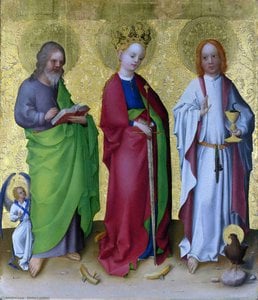
  2. Maestà (Madonna with Angels and Saints) by Simone Martini2Simone Martini
  3. Adoration of the Magi Altarpiece, left hand predella panel depicting the Nativity by Gentile da Fabriano3Gentile da Fabriano

The essentials

Gothic at a glance

  • 34Artists
  • 1161–1465Years of birth
  • 5Countries of birth
  • 0Women
  • 1,535Works in our catalogue
Cities with most births
Florence (6), Siena (3), Nijmegen (2), Venice (2)

Ranked, with their masterpieces

The ranking: 34 Gothic Artists and their key works

1of 34

Duccio di Buoninsegna

Italian Born in Siena Sienese School, Trecento Gothic Wikipedia in 31/32 languages
Duccio di Buoninsegna

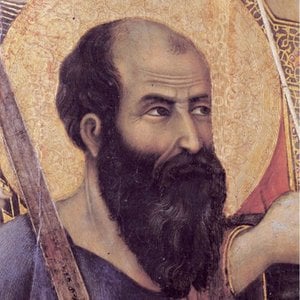
Duccio’s hand worked primarily in egg tempera on wood panels, a medium that required both patience and precision. His work reflects a delicate balance between the celestial splendor of the East and a growing interest in the tangible, human presence. The stylistic footprint left by Duccio di Buoninsegna helped define the visual language of the Trecento Gothic style and established the foundations of the Sienese school.

Where to see The physical remnants of Duccio's career are scattered across several major institutions, offering a way to encounter his specific approach to light and form.

Key works · The 100 most famous works · Duccio di Buoninsegna reproductions

2of 34

Simone Martini

Italian Born in Siena International Gothic Wikipedia in 28/32 languages

Simone Martini

By 1315, Simone Martini was already making his mark on the civic life of Siena. As his career progressed, his reach extended to other Tuscan towns, including Orvieto, where he was active in 1320. Saint Louis of Toulouse Crowning His Brother Robert of Anjou, 1317.

Where to see In Siena, the Palazzo Pubblico holds the Maestà fresco, a work that has occupied its space since 1315.

Teacher of Lippo Memmi #9

Key works · The 100 most famous works · Simone Martini reproductions

3of 34

Gentile da Fabriano

Italian Born in Fabriano International Gothic Wikipedia in 23/32 languages

Gentile da Fabriano

By approximately 1405, Gentile had established himself as a working artist in Venice, a vibrant hub of commerce and cultural exchange.

Key works · The 100 most famous works · Gentile da Fabriano reproductions

4of 34

Pisanello

Italian Born in Pisa Early Renaissance, Int'l Gothic Wikipedia in 28/32 languages

Pisanello

His Saint George and the Princess of Trebizond, a fresco adorning the Pellegrini Chapel in Verona's Church of Sant'Anastasia, is widely considered his masterpiece. He even completed frescoes begun by Gentile da Fabriano at the Basilica of St. Interestingly, some scholars suggest a possible connection to Paolo Uccello, noting a shared fascination with horses—a motif that appears frequently in Pisanello’s drawings and paintings.

Key works · The 100 most famous works · Pisanello reproductions

5of 34

Stefan Lochner

German Born in Meersburg Late Gothic, International Gothic Wikipedia in 19/32 languages

Stefan Lochner

Born around 1410 in the picturesque town of Meersburg, Germany – a location steeped in legend and nestled amongst the stunning Lake Constance – Stephan Lochner’s life was tragically cut short in Cologne around 1451. The altarpiece’s intricate details and symbolic imagery served as a model for countless artists who followed, solidifying Lochner’s position as a pivotal figure in the transition from late Gothic to early Renaissance art.

Key works · The 100 most famous works · Stefan Lochner reproductions

6of 34

Agnolo Gaddi

Italian Born in Florence Gothic, Early Renaissance Wikipedia in 20/32 languages

Agnolo Gaddi

The monumental figures, the emotional resonance, and the narrative clarity that characterized Giotto’s frescoes are all present in Agnolo’s initial paintings. This isn’t to say he abandoned the naturalism pioneered by Giotto; rather, he layered it with a sophisticated aesthetic sensibility that reflected the evolving tastes of Florentine society. He wasn’t merely an artist; he was the inheritor of a powerful lineage, the son of Taddeo Gaddi, himself a devoted and gifted pupil of the revolutionary Giotto di Bondone.

Key works · The 100 most famous works · Agnolo Gaddi reproductions

7of 34

Limbourg Brothers

Dutch Born in Nijmegen International Gothic Wikipedia in 21/32 languages

Limbourg Brothers

Biblical Narratives: Through works such as Job Mocked by His Friends and Christ in Glory, the brothers demonstrated an ability to convey profound theological truths through dramatic composition and symbolic richness.

Key works · The 100 most famous works · Limbourg Brothers reproductions

8of 34

Paolo Veneziano

Italian Born in Venice Byzantine influence & Gothic art Wikipedia in 15/32 languages

Paolo Veneziano

By synthesizing the Eastern influence of Byzantium with the Western innovations of the Gothic period, he created a unique "Venetian" style—one that was opulent, international, and deeply evocative.

Key works · The 100 most famous works · Paolo Veneziano reproductions

9of 34

Lippo Memmi

Italian Born in Siena International Gothic Wikipedia in 17/32 languages

Lippo Memmi

For many years, Lippo Memmi was overshadowed by the brilliance of Simone Martini. His paintings possess a quiet dignity and emotional resonance that sets them apart. Upon returning to Siena, he remained active until his death in 1356, continuing to produce works that reflected both the traditions of Sienese painting and the innovations of the International Gothic movement.

Pupil of Simone Martini #2

Key works · The 100 most famous works · Lippo Memmi reproductions

10of 34

Spinello Aretino

Italian Born in Arezzo Link between Giotto and Sienese School Wikipedia in 16/32 languages

Spinello Aretino

Born into a family of Florentine goldsmiths, his true name was Spinello Di Luca Spinelli, but he became known to history by the moniker "Aretino," signifying his connection to Arezzo.

Key works · The 100 most famous works · Spinello Aretino reproductions

11of 34

Bernardo Daddi

Italian Born in Florence Early Renaissance Wikipedia in 17/32 languages

Bernardo Daddi

Giotto’s emphasis on naturalism and emotional expression undoubtedly shaped Daddi’s early style. His initial works demonstrate a clear connection to Giotto’s followers – masters like the “Master of Santa Cecilia” and other Florentine painters of the first quarter of the 14th century—reflecting a direct lineage of artistic influence. Daddi’s artistic development wasn't solely rooted in Giotto’s teachings; he was also influenced by the Sienese art of Lorenzetti, whose emphasis on civic virtue and naturalistic representation resonated with Daddi’s own aesthetic sensibilities.

Key works · The 100 most famous works · Bernardo Daddi reproductions

12of 34

Andrea Pisano

Italian Born in Pontecorvo Gothic

Andrea Pisano

Early Career & Pisa Baptistery Doors: Pisano’s initial renown emerged from his collaborative work on the ambitious Baptistery façade at Pisa Cathedral, alongside Giovanni di Balduccio. Florence Cathedral & Giotto's Legacy: Pisano swiftly established himself as Florence’s leading sculptor, succeeding Giotto as maestro d’opera in 1340. The four colossal panels depicting prophets—Isaiah, Jeremiah, Ezekiel, and Daniel—are considered among the finest examples of Gothic sculpture in Italy.

Key works · The 100 most famous works · Andrea Pisano reproductions

13of 34

Master Mateo

Spanish Romanesque Sculpture

Master Mateo

His mastery of limestone carving was unparalleled, particularly through his use of a technique known as trabajo vivo. This method involved layering stone slabs to create textured surfaces that mimicked the appearance of flesh and fabric, lending a sense of movement and vitality to the static medium.

Key works · The 100 most famous works · Master Mateo reproductions

14of 34

Jean Malouel

Netherlandish (Dutch) Born in Nijmegen International Gothic Wikipedia in 16/32 languages

Jean Malouel

This circular composition, with its depiction of the Virgin Mary cradling the body of Christ, blends Northern European and Sienese artistic influences into a harmonious whole. The Portrait of Philip the Bold, while only surviving in later copies, was highly esteemed during its time and served as a model for subsequent depictions of the Duke. He played a crucial role in introducing the Limbourg brothers – Herman, Paul, and Johan – to Philip the Bold's service around 1400.

Key works · The 100 most famous works · Jean Malouel reproductions

15of 34

Tilman Riemenschneider

German Born in Heiligenstadt Late Gothic & Renaissance

Tilman Riemenschneider

His work embodies the delicate balance between the spiritual fervor of the Late Gothic and the emerging humanist ideals of the Renaissance.

Key works · The 100 most famous works · Tilman Riemenschneider reproductions

16of 34

Master Francke

Dutch Born in Lower Rhine Gothic Renaissance Wikipedia in 14/32 languages

Master Francke

Hamburg and The Birth of Jesus (1424): Francke’s career truly blossomed in Hamburg, where he secured a contract to create an altarpiece for St.

Key works · The 100 most famous works · Master Francke reproductions

17of 34

Claus Sluter

Dutch Born in Haarlem Northern Realism

Claus Sluter

Technique: Sluter employed a masterful technique utilizing Carrara marble—a material favored by Renaissance sculptors—to achieve unparalleled surface smoothness and tonal gradation. Symbolism & Typology: The Well of Moses exemplifies Sluter's profound understanding of biblical symbolism and typology. Furthermore, Sluter’s nephew, Claus de Werve, continued his artistic lineage, ensuring that Sluter’s legacy persisted within the Burgundian sculptural tradition.

Key works · The 100 most famous works · Claus Sluter reproductions

18of 34

Jacopo di Cione

Italian Born in Florence Gothic Wikipedia in 7/32 languages

Jacopo di Cione

His commitment to procuring marble for the cathedral underscored his understanding of artistic grandeur and civic responsibility. Furthermore, he continued to secure patronage from influential families like the Albizzi, ensuring that Florentine art would endure as a symbol of prestige and cultural achievement. The dispersed predella depicting scenes from Saint Peter’s life – a collaborative effort with Niccolò di Pietro Gerini – remains a poignant reminder of Jacopo's artistic legacy and the enduring power of Florentine Gothic art.

Key works · The 100 most famous works · Jacopo di Cione reproductions

19of 34

Jaume Huguet

Catalan Born in Valls Late Gothic, Flemish influence Wikipedia in 10/32 languages

Jaume Huguet

His workshop became a cornerstone of Catalan production, with works like the Saint Augustine Altarpiece involving collaborations with skilled artists such as Pau Vergós to meet the immense demands of religious guilds and monasteries.

Key works · The 100 most famous works · Jaume Huguet reproductions

20of 34

Lucas Moser

German Born in Weil der Stadt Late Gothic Art Wikipedia in 10/32 languages

Lucas Moser

Commissioned for the parish church in Tiefenbronn, the altarpiece depicts scenes from the life of Mary Magdalene with a striking departure from the prevailing aesthetic norms. The altarpiece isn't just a religious narrative; it is a testament to Moser’s keen observation of human anatomy, light, and shadow. However, scholars generally agree that he was exposed to both the late Gothic traditions prevalent in Southern Germany and the emerging artistic trends emanating from Flanders.

Key works · The 100 most famous works · Lucas Moser reproductions

21of 34

Master Bertram

German Born in Minden International Gothic Wikipedia in 13/32 languages

Master Bertram

It is believed that Bertram was influenced by both French and Netherlandish artistic trends prevalent during his time. Despite these influences, Bertram maintained a uniquely Northern German sensibility, imbuing his work with a sense of regional identity. While sharing similarities with other artists of the period, such as Master Francke (another prominent Hamburg painter), Bertram's work possesses a distinct character—a subtle restraint in emotional expression compared to Francke’s more overtly dramatic approach.

Key works · The 100 most famous works · Master Bertram reproductions

22of 34

Pere Serra

Spanish Gothic-Italian

Pere Serra

Born around 1357 and passing away in 1406, his life coincided with a period of significant artistic and cultural change across Europe, yet he maintained a distinctly Catalan sensibility throughout his career. The city was a vibrant hub for trade and artistic exchange, exposed to influences from Italy, France, and Flanders.

Key works · The 100 most famous works · Pere Serra reproductions

23of 34

Paolo Di Giovanni Fei

Italian Born in San Quirico d'Orcia Naturalism, Proto-Renaissance Wikipedia in 10/32 languages

Paolo Di Giovanni Fei

Unlike the predominantly symbolic and flattened perspectives of earlier works, Lorenzetti sought to create a sense of depth and three-dimensionality on canvas. This departure from traditional Byzantine conventions was not merely stylistic; it reflected a deeper philosophical shift towards understanding the world through observation and experience. The Nativity of the Virgin (c. 1335-1342), now housed in the Museo dell'Opera del Duomo in Siena, stands as a testament to his mastery of tempera paint and his innovative approach to architectural integration.

Key works · The 100 most famous works · Paolo Di Giovanni Fei reproductions

25of 34

Lluís Borrassà

Catalan Born in Girona International Gothic Wikipedia in 8/32 languages

Lluís Borrassà

By successfully introducing and refining the International Gothic style in the Principality, he provided a bridge between the medieval past and the approaching Renaissance.

Key works · The 100 most famous works · Lluís Borrassà reproductions

26of 34

Michele Giambono

Italian Born in Venice International Gothic Wikipedia in 10/32 languages

Michele Giambono

While the broader Renaissance would eventually move toward the anatomical realism and linear perspective of masters like Bellini, Giambono’s dedication to the International Gothic aesthetic provided the essential foundation of splendor upon which later Venetian art was built.

Key works · The 100 most famous works · Michele Giambono reproductions

27of 34

Giovanni dal Ponte

Italian Born in Florence Late Gothic/Renaissance Wikipedia in 7/32 languages

Giovanni dal Ponte

Dal Ponte’s artistic reputation was initially forged through the creation of exquisitely decorated marriage chests – cassoni or forzieri – objects central to Florentine wedding rituals and indicative of a family's wealth and status. His foundations lay firmly within the decorative traditions of the International Gothic style, evident in his use of rich colors, elaborate ornamentation, and elongated figures.

Key works · The 100 most famous works · Giovanni dal Ponte reproductions

28of 34

Theodoric of Prague

Czech Born in Italy Gothic Wikipedia in 16/32 languages

Theodoric of Prague

His panels often carry a curiously Sienese character, though he avoids the extreme delicacy found in the works of Siena. In his more schematic works, such as the depictions of Saint Simon, the rendering of faces becomes harder and more simplified.

Where to see This space holds the weight of his most significant decorative program.

Key works · The 100 most famous works

29of 34

Niccolò di Pietro Gerini

Italian Born in Florence Late Gothic Wikipedia in 6/32 languages

Niccolò di Pietro Gerini

The influence of Andrea di Orcagna and Taddeo Gaddi are also readily apparent, contributing to a distinctive aesthetic characterized by dramatic movement and a certain monumentality. He wasn’t necessarily an innovator in the same vein as Masaccio or Donatello, but he skillfully synthesized existing traditions, creating works that resonated with contemporary audiences and paved the way for future developments.

Key works · The 100 most famous works · Niccolò di Pietro Gerini reproductions

30of 34

Pacino di Buonaguida

Italian Born in Florence Gothic Art Wikipedia in 4/32 languages

Pacino di Buonaguida

Pacino di Bonaguida, a name resonating softly through the annals of 14th-century Italian art, represents a pivotal figure in the transition from the Byzantine -rooted traditions to the burgeoning Renaissance aesthetic. Pinpointing Pacino’s specific influences is a complex undertaking, given the limited documentation surrounding his early career.

Key works · The 100 most famous works · Pacino di Buonaguida reproductions

31of 34

Master Of The Life Of The Virgin

German Late Gothic Wikipedia in 11/32 languages

Master Of The Life Of The Virgin

The Master’s style is a compelling synthesis of Northern European Gothic and Early Renaissance influences. However, the Master’s work transcends mere imitation; he infused these borrowed elements with his own unique sensibility, creating paintings that are both technically proficient and emotionally resonant. The influence of Netherlandish masters is readily apparent in his draftsmanship and compositional structure.

Key works · The 100 most famous works

32of 34

Jan Baegert

Born in Wesel Late Gothic Wikipedia in 3/32 languages

Jan Baegert

Jan Baegert emerged from the established artistic traditions of Wesel, Germany, where he was born in 1465. He received his formal training under his father, Derick Baegert, a painter who provided the essential technical groundwork for Jan's later career.

Where to see Tracing the physical remains of Jan Baegert’s output requires looking toward the Westphalian and Lower Rhine regions.

Key works · The 100 most famous works · Jan Baegert reproductions

33of 34

Master Of The Osservanza

Italian Late Gothic Wikipedia in 8/32 languages

Master Of The Osservanza

The Osservanza cycle emerged around 1430-1450, a period marked by significant stylistic shifts in Siena. Influenced by the vibrant Sienese school —particularly the work of Duccio di Buoninsegna and Simone Martini —the Master nevertheless developed a distinct visual language characterized by a heightened sense of drama, emotional intensity, and an innovative use of color. His innovative use of color, dramatic composition, and psychological realism paved the way for the development of Renaissance art in Siena.

Key works · The 100 most famous works

34of 34

Master of Heiligenkreuz Abbey

Austrian International Gothic Wikipedia in 5/32 languages

Master of Heiligenkreuz Abbey

The Master’s style is a complex synthesis of influences. He drew heavily from the Gothic tradition, evident in his meticulous attention to detail, particularly in the rendering of drapery and architectural elements.

Key works · The 100 most famous works

The paintings behind the names

Famous Gothic works and the artists who made them

  1. Rucellai Madonna by Duccio di Buoninsegna

    Rucellai Madonna

    Duccio di Buoninsegna

    1285 · Galleria degli Uffizi, Florence

  2. Maestà (Madonna with Angels and Saints) by Simone Martini

    Maestà (Madonna with Angels and Saints)

    Simone Martini

    1315 · Palazzo Pubblico, Siena

  3. Adoration of the Magi Altarpiece, left hand predella panel depicting the Nativity by Gentile da Fabriano

    Adoration of the Magi Altarpiece, left hand predella panel depicting the Nativity

    Gentile da Fabriano

    1423 · Galleria degli Uffizi, Florence

  4. Sigismondo Pandolfo Malatesta, Lord of Rimini by Pisanello

    Sigismondo Pandolfo Malatesta, Lord of Rimini

    Pisanello

    1445 · Calouste Gulbenkian Foundation, Lisbon

  5. Madonna of the Rose Bush by Stefan Lochner

    Madonna of the Rose Bush

    Stefan Lochner

    1440 · Wallraf-Richartz-Museum, Cologne

  6. The Last Supper by Agnolo Gaddi

    The Last Supper

    Agnolo Gaddi

    1395 · Lindenau-Museum, Altengau

  7. Les très riches heures du Duc de Berry: Avril (April) by Limbourg Brothers

    Les très riches heures du Duc de Berry: Avril (April)

    Limbourg Brothers

    1412 · Condé Museum, Chantilly

  8. Rediscovery of the Relics of St Mark by Paolo Veneziano

    Rediscovery of the Relics of St Mark

    Paolo Veneziano

    1345 · Basilica di San Marco, Venice

Through time

A Gothic timeline in masterpieces

  1. 1285
  2. 1315
  3. 1334
  4. 1339
  5. 1340
  6. 1340
  7. 1383
  8. 1385
  9. 1387
  10. 1394
  11. 1395
  12. 1395
  13. 1395
  14. 1410

In figures

By the numbers

All of them, in order

List of the 34 famous Gothic artists

  1. 1Duccio di BuoninsegnaDuccio di BuoninsegnaItalian · 1255–1319
  2. 2Simone MartiniSimone MartiniItalian · 1284–1344
  3. 3Gentile da FabrianoGentile da FabrianoItalian · 1370–1427
  4. 4PisanelloPisanelloItalian · 1395–1455
  5. 5Stefan LochnerStefan LochnerGerman · 1410–1451
  6. 6Agnolo GaddiAgnolo GaddiItalian · 1350–1396
  7. 7Limbourg BrothersLimbourg BrothersDutch · 1385–1416
  8. 8Paolo VenezianoPaolo VenezianoItalian · 1333–1358
  9. 9Lippo MemmiLippo MemmiItalian · 1291–1356
  10. 10Spinello AretinoSpinello AretinoItalian · 1350–1410
  11. 11Bernardo DaddiBernardo DaddiItalian · 1290–1348
  12. 12Andrea PisanoAndrea PisanoItalian · 1290–1348
  13. 13Master MateoMaster MateoSpanish · 1161–1217
  14. 14Jean MalouelJean MalouelNetherlandish (Dutch) · 1370–1415
  15. 15Tilman RiemenschneiderTilman RiemenschneiderGerman · 1460–1531
  16. 16Master FranckeMaster FranckeDutch · 1380–1435
  17. 17Claus SluterClaus SluterDutch · 1355–1406
  18. 18Jacopo di CioneJacopo di CioneItalian · 1325–1399
  19. 19Jaume HuguetJaume HuguetCatalan · 1445–1492
  20. 20Lucas MoserLucas MoserGerman · 1390–1443
  21. 21Master BertramMaster BertramGerman · 1345–1415
  22. 22Pere SerraPere SerraSpanish · 1357–1406
  23. 23Paolo Di Giovanni FeiPaolo Di Giovanni FeiItalian · 1345–1411
  24. 24Giovannino De' GrassiGiovannino De' GrassiItalian · 1350–1398
  25. 25Lluís BorrassàLluís BorrassàCatalan · 1360–1425
  26. 26Michele GiambonoMichele GiambonoItalian · 1400–1462
  27. 27Giovanni dal PonteGiovanni dal PonteItalian · 1385–1438
  28. 28Theodoric of PragueTheodoric of PragueCzech ·
  29. 29Niccolò di Pietro GeriniNiccolò di Pietro GeriniItalian · 1368–1415
  30. 30Pacino di BuonaguidaPacino di BuonaguidaItalian · 1280–1340
  31. 31Master Of The Life Of The VirginMaster Of The Life Of The VirginGerman ·
  32. 32Jan BaegertJan Baegert1465–1535
  33. 33Master Of The OsservanzaMaster Of The OsservanzaItalian ·
  34. 34Master of Heiligenkreuz AbbeyMaster of Heiligenkreuz AbbeyAustrian ·

Your questions, answered

Frequently asked questions

Keep reading

Further reading on WahooArt.com

Other movements

Famous artists of other movements

Other periods

Famous artists of other periods

Famous paintings

Famous masterpieces by movement

More rankings

Explore more