Late Medieval artists, ranked
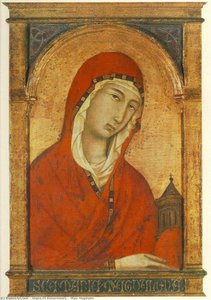
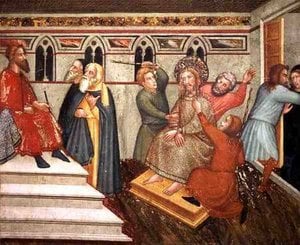
The most famous Late Medieval artist is 시모네 마르티니 (1284–1344), known for 마에스타 (천사들과 성인들과 함께한 성모 마리아) and 성전에서 발견된 그리스도. Next come 안드레이 루블료프, 암브로조 로렌체티, 피에트로 로렌체티 and 후베르트 반 에이크. This ranking of the 99 most famous Late Medieval artists runs from Yuan Dynasty (born 1271) to 후베르트 반 에이크 (born 1366), across 20 countries.
How this list is ranked. Artists whose works our catalogue files under Late Medieval, in the order of our fame ranking of artists. Artists without a Wikidata identifier born after 1955 are left out until verified. The Wikipedia figure next to each name is the number of our 32 languages in which Wikipedia has an article on the artist.
The essentials
Ranked, with their masterpieces
6of 99
이탈리아 Born in 피렌체 초기 르네상스 Wikipedia in 23/32 languages
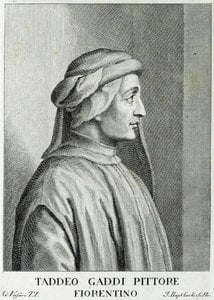
Teacher of Jacopo Del Casentino (Jacopo Landino) #52
11of 99
Italian Born in Zevio Gothic Art Wikipedia in 20/32 languages

Here, around 1364, he embarked on an ambitious cycle depicting scenes from Josephus's Wars of the Jews.
12of 99
이탈리아 Born in 아레초 조토 학파와 시에나 학파의 가교 Wikipedia in 16/32 languages

Pupil of Jacopo Del Casentino (Jacopo Landino) #52 · Teacher of Lorenzo di Bicci #33
15of 99
Italian Born in Florence Early Renaissance

He demonstrated a particular skill in depicting religious scenes – notably the Coronation of the Virgin, now housed in the Accademia in Venice, and the harrowing Massacre of the Innocents, preserved in the Uffizi Gallery in Florence. The Madonna del Parto within the church of San Lorenzo, Florence, further exemplifies his sensitivity to maternal tenderness and spiritual devotion.
16of 99
중국 Born in 우시시 원나라 4대 화가 Wikipedia in 15/32 languages

AllPaintingsStore에서 니찬의 더 많은 작품을 감상하세요: [https://AllPaintingsStore.com/@/ni-zan](https://AllPaintingsStore.com/@/ni-zan) 원대 4대 화가를 만나보세요: [https://AllPaintingsStore.com/@@/a@d3c5zh](https://AllPaintingsStore.com/@@/a@d3c5zh)
17of 99
Italian Born in Florence Gothic-Late Gothic

Orcagna achieved unparalleled fame through The Triumph of Death, a monumental undertaking commissioned for Siena Cathedral between 1365 and 1370.
18of 99
Italian Born in Florence Gothic-Late Gothic Wikipedia in 20/32 languages

The name Orcagna—a moniker bestowed upon him by local artisans—encompasses a remarkable figure in the history of Italian art: Andrea di Cione, a painter, sculptor, architect, and master craftsman who dominated the artistic landscape of Florence during the latter half of the 14th century. He bridged the gap between the Gothic traditions inherited from his predecessors and the emerging Renaissance style, paving the way for future generations of artists.
20of 99
Italian Born in Venice Early Renaissance painting Wikipedia in 15/32 languages

He devoured treatises on geometry, meticulously studying the principles of linear perspective —a system that had only recently been codified by Filippo Brunelleschi and Leon Battista Alberti. While some critics have dismissed Uccello’s perspective as flawed or naive, it is precisely this unconventional approach that sets him apart. Born in Florence around 1397 as Paolo di Dono, he adopted the surname “ Uccello ” – meaning "bird" – perhaps indicative of his family’s emblem or simply a personal inclination.
21of 99
Italian Born in Siena Gothic Art Wikipedia in 14/32 languages

The historical significance of Barna da Siena extends far beyond the walls of a single Tuscan town.
22of 99
Chinese Born in Huzhou Yuan Dynasty Landscape Painting Wikipedia in 14/32 languages

Unlike the more restrained approaches of his contemporaries, Wang Meng’s paintings are characterized by an extraordinary density and dynamism. His brushstrokes—often described as “ropy” or “layered”—were meticulously applied in thick, overlapping patterns, creating a palpable sense of texture and movement. Wang Meng’s style was profoundly influenced by the landscape painters who preceded him – Wang Wei, Dong Yuan, and Juran – but he developed his own distinctive voice through his innovative use of brushwork and composition.
23of 99
Spanish Born in Palma de Mallorca Nautical cartography

Majorcan Cartographic School: Cresques was a leading member of the Majorcan cartographic school, which flourished during the 14th century.
24of 99
French Medieval Art, Religious Paintings

Yet, within this tradition flourished an artist of startling intensity and dramatic vision – Nicolas Bataille (c. 1330-1405). He was born around 1330 in Paris, likely as the son of an architect, a profession that may have instilled within him an appreciation for structure and design. The depiction of Babylon’s destruction reflects the prevailing fears about political instability and social decay in 14th-century France.
25of 99
이탈리아 Born in 베네치아 비잔틴 미술 Wikipedia in 11/32 languages

Web Gallery of Art에 수록된 1336년 거장의 전기. 조토 | 전기, 회화, 아레나 채플, 라멘타치오네 및 관련 정보.
26of 99
Italian Trecento

However, unlike Duccio’s often exuberant and emotionally charged compositions, Segna’s paintings possess a more restrained elegance, characterized by a sense of solemnity and a focus on formal clarity. It’s believed that Segna spent time in Florence during this period, absorbing influences from the burgeoning Florentine school, which was beginning to experiment with linear perspective and naturalistic representation. Segna's artistic journey is believed to have begun under the tutelage of his uncle, Duccio di Buoninsegna, a towering figure in Sienese painting.
27of 99
Italian Born in Colle di Val d'Elsa Late Gothic Wikipedia in 18/32 languages

While many painters of his era are remembered only by the fragments of their altarpieces, Cennino Cennini achieved immortality through the written word.
29of 99
Italian Born in Siena Early Renaissance Wikipedia in 13/32 languages

Architectural Precision: The use of structured backgrounds to ground holy figures within a tangible, albeit idealized, reality. In works such as his Virgin and Child with Saints, one can witness the evolution of his hand—moving from the more rigid, ornamental patterns of the late Gothic style toward a more robust and naturalistic approach. The historical significance of Taddeo di Bartolo lies in his role as a custodian of Sienese identity during a period of immense change.
30of 99
Italian Born in Florence Early Quattrocento

Despite the paucity of surviving paintings attributed to Lippo di Benivieni, his influence is palpable in several significant frescoes adorning churches throughout Siena and San Gimignano. Madonna and Child Panel Painting: A monochrome panel depicting Mary holding the infant Jesus exemplifies Lippo’s mastery of technique—particularly his ability to achieve remarkable tonal gradation using tempera on wood. Furthermore, his work serves as an exemplar of early Quattrocento painting—a transitional phase between Gothic formalism and Renaissance naturalism —demonstrating Lippo’s willingness to embrace new stylistic approaches while retaining core aesthetic principles.
31of 99
Chinese Landscape painting

Like Wang Meng, Zhao Yuan embraced a dense, complex compositional structure characterized by layered mountains, gnarled trees, and meticulously rendered details. Beyond Wang Meng, echoes of earlier masters like Fan Kuan (c. 937-1020), renowned for his monumental landscapes and powerful brushwork, can also be detected in Zhao Yuan’s treatment of rock formations and atmospheric effects. His most significant debt is undoubtedly to Wang Meng (1308-1383), one of the last great masters of the Yuan dynasty.
32of 99
Italian Born in Siena Sienese School Wikipedia in 12/32 languages

Working alongside luminaries such as Luca di Tommè, he contributed to significant communal works, including an altarpiece for the shoemaker's guild in the cathedral of Siena, marking his first documented presence in the annals of art history.
33of 99
Italian Florentine School

This preference for light is not merely aesthetic; it reflects a deeper philosophical shift – a move towards celebrating the beauty and dignity of human life. He skillfully employed perspective, though not with the mathematically precise rigor of later Renaissance artists, creating a sense of depth and spatial awareness through subtle variations in scale and detail. He is considered a crucial link between the late Gothic style of his predecessors and the groundbreaking innovations of artists like Masaccio and Botticelli.
34of 99
Belgian Born in Ypres Early Netherlandish Painting Wikipedia in 15/32 languages

By integrating the sculptural solidity learned from masters like Claus Sluter with the fluid grace of the International Gothic style, Broederlam helped forge a new visual vocabulary. As the favored painter to powerful patrons such as Louis de Mâle, Count of Flanders, and later the formidable Philip the Bold, Duke of Burgundy, his work became a visual manifestation of ducal prestige.
36of 99
Italian Born in Florence Venetian Renaissance Wikipedia in 12/32 languages

The enduring impact of Gherardo di Jacopo Starnina can be summarized through several key artistic contributions: Stylistic Synthesis: The seamless blending of Florentine emotional realism with Venetian decorative splendor.
37of 99
French Early Gothic painting

Emerging during the turbulent and transformative reign of Philip IV, Pucelle rose from the workshops of Paris to become the preeminent manuscript illuminator of his generation.
39of 99
Italian Born in Piove di Sacco Early Renaissance; Venetian painting; Gothic art Wikipedia in 12/32 languages

Guariento di Arpo (c. 1310–1370) stands as a monumental figure of the Trecento, acting as the essential bridge between the grounded, volumetric realism of Florence and the ethereal, ornamental splendor of the Venetian Gothic tradition.
40of 99
Italian Born in Pratovecchio Gothic & Early Renaissance Wikipedia in 10/32 languages

The true significance of Giovanni del Biondo lies in his ability to maintain a distinctive, recognizable style amidst a sea of changing influences.
42of 99
Japanese Born in Kyoto Rinzai Zen, Gozan Bungaku

Kokan Shiren (虎関師錬; 9 May 1278 – 11 August 1347), a pivotal figure in 14th-century Japan, stands as a unique confluence of artistic expression, philosophical depth, and historical scholarship.
43of 99
Italian Born in Florence Gothic Wikipedia in 7/32 languages

His commitment to procuring marble for the cathedral underscored his understanding of artistic grandeur and civic responsibility. Furthermore, he continued to secure patronage from influential families like the Albizzi, ensuring that Florentine art would endure as a symbol of prestige and cultural achievement. The dispersed predella depicting scenes from Saint Peter’s life – a collaborative effort with Niccolò di Pietro Gerini – remains a poignant reminder of Jacopo's artistic legacy and the enduring power of Florentine Gothic art.
45of 99
German Born in Dortmund International Gothic soft style Wikipedia in 13/32 languages

In the twilight of the fourteenth century, a transformative artistic energy began to pulse through the prosperous Hanseatic city of Dortmund, finding its most profound expression in the hands of Conrad von Soest. Completed around 1420, this monumental triptych stands as a pinnacle of the International Gothic style.
46of 99
Egyptian Born in Amarna Amarna art style

Tuthmosis’s mastery lay not only in capturing likeness but also in skillfully manipulating stone. He primarily worked with fine-grained limestone, a material readily available in the quarries surrounding Amarna. The Amarna period, largely due to the work of artists like Tuthmosis, marked a significant departure from traditional artistic conventions, paving the way for subsequent developments in sculpture and portraiture.
47of 99
Italian Born in Valmorea Italian Gothic Wikipedia in 13/32 languages

In the bustling streets of Florence, where the air was thick with the scent of fresh pigment and the echoes of a changing era, a painter named Giovanni di Jacopo di Guido da Caversaccio began to make his mark. Hailing from Lombardy, he arrived in Tuscany as a man seeking his fortune, appearing in the city's records as Johannes Jacobi de Commo.
48of 99
German Born in Minden International Gothic Wikipedia in 13/32 languages

It is believed that Bertram was influenced by both French and Netherlandish artistic trends prevalent during his time. Despite these influences, Bertram maintained a uniquely Northern German sensibility, imbuing his work with a sense of regional identity. While sharing similarities with other artists of the period, such as Master Francke (another prominent Hamburg painter), Bertram's work possesses a distinct character—a subtle restraint in emotional expression compared to Francke’s more overtly dramatic approach.
49of 99
Italian Born in Siena Gothic architecture/sculpture

Giorgio Vasari, the celebrated Renaissance art historian, initially placed Agostino within the orbit of Giovanni Pisano’s workshop, suggesting a formative apprenticeship under this master sculptor. However, modern scholarship proposes a more nuanced lineage, positing that his early training likely occurred with Camaino di Crescentino, father to Tino di Camaino, another influential figure in Sienese sculpture. His exact date of death remains unknown, though records indicate he was no longer living as of June 27, 1347—a period marked by the devastating impact of the Black Death.
50of 99
Born in Kyoto

He employed elaborate rituals, symbolic imagery, and monumental architecture – like Kitayama-dono – to portray himself as a universal monarch or dharma king, mirroring rulers in Southeast Asia. His posthumous name was Rokuon'in (鹿苑院), further cementing his place in Japanese history. Late in his career, Yoshimitsu increasingly sought to legitimize his power through the lens of Buddhist kingship.
51of 99
Netherlandish Born in Valenciennes Pucellian revival

In 1386, Beaunever accepted the prestigious role of superintendent of all painting and sculpture for the Duke, a position that placed him at the heart of one of Europe's most vibrant cultural epicenters. His technical achievements are best observed in the following areas: Illuminated Manuscripts: In works such as the Psalter of Jean de Berry and his depictions of figures like King David, Beauneveu demonstrated an extraordinary ability to use light and shadow to create a sense of three-dimensional volume on parchment.
52of 99
Italian Born in Florence Renaissance

Technical Innovation: Early mastery of light, shadow, and the illusion of volume. In the annals of Italian art, Jacopo remains a luminous figure, a painter who captured the very essence of Florentine devotion. The origins of his artistry are deeply rooted in the Florentine milieu, likely shaped by the influential circle surrounding the Master of St.
54of 99
Italian Born in Pisa Gothic Art Wikipedia in 11/32 languages

Orcagna's Legacy: Andrea Orcagna’s influence is undeniable in Traini’s compositional strategies and expressive dynamism. Orcagna championed the concept of “naturalis dispositio,” prioritizing spatial realism to communicate theological ideas effectively—a principle that Traini wholeheartedly embraced.
55of 99
Italian Born in Bologna International Gothic Wikipedia in 12/32 languages

His legacy is found in: The Synthesis of Styles: The seamless integration of Riminese color palettes with Giottesque structural depth. As we look back upon his prolific career, Vitale remains a cornerstone of Italian art, a painter who captured the transition from the medieval soul to the Renaissance mind with unparalleled grace and spiritual power. His works, scattered across prestigious locations such as Pomposa Abbey and Udine Cathedral, serve as windows into a world where the divine and the earthly were intimately entwined.
56of 99
Kurdish Born in Erbil Company Style

Zain al-Din’s prominence grew during a period of significant change in India, as the power of the Mughal Empire waned and British influence expanded. This era saw the emergence of what is now known as the “Company style” of painting—a hybrid aesthetic favored by British officials and collectors who sought realistic depictions of Indian life, flora, and fauna. The Ashmolean Museum in Oxford holds several examples of his work, including exquisite depictions of mountain-rats, hanging bats, parrots, and storks—each painting a miniature world unto itself.
57of 99
Spanish Gothic-Italian

Born around 1357 and passing away in 1406, his life coincided with a period of significant artistic and cultural change across Europe, yet he maintained a distinctly Catalan sensibility throughout his career. The city was a vibrant hub for trade and artistic exchange, exposed to influences from Italy, France, and Flanders.
59of 99
Chinese Born in Taizhou Yuan dynasty calligraphy

Some of his most notable achievements include: Teaching on Enlightenment: A masterpiece written in running script that is currently held within the prestigious collection of the Tokyo National Museum in Japan, recognized as a National Treasure.
60of 99
Italian Byzantine-influenced art; Gothic art

Born into a lineage of painters, likely the son of Martino and brother to Marco, Paolo’s very existence was woven into the fabric of Venetian artistic tradition. His formative years were steeped in the luminous, spiritual grandeur of Byzantine art, a tradition brought to the Venetian lagoons through trade and deep ecclesiastical ties to Constantinople. His ability to blend the following elements created a style that was uniquely "Venetian": Luminous Color Palettes: Drawing from the Byzantine tradition to create depth and spiritual radiance.
61of 99
Italian Born in Perugia Renaissance

Serving as a supervising architect and decorator, Matteo played an instrumental role in shaping this monumental edifice, which stands as a testament to Florentine civic pride and the intellectual aspirations of the merchant class.
62of 99
Born in Nanjing

Through his relocation of the capital, his naval voyages, and his massive infrastructure projects like the reconstruction of the Grand Canal, Zhu Di ensured that the House of Zhu would be etched into the very foundation of Chinese history.
63of 99
Catalan Born in Avinyonet del Penedès Gothic painting

Born around 1285 in the small town of Avinyonet del Penedès, his early life remains shrouded in some mystery, yet the documented evidence reveals a trajectory marked by both diligent craftsmanship and royal favor. His ability to synthesize diverse stylistic elements—French elegance, Sienese refinement, and Giottesque drama—resulted in a visual language that was both innovative and deeply rooted in its cultural context.
64of 99
Italian Born in Modena Late Gothic Wikipedia in 15/32 languages

Tommaso Barisini, commonly known as Tommaso da Modena and sometimes referred to as Tomaso Baffini (c. 1325 – 1379), stands as one of the most prominent figures in Northern Italian painting during the mid-14th century—a period marked by burgeoning artistic innovation and profound spiritual reflection. His unwavering commitment to naturalistic representation—coupled with his masterful command of perspective—established a precedent for Renaissance artists seeking to emulate the grandeur and clarity of classical art forms.
65of 99
Italian Born in Bologna Renaissance, Proto-Renaissance

D'Avanzi’s style occupies a fascinating position within the transition from Gothic art to the early Renaissance. He wasn’t alone in this pursuit; Altichiero da Zevio, with whom he frequently collaborated, shared similar artistic concerns.
Key works · The 100 most famous works
 The Coronation of the Virgin, and Saints
 Madonna and Child
 Madonna and Child Enthroned with Saint John the Evangelist, Saint Peter, Saint Agnes, Saint Catherine of Alexandria, Saint Lucy, an Unidentified Female Saint, Saint Paul, and Saint John the Baptist, with Eve and the Serpent; the Annunciation
67of 99
Italian Born in Florence Early Italian painter Wikipedia in 14/32 languages

His output includes a variety of formats, from devotional panels to architectural elements: Frescoes: The narrative cycles in the San Silvestro chapel, Santa Croce, Florence. Sculpture and Architecture: A marble statue located on the Florentine campanile and various works attributed to his hand in the Florentine school.
68of 99
Yuan dynasty Born in Jiashan County Wikipedia in 12/32 languages

The brush of Wu Zhen moved with a particular intent, seeking to capture the essence of the natural world through landscape paintings and the delicate forms of bamboo. He achieved a rare unity known as the Three Perfections, where the boundaries between different disciplines began to dissolve. His influence reached far beyond his own lifetime, as he was recognized as one of the Four Yuan Masters, alongside Huang Gongwang, Ni Zan, and Wang Meng.
69of 99
Florentine Born in Florence Later Gothic Wikipedia in 10/32 languages

His later Gothic style reflects this integration of Sienese elements. The tension between these traditions defines his artistic output: The foundational weight of Giotto’s legacy.
70of 99
Italian Born in Florence Early Renaissance Wikipedia in 12/32 languages

Menabuoi’s distinctive style transcends simple categorization, reflecting a complex interplay between Byzantine iconography and Florentine Proto-Renaissance aesthetics. Unlike many of his contemporaries who embraced the burgeoning realism championed by artists like Altichiero and Jacopo d'Avanzi, Menabuoi prioritized conveying spiritual emotion over meticulous anatomical accuracy—a hallmark of Giotto’s artistic vision. Giotto's Legacy: As a student of Giotto, Menabuoi absorbed Giotto’s expressive technique—characterized by elongated figures and emotionally charged gestures—establishing a crucial link between Florentine artistic tradition and Byzantine influences.
71of 99
French Born in Hesdin International Gothic Wikipedia in 13/32 languages

Grandes Heures: Another important illuminated manuscript commissioned by the Duke of Berry. Petites Heures: A smaller-scale book of hours, also demonstrating Jacquemart’s skill in illumination. Historical Significance: Jacquemart de Hesdin played a vital role in the artistic renewal during the late 14th and early 15th centuries.
72of 99
Italian Born in Viterbo Early Italian Renaissance

In the heart of fourteenth-century Italy, amidst the spiritual awakening of the early Renaissance, the name Matteo Giovanetti emerged as a beacon of devotional mastery. His life’s work serves as a vital bridge between the rigid, symbolic traditions of the Gothic period and the burgeoning naturalism that would soon define the Italian Renaissance.
73of 99
Japanese Born in Yamashiro Zen buddhism art

Born in the Yamashiro Province—the heart of modern-day Kyoto—he moved through the prestigious landscapes of Kencho-ji in Kamakura and Nanzen-ji in Kyoto, eventually rising to lead the venerable Tofuku-ji temple.
74of 99
Chinese Zen Buddhism

In the quiet, meditative corridors of history, few figures loom as large or as transformative as Seisetsu Shōchō (1274–1339).
75of 99
Italian Born in Siena Sienese school

He possessed a rare, intuitive grasp of how to marry the ancient, ethereal majesty of Byzantine iconography with the burgeoning humanism and spatial curiosity emerging from Florence. This stylistic evolution is perhaps most evident in his ability to balance: The Byzantine influence, which provided the sacred, unmoving grandeur of the divine. Whether through the intimate grace of his Madonna and Child compositions or the solemnity of his depictions of saints, Bulgarini’s work captures the spiritual heartbeat of an era.
76of 99
Japanese Born in Hara Zen painting

Hsieh Ho’s approach to capturing atmospheric effects through subtle shifts in hue and tone resonated deeply with Tettō's own desire to convey emotion and spiritual depth within his works. His compositions frequently featured sweeping vistas and dynamic brushstrokes, reflecting both the natural world and the internal landscapes of Zen meditation. His bold use of color and expressive brushwork served as an inspiration for subsequent generations of artists, including those who followed in the footsteps of the Ōtōkan school.
77of 99
Italian Born in Modena Byzantine-influenced Lombard Painting Wikipedia in 12/32 languages

Born around 1328 in Modena (Emilia), he emerged from obscurity to become arguably the first Lombard painter of considerable renown, leaving behind an impressive oeuvre that testifies to his unwavering devotion to this venerable artistic heritage. His activity spanned Lombardy, Piedmont, and Pisa in Tuscany, establishing him as a pivotal artist within the burgeoning cultural dynamism of the era.
78of 99
German-Bohemian Born in Schwaebisch Guemund Late Gothic

In the heart of the Late Middle Ages, a period defined by soaring spires and profound devotion, Peter Parler emerged as one of the most influential architects and sculptors of his era. Known variously as Peter von Gemünd or Petr Parléř, his identity was inextricably linked to the Parler family, a lineage of craftsmen whose influence stretched across much of Central Europe.
80of 99
Chinese Born in Beijing Landscape Art

Understanding Yuan art requires delving into its complex context: the ambition of Kublai Khan to unite Eurasia under Mongol rule, coupled with a burgeoning intellectual elite eager to embrace new ideas and traditions. He actively supported artists like Wang Meng and Zhao Yuan, commissioning monumental landscapes and intricate calligraphy scrolls that celebrated imperial grandeur and Confucian ideals. The Yuan Dynasty (1271–1368), established by Kublai Khan, represents a singular moment in Chinese history – the first time a foreign power successfully ruled over all of China.
81of 99
Italian Born in Verona Trecento art

He is often credited with contributions to the equestrian statue of Cangrande della Scala, a powerful symbol of Scaliger authority, and even implicated in the design of Mastino II della Scala’s tomb within the Arche scaligere complex.
82of 99
Italian Born in Siena Gothic Art

The Virgin of the Annunciation, found in various iterations across several museums, exemplifies his mature style. The composition typically depicts the Angel Gabriel kneeling before Mary, delivering the news of Christ’s birth. Yet, unlike Simone’s increasingly internationalized aesthetic, Domenico remained firmly rooted in the Sienese tradition.
83of 99
Italian Gothic Art Italy

Siena’s artistic climate was characterized by a distinctive emphasis on grace, refined detail, and narrative clarity – qualities that would become hallmarks of Agnolo’s own work. The influence of Nicola Pisano and his son Giovanni, prominent sculptors active in Pisa and Florence, cannot be discounted, as their innovations in depicting classical forms and emotional expression were widely admired throughout Tuscany. He frequently collaborated with painters, as seen in the Monument to Tarlati, highlighting the interconnectedness of artistic disciplines during the 14th century.
84of 99
Italian Born in Milan Gothic

However, he also absorbed influences from Northern European sculpture traditions, particularly those emanating from France and Germany, demonstrating a cosmopolitan outlook that characterized the artistic landscape of his era.
85of 99
Italian Born in Arezzo Humanist poetry

Born in Arezzo, Italy, in 1304 as Francesco Patriarca – later adopting the name Francesco Petrarca – this artist was more than just a painter; he was a pivotal figure in the burgeoning Italian Renaissance. His family, prominent Florentine notaries, faced exile due to the turbulent power struggles between the White and Black Guelphs. Furthermore, Petracco's connection to the exiled poet Dante Alighieri – both sharing political exile from Florence – undoubtedly shaped his artistic outlook.
86of 99
Born in Siena

A significant partnership was formed with Agnolo di Ventura, culminating in their joint execution of the cenotaph of Guido Tarlati in the Cathedral of Arezzo (signed and dated 1330). Vasari also mentions collaborations on commissions from the commune of Siena, including the Porta Romana and the iconic Torre del Mangia.
87of 99
Japanese Born in Tokyo Zen Buddhism

Yūbai’s disciples, including Akamatsu Norimura and Akamatsu Norisuke, diligently upheld his legacy—propagating Zen philosophy and artistic traditions throughout Japan.
88of 99
Egyptian Born in Cairo Islamic Art

Sultan Al-Malik Al-Zahir Abu Sa’id Barquq, a name resonating through the annals of Mamluk Egypt, stands as a pivotal figure in the 14th-century Islamic world.
89of 99
Italian Born in Certaldo Humanism precursor

Born amidst the rolling landscapes of Certaldo in 1313, Giovanni Boccaccio emerged as a vital force in the cultural landscape of the fourteenth century. As one of the legendary "Three Crowns" of Italian literature—standing alongside the giants Dante Alighieri and Petrarch—his life served as a bridge between the medieval world and the dawning light of the Renaissance.
90of 99
Japanese Buddhist Art

While the Nanboku-chō period was defined by conflict between rival courts, Kōgon’s focus on Buddhist art provided a sense of cultural continuity and spiritual stability. He successfully utilized the medium of painting to assert a form of authority that was not dependent on military might, but on moral and religious prestige. Emperor Kōgon (1313–1364) was not merely a sovereign navigating a period of profound instability; he was a visionary patron whose devotion to Buddhist iconography helped reshape the aesthetic soul of Northern Japan.
91of 99
Japanese Born in Tokyo Rinzai Zen

Early Life & Artistic Formation: Little biographical detail survives concerning Genkō’s formative years; he emerged from obscurity as a student of Zen at Nara Temple, establishing a foundation for his lifelong devotion to the Dharma.
92of 99
Italian Born in Sant Joan de les Abadès Sienese painting, Gothic influence

93of 99
English Born in Norwich Medieval Mysticism

Through these spiritual windows, she glimpsed a God characterized not by distant judgment, but by an overwhelming, compassionate intimacy. She famously portrayed the divine as a nurturing force, a Father whose love sustains all of creation.
94of 99
Italian Born in Florence Renaissance Painting Wikipedia in 10/32 languages

The significance of Nardo di Cione lies in his ability to bridge the gap between the rigid traditions of the medieval period and the burgeoning humanism of the Renaissance. To study Nardo is to witness the evolution of the Florentine spirit: Technical Versatility: The seamless integration of sculptural depth with painterly fluidity. His early training under Maestro Piero Bargellini, a distinguished sculptor and painter, provided him with a unique dual perspective.
95of 99
Egyptian Born in Amarna Ancient Egyptian Art

Each artifact—from the delicate ebony rods inscribed with sacred hieroglyphs to the iconic, shimmering golden mask —embodies an idealized vision of royal divinity.
96of 99
Italian Born in Modena Giottesque & Bolognese

One of his most celebrated achievements, the Coronation of the Virgin, bears a proud inscription dating the work to March 1385, serving as a permanent testament to his hand. Beyond the cathedral walls, Serafini’s influence extended into other significant religious sites, such as the Church of San Francesco in Mantua. In the twilight of the fourteenth century, amidst the architectural grandeur of Northern Italy, the name Serafino Serafini emerged as a vital, if enigmatic, force in the evolution of late medieval painting.
97of 99
Italian Venetian Gothic
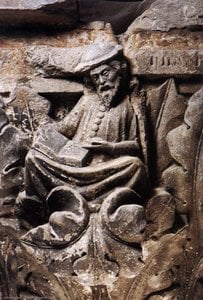
In 1354, a conspiracy involving Doge Marino Faliero was uncovered, and Calendario was caught in the violent aftermath.
98of 99
Italian Born in Pietrantonella Late Medieval Art

Beyond the physical permanence of his marble reliefs, Antonio Baboccio da Piperno’s true significance lies in the lineage of talent he helped cultivate. In the twilight of the Middle Ages, as the rigid structures of the Gothic era began to soften under the burgeoning light of the Renaissance, there emerged a master whose hands shaped the very identity of Neapolitan grandeur.
99of 99
Italian Born in Tosa Byzantine art

He was deeply influenced by Giotto di Bondone, whose revolutionary approach to depicting human emotion and space began to permeate the region. Giotto's innovations—a move away from the stylized, flattened forms of Byzantine art towards greater naturalism and psychological depth —were skillfully absorbed and adapted by his Pistoian disciple. While his name—a label bestowed upon him due to a fresco depicting the miracle of the Virgin Mary in Santa Maria delle Grazie, Pistoia—offers little insight into his personal identity, his paintings speak volumes about the artistic currents shaping Tuscany at the time.
The paintings behind the names
Through time
In figures
All of them, in order
 시모네 마르티니이탈리아 · 1284–1344
 안드레이 루블료프러시아 · 1360–1430
 암브로조 로렌체티이탈리아인 · 1290–1348
 피에트로 로렌체티이탈리아인 · 1280–1348
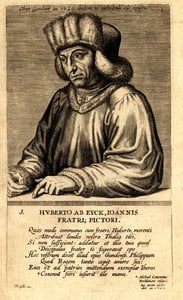 후베르트 반 에이크네덜란드 · 1366–1426타데오 가디이탈리아 · 1300–1366
 아뇰로 가디이탈리아 · 1350–1396
 그리스의 테오파네스그리스 · 1335–1410
 파올로 베네치아노이탈리아 · 1333–1358
 리포 멤미이탈리아인 · 1291–1356AltichieroItalian · 1330–1390스피넬로 아레티노이탈리아 · 1350–1410
 베르나르도 다디이탈리아 · 1290–1348
 안드레아 피사노이탈리아 · 1290–1348Niccolò Di TommasoItalian · 1346–1376예찬중국 · 1301–1374Andrea Di Cione Di Arcangelo (Orcagna)Italian · 1308–1368OrcagnaItalian · 1315–1368
 조반니 다 밀라노이탈리아 · 1346–1369Paolo VenezianoItalian · 1300–1365Barna Da SienaItalian · 1330–1380Wang MengChinese · 1308–1385Cresques AbrahamSpanish · 1325–1387Nicolas BatailleFrench · 1330–1405로렌초 베네치아노이탈리아 · 1336–1379Segna Di BuonaventureItalian · 1298–1326Cennino CenniniItalian · 1360–1440
 우골리노 디 네리오이탈리아인 · 1280–1330Taddeo di BartoloItalian · 1362–1422Lippo Di BenivieniItalian · 1296–1327Zhao YuanChinese · born 1350Andrea Di BartoloItalian · 1360–1428Lorenzo di BicciItalian · 1350–1427Melchior BroederlamBelgian · 1355–1410
 비치 디 로렌초이탈리아 · 1350–1427Gherardo StarninaItalian · 1354–1413Jean PucelleFrench · 1300–1334
 안드레아 디 보나이우토 (안드레아 다 피렌체)이탈리아 · 1343–1379Guariento di ArpoItalian · 1310–1370Giovanni Del BiondoItalian · 1356–1399
 클라우스 슬루터네덜란드 · 1355–1406Kokan ShirenJapanese · 1278–1346Jacopo di CioneItalian · 1325–1399
 바르톨로 디 프레디Italian · 1330–1410Conrad von SoestGerman · 1360–1423TuthmosisEgyptian · 1340–1300Giovanni da MilanoItalian · 1325–1370Master BertramGerman · 1345–1415Agostino Di GiovanniItalian · 1285–1347Ashikaga Yoshimitsu1358–1408André BeauneveuNetherlandish · 1335–1403Jacopo Del Casentino (Jacopo Landino)Italian · 1330–1380
 무소 소세키일본 · 1275–1351Francesco TrainiItalian · 1321–1365Vitale Da BolognaItalian · 1289–1359Sheikh Zain Al-DinKurdish · born 1325Pere SerraSpanish · 1357–1406
 아즈텍 제국멕시코 · 1300–1521Liaoan QingyuChinese · 1288–1363Marco Di Paolo VenezianoItalian · born 1362Matteo Di Ser CambioItalian · 1351–1424Zhu Di1360–1424Ferrer BassaCatalan · 1285–1348Tommaso Da ModenaItalian · 1326–1379Jacopo AvanziItalian · 1350–1416
 파올로 디 조반니 페이이탈리아 · 1345–1411GiottinoItalian · 1324–1372Wu ZhenYuan dynasty · 1280–1354Jacopo del CasentinoFlorentine · 1297–1358Giusto De' MenabuoiItalian · 1330–1393Jacquemart de HesdinFrench · 1350–1410Matteo GiovanettiItalian · 1322–1368Reisai GukyokuJapanese · 1363–1452Qingzhuo Zhengcheng, Ch'Ing-Cho Cheng-Ch'EngChinese · 1274–1339Bartolommeo BulgariniItalian · 1305–1378Gikō TettōJapanese · 1295–1369Barnaba Da ModenaItalian · 1328–1386페터 파를러German-Bohemian · 1330–1399
 보나낫 데스콜 이 데 산클리멘트이탈리아 · 1310–1390Yuan DynastyChinese · 1271–1368Giovanni Di RiginoItalian · born 1315Domenico Di AgostinoItalian · 1317–1366Agnolo Di VenturaItalian · 1290–1349Giovanni Da CampioneItalian · 1320–1375Francesco Di PetraccoItalian · 1304–1374Giovanni d'Agostino1285–1347Sesson YūbaiJapanese · 1290–1347Sultan Al-Malik Al-Zahir Abu Sa’Id BarquqEgyptian · 1339–1399Giovanni Di Chellino BoccaccioItalian · 1313–1375Emperor KōgonJapanese · 1313–1364Jakushitsu GenkōJapanese · 1290–1367Bernat Saulet I El Taller De Sant Joan De Les AbadessesItalian · 1341–1342Mother JulianEnglish · born 1343Nardo di CioneItalian · 1320–1366TutankhamenEgyptian · 1345–1327Serafino SerafiniItalian · 1324–1393Filippo CalendarioItalian · 1315–1355Antonio Baboccio Da PipernoItalian · 1351–1435Zekkai ChūshinItalian · 1336–1405
Your questions, answered
시모네 마르티니 (#1), 안드레이 루블료프 (#2), 암브로조 로렌체티 (#3), 피에트로 로렌체티 (#4) and 후베르트 반 에이크 (#5).
Florence: 11 of the artists in this list were born there.
Italy: 39 of the 99 artists in this list were born there, then 이탈리아 (17) and Japan (8).
The highest-ranked artists born in Italy are Altichiero (#11), Niccolò Di Tommaso (#15), Andrea Di Cione Di Arcangelo (Orcagna) (#17), Orcagna (#18) and Paolo Veneziano (#20).
타데오 가디 (#6) taught Jacopo Del Casentino (Jacopo Landino) (#52); 스피넬로 아레티노 (#12) taught Lorenzo di Bicci (#33).
The earliest-born artist in this list is Yuan Dynasty (#80), born in 1271.
The highest-ranked living artists in this list are Zhao Yuan (#31), Sheikh Zain Al-Din (#56), Marco Di Paolo Veneziano (#60), Giovanni Di Rigino (#81) and Mother Julian (#93).
The museums holding the most key works of this list are 메트로폴리탄 미술관 (17), 국립 미술관 (11) and 하버드 미술관 (6).
Most artists in this list were born in the 1350s (15 of 99), between 1271 and 1366 overall.
Our catalogue holds 1,491 works by these artists. Each one can be ordered as a hand-painted oil reproduction or a print.
Keep reading
Other movements
 Famous Baroque artists밤의 망루 (De Nachtwacht) · 렘브란트
 Famous Contemporary Realist artists이삭 줍는 사람들 · 장프랑수아 밀레
 Famous Impressionist artists별이 빛나는 밤 (뉴욕, MoMA) · 빈센트 반 고흐
 Famous Romanticist artists토성, 그의 아들을 잡아먹는 중 · 프란시스코 데 고야
 Famous Neoclassicist artistsThe Death of Marat · 자크루이 다비드
 Famous Realist artists세계의 기원 · 귀스타브 쿠르베
 Famous Renaissance artists모나리자 (라 죠콘다) · 레오나르도 다 빈치
 Famous Dutch Golden Age artists진주 귀걸이를 한 소녀 · 요하네스 페르메이르
 Famous Expressionist artists구성 VII · 바실리 칸딘스키
 Famous Rococo artists사랑의 교훈 · 앙투안 바토
Other periods
 Famous Early Medieval artistsSnowy River · Wang Wei
 Famous High Medieval artists마에스타의 마돈나 (오니산티 마돈나) · 조토 디 본도네
 Famous Renaissance artists아담의 창조 · 미켈란젤로 부오나로티
 Famous Early Modern artists마태오의 부르심 · 카라바조
 Famous 19th Century artists수련 (또는 연꽃) · 클로드 모네
 Famous Modern artists게르니카 · 파블로 피카소
 Famous Contemporary artistsWind Sculpture III (one in a series of nine) · Yinka Shonibare
More rankings