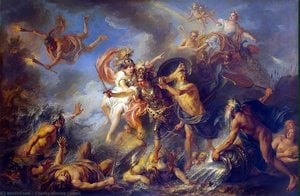
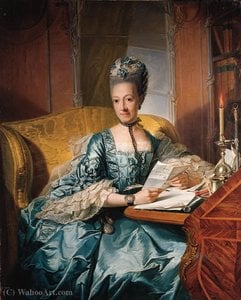
Rococo painters, ranked
The most famous Rococo painter is 앙투안 바토 (1684–1721), known for 질레 (Gilles) and 사랑의 교훈. Next come 카날레토, 조반니 바티스타 티에폴로, 프랑수아 부셰 and 장오노레 프라고나르. This ranking of the 100 most famous Rococo painters runs from 장 프랑수아 드 트로이 (born 1645) to 에두아르 오노레 아브 (born 1818), across 19 countries.
How this list is ranked. Artists whose works our catalogue files under Rococo, in the order of our fame ranking of artists. Artists without a Wikidata identifier born after 1955 are left out until verified. The Wikipedia figure next to each name is the number of our 32 languages in which Wikipedia has an article on the artist.
The essentials
Ranked, with their masterpieces
9of 100
French Born in Tournus Rococo, Genre painting Wikipedia in 22/32 languages

Le Père de famille expliquant la Bible à ses enfants (1755): 그의 초기 성공의 초석으로 가족의 경건함을 구현한 계몽주의 이상을 담고 있습니다. La Jeune Fille qui pleure son oiseau mort (c. 1765): 그르즈의 감정 표현 능력과 애절한 스토리텔링을 보여줍니다. Savoyard with a Dancing Doll (c. 1763): 어린 시절의 정신과 취약성을 포착하고 그의 초상화 기술을 선보입니다.
22of 100
프랑스 Born in 툴롱 로코코 Wikipedia in 17/32 languages

Pupil of Jean-Baptiste van Loo #53
27of 100
프랑스 Born in 니스 로코코 회화 Wikipedia in 16/32 languages

Pupil of Jean-Baptiste van Loo #53
33of 100
French Born in Paris Rococo to Neoclassicism Wikipedia in 20/32 languages

Adélaïde Labille-Guiard (1749–1803) stands as a remarkable figure in the history of French art, not merely for her exquisite portraits but also for her courageous challenge to the restrictive conventions that governed women’s roles within the artistic world. She defied societal expectations, navigated institutional barriers, and ultimately paved the way for future generations of female painters.
38of 100
Born in 베네치아 Late Baroque, Rococo Wikipedia in 19/32 languages

Some of his most notable subjects include: Religious Iconography: Works such as Saint Roch and St Elizabeth Distributing Alms demonstrate his ability to portray Christian compassion and resilience through dramatic lighting and poignant human interaction.
Pupil of Antonio Balestra #69
39of 100
네덜란드 Born in 아메르스포르트 베두타 회화 (Veduta painting) Wikipedia in 14/32 languages

45of 100

She traveled extensively throughout Europe – Italy, Austria, Russia, and England – continuing to paint portraits of the aristocracy and establishing new networks of patronage. Petersburg, and London, where she was elected as an honorary member of the Royal Academy of Arts. Though the political landscape had changed dramatically, she was welcomed back into society and continued to paint until her death in Paris on March 30, 1842.
48of 100
독일 Born in 바이마르 네덜란드 및 이탈리아 거장들의 모방 Wikipedia in 11/32 languages

49of 100
French Born in Rivoli Rococo, Portraiture Wikipedia in 13/32 languages

Vanloo's artistic style was deeply rooted in the traditions of the Baroque and Roman art academies, but he also drew inspiration from the work of contemporary artists such as Nicolas Lancret and Jean-Honoré Fragonard. His compositions are often dynamic and asymmetrical, creating a sense of movement and energy. He skillfully blended these influences to create a distinctive Rococo style characterized by its elegance, grace, and theatricality.
Pupil of Jean-Baptiste van Loo #53
51of 100
English Born in 파리 Romanticism, Animal Painting Wikipedia in 15/32 languages

53of 100
French Born in Aix-en-Provence Baroque, Rococo Wikipedia in 15/32 languages

His father, Louis-Abraham van Loo, himself the son of Jacob van Loo, instilled in him not only technical skill but also an appreciation for the power and prestige associated with portraiture.
54of 100
English Rococo Painting

His work bears an unmistakable resemblance to the portraits of Thomas Hudson and Allan Ramsay, capturing not just the likeness of his subjects but the very essence of their social standing. His journey across the Atlantic in 1749 marked a transformative chapter for both the artist and the colonies. While later giants like Benjamin West and Gilbert Stuart would command the spotlight of American portraiture, Wollaston’s true contribution lies in his role as a pioneer, introducing the delicate elegance and shimmering sophistication of the Rococo style to North America.
55of 100
Swedish Born in Runtuna Rococo Wikipedia in 12/32 languages

Perhaps no single work encapsulates the grandeur and technical complexity of Pilo’s career more than his monumental, though unfinished, masterpiece, "Gustav III’s Coronation." This painting serves as a breathtaking window into the ceremonial splendor of the Swedish monarchy.
56of 100
German Born in Berlin Rococo Wikipedia in 13/32 languages

Anna Dorothea Therbusch (1721-1782) stands as a remarkable figure in the annals of Rococo art history —a woman artist who defied societal expectations and achieved considerable renown during the Enlightenment. Born into a family steeped in artistic tradition, her father, Georg Lisiewski, was himself a celebrated Berlin portrait painter, establishing a lineage dedicated to visual representation. Her acceptance into the Académie royale de peinture et de sculpture marked a pivotal moment in her career, affording her access to influential mentors and fostering collaborations with fellow artists like Philippe Hackert.
59of 100
Italian Born in Venice Vedute Venice Wikipedia in 9/32 languages

Born in Venice in 1710, Marieschi emerged from a lineage of craftsmanship, being the son of a woodcarver—a background that likely instilled in him a profound respect for structure, texture, and the physical essence of the objects he depicted. In the golden age of the Venetian Rococo, few artists captured the ephemeral magic of the Serenissima with as much vitality as Michele Giovanni Marieschi.
60of 100
Italian Born in Este Rococo

He built upon the dramatic energy of the former while embracing the lightness, elegance, and playful sensuality of the latter. The ability to create such realistic illusions with marble solidified his place as one of the leading sculptors of his time. After leaving Vienna, Corradini spent his final years in Rome and Naples, continuing to refine his art until his death in 1752.
61of 100
독일 Born in 마이센 경질 자기

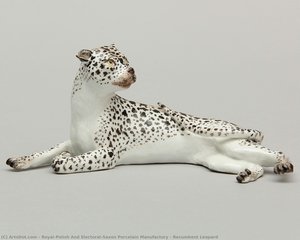
"미덕의 알레고리 인물상" – 복잡한 개념을 조각적 형태로 포착해내는 공장의 능력을 보여주며, 세밀한 디테일과 정제된 예술적 비전을 선보입니다. "엎드린 표범" – 사실주의와 우아함의 숙련된 조화를 나타내며, 동물을 놀라운 정확도와 품격으로 묘사하고자 했던 마이센의 헌신을 반영합니다.
62of 100
Born in Tilburg Wikipedia in 12/32 languages

He contributed over fifty works to Les Vélins du Roi, a renowned collection of botanical watercolors commissioned by the French royal family. Fleurs Dessinees d'apres Nature (Flowers Drawn from Life): Published between 1799 and 1801, this series of twenty-four engraved plates served as a valuable resource for students of floral painting. Van Spaendonck died in Paris in 1822 and is buried in Père Lachaise Cemetery.
69of 100
Born in Verona Wikipedia in 11/32 languages

He then traveled to Bologna and subsequently Rome, working in the workshop of the renowned Carlo Maratta. Roman Classicism: Working with Maratta exposed him to classical ideals and academic rigor.
71of 100
Swedish-German Born in Stockholm City Rococo, Portraiture Wikipedia in 9/32 languages

His early works, heavily influenced by his uncle Meytens and the French masters, exhibited a meticulous attention to detail and a restrained elegance. As he matured, de Marées increasingly embraced the Rococo aesthetic, evident in his use of brighter colors, more fluid brushwork, and a generally lighter, more decorative approach. Other notable works include portraits of members of the Elector’s family, such as The Countess Holstein (Lenbachhaus, Munich) and The Princess Portia (Staatsgalerie, Stuttgart).
74of 100
French Born in Paris Neoclassical Painting Wikipedia in 8/32 languages

These works were not mere depictions of existing structures but were instead monumental visions of palaces, temples, and manicured gardens designed to evoke a sense of mathematical harmony and sublime order. While his name may not resonate with the same immediate thunder as contemporaries like Boucher or Watteau, Lajoue occupied a unique niche in the French canon, serving as an artist who could bridge the gap between the rigid grandeur of classical structure and the delicate, emotive spirit of the Rococo.
77of 100
Swedish Born in Arboga Rococo Wikipedia in 7/32 languages
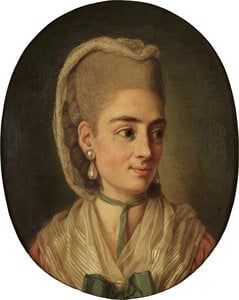
Beyond his individual achievements, Per the Elder Krafft’s historical significance is cemented by the artistic legacy he left within his own family. His children, Per Krafft the Younger and the miniaturist Wilhelmina Krafft, both studied at the Royal Swedish Academy of Fine Arts, carrying forward the technical excellence and emotive depth instilled by their father.
78of 100
Ukrainian, Czech Born in Buchach Baroque, Rococo

Settling in Buchach, Pinsel quickly established himself as a favored artist within Potocki's circle. This synergy is particularly evident in projects like the Buchach Town Hall (1750s) and the Trinitarian Church (1756-1757), where architecture and sculpture coalesce into a unified expression of Baroque grandeur. Despite his prolific output, Pinsel’s life ended relatively early, between September 16, 1761, and October 24, 1762, likely in Buchach.
79of 100
Born in Venice Wikipedia in 10/32 languages

Longhi specialized in portraiture, particularly depictions of Venetian nobles and prominent figures. His portraits often feature elaborate robes and emblems of office, reflecting his subjects’ positions and power – a characteristic noted in comparison to artists like Sebastiano Bombelli. While deeply influenced by his father's realistic approach, Alessandro Longhi also demonstrated an appreciation for other masters.
80of 100
Italian Born in Castellammare di Stabia Rococo Wikipedia in 11/32 languages

Born in 1707 in Castellammare di Stabia, Bonito emerged from a period of profound artistic transition, where the dramatic weight of the Baroque was beginning to soften into the playful elegance of the Rococo. Though some of his works were historically subject to attribution disputes—often being confused with those of his contemporary, Gaspare Traversi —modern scholarship has helped to reclaim Bonito’s distinct identity.
83of 100
Spanish Born in Madrid Rococo Wikipedia in 8/32 languages

In the vibrant, sun-drenched tapestry of 18th-century Spain, few artists captured the delicate interplay of light and social elegance as masterfully as Luis Paret y Alcázar. Paret’s artistic foundation was laid within the prestigious halls of the Academia Real de San Fernando. His influence traveled across oceans, notably shaping the trajectory of Puerto Rican art through his pupil, José Campeche.
85of 100
Italian Born in Venice Rococo Wikipedia in 8/32 languages

His talent attracted the attention of powerful international patrons, most notably the German nobility residing in Venice, such as Sigismund Streit and Johann Matthias von der Schulenburg.
88of 100
French Born in Montpellier Symbolist Art Wikipedia in 7/32 languages

His career unfolded against a backdrop of shifting tastes—a transition from the grandeur of the Baroque to the more intimate sensibilities of the Rococo —and he deftly navigated these currents, leaving behind a body of work that continues to intrigue and delight. He spent three formative years in Italy, specifically Venice, undertaking decorative commissions for the palace of Giustiniani Solini. Following a stay in England in 1720, Raoux spent much of his later life decorating rooms within the Temple complex in Paris.
90of 100
Italian Born in Venice Rococo Wikipedia in 6/32 languages

Within the luminous and often overwhelming splendor of eighteenth-century Venice, the name Francesco Zugno emerges as a vital, if somewhat enigmatic, thread in the tapestry of the Rococo era. His early years were shaped by the prestigious traditions of his ancestors, including the fifteenth-century painter Giambattista Zugno, and he received formal training at the Academy of Painting and Sculpture of Venice.
91of 100
French Born in Martigues Portraiture Wikipedia in 7/32 languages

Notably, he survived the Reign of Terror thanks to his unwavering loyalty and diplomatic connections, demonstrating an astute awareness of political realities. Among his most celebrated commissions were portraits of Jean-Paul Marat—a revolutionary icon—and Charles Eugène Gabriel de la Croix, Marquis de Castries—a military leader who played a crucial role in restoring the monarchy. His work represents a pivotal moment in French art history —a testament to artistic excellence amidst political turmoil.
92of 100
French Born in Valenciennes Fêtes galantes Wikipedia in 6/32 languages

Recognizing his son's prodigious talent early on, Jean secured him an apprenticeship with Antoine Goujon, a sculptor renowned for his monumental works at Versailles—a connection that would prove invaluable to Watteau’s artistic development. He subsequently studied under Nicolas Frémiet, further honing his skills in drawing and etching, disciplines that would serve as crucial tools throughout his career. His innovative techniques—particularly his atmospheric perspective and luminous color palettes—inspired painters across Europe, including Jean-Honoré Fragonard and François Boucher, who embraced fêtes galantes as their primary expressive medium.
93of 100
Dutch Born in Amsterdam Rococo Wikipedia in 5/32 languages

However, he wasn’t simply replicating past styles; he synthesized these influences with the prevailing Rococo aesthetic sweeping across Europe. Buys’s ability to seamlessly blend these influences—the Dutch tradition of realism with the French Rococo's emphasis on elegance and ornamentation—is what sets him apart. The influence of earlier Dutch masters is subtly present in Buys's work, particularly in his meticulous attention to detail and the use of light and shadow reminiscent of the Golden Age painters.
94of 100
Swiss Born in Chur Rococo Wikipedia in 5/32 languages

Notable Commissions: Theus undertook numerous commissions throughout his career, demonstrating versatility and responsiveness to client needs. Teaching & Artistic Legacy: Recognizing the importance of fostering artistic talent, Theus opened an evening drawing school in 1744—a pioneering initiative that nurtured aspiring artists within Charleston’s intellectual circles. Jeremiah Theus' contribution to American art history extends beyond his individual achievements; he represents a crucial link between European artistic traditions and the nascent cultural identity of the United States.
95of 100
Danish Born in Copenhagen Rococo Wikipedia in 7/32 languages

From his beginnings in Copenhagen to the heights of the Russian imperial court and his eventual return to Denmark as a royal portraitist for Christian VI, he remained a central figure in the visual identity of the era's most powerful figures.
96of 100
German Born in Berlin Rococo Wikipedia in 6/32 languages

Matthieu utilizes specific elements to communicate status: The inclusion of books and maps to suggest intellectual pursuit and territorial dominion. His friendship with Jakob Philipp Hackert likely brings broader European influences into his practice, particularly through shared study trips to Italy.
97of 100
Born in Ifs Wikipedia in 6/32 languages

He skillfully blended elements of Dutch intimacy – particularly evident in his genre scenes – with the emerging lightness and elegance that would come to define the Rococo style. While not considered among the most powerful painters of his era, critics acknowledged his careful technique and refined execution. This influence is visible in his attention to light, shadow, and the intimate portrayal of everyday life.
98of 100
Spanish Born in Madrid Neoclassical Wikipedia in 7/32 languages

Illustrative Mastery: Notable contributions to literature, including exquisite drawings for the 1780 edition of Don Quixote, where his line work breathed new life into Cervantes' legendary characters.
99of 100
Italian Born in Rome Vérité ethnographique Wikipedia in 2/32 languages

Leaving behind the grand estates and classical landscapes of England, Brunias immersed himself in the bustling markets, verdant plantations, and diverse communities of colonial Dominica. He meticulously depicted clothing styles, social interactions, and the vibrant cultural tapestry woven from African, European, and Caribbean influences. After returning to England around 1773 or 1775, Brunias exhibited his West Indian works at the Royal Academy, further solidifying his reputation as a unique and compelling artist.
100of 100
Italian Born in Turin Rococo Wikipedia in 6/32 languages

To reflect upon the breadth of his contributions, one might consider the following pillars of his career: Stylistic Synthesis: The seamless blending of Roman classical training with the light, decorative elegance of French Rococo portraiture. Ultimately, Giorgio Domenico Duprà remains a visionary of the Rococo movement. Courtly Service: A distinguished career serving the House of Braganza in Portugal, the Stuart family in Rome, and the House of Savoy in Italy.
The paintings behind the names
Through time
In figures
| 프랑스 | 30 |
|---|---|
| 이탈리아 | 15 |
| Italy | 10 |
| 독일 | 7 |
| France | 7 |
| 영국 | 6 |
| 네덜란드 | 3 |
| Sweden | 3 |
| 17th century | 36 |
|---|---|
| 18th century | 62 |
| 19th century | 1 |
| 국립 미술관 | 25 |
|---|---|
| 에르미타주 박물관 | 15 |
| 루브르 박물관 | 10 |
| 메트로폴리탄 미술관 | 7 |
| 프라도 미술관 | 6 |
| Statens Museum For Kunst | 6 |
| 베네치아 아카데미아 미술관 | 5 |
| 국립미술관 | 5 |
All of them, in order
 앙투안 바토프랑스 · 1684–1721
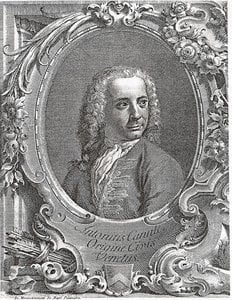 카날레토이탈리아 · 1697–1768
 조반니 바티스타 티에폴로이탈리아 · 1696–1770
 프랑수아 부셰프랑스 · 1703–1770
 장오노레 프라고나르프랑스 · 1732–1806
 장바티스트시메옹 샤르댕프랑스 · 1699–1779
 토머스 게인즈버러영국 · 1727–1788
 조슈아 레이놀즈영국 · 1723–1792장바티스트 그뢰즈French · 1725–1805
 베르나르도 벨로토이탈리아 · 1722–1780
 프란체스코 과르디1712–1793
 피에트로 롱기이탈리아인 · 1701–1785
 조반니 도메니코 티에폴로이탈리아 · 1727–1804
 조반니 바티스타 피아제타이탈리아 · 1683–1754
 니콜라 랑크레프랑스인 · 1689–1743
 조제프 베르네프랑스인 · 1714–1789
 로살바 카리에라이탈리아 · 1675–1757
 마르크 나티에프랑스 · 1685–1766
 캉탱 드 라 투르프랑스인 · 1704–1788
 알렉산더 로슬린스웨덴 · 1718–1793
 요한 조파니독일 · 1733–1810루이미셸 반 로프랑스 · 1707–1771
 장-에티엔 리오타르스위스 · 1702–1789
 프랑수아 르모인프랑스 · 1688–1737
 장 프랑수아 드 트로이프랑스 · 1645–1730
 장 바티스트 파테르프랑스 · 1695–1736샤를앙드레 반 루프랑스 · 1705–1765
 프란체스코 주카렐리이탈리아 · 1702–1788
 자코포 아미고니이탈리아 · 1682–1752
 샤를조제프 나투아르프랑스 · 1700–1777
 프란츠 안톤 말베르츠독일/오스트리아 · 1724–1796
 샤를 앙투안 코이펠프랑스 · 1694–1752Adélaïde Labille-GuiardFrench · 1749–1803
 드미트리 레비츠키우크라이나-러시아 · 1735–1822
 장 바티스트 피갈프랑스 · 1725–1805
 안 발레-코스테르프랑스 · 1744–1818
 루이 장 프랑수아 라그레네프랑스인 · 1756–1827지암바티스타 피토니1687–1767가스파르 판 비텔네덜란드 · 1653–1736
 표도르 로코토프1730–1808
 프랑수아 위베르 드루에1727–1775
 블라디미르 보로비콥스키1757–1825
 앙투안 페스느프랑스 · 1683–1757
 앨런 램지1713–1784Elisabeth-Louise Vigée-Lebrun
 코라도 자쿠인토이탈리아 · 1703–1766
 요한 하인리히 티슈바인독일 · 1722–1789크리스티안 빌헬름 에른스트 디트리히독일 · 1712–1774Charles Amédée Philippe Van LooFrench · 1719–1795
 구스타프 룬드베리스웨덴 · 1695–1786라그레네 르 에네English · 1725–1805
 야코프 데 비트네덜란드 · 1695–1754Jean-Baptiste van LooFrench · 1684–1745John WollastonEnglish · 1742–1775Carl Gustaf PiloSwedish · 1711–1793Anna Dorothea TherbuschGerman · 1721–1782
 요한 게오르크 플라처오스트리아 · 1704–1761
 나다니엘 혼네덜란드 · 1718–1784Michele MarieschiItalian · 1710–1743Antonio CorradiniItalian · 1668–1752마이센 자기 제조소독일 · born 1710Gerard van Spaendonck1746–1822
 조셉 하이모어영국인 · 1692–1780
 장 자크 카피에리프랑스 · 1678–1755
 장 바티스트 페로노프랑스 · 1715–1783
 프랜시스 헤이먼영국인 · 1708–1776
 루이 토케프랑스 · 1696–1772
 도나토 크레티이탈리아 · 1671–1749Antonio Balestra1666–1740
 가스파레 트라베르시이탈리아 · 1722–1770Georg DesmaréesSwedish-German · 1697–1776
 장 바티스트 필레몽프랑스 · 1728–1808
 코르넬리스 트루스트네덜란드 · 1696–1750Jacques De LajoueFrench · 1686–1761
 리처드 코스웨이영국 · 1742–1821
 필리프 메르시에프랑스 · 1689–1760Per Krafft the ElderSwedish · 1724–1793Johann Georg PinzelUkrainian, Czech · 1715–1761Alessandro Longhi1733–1813Giuseppe BonitoItalian · 1707–1789
 크리스토프 위에프랑스 · 1700–1759
 루이 드 실베스트르프랑스 · 1675–1760Luis Paret Y AlcázarSpanish · 1746–1799
 요한 살로몬 발독일, 덴마크 · 1689–1765Giuseppe NogariItalian · 1699–1766
 장 랑크French · 1674–1735
 나사니엘 호언아일랜드 · 1718–1784Jean RaouxFrench · 1677–1734
 에두아르 오노레 아브프랑스 · 1818–1890Francesco ZugnoItalian · 1708–1787Joseph BozeFrench · 1745–1826Louis Joseph WatteauFrench · 1731–1798Jacobus BuysDutch · 1724–1801Jeremiah TheusSwiss · 1716–1774Vigilius EriksenDanish · 1722–1782Georg David MatthieuGerman · 1737–1778Robert Tournières1667–1752Jose Del CastilloSpanish · 1737–1793Agostino BruniasItalian · 1730–1796Domenico DupràItalian · 1689–1770
Your questions, answered
First place goes to 앙투안 바토 (#1); 카날레토 (#2) and 조반니 바티스타 티에폴로 (#3) complete the podium.
앙투안 바토 (#1), 카날레토 (#2), 조반니 바티스타 티에폴로 (#3), 프랑수아 부셰 (#4) and 장오노레 프라고나르 (#5).
The women of this list (5): 로살바 카리에라 (#17), Adélaïde Labille-Guiard (#33), 안 발레-코스테르 (#36), Elisabeth-Louise Vigée-Lebrun (#45) and Anna Dorothea Therbusch (#56).
Most painters in this list were born in the 18th century (62 of 100), between 1645 and 1818 overall.
파리: 15 of the painters in this list were born there.
The highest-ranked painters born in 이탈리아 are 카날레토 (#2), 조반니 바티스타 티에폴로 (#3), 베르나르도 벨로토 (#10), 프란체스코 과르디 (#11) and 피에트로 롱기 (#12).
The earliest-born painter in this list is 장 프랑수아 드 트로이 (#25), born in 1645.
The highest-ranked living painters in this list are 마이센 자기 제조소 (#61).
The highest-ranked painters born in 프랑스 are 앙투안 바토 (#1), 프랑수아 부셰 (#4), 장오노레 프라고나르 (#5), 장바티스트시메옹 샤르댕 (#6) and 장바티스트 그뢰즈 (#9).
프랑스: 30 of the 100 painters in this list were born there, then 이탈리아 (15) and Italy (10).
Our catalogue holds 11,037 works by these painters. Each one can be ordered as a hand-painted oil reproduction or a print.
Keep reading
Other movements
 Famous Baroque artists밤의 망루 (De Nachtwacht) · 렘브란트
 Famous Contemporary Realist artists이삭 줍는 사람들 · 장프랑수아 밀레
 Famous Impressionist artists별이 빛나는 밤 (뉴욕, MoMA) · 빈센트 반 고흐
 Famous Romanticist artists토성, 그의 아들을 잡아먹는 중 · 프란시스코 데 고야
 Famous Neoclassicist artistsThe Death of Marat · 자크루이 다비드
 Famous Realist artists세계의 기원 · 귀스타브 쿠르베
 Famous Renaissance artists모나리자 (라 죠콘다) · 레오나르도 다 빈치
 Famous Dutch Golden Age artists진주 귀걸이를 한 소녀 · 요하네스 페르메이르
 Famous Expressionist artists구성 VII · 바실리 칸딘스키
 Famous Pop Art artists캠벨 수프 통 · 앤디 워홀
Other periods
 Famous Early Medieval artistsSnowy River · Wang Wei
 Famous High Medieval artists마에스타의 마돈나 (오니산티 마돈나) · 조토 디 본도네
 Famous Late Medieval artists수태고지와 두 성인 · 시모네 마르티니
 Famous Renaissance artists아담의 창조 · 미켈란젤로 부오나로티
 Famous Early Modern artists마태오의 부르심 · 카라바조
 Famous 19th Century artists수련 (또는 연꽃) · 클로드 모네
 Famous Modern artists게르니카 · 파블로 피카소
 Famous Contemporary artistsWind Sculpture III (one in a series of nine) · Yinka Shonibare
More rankings