PreviewPreview AR previewAR preview Switch to Print Switch to PrintSwitch to Digital Image Switch to Digital Image SendSend
DetailsDetails Add to favorites Add to favorites DownloadDownload SimilarsSimilars X-RayX-Ray DiaporamaDiaporama StatsStats

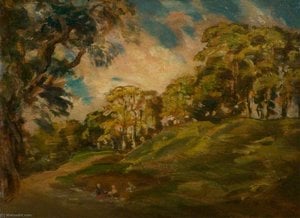
Chepstow Castle

Philip Wilson Steer's "Chepstow Castle" captures the majestic British landscape with atmospheric watercolors. Explore this iconic work of Impressionist art, showcasing the castle and River Wye.

Discover Philip Wilson Steer (1860-1942), a pivotal British Impressionist renowned for luminous landscapes & seascapes. Influenced by Manet & Whistler, his works are held in Tate & Uffizi collections.

Hand Made Oil Reproduction

Hand-painted oil on canvas in your size and frame, made to order by our artists. (Switch to Print Switch to PrintSwitch to Digital Image Switch to Digital Image)

P118B $10
P118H $10
P118W $10
P438Z $10
P508JH $12
P508YH $12
P805H $10
P805Z $10
P919BZ $10
P919G $10
P919XJ $10
P959ZH $10
P968JZ $12
W106C $8
W218G $10
W218JH $8
W218Y $10
W307PJ $10
W316G $10
W316PJ $8
W316Y $10
W398PJ $8
W4111J $10
W500HY $15
W500JH $15
W692G $12
W849H $8
W940BG $15
W953PJ $8

Standard
custom
CM
INCH

Pick from our preset sizes that match the artwork's original proportions.

width
height

You may enter your own dimensions to fit a specific frame or space. If your selected size does not match the original image's proportions, we will either crop the artwork or extend the painting with additional hand-painted elements. A digital mockup will be sent for your approval before production begins.
Please note that the on-screen preview does not reflect the actual cropping or extension. Only the mockup will accurately show the final composition.
While custom sizes are available, we recommend selecting a dimension from the predefined list to preserve the original proportions.

Examples of what can be changed: Replace face with customer photo; Add pet (e.g., replace cat with dog); Include hidden message in background; Change background landscape or elements.
After order, WahooArt.com team will email client for instructions and provide a mockup preview

Worldwide Delivery () in 3/4 weeks instead of standard 5 weeks. (12 September). No compromise on quality.

why_choose_icon
Free Worldwide Express Shipping
why_choose_icon
High-Quality Linen Canvas
why_choose_icon
Full Shipping Insurance
why_choose_icon
Customs Tax Refund Guarantee
why_choose_icon
True Color Matching Guarantee
why_choose_icon
100-Day Return Policy (Defects Only)
why_choose_icon
100% Money-Back Guarantee
why_choose_icon
Bulk Discount Offer

Total Price

$ 272

reproduction

Chepstow Castle

Reproduction Medium

Reproduction Size

-

Total Price

$ 272

Quick Facts

  • Title: Chepstow Castle
  • Dimensions: 24.8 x 37.0 cm
  • Artistic style: Atmospheric, Misty
  • Medium: Watercolor & Chalk
  • Influences:
    • Turner
    • Constable
  • Subject or theme: Castle Landscape
  • Location: Leeds Museums

Art Quiz

There is only one correct answer for each question.

Question 1:
What is the primary subject of Philip Wilson Steer’s painting, ‘Chepstow Castle’?
Question 2:
In what year was Philip Wilson Steer’s painting, ‘Chepstow Castle’, created?
Question 3:
The painting 'Chepstow Castle' is primarily an example of which artistic movement?
Question 4:
What medium did Philip Wilson Steer predominantly use when creating ‘Chepstow Castle’?
Question 5:
The painting depicts Chepstow Castle in a way that suggests which atmosphere or feeling?

The Canvas as a Window: Philip Wilson Steer’s Chepstow Castle

Philip Wilson Steer's "Chepstow Castle" isn’t merely a depiction of a medieval fortress; it’s an immersion into the very essence of the Welsh landscape and the evocative power of memory. Painted in 1905, this watercolour captures more than just the physical structure of Chepstow Castle perched dramatically upon its limestone cliffs overlooking the River Wye. Instead, Steer offers us a shimmering, almost dreamlike vision—a testament to his profound understanding of light, atmosphere, and the enduring connection between man and nature. The castle itself, rendered with delicate washes of grey and ochre, seems to dissolve into the misty backdrop, becoming less a solid monument and more a spectral presence within the scene.

Steer’s artistic journey was one of constant evolution. Initially influenced by French Impressionism – particularly Manet and Whistler – he later sought inspiration in the works of John Constable and J.M.W. Turner, embracing a style that prioritized capturing fleeting moments and atmospheric effects over precise detail. This shift is powerfully evident here; the painting isn’t concerned with photographic accuracy but rather with conveying a specific mood—a sense of quiet contemplation and timelessness. The artist's deliberate blurring of edges and his masterful use of color create an ethereal quality, inviting the viewer to step into the scene and experience it as if they were standing beside the river themselves.

The Influence of Turner and Constable: A Return to English Roots

Steer’s decision to revisit the styles of Constable and Turner was a deliberate one, representing a conscious move away from the Parisian art world and back towards his British heritage. Constable's focus on the rural landscape—particularly the interplay of light and shadow in fields and waterways—provided Steer with a model for capturing the subtle nuances of the Welsh countryside. Similarly, Turner’s exploration of atmospheric perspective and his ability to evoke mood through color informed Steer’s approach to depicting the misty Wye Valley. The painting's silvery palette, reminiscent of Turner’s seascapes, suggests a sense of mystery and melancholy, while the composition echoes Constable’s emphasis on capturing the beauty of ordinary subjects.

Notably, Steer’s work during this period was heavily influenced by his travels in search of the picturesque. He sought out sites that were popular with eighteenth-century travelers—locations where the natural world could be experienced as a sublime and awe-inspiring spectacle. This pursuit is vividly reflected in "Chepstow Castle," which captures not just the castle itself but also the surrounding landscape, creating a harmonious whole. The inclusion of the River Wye, rendered with delicate washes of blue and grey, adds to the painting’s sense of tranquility and timelessness.

Symbolism and Emotional Resonance

Beyond its purely visual qualities, "Chepstow Castle" is rich in symbolic meaning. The castle itself represents not only a physical structure but also a symbol of power, history, and resilience—a reminder of the enduring legacy of Norman England in Wales. The misty atmosphere surrounding the castle evokes a sense of nostalgia and longing, suggesting that the past is never truly gone but continues to resonate within the present. The figures on the boats add a human element to the scene, hinting at the ongoing connection between people and place.

Steer’s masterful use of light—particularly its ability to transform the landscape—creates an emotional resonance that transcends mere representation. The painting evokes a sense of quiet contemplation and invites the viewer to reflect on their own relationship with history, memory, and the natural world. It's a piece that speaks not just to the eye but also to the heart, offering a glimpse into the artist’s profound understanding of beauty and its power to inspire.


Artist Biography

Early Life and Artistic Foundations

Philip Wilson Steer, born in Birkenhead in 1860, emerged from a family deeply rooted in the artistic world—his father was both a portrait painter and a dedicated art teacher. This early exposure proved formative, nurturing a sensibility that would define his life’s path. A relocation to Whitchurch near Monmouth when he was just three years old instilled a connection with the British countryside that would resonate throughout his oeuvre. His formal education began at Hereford Cathedral School, providing a foundational grounding before he wholeheartedly pursued his artistic ambitions. Steer's training continued at the Gloucester School of Art and the South Kensington Drawing Schools, but it was his sojourn to Paris between 1880 and 1884 that proved truly transformative. Studying at the Académie Julian and later under Alexandre Cabanel at the École des Beaux Arts, he encountered a world brimming with new ideas and approaches to painting.

The Embrace of Impressionism and a Distinctive Style

Paris became a crucible for Steer’s artistic development. He was profoundly moved by the works of Édouard Manet and James McNeill Whistler, absorbing their innovative techniques in capturing light, color, and atmosphere. This exposure ignited within him a passion for Impressionism, yet he never simply replicated it. Steer skillfully blended these French influences with his inherent English sensibilities, forging a style uniquely his own. His paintings are characterized by a remarkable ability to seize fleeting moments—the play of sunlight on water, the ephemeral quality of coastal air. He employed loose brushstrokes and vibrant colors not merely to depict scenes but to evoke emotions and create an immersive sense of immediacy. Recurring themes in his work include beach scenes and seascapes, often bathed in silvery, translucent light, demonstrating a mastery of depicting the freshness and luminosity of these environments. Works like The Music Room, early in his career, showcase his burgeoning skill with composition and light, while pieces such as Girls Running: Walberswick Pier burst with the energy and vibrancy of a Suffolk coastal town.

A Champion of Modern Art and Etaples Influence

Steer wasn’t content to simply paint; he actively shaped the artistic landscape of Britain. He played a pivotal role in establishing the New English Art Club, an organization dedicated to championing modern artistic expression—a bold move at a time when traditional tastes still held sway. Through this platform and regular exhibitions at the Royal Academy, including participation in the groundbreaking London Impressionist Exhibition of 1889, he helped introduce new ideas and challenge conventional norms. His time spent at the Etaples art colony in 1887 further refined his artistic vision. This vibrant community of artists provided a stimulating environment for experimentation and collaboration, solidifying his ability to capture light and atmosphere with increasing nuance and skill. Steer drew inspiration from a diverse range of masters—John Constable, J.M.W. Turner, and even François Boucher—but always filtered these influences through his own unique perspective.

Legacy, Recognition, and Enduring Influence

Philip Wilson Steer continued to paint prolifically until health issues forced him to stop in 1940, passing away two years later at the age of 81. His contributions were widely recognized during his lifetime, culminating in an Order of Merit. Today, his works are held in prestigious collections worldwide, including the Tate Gallery and even the Uffizi Gallery—a testament to his international acclaim. Beyond his paintings themselves, Steer’s legacy extends through his long tenure as a painting tutor at the Slade School of Art. For many years, he profoundly influenced generations of young artists, imparting not only technical skills but also a deep appreciation for observation and artistic integrity. His contribution to the development and acceptance of Impressionism in Britain is undeniable, solidifying his place as a significant figure in British art history—a painter who successfully bridged the gap between tradition and modernity, leaving an enduring mark on the landscape of British art. Notable works like Convalescent, with its rich textures and evocative gaze, and The Teme at Ludlow, highlighting serene beauty and masterful brushwork, continue to captivate audiences today, demonstrating the timeless quality of his artistic vision.
Philip Wilson Steer

Philip Wilson Steer

1860 - 1942 , United Kingdom

Quick Facts

  • Artistic Movement Or Style: Impressionism
  • Artists Or Movements Influenced By This Artist: British Impressionism
  • Artists Who Influenced This Artist:
    • Manet
    • Whistler
    • Constable
    • Turner
    • Boucher
  • Date Of Birth: 1860
  • Date Of Death: 1942
  • Full Name: Philip Wilson Steer
  • Nationality: British
  • Notable Artworks:
    • The Music Room
    • Girls Running
    • Convalescent
    • The Teme at Ludlow
    • Mother and Daughter
  • Place Of Birth: Birkenhead, UK
Explore artworks organized by themes, styles, and characteristics.