x


Hand-painted oil on canvas in your size and frame, made to order by our artists. ( Buy Print Buy Image)





























Pick from our preset sizes that match the artwork's original proportions.

You may enter your own dimensions to fit a specific frame or space. If your selected size does not match the original image's proportions, we will either crop the artwork or extend the painting with additional hand-painted elements. A digital mockup will be sent for your approval before production begins.
Please note that the on-screen preview does not reflect the actual cropping or extension. Only the mockup will accurately show the final composition.
While custom sizes are available, we recommend selecting a dimension from the predefined list to preserve the original proportions.
Worldwide Delivery () in 3/4 weeks instead of standard 5 weeks. (26 August). No compromise on quality.


Mrs Raynes
Reproduction Size
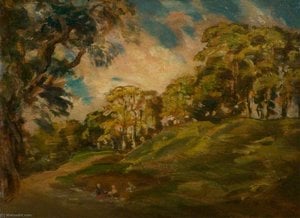
Philip Wilson Steer’s “Mrs Raynes,” completed in 1922, stands as a testament to the enduring power of Impressionism and Steer's masterful ability to capture fleeting moments of domestic tranquility amidst a subtly evocative landscape. Exhibited at Tate Britain, this painting transcends mere portraiture; it’s an exploration of light, texture, and psychological nuance that continues to fascinate viewers.
Steer, born in Birkenhead in 1860, inherited a lineage steeped in artistic tradition—his father was himself a respected portrait painter—a formative influence shaping his lifelong dedication to visual art. Following a relocation to Whitchurch near Monmouth as a young child, Steer developed an intrinsic connection with the British countryside, which would become a recurring motif in his oeuvre.
The painting depicts Mrs Raynes, a woman of considerable age, seated comfortably in a chair within a richly decorated room. The setting is deliberately understated—a glimpse of a vase and potted plants—allowing Steer’s focus to remain squarely on the subject's face and posture. Her gaze directs outwards, seemingly meeting the viewer’s eye with an expression that blends serenity and quiet contemplation.
Steer employed a technique characteristic of Impressionism: thin layers of oil paint applied in loose brushstrokes—a deliberate departure from academic conventions—to achieve remarkable luminosity and atmospheric depth. The silvery light filtering through the window illuminates Mrs Raynes’s face, highlighting subtle contours and conveying an impression of warmth and dignity. Steer skillfully blended shades of ochre, umber, and ivory to create a harmonious palette that reinforces the painting's mood.
Beyond its aesthetic qualities, “Mrs Raynes” speaks to broader themes of aging, domestic life, and the passage of time. The carefully considered composition—the positioning of the vase and plants—suggests an environment designed for comfort and reflection. Steer’s masterful rendering captures not just a likeness but also an essence, inviting viewers to contemplate the quiet beauty inherent in everyday experience.
The painting's influence extends beyond its immediate visual impact. Steer’s dedication to portraying the English countryside—particularly coastal scenes—echoes the stylistic concerns of John Constable and J. M. W. Turner, artists who championed a painterly approach that prioritized capturing atmospheric conditions over precise representation. “Mrs Raynes” embodies this legacy, securing its place as an iconic example of Impressionist art.


1860 - 1942 , United Kingdom

Explore the ethereal beauty of Impressionist landscapes. Discover how masters like Monet captured fleeting light through color and texture, and learn to curate these timeless, luminous masterpieces for your home collection.

Elevate your home with bespoke Impressionist oil paintings. WahooArt transforms your cherished photos into museum-quality masterpieces through expert hand-painting and academic rigor. Discover a timeless legacy of light, texture, and unparalleled craftsmanship for the discerning collector.

Elevate your personal landscapes into breathtaking Impressionist oil masterpieces. WahooArt transforms your cherished photos into museum-quality, hand-painted treasures through academic artistry and premium craftsmanship. Invest in a timeless legacy for your home today.


Stay updated with the latest art news, exclusive offers, and decoration ideas.
Tell us about your project and our art experts will provide you with 3 personalized art suggestions.
Let Us Curate 3 Options Just for You - Free!

 Preview
 Send
Send Share
Share
 Details

 Download
 Similars
 X-Ray
X-Ray Diaporama


 Read More







 Glass option is only available in size under 110 CM