

Hand-painted oil on canvas in your size and frame, made to order by our artists. ( Switch to Print Switch to Digital Image)





























Pick from our preset sizes that match the artwork's original proportions.

Type the width and the height you need, to fit your frame or your wall. This is hand-painted, so for a size with a different shape the artist can paint a bit more around the picture, or cut a bit — you choose. We send you a digital mockup to approve before the painting starts. The picture shown on this page does not show the real result — only the mockup does.
Worldwide Delivery () in 3/4 weeks instead of standard 5 weeks. (24 October). No compromise on quality.
LE PONT DU GARD
Reproduction Size
In the vast tapestry of eighteenth-century French art, few threads are as evocative and hauntingly beautiful as those woven by Hubert Robert. His masterpiece, Le Pont du Gard, is far more than a mere topographical record of an ancient Roman aqueduct; it is a profound meditation on the passage of time, the endurance of human ingenuity, and the sublime beauty found in decay. As a painter who famously bridged the gap between the playful elegance of the Rococo and the structured gravity of Neoclassibility, Robert possessed a singular ability to transform stone and mortar into vessels of memory. In this panoramic vista, the monumental arches of the aqueduct stretch across the canvas like a rhythmic heartbeat of a vanished civilization, inviting the viewer to step into a world where history breathes through the very cracks in the limestone.
The composition is a masterclass in balanced tension, where the massive, horizontal weight of the Roman engineering feat is softened by the organic fluidity of the natural landscape. Robert utilizes a sophisticated linear perspective to draw the eye deep into the horizon, yet he anchors the scene with the rhythmic repetition of the bridge's arches. Beneath this architectural titan, the river flows with a serene grace, its surface acting as a mirror for the soft, diffused light of a late afternoon sky. Small, delicate figures are scattered along the banks and within tiny boats, serving not merely as decorative elements but as vital tools for scale. These tiny traces of life emphasize the overwhelming magnitude of the structure, reminding us of the fleeting nature of human existence when measured against the monumental legacy of the Roman Empire.
To behold a high-quality reproduction of Le Pont du Gard is to witness the delicate alchemy of Robert’s technique. The artist employed a meticulous layering of oil paints, utilizing glazing to achieve a luminous, ethereal quality that seems to emanate from within the canvas itself. This method allows for a subtle interplay of light and shadow, where the rough, weathered texture of the ancient stone contrasts beautifully with the soft, translucent clouds drifting above. The color palette is a sophisticated arrangement of earthy tones—muted beiges, warm browns, and stony greys—interrupted only by the most delicate whispers of pale blue and a faint, rosy warmth reflected in the water’s surface.
For the discerning collector or interior designer, this artwork offers an unparalleled sense of tranquility and intellectual depth. The painting does not shout; rather, it whispers stories of antiquity and the romantic allure of ruins. Its ability to harmonize structured geometric forms with the unpredictable beauty of nature makes it a versatile centerpiece for any sophisticated space. Whether placed in a sunlit gallery or a quiet study, the piece serves as a window into a "capriccio"—a semi-fictitious, picturesque vision that celebrates the grandeur of the past. It is an investment in emotion, providing a focal point that inspires awe, contemplation, and a deep connection to the enduring spirit of human history.
The color that stands out most in "LE PONT DU GARD" is walnut (#624729). The dominant color is useful when matching an artwork to an interior.
"LE PONT DU GARD" by Hubert Robert shows a balanced color intensity.
Within the Romantic Neoclassicism movement, "LE PONT DU GARD" is recorded with a tranquil tone.

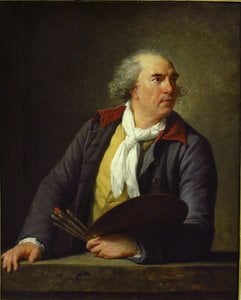
1733 - 1808 , France

Explore the breathtaking intersection of Roman grandeur and Impressionist light. Discover how masters like Monet reimagined classical ruins through vibrant, emotive brushstrokes. A cultural journey for true art lovers seeking to bring eternal glory into their homes.

Explore the rich history of landscape art with WahooArt. Discover renowned artists, movements like Impressionism & Romanticism, and expert guidance for collecting timeless pieces. Find your perfect serene escape today!

Explore the captivating world of Hubert Robert, master of Romantic landscape painting & 'capriccio' ruins. Discover his historical context, artistic innovations, and collecting insights with WahooArt.

Journey through John Constable's 25 most celebrated landscapes. Explore Romanticism, Dedham Vale & his masterful use of light in iconic paintings like 'Hay Wain'. Find museum-quality art reproductions and elevate your home decor on WahooArt.com.

Journey through 10 Romantic landscape masterpieces by Friedrich, Turner & Cole. Explore emotional art, sublime nature scenes & iconic 19th-century paintings. Find museum-quality reproductions for your home at WahooArt.com – discover the full collection online!

 Preview
 Send
Send Share
Share
 Details
 Guide
Guide

 Download
 Similars
 X-Ray
X-Ray Diaporama
 Stats
Stats


 Read More









 Glass option is only available in size under 110 CM


