Oil On CanvasWallArtBaroque
 1618Early Modern
 135.0 x 202.0 cm
 Alte Pinakothek
Hand-painted oil on canvas in your size and frame, made to order by our artists. ( Switch to Print Switch to Digital Image)





























Pick from our preset sizes that match the artwork's original proportions.

You may enter your own dimensions to fit a specific frame or space. If your selected size does not match the original image's proportions, we will either crop the artwork or extend the painting with additional hand-painted elements. A digital mockup will be sent for your approval before production begins.
Please note that the on-screen preview does not reflect the actual cropping or extension. Only the mockup will accurately show the final composition.
While custom sizes are available, we recommend selecting a dimension from the predefined list to preserve the original proportions.
Worldwide Delivery () in 3/4 weeks instead of standard 5 weeks. (23 September). No compromise on quality.


Christ among the Doctors
Reproduction Size
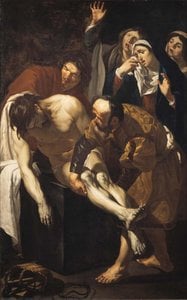
In the profound stillness of 1618, Dirck van Baburen captured a moment of intellectual and spiritual electricity in his masterpiece, Christ among the Doctors. This painting is not merely a depiction of a biblical episode; it is a visceral theatrical performance rendered in oil. The scene brings to life the Finding in the Temple, where the young Jesus engages in a spirited theological debate with the learned elders of Jerusalem. As viewers, we are not mere observers standing at a distance, but participants drawn into the intimate circle of scholars and seekers. The composition vibrates with the tension of discovery, as the light of divine wisdom illuminates the faces of those gathered around the central figure.
The emotional weight of the piece lies in its ability to balance the gravity of religious discourse with the human curiosity of the onlookers. There is a palpable sense of movement—the leaning bodies, the furrowed brows, and the intense gazes that converge upon the young Christ. For the collector or the interior designer, this work offers more than just aesthetic beauty; it provides a focal point of profound contemplation, making it an ideal centerpiece for spaces dedicated to thought, study, or quiet reflection.
To understand the technical brilliance of this work, one must look to the artist's transformative journey through Rome. As a leading figure of the Utrecht School of Caravaggisti, van Baburen brought the revolutionary language of tenebrism back to the Netherlands. In Christ among the Doctors, he employs a dramatic use of chiaroscuro—the stark contrast between deep, swallowing shadows and sudden, piercing highlights. This technique does more than create depth; it sculpts the figures out of the darkness, giving them a three-dimensional presence that feels almost tactile.
The brushwork is deliberate yet fluid, capturing the varied textures of the era: the heavy folds of scholarly robes, the weathered skin of the doctors, and the crisp edges of the open book that serves as the anchor of the discussion. The palette is rich and earthy, grounded in tones that evoke antiquity and permanence. This mastery of light and shadow creates a cinematic atmosphere, where every flicker of illumination tells a story of revelation. For those seeking a high-quality reproduction, these nuances of texture and light are what elevate the piece from a simple image to a window into the seventeenth century.
Beyond its technical prowess, the painting is steeped in layers of symbolism that resonate across centuries. The open book at the heart of the composition represents the intersection of human knowledge and divine truth. It serves as a bridge between the earthly intellect of the doctors and the celestial wisdom embodied by Christ. This theme of searching for meaning through study and dialogue remains deeply relevant in our contemporary world, making the painting an inspiring addition to any curated collection.
Integrating such a powerful work into a modern interior requires an eye for balance. Whether placed in a grand library or a sophisticated living space, the dramatic energy of van Baburen’s style commands attention without overwhelming the room. It invites conversation and serves as a testament to the enduring power of the Dutch Golden Age. Owning a reproduction of this caliber is an opportunity to surround oneself with the legacy of the masters, bringing a sense of historical depth and spiritual resonance to the most cherished corners of a home.

In the annals of the Dutch Golden Age, few names evoke the visceral drama of shadow and sudden illumination quite like Dirck van Baburen. Born around 1595 in Wijk bij Duurstede, his life was a brief but brilliant meteor strike across the canvas of art history. Though his years were tragically short, ending in 1624, he managed to ignite a stylistic revolution that would redefine the northern European aesthetic. As a central pillar of the Utrecht School of Caravaggisti, van Baburen did not merely paint scenes; he orchestrated moments of profound tension, using the stark language of tenebrism to pull viewers into the intimate, often gritty reality of his subjects.
The foundation of his mastery was laid in the studios of Utrecht, under the tutelage of the respected Paulus Moreelse. However, the true metamorphosis of his soul and brush occurred during his transformative pilgrimage to Rome between 1612 and 1615. It was in the sun-drenched yet shadow-strewn streets of the Eternal City that van Baburen encountered the revolutionary spirit of Caravaggio. Through his close association with Bartolomeo Manfredi, a devoted follower of Caravaggio’s methods, the young Dutchman absorbed the secrets of chiaroscuro—the art of using extreme contrasts between light and dark to create volume and psychological depth. This Roman immersion was not merely academic; it was a social and professional ascent, as he secured commissions from prestigious patrons such as Cardinal Scipione Borghese, placing him at the very heart of the Baroque movement.
Upon his return to the Netherlands, van Baburen did not arrive as a mere student, but as a vanguard. Alongside contemporaries like Hendrick ter Brugghen and Gerard van Honthorst, he spearheaded a movement that would forever alter the trajectory of Dutch painting. This collective, known as the Utrecht Caravaggisti, sought to transplant the dramatic intensity of Italian Baroque into the local vernacular. Their work was characterized by a departure from the polished, serene landscapes of their predecessors, favoring instead:
His technical prowess allowed him to manipulate light as if it were a physical substance, carving figures out of the darkness with a precision that felt almost tactile. Whether depicting religious fervor or the humble activities of a tavern, his brushwork possessed an energy that bridged the gap between the monumental scale of Italian art and the intimate, domestic focus of the Dutch tradition.
The impact of Dirck van Baburen extends far beyond the borders of Utrecht. While his career was cut short in his early thirties, the ripples of his innovation traveled through the decades, influencing the development of the Dutch Baroque and even providing a stylistic precursor to the works of Rembrandt van Rijn. The way Rembrandt would later manipulate light to evoke profound psychological truths owes a significant debt to the groundwork laid by the Utrecht masters.
Today, van Baburen is remembered not just as a follower of an Italian master, but as an architect of a new visual language. He transformed the canvas into a stage where light and shadow perform a perpetual drama, ensuring that his name remains etched in the history of art as a master of the profound, the dramatic, and the deeply human. His ability to find the extraordinary within the ordinary continues to captivate scholars and art lovers alike, serving as a testament to the enduring power of the Caravaggesque spirit.

1595 - 1624 , Netherlands

Journey through the spiritual intensity of El Greco's greatest works. From Mannerist drama to iconic religious oil paintings, explore 25 timeless masterpieces and find museum-quality reproductions for your decor. Discover all masterpieces on WahooArt.com.

Explore the profound mastery of Caravaggio's tenebrism. Discover how his dramatic use of chiaroscuro revolutionized Baroque art through intense emotion and realism. An expert guide for classic art enthusiasts seeking to understand the power of shadow in historical masterpieces.

Explore the profound impact of Chiaroscuro and Tenebrism in Baroque masterpieces. Discover how dramatic light and shadow define emotion and volume, and learn to curate these powerful historical techniques for sophisticated, luxury interior design collections.

Immerse yourself in the dramatic world of Francisco de Zurbarán. Explore 25 iconic Spanish Baroque masterpieces defined by intense tenebrism and spiritual realism. Find inspiration for museum-quality art reproductions and decor. Discover all masterpieces on WahooArt.com.

Explore the profound impact of Tenebrism in Baroque art. Discover how masters like Caravaggio used dramatic shadows to evoke emotion, and learn the technical secrets behind this captivating style of light and darkness.

 Preview
 Send
Send Share
Share
 Details
 Guide
Guide

 Download
 Similars
 X-Ray
X-Ray Diaporama
 Stats
Stats Read More







 Glass option is only available in size under 110 CM


![Scrovegni - [22] - Christ Among The Doctors — Giotto Di Bondone, Gothic Art](/media/artworks/images-thumb/b0/d6/b0d6b4a8f685d3a87d276cb650082a00.jpg)