Preview AR preview Switch to Print Switch to Digital Image Send
Details Guide Add to favorites Download Similars X-Ray Diaporama Stats

Christ

High Renaissance style defines Venus Anadyomene. Discover the stunning beauty of his classical works today.

Hand Made Oil Reproduction

Hand-painted oil on canvas in your size and frame, made to order by our artists. ( Switch to Print Switch to Digital Image)

Corner sample of the P118B picture frame: moulded polystyrene, 5 cm wide and 3 cm thick
P118B $10
Corner sample of the P118H picture frame: moulded polystyrene, 5 cm wide and 3 cm thick
P118H $10
Corner sample of the P118W picture frame: moulded polystyrene, 5 cm wide and 3 cm thick
P118W $10
Corner sample of the P438Z picture frame: moulded polystyrene, 5.5 cm wide and 3.5 cm thick
P438Z $10
Corner sample of the P508JH picture frame: moulded polystyrene, 7 cm wide and 3.5 cm thick
P508JH $12
Corner sample of the P508YH picture frame: moulded polystyrene, 7 cm wide and 3.5 cm thick
P508YH $12
Corner sample of the P805H picture frame: moulded polystyrene, 5 cm wide and 3.5 cm thick
P805H $10
Corner sample of the P805Z picture frame: moulded polystyrene, 5 cm wide and 3.5 cm thick
P805Z $10
Corner sample of the P919BZ picture frame: moulded polystyrene, 7 cm wide and 3.5 cm thick
P919BZ $10
Corner sample of the P919G picture frame: moulded polystyrene, 7 cm wide and 3.5 cm thick
P919G $10
Corner sample of the P919XJ picture frame: moulded polystyrene, 7 cm wide and 3.5 cm thick
P919XJ $10
Corner sample of the P959ZH picture frame: moulded polystyrene, 5 cm wide and 3 cm thick
P959ZH $10
Corner sample of the P968JZ picture frame: moulded polystyrene, 6 cm wide and 4 cm thick
P968JZ $12
Corner sample of the W106C picture frame: solid wood, 5 cm wide and 3 cm thick
W106C $8
Corner sample of the W218G picture frame: solid wood, 5 cm wide and 3 cm thick
W218G $10
Corner sample of the W218JH picture frame: solid wood, 5 cm wide and 3 cm thick
W218JH $8
Corner sample of the W218Y picture frame: solid wood, 5 cm wide and 3 cm thick
W218Y $10
Corner sample of the W307PJ picture frame: solid wood, 6 cm wide and 3 cm thick
W307PJ $10
Corner sample of the W316G picture frame: solid wood, 6 cm wide and 3 cm thick
W316G $10
Corner sample of the W316PJ picture frame: solid wood, 6 cm wide and 3 cm thick
W316PJ $8
Corner sample of the W316Y picture frame: solid wood, 6 cm wide and 3 cm thick
W316Y $10
Corner sample of the W398PJ picture frame: solid wood, 5 cm wide and 3 cm thick
W398PJ $8
Corner sample of the W4111J picture frame: solid wood, 6.5 cm wide and 3.5 cm thick
W4111J $10
Corner sample of the W500HY picture frame: solid wood, 7 cm wide and 5 cm thick
W500HY $15
Corner sample of the W500JH picture frame: solid wood, 7 cm wide and 5 cm thick
W500JH $15
Corner sample of the W692G picture frame: solid wood, 8 cm wide and 4 cm thick
W692G $12
Corner sample of the W849H picture frame: solid wood, 5 cm wide and 3 cm thick
W849H $8
Corner sample of the W940BG picture frame: solid wood, 7.5 cm wide and 4.5 cm thick
W940BG $15
Corner sample of the W953PJ picture frame: solid wood, 6 cm wide and 3.5 cm thick
W953PJ $8

Standard
custom
CM
INCH

Pick from our preset sizes that match the artwork's original proportions.

width
height

Type the width and the height you need, to fit your frame or your wall. This is hand-painted, so for a size with a different shape the artist can paint a bit more around the picture, or cut a bit — you choose. We send you a digital mockup to approve before the painting starts. The picture shown on this page does not show the real result — only the mockup does.

Examples of what can be changed: Replace face with customer photo; Add pet (e.g., replace cat with dog); Include hidden message in background; Change background landscape or elements.
After order, WahooArt.com team will email client for instructions and provide a mockup preview

Worldwide Delivery () in 3/4 weeks instead of standard 5 weeks. (23 October). No compromise on quality.

Free Worldwide Express Shipping
High-Quality Linen Canvas
Full Shipping Insurance
Customs Tax Refund Guarantee
True Color Matching Guarantee
100-Day Return Policy (Defects Only)
100% Money-Back Guarantee
Bulk Discount Offer

Total Price

$ 272

Christ

Reproduction Medium

Reproduction Size

-

Total Price

$ 272

Quick Facts

  • Notable elements or techniques: Detailed depiction; Atmospheric perspective
  • Influences: Venetian Renaissance
  • Artistic style: Classical Mannerism
  • Movement: Renaissance
  • Medium: Oil on Canvas
  • Year: 1522

Art Quiz

There is only one correct answer for each question.

Question 1:
What artistic movement heavily influenced Titian Ramsay Peale II’s style?
Question 2:
The painting depicts Jesus Christ holding what prominent symbol?
Question 3:
What is the cityscape in the background of ‘Christ’ intended to represent?
Question 4:
Which artist's style is Titian Ramsay Peale II often compared to?
Question 5:
The inclusion of swords in the painting symbolizes:

A Renaissance Echo in the New World: Exploring Titian Ramsay Peale II’s “Christ”

Titian Ramsay Peale II stands as a singular figure within the burgeoning artistic landscape of 19th-century America—a testament to an enduring fascination with European artistic traditions amidst the rapid expansion of national identity. Born in Philadelphia in 1799, he inherited a lineage steeped in artistic prowess from his father, Charles Willson Peale, a titan of early American portraiture and the visionary founder of the nation’s inaugural museum. While his paternal legacy commanded considerable attention, Titian Ramsay Peale II carved out his own distinctive path—one firmly anchored in the stylistic precepts of the High Renaissance, specifically those emanating from Venice. This wasn't merely an imitation; it was a profound internalization of artistic ideals, translating them into canvases imbued with meticulous detail and a palette bursting with vibrant hues that distinguished him noticeably from many of his contemporaries. His life unfolded against the backdrop of transformative societal shifts—the Industrial Revolution reshaping American society—yet his creative spirit remained resolutely devoted to honoring the masters of antiquity, resulting in artworks that powerfully juxtapose classical elegance with nascent national expression.

Subject Matter and Composition: Heavenly Ascent

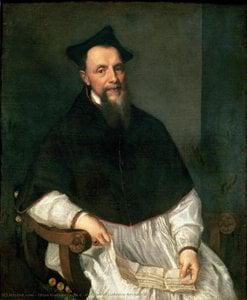
The painting depicts a dramatic religious scene centered around Jesus Christ, portrayed as ascending through the heavens on clouds. His posture exudes confidence and serenity, accentuated by the outstretched right hand firmly grasping a flag—a symbol of victory and divine authority—while his left hand cradles a cross, representing sacrifice and redemption. Surrounding him are figures embodying faith and devotion, strategically positioned to reinforce the narrative’s spiritual core. Notably, the cityscape visible in the distance serves as an earthly counterpoint to Christ's celestial journey, grounding the scene within a recognizable human context. The inclusion of two swords—one on the right side and another closer to the center—adds layers of complexity, hinting at themes of judgment and divine justice. Finally, perched atop the composition is an umbrella, offering visual balance and subtly suggesting protection from earthly tribulations.

Style and Technique: Venetian Influence Meets American Precision

Titian Ramsay Peale II’s artistic approach reflects a masterful blend of Venetian Renaissance techniques with the burgeoning precision characteristic of American artmaking during his era. Like many artists influenced by Venetian masters such as Titian and Tintoretto, he employed chiaroscuro—the dramatic interplay of light and shadow—to sculpt form and convey emotion. This technique is particularly evident in the depiction of Christ’s body, where subtle gradations of tone create a palpable sense of volume and realism. However, Peale II distinguishes himself through meticulous attention to detail—a hallmark of American naturalism—evident in the rendering of textures like the clouds and drapery. The artist skillfully utilized glazing techniques, layering translucent pigments over underlying colors to achieve luminous effects and heighten visual richness.

Historical Context: Romantic Idealism Amidst Industrial Change

Created in 1522, “Christ” emerged during a period marked by significant intellectual and artistic ferment—the High Renaissance’s waning influence giving way to the Romantic movement's emphasis on emotion and imagination. The painting reflects the broader cultural currents of its time, grappling with questions of faith, morality, and humanity’s relationship with divinity. Simultaneously, it captures the spirit of a nation undergoing rapid industrial transformation, mirroring the tension between tradition and progress that defined 19th-century America. Peale II's work stands as a poignant reminder of how artistic sensibilities can transcend geographical boundaries and historical epochs, resonating powerfully across centuries.

Symbolism: Faith, Sacrifice, and Divine Glory

The painting’s symbolism is rich and multifaceted. The flag represents Christ’s triumph over death and symbolizes divine victory—a cornerstone of Christian theology. The cross embodies sacrifice and redemption—the central sacrament of Christianity—serving as a visual reminder of Jesus's willingness to endure suffering for the salvation of humankind. Furthermore, the cityscape serves as an emblem of earthly existence juxtaposed against heavenly ascension, prompting contemplation on the human condition and its ultimate destiny. The swords symbolize divine judgment and underscore the importance of moral righteousness.

Emotional Impact: Reverence and Inspiration

“Christ” commands a profound emotional response—one rooted in reverence for religious faith and inspired by the sublime beauty of artistic execution. Peale II’s masterful use of color, light, and texture evokes feelings of awe and contemplation, transporting viewers to a realm beyond earthly concerns. The painting's enduring appeal lies in its ability to communicate timeless themes of spirituality, compassion, and hope—themes that continue to resonate with audiences today. A high-quality reproduction offers an opportunity to experience this artistic legacy firsthand, bringing the grandeur of Venetian Renaissance art into any home decor setting.

Questions & Answers

How does the subject of "Christ" relate to Titian Ramsay Peale II's usual themes?

"Christ" depicts religious iconography, renaissance art, celestial imagery, byzantine influence, flag symbolism, classical composition, baroque style, while Titian Ramsay Peale II's recorded themes are venetian tradition, spiritual narrative, classical idealism, artistic legacy, symbolic representation. Comparing the two shows how the work relates to the artist's usual subjects.

What feeling do the colors of "Christ" by Titian Ramsay Peale II create?

The earthy palette of "Christ" by Titian Ramsay Peale II goes together with its mysterious emotional tone. Color is one of the ways a work conveys feeling.

How is the mood of "Christ" by Titian Ramsay Peale II described?

The overall mood of "Christ" by Titian Ramsay Peale II is dramatic. The mood describes the general atmosphere of the work.


Artist Biography

The intersection of science and classical form

To look at the work of Titian Ramsay Peale II is to see a deliberate attempt to reconcile the rigorous demands of 19th-century natural history with the aesthetic weight of the High Renaissance. Born in Philadelphia in 1799, he did not merely inherit a famous name as the son of Charles Willson Peale; he inherited a specific way of seeing. His early years were defined by this dual focus. He was an explorer and a scientific illustrator long before he was purely a painter. During the Stephen Harriman Long expedition to the Rocky Mountains between 1819 and 1820, his task was documentation. He recorded flora and fauna with a precision that required anatomical accuracy. This period of fieldwork provided the technical foundation for his later canvases. He understood how light hit a wing or how texture defined a specimen.

This scientific training prevented his later religious and mythological works from becoming mere abstractions. When he turned to subjects like St. Augustine, he applied the same scrutiny to the folds of a garment as he would to a botanical specimen. He utilized techniques such as sfumato to soften edges, yet the underlying structure remained grounded in physical reality. His work exists in the tension between the observational eye of a naturalist and the stylistic ambitions of Venetian colorism.

A technical bridge between eras

Peale’s development was marked by an refusal to adhere to the purely utilitarian trends of American art in his era. While many contemporaries focused on straightforward portraiture or landscape, he looked backward to the principles of artists like Rubens and the Venetian masters. This is most evident in his handling of color and light. He sought a luminous quality that mirrored the Old World traditions. His religious paintings, such as The Holy Family with a Shepherd, demonstrate a controlled use of oil paint to build depth through layers. He did not rely on superficial beauty; he relied on the structural application of pigment.

His technical repertoire was broad and functional. He worked across several media to achieve his goals:

  • Watercolor and graphite for scientific documentation
  • Oil on canvas for religious and mythological subjects
  • Lithography and ink for illustration
  • Photography, which he adopted as an amateur later in life

This versatility allowed him to move between the microscopic detail of a Cicada watercolor and the atmospheric scale of a landscape. He was not interested in style for its own sake, but in how specific techniques could communicate the weight of his subject matter.

The legacy of an overlooked naturalist

For much of the 20th century, Peale’s significance was obscured by the sheer scale of the Peale family's broader impact on American culture. He did not fit the mold of the purely commercial portraitist. His career included roles as a chief naturalist for the United States Exploring Expedition from 1838 to 1842 and work within the United States Patent Office. These were not distractions from his art; they were the source of it. The precision found in his wildlife drawings informed the dignity he brought to his classical subjects.

Today, the value of his work lies in this specific synthesis. He represents a moment when American identity was being formed through the simultaneous exploration of new territories and the reinterpretation of ancient artistic values. His paintings, now held in institutions such as the Uffizi Gallery and the Scottish National Gallery of Modern Art, remain relevant because they refuse to separate the intellect from the aesthetic. He proved that scientific observation and classical reverence could occupy the same canvas.

Explore artworks organized by themes, styles, and characteristics.