Preview AR preview Buy Hand Made Painting Switch to Digital Image Send
Details Guide Add to favorites Download Similars X-Ray Diaporama Q&A Stats

Head

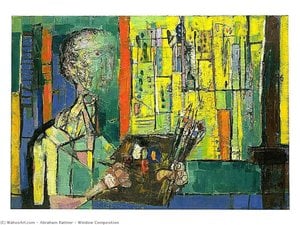
Own a stunning reproduction of Abraham Rattner’s "Head" (1945). This Expressionist ink-on-paper masterpiece evokes emotion & mystery. Handcrafted oil prints available now!

Abraham Rattner (1895-1978): American Expressionist painter known for vibrant canvases exploring religious themes & surrealism. WWI camouflage artist, featured in major museums.

The artwork displayed on this page is protected by copyright law, which means we cannot legally create or sell an identical reproduction. This protection is enforced under international agreements such as the Berne Convention and by national laws, including those outlined by the U.S. Copyright Law - Title 17.

This method fully complies with copyright regulations because it does not involve copying or duplicating the protected artwork. Instead, it is a creative reinterpretation - a new painting that is influenced by the original but not identical to it.

Giclée / Art Print

Museum-quality giclée or canvas print with fast production and flexible finish options. ( Buy Hand Made Painting Switch to Digital Image)

Corner sample of the P118B picture frame: moulded polystyrene, 5 cm wide and 3 cm thick
P118B $10
Corner sample of the P118H picture frame: moulded polystyrene, 5 cm wide and 3 cm thick
P118H $10
Corner sample of the P118W picture frame: moulded polystyrene, 5 cm wide and 3 cm thick
P118W $10
Corner sample of the P438Z picture frame: moulded polystyrene, 5.5 cm wide and 3.5 cm thick
P438Z $10
Corner sample of the P508JH picture frame: moulded polystyrene, 7 cm wide and 3.5 cm thick
P508JH $12
Corner sample of the P508YH picture frame: moulded polystyrene, 7 cm wide and 3.5 cm thick
P508YH $12
Corner sample of the P805H picture frame: moulded polystyrene, 5 cm wide and 3.5 cm thick
P805H $10
Corner sample of the P805Z picture frame: moulded polystyrene, 5 cm wide and 3.5 cm thick
P805Z $10
Corner sample of the P919BZ picture frame: moulded polystyrene, 7 cm wide and 3.5 cm thick
P919BZ $10
Corner sample of the P919G picture frame: moulded polystyrene, 7 cm wide and 3.5 cm thick
P919G $10
Corner sample of the P919XJ picture frame: moulded polystyrene, 7 cm wide and 3.5 cm thick
P919XJ $10
Corner sample of the P959ZH picture frame: moulded polystyrene, 5 cm wide and 3 cm thick
P959ZH $10
Corner sample of the P968JZ picture frame: moulded polystyrene, 6 cm wide and 4 cm thick
P968JZ $12
Corner sample of the W106C picture frame: solid wood, 5 cm wide and 3 cm thick
W106C $8
Corner sample of the W218G picture frame: solid wood, 5 cm wide and 3 cm thick
W218G $10
Corner sample of the W218JH picture frame: solid wood, 5 cm wide and 3 cm thick
W218JH $8
Corner sample of the W218Y picture frame: solid wood, 5 cm wide and 3 cm thick
W218Y $10
Corner sample of the W307PJ picture frame: solid wood, 6 cm wide and 3 cm thick
W307PJ $10
Corner sample of the W316G picture frame: solid wood, 6 cm wide and 3 cm thick
W316G $10
Corner sample of the W316PJ picture frame: solid wood, 6 cm wide and 3 cm thick
W316PJ $8
Corner sample of the W316Y picture frame: solid wood, 6 cm wide and 3 cm thick
W316Y $10
Corner sample of the W398PJ picture frame: solid wood, 5 cm wide and 3 cm thick
W398PJ $8
Corner sample of the W4111J picture frame: solid wood, 6.5 cm wide and 3.5 cm thick
W4111J $10
Corner sample of the W500HY picture frame: solid wood, 7 cm wide and 5 cm thick
W500HY $15
Corner sample of the W500JH picture frame: solid wood, 7 cm wide and 5 cm thick
W500JH $15
Corner sample of the W692G picture frame: solid wood, 8 cm wide and 4 cm thick
W692G $12
Corner sample of the W849H picture frame: solid wood, 5 cm wide and 3 cm thick
W849H $8
Corner sample of the W940BG picture frame: solid wood, 7.5 cm wide and 4.5 cm thick
W940BG $15
Corner sample of the W953PJ picture frame: solid wood, 6 cm wide and 3.5 cm thick
W953PJ $8

Standard
custom
CM
INCH

Pick from our preset sizes that match the artwork's original proportions.

width
height

Type the width and the height you need, to fit your frame or your wall. A print can only be cut, never made bigger than the picture, so a size with a different shape loses a part of the image. We send you a digital mockup to approve before we print anything. The picture shown on this page does not show the real cut — only the mockup does.

Worldwide Delivery () in 2 weeks instead of standard 4/5 weeks. (30 October)

Free Worldwide Express Shipping
High-Quality Linen Canvas
Full Shipping Insurance
Customs Tax Refund Guarantee
True Color Matching Guarantee
100-Day Return Policy (Defects Only)
100% Money-Back Guarantee
Bulk Discount Offer

Total Price

$ 69

Head

Giclée / Art Print

Reproduction Size

-

Total Price

$ 69

The artwork "Head" by Abraham Rattner is a captivating piece that showcases the artist's unique style and technique. Created in 1945, this ink on paper painting measures 22 x 12 cm and is currently housed at the Smithsonian American Art Museum in the United States. As a professional expert in Art and https://WahooArt.com salesman, I can attest that this piece is a remarkable example of Expressionism, a movement that emphasizes the artist's inner experiences and emotions.

Artist Background

Abraham Rattner was an American artist born in 1895 in Poughkeepsie, New York. He studied at the Corcoran School of Art and later moved to Paris, where he was influenced by Claude Monet's palette. Rattner's work is characterized by its bold lines, vibrant colors, and emotive subject matter. His paintings often feature distorted or deformed figures, which add to the sense of mystery and intrigue.

Painting Analysis

The painting "Head" is a prime example of Rattner's unique style. The subject's face is partially obscured, adding to the sense of enigma and intrigue. The use of ink on paper creates a sense of intimacy and immediacy, as if the artist is sharing a private thought or emotion with the viewer. The bold lines and expressive brushstrokes evoke a sense of energy and movement, drawing the viewer into the painting. Handmade oil painting reproductions of "Head" are available on https://WahooArt.com, allowing art enthusiasts to own a piece of history. These reproductions are created using traditional techniques and high-quality materials, ensuring that the original artwork's essence is preserved. Whether you're an art collector or simply appreciate the beauty of Abraham Rattner's work, a handmade oil painting reproduction is a unique and meaningful way to experience his art.
In conclusion, "Head" by Abraham Rattner is a thought-provoking piece that showcases the artist's innovative style and technique. As a professional expert in Art and https://WahooArt.com salesman, I highly recommend exploring more of Rattner's artworks and learning about his fascinating life and career.

Questions & Answers

How can I get a digital file of "Head" by Abraham Rattner?

To get a digital file of "Head" by Abraham Rattner, order a high-resolution digital image download on its Digital Image page.

What kind of colors does "Head" use?

The colors of "Head" form a neutrals palette. This classification describes the dominant color families.

Which artist and which style stand behind "Head"?

Abraham Rattner created "Head" within the Expressionism movement.


Artist Biography

A Life Painted in Expression: The World of Abraham Rattner

Abraham Rattner, born in Poughkeepsie, New York, in 1895, was an artist whose life and work were deeply interwoven with the tumultuous currents of the 20th century. His journey, spanning from the battlefields of World War I to the vibrant art scenes of Paris and New York, forged a unique artistic voice—one characterized by bold expressionism, spiritual yearning, and a hauntingly beautiful use of color. Rattner’s early ambition leaned toward architecture, initially pursued at George Washington University, but his true calling lay in painting, leading him to further studies at the Corcoran School of Art and the Pennsylvania Academy of the Fine Arts. This foundational training would prove crucial as he navigated the evolving landscape of modern art.

From Camouflage to Canvas: War and Artistic Awakening

The outbreak of World War I dramatically altered Rattner’s path. Recruited by Homer Saint-Gaudens for the U.S. Army's American Camouflage Corps, he served in France, a formative experience that would indelibly mark his artistic vision. Participating in significant battles like the Second Battle of the Marne, Château-Thierry, and Belleau Wood, Rattner wasn’t merely an observer of conflict; he was actively engaged in concealing it—a paradoxical role for an artist whose later work would be defined by its raw emotional honesty. A severe back wound sustained during his service brought lifelong physical discomfort, but also a profound sensitivity to the fragility of life and the enduring power of the human spirit. This experience instilled within him themes of vulnerability and resilience that resonated throughout his oeuvre. Following the war, a Cresson Traveling Fellowship provided Rattner with the opportunity to return to France, this time not as a soldier, but as an artist seeking inspiration and honing his craft.

The Parisian Years: A Crucible of Style

Paris in the 1920s was a magnet for artists from around the globe, and Rattner fully immersed himself in its dynamic art scene. He studied at several prestigious academies—the École des Beaux-Arts, Academies Julian, Ransom, and Grande Chaumière—absorbing influences from masters like Claude Monet, Georges Rouault, and Pablo Picasso. However, he didn’t simply mimic these artists; instead, he synthesized their lessons into a distinctive style that was uniquely his own. His Parisian period saw the development of an expressionist approach characterized by rich, often somber colors, distorted forms, and surreal imagery. Religious themes began to emerge as central motifs in his work, reflecting a deep spiritual questioning and a fascination with the mysteries of faith. These weren’t traditional religious paintings; rather, they were intensely personal explorations of belief, doubt, and the human condition.

Return to America & Lasting Legacy

The looming threat of Nazism forced Rattner's return to New York City in 1940. He didn’t remain static upon his arrival; he embarked on a cross-country journey with writer Henry Miller, documenting their experiences and further enriching his artistic perspective. Rattner also dedicated himself to teaching, sharing his knowledge and passion at institutions like The New School, Yale University, and Columbia University. His artwork gained recognition in prominent museums such as the Art Institute of Chicago, the Whitney Museum of American Art, and the Albright-Knox Art Gallery, solidifying his place within the canon of American art. Beyond painting, Rattner’s artistic talents extended to stained glass; he designed the breathtaking east wall of the Chicago Loop Synagogue in 1960—a masterpiece celebrated for its exceptional beauty and spiritual resonance. Today, The Leepa-Rattner Museum of Art in Tarpon Springs, Florida, stands as a testament to his enduring legacy, housing a significant collection of his works alongside those of his contemporaries. Abraham Rattner’s art bridges the gap between European modernism and American expressionism, offering viewers a powerful glimpse into the soul of an artist who lived through—and reflected upon—a century of profound change. His unique blend of religious symbolism, surreal imagery, and vibrant colors continues to captivate and inspire, ensuring his place as a significant figure in 20th-century art history.

Abraham Rattner

Abraham Rattner

1895 - 1978 , United States of America

Quick Facts

  • Full Name: Abraham Rattner
  • Nationality: American
  • Date Of Birth: 1895
  • Date Of Death: 1978
  • Place Of Birth: Poughkeepsie, United States of America
  • Artistic Movement Or Style: Expressionism, Surrealism
  • Artists Who Influenced This Artist:
    • Claude Monet
    • Georges Rouault
    • Pablo Picasso
  • Artists Or Movements Influenced By This Artist: ['American Expressionism']
Explore artworks organized by themes, styles, and characteristics.