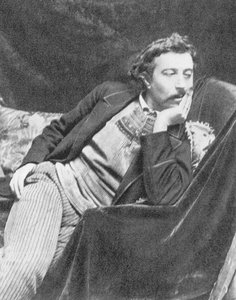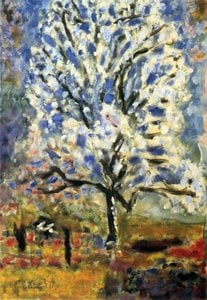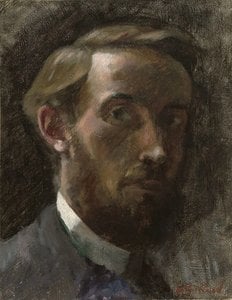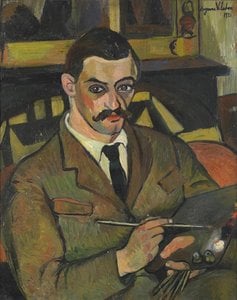
Post-impressionist masters, in order

The 88 Most Famous Post-impressionist Artyści

The most famous Post-impressionist artysta is Vincent Van Gogh (1853–1890), known for Gwiaździsta noc (Nowy Jork, MoMA) i Zjemnik. Next come Paul Cézanne, Paul Gauguin, Henri De Toulouse-Lautrec i Paul Signac. This ranking of the 88 most famous Post-impressionist artyści runs from George Henry (born 1828) to Yuri Ivanovych Khymych (born 1928), across 34 countries.

How this list is ranked. Artists whose works our catalogue files under Post-impressionist, in the order of our fame ranking of artists. Artists without a Wikidata identifier born after 1955 are left out until verified. The Wikipedia figure next to each name is the number of our 32 languages in which Wikipedia has an article on the artist.

  1. Gwiaździsta noc (Nowy Jork, MoMA) autorstwa Vincent Van Gogh1Vincent Van Gogh
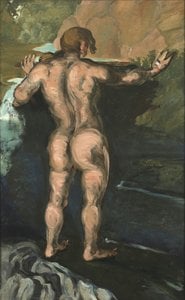
  2. Kąpiący się i skały autorstwa Paul Cézanne2Paul Cézanne
  3. Żółty Chrystus autorstwa Paul Gauguin3Paul Gauguin

The essentials

Post-impressionist at a glance

  • 88Artyści
  • 1828–1928Rok urodzenia
  • 34Kraje pochodzenia
  • 4Kobiety
  • 17 657Dzieła w naszym katalogu
Miasta z największą liczbą urodzeń
Paryż (3), Zundert (2), Budapeszt (2), Londyn (2)
Muzea posiadające najważniejsze dzieła
Musée d'Orsay (11), Art Institute of Chicago (4), Van Gogh Museum (3), MoMA - Museum of Modern Art (3)

Ranked, with their masterpieces

The ranking: 88 Post-impressionist Artyści and their key works

1of 88

Vincent Van Gogh

Holender Born in Zundert Postimpresjonizm Wikipedia in 32/32 languages

Vincent Van Gogh

Vincent Willem Van Gogh przyszedł na świat 30 marca 1853 roku w Zundert w Holandii. Cisza i spokój wioski Zundert w regionie Brabant były świadkami narodzin Vincenta Willema Van Gogha. Spędził w Paryżu czas aż do kwietnia 1876 roku, a przez te wszystkie lata pielęgnował coraz bogatszą korespondencję ze swoim młodszym bratem, Theo, który również był związany z siecią Goupil & Cie.

Key works · The 100 most famous works

2of 88

Paul Cézanne

Francuski Born in Aix-en-Provence Postimpresjonizm Wikipedia in 32/32 languages

Paul Cézanne

Urodzony 19 stycznia 1839 roku przy 28 rue de l'Opéra w Aix-en-Provence, Paul Cézanne wkroczył w świat ukształtowany przez surowy porządek. Jego ojciec, Louis-Auguste Cézanne, był człowiekiem o znacznym statusie lokalnym, współzałożycielem banku Banque Cézanne et Cabassol. Podczas gdy ambicje jego ojca skłaniały się ku prawu, młody artysta odnalazł swoją ścieżkę pod okiem Josepha Giberta w Wolnej Szkole Rysunku Miejskiego.

Key works · The 100 most famous works

3of 88

Paul Gauguin

Francuski Born in Paryż ['Postimpresjonizm', 'Symbolizm', 'Syntetyzm', 'Primitywizm'] Wikipedia in 32/32 languages

Paul Gauguin

Urodzony w Paryżu w 1848 roku, Eugène Henri Paul Gauguin wkroczył w świat pełen gwałtownych prądów społecznych i politycznych. W 1887 roku zmiana scenerii zaprowadziła go do Panamy i na Martynikę, gdzie podróżował u boku Charles Laval. Do 1891 roku nieustanne poszukiwania nowej, oryginalnej tematyki zaprowadziły Paul Gauguin na brzegi Papeete na Tahiti.

Key works · The 100 most famous works

4of 88

Henri De Toulouse-Lautrec

Francuski Born in Albi Postimpresjonizm Wikipedia in 31/32 languages

Henri De Toulouse-Lautrec

Urodzony 24 listopada 1864 roku w Albi we Francji, Henri De Toulouse-Lautrec wkroczył w świat o znacznym statusie społecznym. Był pierwszym dzieckiem hrabiego Alphonse'a de Toulouse-Lautrec Montfa oraz Adèle Zoë Tapié de Celeyran. Jego przodkowie łączyli go z hrabiami z Tuluzy, Odet de Foix, Wikomtem de Lautrec, a także Wikomtami z Montfa.

Key works · The 100 most famous works

5of 88

Paul Signac

Francuski Born in Paryż Neoimpresjonizm, Pointylizm Wikipedia in 29/32 languages

Paul Signac

Był synem Jules’a Jeana-Baptiste’a Signaca i Héloïse Anaïs-Eugénie Deudon, z rodziny, która położyła fundamenty pod życie poświęcone poszukiwaniu światła. Ziarna transformacji, której podległ Paul Signac, zostały zasiane podczas wizyty na wystawie w 1880 roku, gdzie dzieła Claude’a Moneta wywarły na nim niezatarte wrażenie. W 1899 roku wyłożył te złożone teorie w swojej pracy, From Eugène Delacroix to Neo-Impressionism.

Key works · The 100 most famous works

6of 88

Pierre Bonnard

Francuski Born in Fontenay-aux-Roses Postimpresjonizm, intymizm, Les Nabis Wikipedia in 27/32 languages

Pierre Bonnard

Pierre Bonnard przyszedł na świat 3 października 1867 roku w Fontenay-aux-Roses w departamencie Hauts-de-Seine we Francji. W 1893 roku w życiu Bonnarda pojawiła się kobieta o imieniu Maria Boursin – obecność, która miała na zawsze zdefiniować domowy krajobraz jego późniejszych lat. Z kolei w 1892 roku, obraz The Dressing Gown ukazał narastające zainteresowanie ciszą i spokojem życia domowego.

Key works · The 100 most famous works

7of 88

Émile Bernard

Francuski Born in Lille Post-Impressionizm Wikipedia in 28/32 languages

Émile Bernard

Key Relationship: A pivotal moment came in August 1886 when he met Paula Gauguina w Pont-Aven. On również współpracował z Vincentem van Goghem, tworząc część grupy Petit-Boulevard wraz z Anquetinem i Toulouse-Lautreciem.

Key works · The 100 most famous works

8of 88

Suzanne Valadon

Francuska Born in Bessines-sur-Gartempe Postimpresjonizm Wikipedia in 27/32 languages

Suzanne Valadon

This period of modeling proved pivotal; Valadon wasn’t simply a passive subject but an active observer, dissecting the artistic gaze and internalizing its principles. She began to draw prolifically, initially focusing on scenes from her everyday life—her mother, her son Maurice Utrillo (whose paternity remains uncertain, though Miguel Utrillo later acknowledged him), and intimate domestic settings. Her early years as an artist's model exposed her to the work of some of the most influential artists of the era, including Renoir, Toulouse-Lautrec, Degas, and Puvis de Chavannes.

Teacher of Maurice Utrillo #12

Key works · The 100 most famous works

9of 88

Maurice Denis

Francuz Born in Granville Symbolizm, Neo-klasycyzm Wikipedia in 26/32 languages

Maurice Denis

Maurice Denis, urodzony w 1870 roku w nadmorskim miasteczku Granville we Francji, zajmuje fascynujące miejsce w historii sztuki – jest kluczową postacią łączącą schyłek impresjonizmu z rodzącymiymi się nurtami sztuki nowoczesnej. Artystyczna podróż Denisa nabrała decydującego tempa, gdy stał się centralną postacią grupy Les Nabis – zbioru młodych artystów pragnących zrewolucjonizować malarstwo poprzez bardziej duchowe i symboliczne podejście.

Key works · The 100 most famous works

10of 88

Jean-Édouard Vuillard

Francuski Born in Cuiseaux Les Nabis, Intimizm Wikipedia in 23/32 languages

Jean-Édouard Vuillard

W 1885 roku rozpoczął kursy w Académie Julian, a także często bywał w pracowniach William-Adolphe Bouguereau oraz Roberta-Fleury, aby doskonalić swoją technikę. W latach między 1891 a 1900 rokiem Jean-Édouard Vuillard poruszał się w awangardowych kręgach Les Nabis – grupy młodych malarzy, którzy pragnęli na nowo zdefiniować język wizualny swojej epoki.

Key works · The 100 most famous works

11of 88

Amrita Sher-Gil

Węgiersko-indyjska Born in Budapeszt Nowoczesna sztuka indyjska, Awangarda Wikipedia in 20/32 languages

Amrita Sher-Gil

Urodzona w 1913 roku w Budapeszencie dla niezwykle różnorodnego pochodzenia – Umrao Singh Sher-Gil Majithia, sikhistowskiego arystokraty i uczonego, oraz Marie Antoinette Gottesmann, węgierskiej żydowskiej śpiewaczki operowej – jej życie miało stać się opowieścią o fascynujących kontrastach. Formalne kształcenie zaprowadziło Amritę do Paryża w 1929 roku, gdzie zapisała się do Académie de la Grande Chaumière pod okiem Pierre Vaillenta i Luciena Simona, a później uczęszczała do École des Beaux-Arts.

Key works · The 100 most famous works

12of 88

Maurice Utrillo

Francuski Born in 18. dzielnica Paryża Postimpresjonizm, Szkoła Paryska Wikipedia in 25/32 languages

Maurice Utrillo

Maurice Utrillo przyszedł na świat 26 grudnia 1883 roku w paryskiej dzielnicy Montmartre jako Maurice Valadon. Około 1909 roku Maurice Utrillo wkroczył w wyjątkową fazę swojej twórczości, znaną jako „Okres Biały”. Artysta nie szukał jaskrawych barw tętniącego życiem miasta, lecz skupiał się na cichym, bladym świetle, które osiadało na kamieniu i zaprawie budynków. 1910: place pigalle. 1913: The Lapin Agile [Le Lapin Agile]. 1917: Rue Saint-Vincent and the Lapin Agile.

Pupil of Suzanne Valadon #8

Key works · The 100 most famous works

13of 88

Félix Vallotton

Szwajcarska i francuska Born in Lozanna Postimpresjonizm, Symbolizm, Les Nabis

Félix Vallotton

Félix Vallotton urodził się w 1865 roku w Lozannie, w Szwajcarii. Po przybyciu do Paryża, w styczniu 1882 roku, zapisał się do Académie Julian. Rok 1898 przyniósł w życiu Félix Vallotton znaczącą zmianę, gdy poślubił Gabrielle Rodrigues-Henriques, zamożną wdowę.

Key works · The 100 most famous works

14of 88

Tom Thomson

Kanadyjski Born in Claremont Kanadyjska nowoczesność Wikipedia in 18/32 languages

Tom Thomson

This period proved formative; it wasn’t merely about acquiring technical proficiency in penmanship and design – essential skills for the time – but also about encountering individuals who would later become central figures in the burgeoning Canadian art scene – J.E.H. However, it was the discovery of Algonquin Park in 1912 that truly ignited Thomson’s artistic passion. The influence of European Impressionists – particularly Monet and Pissarro – is also evident in Thomson’s use of color and light.

Key works · The 100 most famous works

15of 88

Emily Carr

Canadian Born in Victoria Modernism, Post-Impressionism

Emily Carr

Her father, Richard Carr, was born in Crayford, Kent, England, and embarked on extensive travels across Europe, the Americas, and the Caribbean in pursuit of entrepreneurial ventures. Emily Carr pursued formal art training initially at the San Francisco Art Institute (1890-1892), immersing herself in American Impressionist aesthetics before relocating to London in 1899—where she enrolled at Westminster School of Art, seeking guidance from prominent instructors and honing her artistic technique.

Key works · The 100 most famous works

16of 88

Giovanni Segantini

Włoski Born in Arco Symbolizm, Dywizjonizm Wikipedia in 19/32 languages

Giovanni Segantini

This itinerant existence instilled in young Giovanni a sense of displacement and resilience. Following his mother's untimely death, he found himself adrift, eventually ending up in a Milanese reformatory. Simultaneously, he was deeply moved by the works of Anton Mauve and Jean-François Millet, artists who championed realism and depicted scenes from rural life with remarkable sensitivity.

Key works · The 100 most famous works

17of 88

Paul Sérusier

Francuski Born in Paryż Postimpresjonizm, Nabis, Syntetyzm Wikipedia in 21/32 languages

Paul Sérusier

W październiku 1888 roku, pod ścisłym okiem Gauguina, Paul Sérusier stworzył Talizman. Grupa ta funkcjonowała jako kluczowy węzeł awangardy, łącząc Sérusiera z innymi wybitnymi postaciami epoki, takimi jak Pierre Bonnard, Édouard Vuillard czy Maurice Denis. W 1895 roku wzbogacił on publikację The Evergreen: A Northern Seasonal: The Book of Spring swoją ilustracją Pastorale Bretonne.

Key works · The 100 most famous works

18of 88

Henri-Edmond Cross

Francuz Born in Douai Neoimpresjonizm Wikipedia in 21/32 languages

Henri-Edmond Cross

However, the Parisian art scene of the 1880s was abuzz with new ideas, and Cross found himself increasingly drawn to the revolutionary principles of Neo-Impressionism—a movement spearheaded by Georges Seurat and Paul Signac. Cross’s artistic development was shaped by a confluence of factors: his formal training under Carolus-Duran instilled in him a solid foundation in classical technique; his exposure to Seurat and Signac introduced him to the principles of Pointillism; and his relocation to southern France provided him with an unparalleled source of inspiration.

Key works · The 100 most famous works

19of 88

Théo van Rysselberghe

Belgijski Born in Gandawa Neo-Impressionizm Wikipedia in 19/32 languages

Théo van Rysselberghe

The true turning point in van Rysselberghe’s artistic development arrived with his encounter with Georges Seurat's A Sunday on La Grande Jatte at the eighth Impressionist exhibition in Paris in 1886. Van Rysselberghe’s works are now held in prominent museum collections worldwide, including the Musée du Luxembourg in Paris and the Museum voor Schone Kunsten in Ghent, ensuring that his contribution to the history of art continues to be celebrated and appreciated by generations to come.

Key works · The 100 most famous works

20of 88

Walter Richard Sickert

Brytyjczyk Born in Monachium Postimpresjonizm Wikipedia in 19/32 languages

Walter Richard Sickert

Wczesna twórczość Sickerta charakteryzowała się tonalnymi studiami, inspirowanymi przez Whistlera – skupieniem na kolorze i świetle, a nie na szczegółach. Sickert nie tylko naśladował techniki Whistlera, ale również rozwijał własny styl, który łączył elementy impresjonizmu z elementami realizmu i teatralności.

Key works · The 100 most famous works

21of 88

Roger Fry

Brytyjski Born in Londyn Postimpresjonizm Wikipedia in 19/32 languages

Roger Fry

Roger Eliot Fry, nazwisko synonimiczne z wprowadzeniem sztuki nowoczesnej do Wielkiej Brytanii, był czymś znacznie więcej niż tylko malarzem czy krytykiem; był katalizatorem kulturowym. Urodzony w 1866 roku w zamożnej rodzinie kwakrów w Highgate w Londynie, wczesne życie Fry’a było przesiąknięte ciekawością intelektualną i liberalną atmosferą, która pielęgowała jego rozwijające się wrażliwości artystyczne.

Key works · The 100 most famous works

22of 88

Tivadar Kosztka Csontváry

Węgierski Born in Sabinov Postimpresjonizm, Ekspresjonizm Wikipedia in 19/32 languages

Tivadar Kosztka Csontváry

He embarked upon a period of intense preparation, fueled by unwavering self-belief and a relentless pursuit of artistic mastery. However, it wasn't merely technical proficiency that drove him; Csontváry sought something deeper, a unique visual language to express his inner world. He struggled to gain recognition in Hungary, finding greater appreciation among critics in Western Europe, particularly in Paris where he exhibited in 1907.

Key works · The 100 most famous works

23of 88

Joos Vincent De Vos

Holender Born in Zundert Sztuka romańska

Joos Vincent De Vos

Joos Vincent de Vos (1853-1890), holenderski artysta nierozerwalnie związany z dziedzictwem Vincenta van Gogha, pozostaje fascynującą postacią w europejskim malarstwie XIX wieku. Urodzony w 1853 roku w Zundert w Holandii, Joos Vincent de Vos prowadził życie, którego początki pozostają w pewnej mierze owiane tajemnicą. Był synem młynarza Jana Eugene'a Vosa oraz Marie Anne Verhaeghe.

Key works · The 100 most famous works

24of 88

Duncan Grant

Szkot Born in Aviemore Post-Impressionizm Wikipedia in 13/32 languages

Duncan Grant

Duncan James Corrowr Grant, born in 1885 amidst the rugged beauty of Rothiemurchus Forest District in Scotland, embarked on a life that would indelibly mark the landscape of British art. His early years were far from conventional, shaped by his father’s military service and extended periods spent in India and Burma. He was a key member of the Bloomsbury Group alongside Vanessa Bell, Virginia Woolf, and Lytton Strachey.

Key works · The 100 most famous works

25of 88

Moïse Kisling

Born in Kraków Wikipedia in 19/32 languages

Moïse Kisling

Moïse Kisling, urodzony jako Mojżesz Kisling w 1891 roku w Krakowie, mieście tętniącym życiem kulturalnym Austro-Węgier, był artystą, którego życie odzwierciedlało burzliwe prądy XX wieku. Wczesne prace zdradzały innowacje strukturalne Paula Cézanne’a i śmiałą chromatykę André Deraina, z subtelnymi tendencjami kubistycznymi – co widać w takich dziełach jak Portret André Salmona (1912).

Key works · The 100 most famous works

26of 88

Edward Seago

Brytyjska Born in Norwich Impresjonizm

Edward Seago

Urodzony w Norwich 31 marca 1910 roku, Seago był człowiekiem, którego przeznaczenie zostało nierozerwalnie związane z ziemią i morzem East Anglia. Choć w dużej mierze był artystą samoukiem, jego drogę oświetlało przewodnictwo takich postaci jak Sir Alfred Munnings czy Bertram Priestman.

Key works · The 100 most famous works

27of 88

Paul Ranson

Francuz Born in Limoges Postimpresjonizm Wikipedia in 16/32 languages

Paul Ranson

Urodzony w historycznym francuskim mieście Limoges w 1861 roku, Paul Elie Ranson wyłonił się jako transformująca siła wewnątrz awangardy późnego dziewiętnastego wieku. Jako centralna postać ruchu Les Nabis, Ranson wyszedł poza ulotne wrażenia światła, które definiowały jego poprzedników, starając się zamiast tego utkać gobelin symbolizmu i duchowej głębi. Fundamenty stylu Ransona zostały położone pośród intelektualnego fermentu Paryża, gdzie dominowały rewolucyjne cienie Cézanne'a i Gauguina.

Key works · The 100 most famous works

28of 88

Dawid Burliuk

Rosyjsko-Ukraiński Born in Semyrotivka Futuryzm, Neo-prymitywizm Wikipedia in 17/32 languages

Dawid Burliuk

Już od najmłodszych lat Burliuk wykazywał się bujną energią, cechą zauważoną przez jego profesora Antoniego Ažbę w Królewskiej Akademii w Monachium, który słynnie określił go mianem „wspaniałego dzikiego konia stepu”. Formalne wykształcenie Burliuka rozpoczęło się na akademiach sztuk w Kazaniu i Odessie, a następnie zaprowadziło go do Monachium, a później do Paryża.

Key works · The 100 most famous works

29of 88

Henri Lebasque

Francuz Born in Champigné Post-Impressionizm Wikipedia in 13/32 languages

Henri Lebasque

These Intimist painters prioritized domestic scenes and intimate moments, fostering in Lebasque a similar inclination toward capturing the quiet poetry of everyday existence. The Nabis’ emphasis on flattened forms, decorative patterns, and subtle color harmonies resonated deeply with his own artistic inclinations. His association with Les Nabis, particularly Édouard Vuillard and Pierre Bonnard, proved transformative.

Key works · The 100 most famous works

30of 88

József Rippl-Rónai

Węgierski Born in Kaposvár ['Impressionizm', 'Post-Impressionizm', 'Symbolizm'] Wikipedia in 15/32 languages

József Rippl-Rónai

Formalna edukacja artystyczna Rippl-Rónai rozpoczęła się w Monachijskiej Akademii Sztuk Pięknych, by następnie kontynuowana być w paryskiej Académie Julian. Artysta czerpał inspirację z twórczości Mihálya Munkácsy'ego, a w późniejszym okresie przyjął filozofię grupy Les Nabis. Moja babcia (1894): Ten obraz stanowił przełomowy moment w karierze Rippl-Rónai, odnosząc znaczący sukces i prezentując ewolucję jego stylu.

Key works · The 100 most famous works

31of 88

George Henry

Scottish Glasgow Boys

George Henry

George Henry stands as a luminous figure in the annals of British art, a painter whose brush captured the shifting light and soulful atmosphere of the late nineteenth century. It was here that he forged deep connections with contemporaries such as John Singer Sargent, creating a shared intellectual space where new ideas could flourish. He is now recognized not just as a regional painter, but as a pioneer who helped bridge the gap between traditional Scottish painting and the modern European avant-garde.

Key works · The 100 most famous works

32of 88

Maxime Maufra

Francuz Born in Nantes Postimpresjonizm; Pointylizm Wikipedia in 11/32 languages

Maxime Maufra

Maxime Emile Louis Maufra (1861 – 1918) jawi się jako wybitna postać francuskiego malarstwa pejzażowego, słynąca przede wszystkim z mistrzowskiego przedstawiania nadmorskich widoków Bretanii oraz scen morskich. Urodzony w Nantes 17 maja, wyruszył w artystyczną podróż w dużej mierze jako samouk, wspierany przez zachętę kolegów po fachu z Nantes – Charlesa Leduca i Alfreda Leduca – oraz inspirowany ekspresyjnym stylem Charlesa Le Roux.

Key works · The 100 most famous works

33of 88

Roderik O’Konór

Irlandczykowanie Born in Castleknock Post-Impressionizm

Roderik O’Konór

Early works retain traces of Impressionistic techniques, but they gradually evolve into a more individual style, incorporating elements of Pointillism and expressive mark-making. Works like Yellow Landscape (1892), La Jeune Bretonne (1895), Mixed Flowers on Pink Cloth (circa 1916), and Landscape, Cassis (1913) stand as compelling testaments to this artistic evolution. His association with prominent figures like Somerset Maugham, Gerald Kelly, and Aleister Crowley further underscores his involvement in the vibrant intellectual life of Paris.

Key works · The 100 most famous works

34of 88

Charles van den Eycken

Belgijczyk Born in Bruksela Poppstympresjonizm

Charles van den Eycken

While van den Eycken developed a unique voice, his artistic style wasn’t formed in isolation. The influence of Post-Impressionism is subtly present in his work, particularly in his use of color and brushwork. He also shared affinities with Dutch Golden Age painters known for their meticulous depictions of interiors and domestic life—a legacy perhaps inherited through his family’s artistic lineage.

Key works · The 100 most famous works

35of 88

Augustus Edwin John

Walijski Born in Tenby Postimpresjonizm

Augustus Edwin John

John's artistic journey began formally at the Tenby School of Art, where his innate talent quickly became evident. However, it was his enrollment at the Slade School of Fine Art in London in 1894 that truly shaped his development. Crucially, during this period, John's exposure to the works of Old Masters like Peter Paul Rubens profoundly influenced his approach to composition, color, and dramatic lighting.

Key works · The 100 most famous works

36of 88

Georges Lemmen

Belgijski Born in Schaarbeek Neoimpresjonizm i Puntylizm Wikipedia in 12/32 languages

Georges Lemmen

W barwnym gobelinie europejskiej sztuki późnego dziewiętnastego wieku niewiele nici lśni z taką naukową precyzją i poetycką gracją, jak te utkane przez Georges'a Lemmena. Urodzony w 1865 roku w Schaerbeek w Belgii, od wczesnych lat kształtowany był przez niezwykłe przenikanie się różnych dyscyplin. Jego edukacja w Saint George’s Hospital w Londynie zaowocowała głębokim zrozumieniem ludzkiej anatomii – umiejętnością szlifowaną wspólnie ze współczesną mu Helen Lemmens.

Key works · The 100 most famous works

37of 88

Nicolas Tarkhoff

Russian/French ['Impressionism', 'Post-Impressionism', 'Fauvism']

Nicolas Tarkhoff

However, the young Tarkhoff possessed an innate artistic inclination, described as a “fervent desire to be a painter.” Tragedy marked his childhood; he lost his mother at age three and his father eight years later, experiences that perhaps fostered a sensitivity reflected in his later work. He also studied with Luc- Olivier Merson, yet it was the works of Van Gogh, Gauguin, and Cézanne that truly ignited his artistic evolution.

Key works · The 100 most famous works

38of 88

Jan Sluijters

Born in ’s-Hertogenbosch Wikipedia in 8/32 languages

Jan Sluijters

Johannes Carolus Bernardus (Jan) Sluijters, urodzony w’s-Hertogenbosch w Holandii w 1881 roku i zmarły w Amsterdamie w 1957 roku, pozostaje hipnotyzującą postacią w krajobrazie sztuki niderlandzkiej. Ta podstawa doprowadziła go do zapisania się na Królewską Szkołę Sztuk Stosowanych i Pięknych w Amsterdamie, gdzie szlifował swoje umiejętności i zaczął badać własny, charakterystyczny styl.

Key works · The 100 most famous works

39of 88

Charles Cottet

Francuz Born in Le Puy-en-Velay Postimpresjonizm, Symbolizm, Szkoła Pont-Aven, Bande Noire Wikipedia in 12/32 languages

Charles Cottet

Charles Cottet, znamienity francuski malarz, przyszedł na świat 12 lipca 1863 roku w Le Puy-en-Velay, a zmarł 20 września 1925 roku w Paryżu. Swoją artystyczną drogę kształtował w École des Beaux-Arts pod okiem Puvis de Chavannes oraz Rolla, a także studiował w Académie Julian, gdzie stał się częścią nurtu malarskiego Les Nabis. Petit village au pied de la falaise, Musée Malraux, Le Havre (1905).

Key works · The 100 most famous works

40of 88

Émile Schuffenecker

Francuz Born in Fresne-Saint-Mamès Post-Impressionizm Wikipedia in 12/32 languages

Émile Schuffenecker

Supported by his maternal aunt Anne Fauconnet Monnet, Schuffenecker received a robust education at the frères des écoles chrétiennes, preparing him for a career in commerce—specifically, assisting his uncle Pierre Cornu’s chocolate and coffee roasting business. He was particularly captivated by Vincent van Gogh’s expressive use of color and texture, recognizing the transformative potential of conveying inner feelings through visual media – a conviction that resonated throughout his artistic career.

Key works · The 100 most famous works

41of 88

Roger Eliot Fry

Brytyjska Born in Londyn Postimpresjonizm

Roger Eliot Fry

Roger Eliot Fry, urodzony w Londynie 14 grudnia 1866 roku, wywodził się z dostojnej kwakierskiej rodziny, przesiąkniętej intelektualną rygorystycznością i społeczną wrażliwością. Jego ojciec, Sir Edward Fry, był szanowanym sędzią i zoologiem, który zaszczepił w młodym Rogerze głęboką umiejętność obserwacji oraz analitycznego myślenia – cechy, które miały w sposób fundamentalny ukształtować jego artystyczną drogę.

Key works · The 100 most famous works

42of 88

Frank Bramley

Angielski Born in Sibsey Post-Impressionizm Wikipedia in 8/32 languages

Frank Bramley

Interestingly, Bramley was a founding member of the New English Art Club but later resigned following disagreements with fellow artist Walter Sickert, demonstrating his independent spirit and unwavering commitment to his artistic vision.

Key works · The 100 most famous works

43of 88

Spencer Frederick Gore

Brytyjska Born in Epsom Postimpresjonizm Wikipedia in 9/32 languages

Spencer Frederick Gore

Spencer Frederick Gore był brytyjskim malarzem, który wyłonił się jako jedna z najważniejszych postaci rozwijającej się grupy Camden Town Group, wyznaczając przełomowy moment w brytyjskiej sztuce wczesnego dwudziestolecia XX wieku.

Key works · The 100 most famous works

44of 88

Igor Grabar

Rosyjska Born in Budapeszt Postimpresjonizm Wikipedia in 16/32 languages

Igor Grabar

W 1894 roku został studentem Akademii Sztuk Pięknych w Sankt Petersburgu, gdzie kształcił się pod okiem mistrza, jakim był Ilya Repin. Rola ta ewoluowała wraz ze zmieniającym się krajobrazem politycznym, aż w końcu, w latach 1918–1925, sprawował on urząd dyrektora Państwowej Galerii Tretyakowa. Poza murami uniwersytetu podjął się odpowiedzialnego zadania kierowania Naukowym Instytutem Historii Sztuki przy Akademii Nauk.

Key works · The 100 most famous works

45of 88

Samuel John Peploe

Born in Edynburg Wikipedia in 8/32 languages

Samuel John Peploe

Samuel John Peploe, urodzony w Edynburgu w 1871 roku, zajmuje wyjątkowe miejsce w historii brytyjskiej sztuki początku XX wieku. Studiował w Académie Julian i Colarossi, dzieląc przestrzeń studyjną z Robertem Broughiem, chłonąc rodzący się ruch postimpresjonistyczny. Obrazy takie jak Martwa Natura z Różowymi i Czerwonymi Różami w Chińskiej Wazie demonstrują jego opanowanie martwej natury, podczas gdy dzieła takie jak Zielona Bluzka ukazują jego zdolność do uchwycenia światła i formy.

Key works · The 100 most famous works

47of 88

Medardo Rosso

Włoska, francuska Born in Turyn Postimpresjonizm

Medardo Rosso

Medardo Rosso, urodzony w Turynie 21 czerwca 1858 roku, był rzeźbiarzem, który odważył się zakwestionować same fundamenty swojej dziedziny. Przeprowadzka z rodziną do Mediolanu w wieku dwunastu lat, krótka służba wojskowa, a następnie zapisanie się i szybkie wydalenie z Akademii Brera za postulowanie radykalnych zmian w zajęciach rysunkowych – konkretnie wprowadzenia żywych modeli i studiów anatomicznych zamiast konwencjonalnych metod – stanowiły początek jego drogi.

Key works · The 100 most famous works

48of 88

Henry Lamb

Brytyjczyk Born in Adelaide Postimpresjonizm

Henry Lamb

John's unwavering commitment to drawing from life – a direct lineage from the Slade School tradition – instilled in Lamb a fundamental respect for observation and a mastery of expressive line work. Lamb’s early years were also deeply intertwined with the vibrant bohemian circles of London, where he encountered and befriended prominent figures like Lytton Strachey, whose penetrating portrait would become one of Lamb's most celebrated achievements.

Key works · The 100 most famous works

49of 88

Maurice Brazil Prendergast

Nowofundlandczyk-Amerykanin Born in St. John's Postimpresjonizm Wikipedia in 12/32 languages

Maurice Brazil Prendergast

Maurice Brazil Prendergast przyszedł na świat 10 października 1858 roku w St. Dzięki kanadyjskiemu malarzowi, jakim był James Morrice, Prendergast został wprowadzony w kręgi angielskiej awangardy, a w szczególności poznał twórczość i wpływ Waltera Sickerta oraz Aubrey'ego Beardsleya. Jako członek New York Water Color Club oraz Boston Water Color Club potwierdził swoje mistrzostwo w posługiwaniu się akwarelą.

Key works · The 100 most famous works

50of 88

Gustaw Loiseau

Born in 16. dzielnica Paryża Wikipedia in 9/32 languages

Gustaw Loiseau

Gustave Loiseau, urodzony w Paryżu 3 października 1865 roku, a zmarły tamże 10 października 1935 roku, to postimpresjonistyczny malarz, którego nazwisko choć nie zawsze wymieniane z pierwszym rzędem gigantów sztuki francuskiej przełomu wieków, zajmuje istotne miejsce w historii malarstwa. Początkowo eksperymentował z punktalizmem, precyzyjną techniką promowaną przez Georges’a Seurata i Paula Signaca, ale ostatecznie uznał ją za zbyt restrykcyjną dla swojej wizji.

Key works · The 100 most famous works

52of 88

Konstantin Juon

Русский Born in Moskwa Импрессионизм, Символизм, Социалистический реализм Wikipedia in 10/32 languages

Konstantin Juon

Konstantin Fyodorovich Yuon, born in Moscow on October 24, 1875, emerged from a family deeply rooted in both Swiss-Russian heritage and a palpable artistic inclination. His brother, Paul Juon, would later achieve renown as a composer – a familial connection that hinted at the creative currents flowing through their upbringing. Initially drawn to the Impressionist movement, particularly the work of Camille Pissarro, he skillfully integrated elements of Symbolism into his landscapes – creating works that possessed a haunting beauty and conveyed subtle emotional undertones.

Key works · The 100 most famous works

53of 88

Albert André

French Born in 2nd arrondissement of Lyon Post-Impressionism Wikipedia in 7/32 languages

Albert André

André’s influence extends beyond his own artistic output. His meticulous study of Renoir's work and his dedication to preserving the artist's legacy resulted in one of the most comprehensive and insightful biographies of Renoir ever written—a testament to André’s deep appreciation for his friend and mentor. He wasn't a painter who sought fame or recognition; his primary motivation was to capture the beauty and complexity of the world around him—particularly the intimate corners of domestic life.

Key works · The 100 most famous works

55of 88

Georges D'Espagnat

Francuz Born in Melun Postimpresjonizm Wikipedia in 6/32 languages

Georges D'Espagnat

W barwnej tkaninie francuskiej sztuki przełomu XIX i XX wieku, niewiele postaci uosabia przejście od tradycji do nowoczesności z taką gracją jak Georges D’Espagnat. Urodzony w Melun w 1870 roku, D’Espagnat był przeznaczony do życia zanurzonego w estetyce piękna.

Key works · The 100 most famous works

56of 88

David Jandi

Hungarian Impressionism & Post-Impressionism

David Jandi

This movement championed a return to tonal painting—a reaction against the shimmering brilliance of Impressionism —emphasizing atmospheric perspective and capturing the subtle nuances of Hungarian landscapes. Notable Subjects: Jandi’s artistic output focused primarily on Hungarian landscapes, particularly those surrounding Nagybánya (Bathory), where he established his studio. His works are housed in several Hungarian museums, including the Széchényi National Museum and the Hungarian National Gallery, ensuring that his vision of Hungarian landscape painting endures.

Key works · The 100 most famous works

57of 88

Francisco Iturrino

Spanish Born in Santander Post-Impressionism, Fauvism Wikipedia in 7/32 languages

Francisco Iturrino

Initially, his work resonated with the principles of Impressionism and Post-Impressionism, absorbing the luminous effects of Monet and Sisley.

Key works · The 100 most famous works

58of 88

Charles-François-Prosper Guérin

French Born in Sens Post-Impressionism Wikipedia in 9/32 languages

Charles-François-Prosper Guérin

His artistic repertoire was remarkably diverse, encompassing: Luminous Portraits that captured the elegance and psychological depth of his sitters;. Intimate Still Lifes where everyday objects were transformed through light and color;. Born into the artistic heartbeat of Paris in 1875, Charles-François Guérin carried the weight of a profound creative inheritance.

Key works · The 100 most famous works

59of 88

Emmanuel Zairis

Greek Realism, Impressionism

Emmanuel Zairis

Zairis’s most distinctive contribution to Greek art lies in his masterful depiction of daily life, particularly within the context of Rome. He spent considerable time there, capturing scenes from the Trinità dei Monti – the iconic church overlooking the city – and other bustling corners of the Eternal City. Works like “ The Old Egg Seller ” exemplify this style—a solitary figure bathed in sunlight, conveying both resilience and vulnerability.

Key works · The 100 most famous works

61of 88

Mark Gertler

British Born in Spitalfields Post-Impressionism, Early Modernism Wikipedia in 7/32 languages

Mark Gertler

Gertler's artistic style was profoundly shaped by Post-Impressionist painters such as Vincent van Gogh and Paul Cézanne, particularly their expressive use of color and distorted forms. Gertler’s canvases often convey a sense of melancholy and introspection—themes that reflect his personal experiences and philosophical concerns.

Key works · The 100 most famous works

63of 88

Edouard Cortès

Francuz Born in Lagny-sur-Marne Postimpresjonizm Wikipedia in 9/32 languages

Edouard Cortès

Post-Impressionist artists like Eugène Boudin also influenced his approach to capturing fleeting moments and atmospheric conditions. His dedication to depicting everyday life aligns him with Realist painters, yet his romanticized vision of Paris elevates his work beyond mere documentation. The atmospheric effects and subtle play of light recall the Impressionists, particularly Camille Pissarro and Alfred Sisley.

Key works · The 100 most famous works

64of 88

Konstantinos Maleas

Grecja Born in Stambuł Post-Impressionizm Wikipedia in 6/32 languages

Konstantinos Maleas

Paris proved to be far more than just a place of study; it was a transformative crucible for Maleas’s artistic development. In 1917, he became a founding member of “Omada Techni” (Art Group), an avant-garde collective dedicated to introducing international contemporary art movements to Greece – a testament not only to his artistic vision but also to his commitment to fostering a more open and progressive art scene.

Key works · The 100 most famous works

66of 88

William Henry Margetson

British Born in Denmark Hill Victorian Elegance & Post-Impressionism Wikipedia in 4/32 languages

William Henry Margetson

William Henry Margetson, born in Camberwell, Surrey, in December 1861, was a painter whose career unfolded across the shifting tides of Victorian and early 20th-century British art. His journey began with formal training at Dulwich College, followed by studies at the prestigious Royal College of Art and the Royal Academy Schools – a path typical for aspiring artists of his time, yet one he navigated with distinct talent and sensitivity.

Key works · The 100 most famous works

67of 88

Filippo De Pisis

Italian Born in Ferrara Post-Impressionism Wikipedia in 8/32 languages

Filippo De Pisis

His legacy is found in: The fusion of poetry and painting: Proving that visual art can be as lyrical and metaphorically rich as the written word. He remains a celebrated figure in the annals of Italian art, remembered not just as a painter of scenes, but as a chronicler of the ephemeral soul.

Key works · The 100 most famous works

68of 88

Henry Ottmann

French Born in Ancenis Impressionism/Post-Impressionism Wikipedia in 6/32 languages

Henry Ottmann

Ottmann’s artistic output was remarkably diverse, encompassing sensitive portraits, intimate nudes, vibrant still lifes, and evocative scenes of modern life. Beyond painting, Ottmann also demonstrated versatility as a printmaker, contributing illustrations using woodcut techniques to periodicals like La Gebre in 1919 alongside artists such as Paul Signac and Henriette Tirman. Exhibiting alongside these masters at the Galerie Paul Durand-Ruel in 1911 and 1912 allowed Ottmann to absorb their techniques and stylistic approaches firsthand.

Key works · The 100 most famous works

69of 88

Ernest Zobole

Walijczyk Born in Tylorstown Ekspresjonizm

Ernest Zobole

Ernest Zobole (1927-1999) pozostaje niezwykłym głosem w historii walijskiej sztuki, artystą, którego płótna oddychały surowością i pięknem dolin Rhondda w ostatnich latach przemysłowej potęgi Brytanii. Urodzony w Tylorstown, w regionie Rhondda Cynon Taf, Zobole spędził lata formacyjne w atmosferze społeczności górniczych. Wczesne skłonności artystyczne objawiły się podczas studiów w Cardiff School of Art (późniejszym Glyndŵr University), gdzie doskonalił swoje umiejętności w technice akwareli i malarstwa olejnego.

Key works · The 100 most famous works

70of 88

Allen Tucker

Amerykanin Born in Brooklyn Postimpresjonizm Wikipedia in 3/32 languages

Allen Tucker

W 1887 roku ukończył School of Mines na Uniwersytecie Columbia, by następnie pracować jako kreślarz w firmie McIlvaine and Tucker, należącej do jego ojca. W 1908 roku wystawiał u boku tak wybitnych postaci jak Robert Henri, George Luks czy George Bellows – artystów, którzy rzucali wyzwanie akademickim tradycjom i przyjmowali bardziej surowe, realistyczne przedstawienie amerykańskiego życia.

Key works · The 100 most famous works

72of 88

Anna Ostroumova-Lebedeva

Russian Born in Saint Petersburg Watercolor painting; Woodcut technique Wikipedia in 9/32 languages

Anna Ostroumova-Lebedeva

Having survived one of the darkest chapters of human history, she continued to contribute to the artistic community as a professor at the Leningrad Institute of Painting, Architecture, and Sculpture.

Key works · The 100 most famous works

73of 88

Yuriy Khymych

Yuriy Khymych

However, he quickly moved beyond strict imitation, seeking ways to capture the feeling of Ukraine rather than simply its appearance. This isn’t an abandonment of realism, but rather a transformation of it; Khymych seeks to convey the emotional truth of his subjects through poetic abstraction. He also demonstrates an affinity for the bold color palettes and expressive brushwork of Vincent van Gogh and the post-impressionists.

Key works · The 100 most famous works

74of 88

Bertalan Pór

Węgierski Born in Babiná Modernizm, Fauvizm, Kubizm Wikipedia in 5/32 languages

Bertalan Pór

Pór’s artistic trajectory began with a grounding in traditional drawing instruction at Budapest's School of Industrial Design. However, recognizing the need for broader horizons, he pursued further education in Munich under Gabriel von Hackl—a teacher who instilled in him an appreciation for German artistic heritage. Despite facing exile during the turbulent years following the collapse of the Hungarian Soviet Republic in 1919, Pór persevered, establishing himself in Prague and Vienna before finally settling in Berlin in the 1920s—a period marked by considerable artistic experimentation and engagement with avant-garde intellectual currents.

Key works · The 100 most famous works

75of 88

Hayley Lever

Australijsko-amerykańska Born in Adelajda Postimpresjonizm Wikipedia in 4/32 languages

Hayley Lever

Richard Hayley Lever, urodzony w 1876 roku w Bowden w Australii Południowej, wyruszył w podróż, która miała przenieść go przez kontynenty i zanurzyć w ewoluujących nurtach malarstwa postimpresjonistycznego. Jego historia to opowieść o nieustannych poszukiwaniach artystycznych, napędzanych wczesnym talentem pielęgnowanym w Prince Alfred College pod okiem Jamesa Ashtona, a następnie szlifowanym w tętniących życiem społecznościach artystycznych Anglii, Francji, a ostatecznie Ameryki.

Key works · The 100 most famous works

76of 88

Liu Kang

Born in Henan

Liu Kang

Bold & Textured Approach: Liu Kang's artistic style is immediately recognizable by its vibrant colors, expressive brushwork, and rich textures. Southeast Asian Focus: A defining characteristic of his work is the focus on scenes depicting life in Southeast Asia – capturing everyday moments, cultural practices, and landscapes with sensitivity and warmth. Cultural Immersion: Living and working in Southeast Asia profoundly shaped his artistic vision.

Key works · The 100 most famous works

77of 88

Eduardo Afonso Viana

Hiszpański Born in Lizbona Kubizm, Surrealizm Wikipedia in 6/32 languages

Eduardo Afonso Viana

Eduardo Afonso Viana, wybitna postać w historii portugalskiej sztuki, przyszedł na świat w Lizbonie w 1881 roku. W 1905 roku Viana przeniósł swoje talenty do Paryża, studiując pod okiem Jeana-Paula Laurensa, co pozwoliło mu na dalsze doskonalenie kunsztu i poszerzanie horyzontów twórczych. Był on jednym z przedstawicieli pierwszego pokolenia modernizmu w malarstwie portugalskim, tworząc ramię w ramię z takimi mistrzami jak Amadeo de Souza Cardoso oraz Almada Negreiros.

Key works · The 100 most famous works

78of 88

Fikret Mualla

Francuska Born in Kadıköy ['Postimpresjonizm', 'Symbolizm'] Wikipedia in 9/32 languages

Fikret Mualla

Fikret Muallâ Saygı, awangardowy malarz XX wieku pochodzenia tureckiego, przyszedł na świat 20 lipca 1903 roku w Kadıköy, w Stambule, wówczas w granicach Imperium Osmańskiego. Paris, Sacré-Cœur (35 x 28 cm, olej na płycie, Muzeum Sakıp Sabancı, Stambuł, Turcja) stanowi doskonały przykład jego fascynacji życiem miasta. Jego dzieło Cannes (37 x 50 cm, olej na płótnie, Muzeum Sakıp Sabancı, Stambuł, Turcja) ukazuje niezwykłą zdolność artysty do chwytania esencji towarzyskich zgromadzeń.

Key works · The 100 most famous works

79of 88

William Penhallow Henderson

American Born in Medford Post-Impressionism Wikipedia in 3/32 languages

William Penhallow Henderson

The costumes he created – particularly ‘ Two of Spades,’ a striking clown ensemble—were bold, expressive, and deeply rooted in the spirit of the story. His work for Alice in Wonderland demonstrated an ability to translate fantastical narratives into tangible forms, blending theatricality with artistic innovation. Henderson’s artistic style can be described as Post-Impressionistic with strong elements of Symbolism and Expressionism.

Key works · The 100 most famous works

80of 88

Julio Vila y Prades

Spanish Born in Valencia Post-Impressionism Wikipedia in 4/32 languages

Julio Vila y Prades

Born in Valencia in 1873, his life was a journey through the vibrant landscapes of Spain and the sweeping vistas of Latin America, leaving behind a body of work that serves as a window into a bygone era.

Key works · The 100 most famous works

81of 88

Malcolm Drummond

British Born in Maidenhead Post-Impressionism, Camden Town Group Wikipedia in 3/32 languages

Malcolm Drummond

Drummond’s association with the Camden Town Group (1911-1913) proved to be a formative experience. His paintings of interiors—densely packed rooms filled with furniture, figures, and a palpable sense of atmosphere—are particularly compelling, offering glimpses into the lives of ordinary Londoners. During this period, he produced some of his most memorable works, including depictions of the Hammersmith Palais de Danse and the London Law Courts – scenes that capture the energy and dynamism of early 20th-century London.

Key works · The 100 most famous works

82of 88

Bernard Meninsky

Brytyjska Born in Konotop Postimpresjonizm Wikipedia in 4/32 languages

Bernard Meninsky

Urodzony w Konotopie na Ukrainie – miejscu przesiąkniętym zarówno ukraińskim, jak i jidysz dziedzictwem – Bernard Meninsky rozpoczął swoją artystyczną podróż daleko od tętniących życiem centrów sztuki Londynu. Mimo przerwania formalnej edukacji w wieku jedenastu lat, szybko ujawnił się u niego niezwykły talent do rysunku, co zaowocowało stypendiami, które w 1912 roku skierowały go ku prestiżowej Slade School of Fine Art.

Key works · The 100 most famous works

84of 88

Jozsef Nemes Lamperth

Hungarian Born in Budapest Post-Impressionism, Secessionism Wikipedia in 1/32 languages

Jozsef Nemes Lamperth

Despite his brief career, he left an indelible mark on early 20th-century Hungarian art, becoming a pivotal figure bridging the expressive fervor of Expressionism with the decorative elegance of Secessionist aesthetics. Lamperth’s artistic journey began during a period of intense social and political change in Hungary. The Memorial Exhibition held at the Hungarian National Gallery in 2014, titled “The Painter and the Museum,” served as a crucial step in recognizing his contribution to the country’s artistic heritage.

Key works · The 100 most famous works

85of 88

Josep Mompou Dencausse

Hiszpański Born in Barcelona Postimpresjonizm i fowizm Wikipedia in 2/32 languages

Josep Mompou Dencausse

Urodzony w 1888 roku w tętniącej życiem kulturalnej kolebce Barcelony, Josep Mompou Dencausse wyłonił się jako głęboki głos katalońskiej sceny artystycznej, splatając delikatne światło impresjonizmu z surową, emocjonalną siłą fowizmu. W miarę dojrzewania swojej artystycznej tożsamości, Mompou Dencausse z niezwykłą płynnością poruszał się między zmieniającymi się prądami modernizmu początku XX wieku. Odnalazł pokrewne duchy w ruchu fowistycznym, przyjmując radykalne wyzwolenie koloru promowane przez Henri Matisse'a.

Key works · The 100 most famous works

86of 88

Charles Ernest Cundall

Brytyjska Born in Stretford Postimpresjonizm, Fauwizm Wikipedia in 1/32 languages

Charles Ernest Cundall

Urodzony w Stretford w hrabstwie Lancashire, Charles Ernest Cundall wyłonił się jako niezwykle wszechstronna postać na brytyjskiej scenie artystycznej początku XX wieku. Formalna edukacja w Manchester School of Art oraz późniejsze stypendium w Royal College of Art w 1912 roku zapoczątkowały głęboką ewolucję artystyczną, dzięki której opanował on wszystko – od intymnych portretów po monumentalne, panoramiczne pejzaży miejskich.

Key works · The 100 most famous works

87of 88

Theophrastos Triantafyllidis

Greek Born in İzmir Impressionism, Post-Impressionism, Expressionism Wikipedia in 1/32 languages

Theophrastos Triantafyllidis

Bathers on the boat: An evocative oil painting blending expressionism & impressionism, capturing a moment of transition with fluid forms and atmospheric depth. Flea Market: With rich colors and interesting shapes, this painting is surprisingly compelling. Triantafyllidis’s artistic vision was profoundly shaped by the Impressionist movement, spearheaded by artists like Monet and Renoir.

Key works · The 100 most famous works

88of 88

Theodor Kern

Austrian Born in Salzburg Impressionism Wikipedia in 1/32 languages

Theodor Kern

His journey through the prestigious Kunstakiente Düsseldorf allowed him to immerse himself in the flowing, organic rhythms of Jugendstil, where he studied under masters such as Wilhelm Trübschenne and Hugo Steiner-Samuels.

Key works · The 100 most famous works

The paintings behind the names

Famous Post-impressionist works and the artists who made them

  1. Gwiaździsta noc (Nowy Jork, MoMA) autorstwa Vincent Van Gogh

    Gwiaździsta noc (Nowy Jork, MoMA)

    Vincent Van Gogh

    1889 · MoMA - Museum of Modern Art, Nowy Jork

  2. Kąpiący się i skały autorstwa Paul Cézanne

    Kąpiący się i skały

    Paul Cézanne

    1866 · Chrysler Museum of Art, Norfolk

  3. Żółty Chrystus autorstwa Paul Gauguin

    Żółty Chrystus

    Paul Gauguin

    1889 · Buffalo AKG Art Museum

  4. Tańcząca La Goulue (znana również jako Les Almees) autorstwa Henri De Toulouse-Lautrec

    Tańcząca La Goulue (znana również jako Les Almees)

    Henri De Toulouse-Lautrec

    1895 · Musée d'Orsay, Paryż

  5. Boulevard de Clichy 1886 autorstwa Paul Signac

    Boulevard de Clichy 1886

    Paul Signac

    1886 · Minneapolis Institute of Art

  6. Nuda autorstwa Pierre Bonnard

    Nuda

    Pierre Bonnard

    1920

  7. Iron Bridges at Asnières autorstwa Émile Bernard

    Iron Bridges at Asnières

    Émile Bernard

    1887 · MoMA - Museum of Modern Art, Nowy Jork

  8. Sala Niebieska autorstwa Suzanne Valadon

    Sala Niebieska

    Suzanne Valadon

    1923 · Centre Pompidou, Paryż

Through time

A Post-impressionist timeline in masterpieces

  1. 1866
  2. 1884
  3. 1887
  4. 1888
  5. 1888
  6. 1889
  7. 1892
  8. 1895
  9. 1899
  10. 1902
  11. 1910
  12. 1917
  13. 1920
  14. 1921

In figures

By the numbers

Kraj pochodzenia
Francja20
Wielka Brytania9
France4
Holandia3
Węgry3
Kanada3
Belgia3
Włochy2
Rok urodzenia
1820s1
1830s1
1840s1
1850s11
1860s25
1870s20
1880s12
1890s7
1900s3
1910s2
1920s3
Muzea posiadające ich kluczowe dzieła
Musée d'Orsay11
Art Institute of Chicago4
Van Gogh Museum3
MoMA - Museum of Modern Art3
Petit Palais2
Metropolitan Museum of Art2
Ferens Art Gallery2
Galeria Narodowa w Budapeszcie2

All of them, in order

List of the 88 famous Post-impressionist artyści

  1. 1Vincent Van GoghVincent Van GoghHolender · 1853–1890
  2. 2Paul CézannePaul CézanneFrancuski · 1839–1906
  3. 3Paul GauguinPaul GauguinFrancuski · 1848–1903
  4. 4Henri De Toulouse-LautrecHenri De Toulouse-LautrecFrancuski · 1864–1901
  5. 5Paul SignacPaul SignacFrancuski · 1863–1935
  6. 6Pierre BonnardPierre BonnardFrancuski · 1867–1947
  7. 7Émile BernardÉmile BernardFrancuski · 1868–1941
  8. 8Suzanne ValadonSuzanne ValadonFrancuska · 1865–1938
  9. 9Maurice DenisMaurice DenisFrancuz · 1870–1943
  10. 10Jean-Édouard VuillardJean-Édouard VuillardFrancuski · 1868–1940
  11. 11Amrita Sher-GilAmrita Sher-GilWęgiersko-indyjska · 1913–1941
  12. 12Maurice UtrilloMaurice UtrilloFrancuski · 1883–1955
  13. 13Félix VallottonFélix VallottonSzwajcarska i francuska · 1865–1925
  14. 14Tom ThomsonTom ThomsonKanadyjski · 1877–1917
  15. 15Emily CarrEmily CarrCanadian · 1871–1945
  16. 16Giovanni SegantiniGiovanni SegantiniWłoski · 1858–1899
  17. 17Paul SérusierPaul SérusierFrancuski · 1864–1927
  18. 18Henri-Edmond CrossHenri-Edmond CrossFrancuz · 1856–1910
  19. 19Théo van RysselbergheThéo van RysselbergheBelgijski · 1862–1926
  20. 20Walter Richard SickertWalter Richard SickertBrytyjczyk · 1860–1942
  21. 21Roger FryRoger FryBrytyjski · 1866–1934
  22. 22Tivadar Kosztka CsontváryTivadar Kosztka CsontváryWęgierski · 1853–1919
  23. 23Joos Vincent De VosJoos Vincent De VosHolender · 1853–1890
  24. 24Duncan GrantDuncan GrantSzkot · 1885–1978
  25. 25Moïse KislingMoïse Kisling1891–1953
  26. 26Edward SeagoEdward SeagoBrytyjska · 1910–1974
  27. 27Paul RansonPaul RansonFrancuz · 1861–1909
  28. 28Dawid BurliukDawid BurliukRosyjsko-Ukraiński · 1882–1967
  29. 29Henri LebasqueHenri LebasqueFrancuz · 1865–1937
  30. 30József Rippl-RónaiJózsef Rippl-RónaiWęgierski · 1861–1927
  31. 31George HenryGeorge HenryScottish · 1828–1895
  32. 32Maxime MaufraMaxime MaufraFrancuz · 1861–1918
  33. 33Roderik O’KonórRoderik O’KonórIrlandczykowanie · 1860–1940
  34. 34Charles van den EyckenCharles van den EyckenBelgijczyk · 1859–1923
  35. 35Augustus Edwin JohnAugustus Edwin JohnWalijski · 1878–1961
  36. 36Georges LemmenGeorges LemmenBelgijski · 1865–1916
  37. 37Nicolas TarkhoffNicolas TarkhoffRussian/French · 1871–1930
  38. 38Jan SluijtersJan Sluijters1881–1957
  39. 39Charles CottetCharles CottetFrancuz · 1863–1925
  40. 40Émile SchuffeneckerÉmile SchuffeneckerFrancuz · 1851–1934
  41. 41Roger Eliot FryRoger Eliot FryBrytyjska · 1866–1934
  42. 42Frank BramleyFrank BramleyAngielski · 1857–1915
  43. 43Spencer Frederick GoreSpencer Frederick GoreBrytyjska · 1878–1914
  44. 44Igor GrabarIgor GrabarRosyjska · 1871–1960
  45. 45Samuel John PeploeSamuel John Peploe1871–1935
  46. 46Herbert F RoyleHerbert F RoyleBritish · 1870–1958
  47. 47Medardo RossoMedardo RossoWłoska, francuska · 1858–1928
  48. 48Henry LambHenry LambBrytyjczyk · 1883–1960
  49. 49Maurice Brazil PrendergastMaurice Brazil PrendergastNowofundlandczyk-Amerykanin · 1858–1924
  50. 50Gustaw LoiseauGustaw Loiseau1865–1935
  51. 51Yuri Ivanovych KhymychYuri Ivanovych KhymychUkrainian · 1928–2003
  52. 52Konstantin JuonKonstantin JuonРусский · 1875–1958
  53. 53Albert AndréAlbert AndréFrench · 1869–1954
  54. 54Charles Langton LocktonCharles Langton LocktonBritish · 1856–1932
  55. 55Georges D'EspagnatGeorges D'EspagnatFrancuz · 1870–1950
  56. 56David JandiDavid JandiHungarian · 1893–1944
  57. 57Francisco IturrinoFrancisco IturrinoSpanish · 1864–1924
  58. 58Charles-François-Prosper GuérinCharles-François-Prosper GuérinFrench · 1875–1939
  59. 59Emmanuel ZairisEmmanuel ZairisGreek · 1878–1948
  60. 60Konstantin GorbatovKonstantin GorbatovRussian · 1876–1945
  61. 61Mark GertlerMark GertlerBritish · 1891–1939
  62. 62James Dickson InnesJames Dickson InnesBrytyjski · 1887–1914
  63. 63Edouard CortèsEdouard CortèsFrancuz · 1882–1969
  64. 64Konstantinos MaleasKonstantinos MaleasGrecja · 1879–1928
  65. 65Jules Alexandre GrunJules Alexandre GrunFrench · 1868–1938
  66. 66William Henry MargetsonWilliam Henry MargetsonBritish · 1861–1940
  67. 67Filippo De PisisFilippo De PisisItalian · 1896–1956
  68. 68Henry OttmannHenry OttmannFrench · 1877–1927
  69. 69Ernest ZoboleErnest ZoboleWalijczyk · 1927–1999
  70. 70Allen TuckerAllen TuckerAmerykanin · 1866–1939
  71. 71Antonio SicurezzaAntonio SicurezzaItalian · 1905–1979
  72. 72Anna Ostroumova-LebedevaAnna Ostroumova-LebedevaRussian · 1871–1955
  73. 73Yuriy KhymychYuriy Khymych
  74. 74Bertalan PórBertalan PórWęgierski · 1880–1964
  75. 75Hayley LeverHayley LeverAustralijsko-amerykańska · 1876–1958
  76. 76Liu KangLiu Kang
  77. 77Eduardo Afonso VianaEduardo Afonso VianaHiszpański · 1881–1967
  78. 78Fikret MuallaFikret MuallaFrancuska · 1903–1967
  79. 79William Penhallow HendersonWilliam Penhallow HendersonAmerican · 1877–1943
  80. 80Julio Vila y PradesJulio Vila y PradesSpanish · 1873–1930
  81. 81Malcolm DrummondMalcolm DrummondBritish · 1880–1945
  82. 82Bernard MeninskyBernard MeninskyBrytyjska · 1891–1950
  83. 83Panajiotis TetsisPanajiotis TetsisGrecki · 1925–2016
  84. 84Jozsef Nemes LamperthJozsef Nemes LamperthHungarian · 1891–1924
  85. 85Josep Mompou DencausseJosep Mompou DencausseHiszpański · 1888–1968
  86. 86Charles Ernest CundallCharles Ernest CundallBrytyjska · 1890–1971
  87. 87Theophrastos TriantafyllidisTheophrastos TriantafyllidisGreek · 1881–1955
  88. 88Theodor KernTheodor KernAustrian · 1900–1969

Your questions, answered

Frequently asked questions

  • Which Post-impressionist artysta is the most famous?

    First place goes to Vincent Van Gogh (#1); Paul Cézanne (#2) and Paul Gauguin (#3) complete the podium.

  • Which five Post-impressionist artyści should everyone know?

  • Who are the most famous Post-impressionist artyści from Francja?

    The highest-ranked artyści born in Francja are Paul Cézanne (#2), Paul Gauguin (#3), Henri De Toulouse-Lautrec (#4), Paul Signac (#5) i Pierre Bonnard (#6).

  • Which Post-impressionist artyści were masters and pupils?

    Suzanne Valadon (#8) taught Maurice Utrillo (#12).

  • Who was the earliest Post-impressionist artysta?

    The earliest-born artysta in this list is George Henry (#31), born in 1828.

  • When did the famous Post-impressionist artyści live?

    Most artyści in this list were born in the 1860s (25 of 88), between 1828 and 1928 overall.

  • In which city were most Post-impressionist artyści born?

    Paryż: 3 of the artyści in this list were born there.

  • Who are the great women of Post-impressionist art?

    The women of this list (4): Suzanne Valadon (#8), Amrita Sher-Gil (#11), Emily Carr (#15) i Anna Ostroumova-Lebedeva (#72).

  • Who are the most famous Post-impressionist artyści from Wielka Brytania?

    The highest-ranked artyści born in Wielka Brytania are Roger Fry (#21), Duncan Grant (#24), Edward Seago (#26), Frank Bramley (#42) i Spencer Frederick Gore (#43).

  • What techniques did Post-impressionist artyści use?

    “Vincent Van Gogh nakładał farbę grubymi warstwami, stosując technikę impasto, która tworzyła bogatą, teksturalną powierzchnię, nadając płótnu niemal rzeźbiarski charakter.” — from our biography of Vincent Van Gogh (#1).

  • Where were most Post-impressionist artyści born?

    Francja: 20 of the 88 artyści in this list were born there, then Wielka Brytania (9) i France (4).

  • Where can I buy Post-impressionist art?

    Our catalogue holds 17,657 works by these artyści. Each one can be ordered as a hand-painted oil reproduction or a print.

Keep reading

Further reading on WahooArt.com

Other movements

Famous artists of other movements

Other periods

Famous artists of other periods

More rankings

Explore more