Émile Bernard, 1868 – 1941

Émile Bernard Paintings: The 100 Most Famous Works, Ranked

Émile Bernard's most famous painting is Iron Bridges at Asnières (1887), in the MoMA - Museum of Modern Art, Nowy Jork. With Portrait of Marie Lemasson (1892) and Self-Portrait 1918 (1919), it completes the three works everyone recognises. Our catalogue lists 201 works by Émile Bernard; the 100 below are the ones the world looks at most, each with its year, the museum that holds it and why it matters.

Ranking oparty na naszym wskaźniku popularności, który łączy liczbę wyszukiwań, wizyt oraz zamówień dla każdego dzieła. Aktualizacja: Październik 2026. Every masterpiece on this page can be ordered as a museum-quality, hand-painted oil reproduction or a fine art print, at the size you choose.

Portret Émile Bernard
Émile Bernard · 1868 – 1941
Urodzony · zmarł
1868 – 1941, Lille
Nurt
Post-impressionist synthetism
Dzieła w naszym katalogu
201
Najsłynniejsze
Iron Bridges at Asnières (1887)
Najwięcej dzieł w
Van Gogh Museum

The 10 most famous Émile Bernard paintings

Iron Bridges at Asnières (1887) autorstwa Émile Bernard
1

Iron Bridges at Asnières

1887 · Oil On Canvas · MoMA - Museum of Modern Art, Nowy Jork

The scene unfolds within the frame of Iron Bridges at Asnières, a work that captures a specific moment in the evolution of modern painting. Created in 1887, this piece emerges from the creative energy of the late nineteenth century. The artist, Émile Bernard, moves away from the fleeting light of earlier movements to find a new way of seeing the world. This Post-Impressionist work marks a departure from simple observation,…

Portrait of Marie Lemasson (1892) autorstwa Émile Bernard
2

Portrait of Marie Lemasson

1892 · Oil On Canvas · Muzeum Izraela, Jerozolima

Marie Lemasson sits before the viewer, a quiet presence anchored in a sea of teal and seafoam green. Her gaze is direct, meeting the eye with a stoic, unblinking calm. She wears a pale lavender-white blouse that catches the diffused light, a soft contrast to the deep burgundy of her skirt. The background is a rhythmic arrangement of vertical stripes, creating a shallow space that pushes her figure forward. There…

Self-Portrait 1918 (1919) autorstwa Émile Bernard
3

Self-Portrait 1918

1919 · Oil On Paper · Van Gogh Museum, Amsterdam

An intimate study of an aging artist, this oil on paper portrait captures a moment of profound introspection. The subject is positioned in a close-up view, his head and upper torso emerging from a deep, shadowed background. He holds a palette and brush, tools of his trade that anchor the composition in the act of creation. The lighting is highly directional, striking the face from the upper left and casting…

Portrait of a Black Woman (1895) autorstwa Émile Bernard
6

Portrait of a Black Woman

1895 · Oil On Canvas · Philadelphia Museum of Art, Filadelfia

The gaze of the subject meets the viewer in Portrait of a Black Woman, a work that captures a quiet, heavy stillness. Painted by Émile Bernard, this piece emerges from a period of intense creative exploration. It exists under the title Portrait of a Black Woman, though some records identify the work as Study Of A Mulatto Woman, 1895. This distinction offers a glimpse into how the subject is perceived…

Night Festival (1888) autorstwa Émile Bernard
7

Night Festival

1888 · Oil · Yale University Art Gallery, Nowe Havane

The evening air feels heavy and alive in Night Festival, an oil painting by Émile Bernard. Created about 1888, this work captures a moment of communal celebration suspended in the dark. The scene pulls the viewer into a nocturnal gathering where the glow of light meets the deep shadows of the night. It is a piece that belongs firmly to the Post-Impressionist movement, marking a departure from the fleeting light…

Émile Bernard, paintings 11 to 100

Self-Portrait (1888) autorstwa Émile Bernard
#39

Self-Portrait

1888 · Barnes Foundation

This 1888 oil on canvas, titled Self-Portrait, offers an intimate glimpse into the creative environment of Émile Bernard. Painted during his time in the French seaside village of…

Order a reproduction →
The Adoration of the Shepherds (1889) autorstwa Émile Bernard
#43

The Adoration of the Shepherds

1889 · Musée de Pont-Aven

In the quiet, evocative depths of Émile Bernard’s 1889 woodcut, The Adoration of the Shepherds, one finds more than a mere retelling of a biblical milestone; one encounters…

Bring it home →

Émile Bernard's paintings by period

The subjects Émile Bernard painted most

The four subjects that return most often among these masterpieces, with the finest example of each.

Where to see Émile Bernard's paintings

8 muzeów, w których znajduje się najwięcej obrazów z tej strony.

Muzeum Miasto Dzieła artysty Émile Bernard Obrazy z tej listy
Van Gogh Museum, AmsterdamVan Gogh Museum Amsterdam 11 Self-Portrait 1918, Woman Sitting in a Field: Brittany, Portrait of Andries Bonger (1861-1936), his wife Annie van der Linden and Emile Bernard (1868-1941)
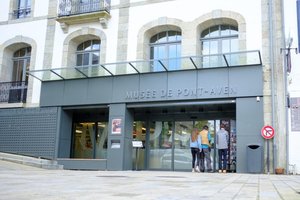
Musée de Pont-Aven, HastenparckMusée de Pont-Aven Hastenparck 7 Landscape at Pont-Aven with Poplars, The Adoration of the Shepherds, Study for The Buckwheat Harvesters
Thyssen-Bornemisza Museum, MadrytThyssen-Bornemisza Museum Madryt 4 The Annunciation, Inside a Shop in Pont-Aven, The Cliffs at Le Pouldu
Musée des Beaux-Arts de Quimper, QuimperMusée des Beaux-Arts de Quimper Quimper 4 Funeral palls 1, Funeral palls 2, Orchard at Pont Aven
Wallraf-Richartz-Museum, KölnWallraf-Richartz-Museum Köln 3 Loving Couple, Houses in Pont-Aven
Muzeum Sztuki w Dallas, DallasMuzeum Sztuki w Dallas Dallas 3 The Salon, Bridge at Pont-Aven
Musée des Beaux-Arts, ReimsMusée des Beaux-Arts Reims 3 Fellah Women at the Bath, Toilet of Venus
Ackland Art Museum, Chapel HillAckland Art Museum Chapel Hill 2 Victorine Lelopin, The Wave

Émile Bernard's most famous painting of each decade

  1. 1880s
    Iron Bridges at Asnières (1887) autorstwa Émile Bernard
    No. 1 of 100

    Iron Bridges at Asnières

    Wiek 12 – 21 · MoMA - Museum of Modern Art

    The scene unfolds within the frame of Iron Bridges at Asnières, a work that captures a specific moment in the evolution of modern painting. Created in 1887, this…

  2. 1890s
    Portrait of Marie Lemasson (1892) autorstwa Émile Bernard
    Rank 2 / 100

    Portrait of Marie Lemasson

    Wiek 22 – 31 · Muzeum Izraela

    Marie Lemasson sits before the viewer, a quiet presence anchored in a sea of teal and seafoam green. Her gaze is direct, meeting the eye with a stoic,…

  3. 1900s
  4. 1910s
    Self-Portrait 1918 (1919) autorstwa Émile Bernard
    Rank 3 / 100

    Self-Portrait 1918

    Wiek 42 – 51 · Van Gogh Museum

    An intimate study of an aging artist, this oil on paper portrait captures a moment of profound introspection. The subject is positioned in a close-up view, his head…

  5. 1920s
    Woman's Head (1920) autorstwa Émile Bernard
    No. 35 of 100

    Woman's Head

    Wiek 52 – 61 · Harvard Art Museums
  6. 1930s
    Melancholy (1935) autorstwa Émile Bernard
    #36 of 100

    Melancholy

    Wiek 62 – 71 · Musée d’Art Moderne de la Ville de Paris
  7. 1940s
    Breton Women (1940) autorstwa Émile Bernard
    No. 38 of 100

    Breton Women

    Wiek 72 – 73 · Musée d’Art Moderne de la Ville de Paris

Questions about Émile Bernard's paintings

What is Émile Bernard's most famous painting?Show the answer

Iron Bridges at Asnières (1887), MoMA - Museum of Modern Art, Nowy Jork. Next come Portrait of Marie Lemasson (1892) and Self-Portrait 1918 (1919).

How old was Émile Bernard when Iron Bridges at Asnières was painted?Show the answer

19 years old: Iron Bridges at Asnières dates from 1887 and Émile Bernard was born in 1868.

What are the top 10 paintings by Émile Bernard?Show the answer

Iron Bridges at Asnières, Portrait of Marie Lemasson, Self-Portrait 1918, Buckwheat Harvesters at Pont Aven, Après le bain (les nymphes), Portrait of a Black Woman, Night Festival, The Harvest, Loving Couple i The Harvest at Saint-Briac. The ranking above gives the year and the museum of each.

How many paintings did Émile Bernard make?Show the answer

Our catalogue lists 201 works by Émile Bernard, dated from 1885 to 1940.

Where are Émile Bernard's most famous paintings?Show the answer

Most of them are in Van Gogh Museum (Amsterdam), Musée de Pont-Aven (Hastenparck) i Thyssen-Bornemisza Museum (Madryt). The table above lists the museums one by one.

When did Émile Bernard paint the most famous works?Show the answer

In 1880s: 29 of the 100 works on this page date from then, among them Iron Bridges at Asnières.

What are Émile Bernard's earliest and latest famous paintings?Show the answer

The earliest on this page is Funeral palls 1 (1885), the latest Breton Women (1940).

What did Émile Bernard paint most often?Show the answer

Women (10), People (6) i Woman (4), among the 100 works on this page.

What medium did Émile Bernard use most?Show the answer

Oil On Canvas: 6 of the 100 works on this page.

Which art movement does Émile Bernard belong to?Show the answer

Post-impressionist synthetism, as the paintings on this page show.

Which Émile Bernard paintings can I see at the Van Gogh Museum?Show the answer

Self-Portrait 1918, Woman Sitting in a Field: Brittany i Portrait of Andries Bonger (1861-1936), his wife Annie van der Linden and Emile Bernard (1868-1941) are among the 10 works on this page held by the Van Gogh Museum, Amsterdam.

Can I buy a reproduction of a Émile Bernard painting?Show the answer

Yes. Every painting on this page can be ordered as a museum-quality, hand-painted oil reproduction or a fine art print, in the size you choose, from the painting's own page.

About Émile Bernard

Émile Bernard: A Post-Impressionist Pioneer

Émile Henri Bernard (ur. 28 kwietnia 1868 w Lille, zm. 16 kwietnia 1941 w Paryżu) – francuski malarz i poeta, który należał do grupy twórców Postimpresjonizmu oraz był przyjacielem Vincenta van Gogha i Paula Gauguina. Jego twórczość charakteryzowała się eksperymentami z techniką cloisonnizmu i syntetyzmem oraz głębokim zainteresowaniem symbolizmem i emocjami. Bernard pozostawił po sobie bogate dziedzictwo artystyczne, które wpłynęło na rozwój sztuki nowoczesnej i zainspirowało kolejne pokolenia twórców.

Early Life and Education

  • Born: April 28, 1868, in Lille, France.
  • Émile Henri Bernard’s early life was shaped by his sister's illness, leading to him being raised primarily by his grandmother, who ran a laundry in Lille. This supportive environment fostered his artistic inclinations.
  • In 1878, the family relocated to Paris, where Bernard attended Collège Sainte-Barbe.
  • He began formal art studies at École des Beaux-Arts i później dołączył do Atelier Cormon w 1884 roku. Tu eksperymentował z impresjonizmem i punktylizmem.
  • Jego ekspresywne tendencje doprowadziły do zawieszoności z École des Beaux-Arts, co skłoniło go do twórczej podróży przez Bretanę pieszo.

Artistic Development and Influences

  • Bernard’s artistic development was significantly influenced by his travels in Brittany, gdzie spotkał lokalne tradycje i krajobrazy, które głęboko rezonowały z nim.
  • Key Relationship: A pivotal moment came in August 1886 when he met Paula Gauguina w Pont-Aven. Ten kontakt zapoczątkował bliską przyjaźń artystyczną i głęboko wpłynął na styl obu twórców.
  • Bernard’s style played a crucial role in shaping Gauguin’s mature work, szczególnie jego eksplorację symbolizmu i płaskich kształtów.
  • On również współpracował z Vincentem van Goghem, tworząc część grupy Petit-Boulevard wraz z Anquetinem i Toulouse-Lautreciem.

Key Artistic Movements

  • Cloisonnism: Bernard jest uznawany za pioniera cloisonizmu, stylu charakteryzującego się mocnymi, płaskimi kształtami oddzielonymi ciemnymi konturami – nawiązującymi do witraży.
  • Synthetism: On również odegrał kluczową rolę w rozwoju syntetyzmu, który koncentrował się na tworzeniu sztuki opartą na doświadczeniu subiektywnym i znaczeniu symbolicznym zamiast bezpośredniego obserwowania natury.

Notable Works

  • La Grandmère (1887): Jest to obraz przedstawiający jego babcię, ukazujący umiejętność twórczą Bernarda w zakresie ekspresyjnego kształtu i koloru. Jest jednym z jego najbardziej ikonicznych dzieł sztuki.
  • Znaczące prace Bernard poświęcone są krajobrazom Bretanii, które uchwyciły ducha wiejskiego życia regionu.

Literary Contributions and Historical Significance

  • Bernard był także twórcą literatury, produkując dramaty, poezję i krytykę sztuki. Jego teksty dostarczają cennych informacji pierwszoznakowych na temat rozwoju sztuki nowoczesnej podczas jego czasów.
Bernard pozostawił po sobie bogate dziedzictwo artystyczne, które wpłynęło na rozwój sztuki nowoczesnej i zainspirowało kolejne pokolenia twórców. Jego prace otworzyły drogę dla późniejszych ruchów takich jak Fauwizm i Ekspresjonizm, wpływając na twórczość wielu artystów. Zmarł w 1941 roku, pozostawiając po sobie dzieła sztuki, które są nadal celebrowane za oryginalność i innowacyjną technikę.

Wszystkie 201 dzieła artysty Émile Bernard →