
Gothic 아티스트, ranked
The most famous Gothic 아티스트 is 두초 (1255–1319), known for 루첼라이 마돈나 및 마에스타 (천사와 성인들과 함께한 마돈나). Next come 시모네 마르티니, 젠틸레 다 파브리아노, 피사넬로 및 슈테판 로흐너. This ranking of the 34 most famous Gothic 아티스트 runs from Master Mateo (born 1161) to Jan Baegert (born 1465), across 8 countries.
How this list is ranked. Artists whose works our catalogue files under Gothic, in the order of our fame ranking of artists. Artists without a Wikidata identifier born after 1955 are left out until verified. The Wikipedia figure next to each name is the number of our 32 languages in which Wikipedia has an article on the artist.
The essentials
Ranked, with their masterpieces
3of 34
이탈리아 Born in 파브리아노 국제 고딕 양식 Wikipedia in 23/32 languages

AllPaintingsStore.com에서 제공하는 자료를 통해 국제 고딕 양식에 대한 더 깊은 통찰력을 탐구해 보세요. Wikipedia 의 정보를 통해 그의 삶과 작품 세계를 더욱 자세히 살펴보세요.
Key works · The 100 most famous works · 피사넬로 reproductions
13of 34
Spanish Romanesque Sculpture

His mastery of limestone carving was unparalleled, particularly through his use of a technique known as trabajo vivo. This method involved layering stone slabs to create textured surfaces that mimicked the appearance of flesh and fabric, lending a sense of movement and vitality to the static medium.
16of 34
네덜란드 Born in 니더라인 고딕 르네상스 Wikipedia in 14/32 languages

Hamburg and The Birth of Jesus (1424): Francke’s career truly blossomed in Hamburg, where he secured a contract to create an altarpiece for St.
18of 34
Italian Born in Florence Gothic Wikipedia in 7/32 languages

His commitment to procuring marble for the cathedral underscored his understanding of artistic grandeur and civic responsibility. Furthermore, he continued to secure patronage from influential families like the Albizzi, ensuring that Florentine art would endure as a symbol of prestige and cultural achievement. The dispersed predella depicting scenes from Saint Peter’s life – a collaborative effort with Niccolò di Pietro Gerini – remains a poignant reminder of Jacopo's artistic legacy and the enduring power of Florentine Gothic art.
19of 34
Catalan Born in 발스 Late Gothic, Flemish influence Wikipedia in 10/32 languages

His workshop became a cornerstone of Catalan production, with works like the Saint Augustine Altarpiece involving collaborations with skilled artists such as Pau Vergós to meet the immense demands of religious guilds and monasteries.
20of 34
German Born in Weil der Stadt Late Gothic Art Wikipedia in 10/32 languages

Commissioned for the parish church in Tiefenbronn, the altarpiece depicts scenes from the life of Mary Magdalene with a striking departure from the prevailing aesthetic norms. The altarpiece isn't just a religious narrative; it is a testament to Moser’s keen observation of human anatomy, light, and shadow. However, scholars generally agree that he was exposed to both the late Gothic traditions prevalent in Southern Germany and the emerging artistic trends emanating from Flanders.
21of 34
German Born in Minden International Gothic Wikipedia in 13/32 languages

It is believed that Bertram was influenced by both French and Netherlandish artistic trends prevalent during his time. Despite these influences, Bertram maintained a uniquely Northern German sensibility, imbuing his work with a sense of regional identity. While sharing similarities with other artists of the period, such as Master Francke (another prominent Hamburg painter), Bertram's work possesses a distinct character—a subtle restraint in emotional expression compared to Francke’s more overtly dramatic approach.
Key works · The 100 most famous works · Master Bertram reproductions
22of 34
Spanish Gothic-Italian

Born around 1357 and passing away in 1406, his life coincided with a period of significant artistic and cultural change across Europe, yet he maintained a distinctly Catalan sensibility throughout his career. The city was a vibrant hub for trade and artistic exchange, exposed to influences from Italy, France, and Flanders.
Key works · The 100 most famous works · 파올로 디 조반니 페이 reproductions
 The Coronation of the Virgin, and Saints
 Madonna and Child
 Madonna and Child Enthroned with Saint John the Evangelist, Saint Peter, Saint Agnes, Saint Catherine of Alexandria, Saint Lucy, an Unidentified Female Saint, Saint Paul, and Saint John the Baptist, with Eve and the Serpent; the Annunciation
24of 34
Italian Born in Milan Gothic Illuminations

He took the established decorative language of the Gothic period and infused it with a burgeoning sense of naturalism that would eventually pave the way for the Renaissance.
25of 34
Catalan Born in Girona International Gothic Wikipedia in 8/32 languages

By successfully introducing and refining the International Gothic style in the Principality, he provided a bridge between the medieval past and the approaching Renaissance.
26of 34
Italian Born in Venice International Gothic Wikipedia in 10/32 languages

While the broader Renaissance would eventually move toward the anatomical realism and linear perspective of masters like Bellini, Giambono’s dedication to the International Gothic aesthetic provided the essential foundation of splendor upon which later Venetian art was built.
27of 34
Italian Born in 피렌체 Late Gothic/Renaissance Wikipedia in 7/32 languages

Dal Ponte’s artistic reputation was initially forged through the creation of exquisitely decorated marriage chests – cassoni or forzieri – objects central to Florentine wedding rituals and indicative of a family's wealth and status. His foundations lay firmly within the decorative traditions of the International Gothic style, evident in his use of rich colors, elaborate ornamentation, and elongated figures.
31of 34
German Late Gothic Wikipedia in 11/32 languages

The Master’s style is a compelling synthesis of Northern European Gothic and Early Renaissance influences. However, the Master’s work transcends mere imitation; he infused these borrowed elements with his own unique sensibility, creating paintings that are both technically proficient and emotionally resonant. The influence of Netherlandish masters is readily apparent in his draftsmanship and compositional structure.
32of 34
Born in Wesel Late Gothic Wikipedia in 3/32 languages

Jan Baegert emerged from the established artistic traditions of Wesel, Germany, where he was born in 1465. He received his formal training under his father, Derick Baegert, a painter who provided the essential technical groundwork for Jan's later career.
Where to see Tracing the physical remains of Jan Baegert’s output requires looking toward the Westphalian and Lower Rhine regions.
33of 34
Italian Late Gothic Wikipedia in 8/32 languages

The Osservanza cycle emerged around 1430-1450, a period marked by significant stylistic shifts in Siena. Influenced by the vibrant Sienese school —particularly the work of Duccio di Buoninsegna and Simone Martini —the Master nevertheless developed a distinct visual language characterized by a heightened sense of drama, emotional intensity, and an innovative use of color. His innovative use of color, dramatic composition, and psychological realism paved the way for the development of Renaissance art in Siena.
34of 34
Austrian International Gothic Wikipedia in 5/32 languages

The Master’s style is a complex synthesis of influences. He drew heavily from the Gothic tradition, evident in his meticulous attention to detail, particularly in the rendering of drapery and architectural elements.
The paintings behind the names
Through time
In figures
| 이탈리아 | 16 |
|---|---|
| Germany | 4 |
| 네덜란드 | 3 |
| Italy | 3 |
| 독일 | 2 |
| Spain | 2 |
| 스페인 | 1 |
| Austria | 1 |
| 12th 세기 | 1 |
|---|---|
| 13th 세기 | 6 |
| 14th 세기 | 18 |
| 15th 세기 | 5 |
| 메트로폴리탄 미술관 | 6 |
|---|---|
| 국립 미술관 | 4 |
| 우피치 미술관 | 3 |
| Museo dell'Opera del Duomo | 2 |
| 이사벨라 스튜어트 가드너 미술관 | 2 |
| Germanisches Nationalmuseum | 2 |
| 바이에른 주립 회화 컬렉션 | 2 |
| 하버드 미술관 | 2 |
All of them, in order
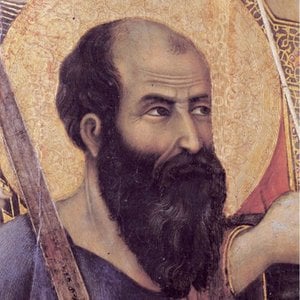 두초이탈리아 · 1255–1319
 시모네 마르티니이탈리아 · 1284–1344젠틸레 다 파브리아노이탈리아 · 1370–1427
 피사넬로이탈리아 · 1395–1455
 슈테판 로흐너독일 · 1410–1451
 아뇰로 가디이탈리아 · 1350–1396
 림부르크 형제네덜란드 · 1385–1416
 파올로 베네치아노이탈리아 · 1333–1358
 리포 멤미이탈리아인 · 1291–1356
 스피넬로 아레티노이탈리아 · 1350–1410
 베르나르도 다디이탈리아 · 1290–1348
 안드레아 피사노이탈리아 · 1290–1348Master MateoSpanish · 1161–1217
 장 말루엘네덜란드 (네덜란드계) · 1370–1415
 틸만 리멘슈나이더독일 · 1460–1531마스터 프랑케 (프라테르 프랑케)네덜란드 · 1380–1435
 클라우스 슬루터네덜란드 · 1355–1406Jacopo di CioneItalian · 1325–1399자우메 우게트Catalan · 1445–1492Lucas MoserGerman · 1390–1443Master BertramGerman · 1345–1415Pere SerraSpanish · 1357–1406
 파올로 디 조반니 페이이탈리아 · 1345–1411Giovannino De' GrassiItalian · 1350–1398Lluís BorrassàCatalan · 1360–1425Michele GiambonoItalian · 1400–1462Giovanni dal PonteItalian · 1385–1438
 프라하의 테오도리크체코 ·
 니콜로 디 피에트로 제리니이탈리아 · 1368–1415
 파치노 디 보나구이다이탈리아 · 1280–1340Master Of The Life Of The VirginGerman · Jan Baegert1465–1535Master Of The OsservanzaItalian · Master of Heiligenkreuz AbbeyAustrian ·
Your questions, answered
First place goes to 두초 (#1); 시모네 마르티니 (#2) and 젠틸레 다 파브리아노 (#3) complete the podium.
두초 (#1), 시모네 마르티니 (#2), 젠틸레 다 파브리아노 (#3), 피사넬로 (#4) 및 슈테판 로흐너 (#5).
피렌체: 5 of the 아티스트 in this list were born there.
The museums holding the most key works of this list are 메트로폴리탄 미술관 (6), 국립 미술관 (4) 및 우피치 미술관 (3).
Most 아티스트 in this list were born in the 14th 세기 (18 of 34), between 1161 and 1465 overall.
The earliest-born 아티스트 in this list is Master Mateo (#13), born in 1161.
The highest-ranked 아티스트 born in 이탈리아 are 두초 (#1), 시모네 마르티니 (#2), 젠틸레 다 파브리아노 (#3), 피사넬로 (#4) 및 아뇰로 가디 (#6).
이탈리아: 16 of the 34 아티스트 in this list were born there, then Germany (4) 및 네덜란드 (3).
“He skillfully employed tempera on panel, achieving luminous colors and textural richness.” — from our biography of 마스터 프랑케 (프라테르 프랑케) (#16).
Our catalogue holds 1,535 works by these 아티스트. Each one can be ordered as a hand-painted oil reproduction or a print.
Keep reading
Other movements
 유명한 Baroque 예술가밤의 망루 (De Nachtwacht) · 렘브란트
 유명한 Contemporary Realist 예술가이삭 줍는 사람들 · 장프랑수아 밀레
 유명한 Impressionist 예술가별이 빛나는 밤 (뉴욕, MoMA) · 빈센트 반 고흐
 유명한 Romanticist 예술가토성, 그의 아들을 잡아먹는 중 · 프란시스코 데 고야
 유명한 Neoclassicist 예술가The Death of Marat · 자크루이 다비드
 유명한 Realist 예술가세계의 기원 · 귀스타브 쿠르베
 유명한 Renaissance 예술가모나리자 (라 죠콘다) · 레오나르도 다 빈치
 유명한 Dutch Golden Age 예술가진주 귀걸이를 한 소녀 · 요하네스 페르메이르
 유명한 Expressionist 예술가구성 VII · 바실리 칸딘스키
 유명한 Rococo 예술가사랑의 교훈 · 앙투안 바토
Other periods
 유명한 Early Medieval 예술가Snowy River · 왕유
 유명한 High Medieval 예술가마에스타의 마돈나 (오니산티 마돈나) · 조토 디 본도네
 유명한 Late Medieval 예술가수태고지와 두 성인 · 시모네 마르티니
 유명한 Renaissance 예술가아담의 창조 · 미켈란젤로 부오나로티
 유명한 Early Modern 예술가마태오의 부르심 · 카라바조
 유명한 19th Century 예술가수련 (또는 연꽃) · 클로드 모네
 유명한 Modern 예술가게르니카 · 파블로 피카소
 유명한 Contemporary 예술가Wind Sculpture III (one in a series of nine) · Yinka Shonibare
More rankings


