Anteprima in scala realeAnteprima in scala reale Prova in ARProva in AR Passa alle stampe Passa alle stampePassa all'immagine digitale Passa all'immagine digitale CondividiCondividi
DettagliDettagli Aggiungi ai preferiti Aggiungi ai preferiti ScaricaScarica Articoli similiArticoli simili RadiografiaRadiografia SlideshowSlideshow StatisticheStatistiche

Faust and Marguerite

Simeon Solomon’s ‘Faust & Marguerite’ (1856) – a haunting pen & ink drawing of Victorian romance & transgression. Pre-Raphaelite style, opulent details, & somber mood. Explore this unique artwork.

Scopri Simeon Solomon: un artista pre-rafaelitico britannico noto per opere simboliste e temi audaci come l'amore omosessuale e la mitologia classica. Un talento unico nel contesto vittoriano.

Riproduzione a olio fatta a mano

Olio su tela dipinto a mano nelle tue dimensioni e con la tua cornice, realizzato su ordinazione dai nostri artisti. (Passa alle stampe Passa alle stampePassa all'immagine digitale Passa all'immagine digitale)

P118B $10
P118H $10
P118W $10
P438Z $10
P508JH $12
P508YH $12
P805H $10
P805Z $10
P919BZ $10
P919G $10
P919XJ $10
P959ZH $10
P968JZ $12
W106C $8
W218G $10
W218JH $8
W218Y $10
W307PJ $10
W316G $10
W316PJ $8
W316Y $10
W398PJ $8
W4111J $10
W500HY $15
W500JH $15
W692G $12
W849H $8
W940BG $15
W953PJ $8

Standard
personalizzato
CM
INCH

Scegli tra le nostre dimensioni predefinite, che rispettano le proporzioni originali dell'opera d'arte.

larghezza
altezza

È possibile inserire dimensioni personalizzate per adattare l'opera a una cornice o a uno spazio specifico. Se la dimensione selezionata non corrisponde alle proporzioni dell'immagine originale, provvederemo a ritagliare l'opera o a estendere il dipinto con elementi aggiuntivi dipinti a mano. Un mockup digitale ti sarà inviato per approvazione prima dell'inizio della produzione.
Si prega di notare che l'anteprima a schermo non riflette il ritaglio o l'estensione effettivi. Solo il mockup mostrerà accuratamente la composizione finale.
Sebbene siano disponibili dimensioni personalizzate, consigliamo di selezionare una dimensione dall'elenco predefinito per preservare le proporzioni originali.

Esempi di personalizzazione: sostituire il volto con una foto del cliente; aggiungere un animale domestico (ad esempio, sostituire un gatto con un cane); inserire un messaggio nascosto nello sfondo; cambiare il paesaggio o gli elementi dello sfondo.
Dopo l'ordine, il team di WahooArt.com contatterà il cliente via e-mail per ricevere le istruzioni e fornirà un'anteprima del mockup

Consegna in tutto il mondo () in 3/4 settimane anziché nelle normali 5 settimane. (13 Settembre). Nessun compromesso sulla qualità.

why_choose_icon
Spedizione espressa gratuita in tutto il mondo
why_choose_icon
Tela in lino di alta qualità
why_choose_icon
Assicurazione completa sulla spedizione
why_choose_icon
Garanzia di rimborso dei dazi doganali
why_choose_icon
Garanzia di perfetta fedeltà cromatica
why_choose_icon
Politica di reso entro 100 giorni (solo per difetti di fabbricazione)
why_choose_icon
Garanzia di rimborso al 100%
why_choose_icon
Sconto per acquisti multipli

Prezzo totale

$ 297

reproduction

Faust and Marguerite

Tecnica di riproduzione

Dimensioni della riproduzione

-

Prezzo totale

$ 297

Dettagli rapidi

  • Movement: Pre-Raphaelite
  • Year: 1856
  • Influences: Victorian era
  • Dimensions: 25.4 x 20.2 cm
  • Notable elements: Opulent details, figures
  • Title: Faust and Marguerite
  • Artist: Simeon Solomon

Quiz d'arte

Per ogni domanda è presente una sola risposta corretta.

Domanda 1:
What artistic movement is most closely associated with Simeon Solomon’s ‘Faust and Marguerite’?
Domanda 2:
The drawing primarily utilizes which technique to create texture and form?
Domanda 3:
What is a symbolic element in the artwork that suggests worldly pleasures?
Domanda 4:
In what year was ‘Faust and Marguerite’ created?
Domanda 5:
Simeon Solomon's life was significantly impacted by which event?

A Shadowed Romance: Simeon Solomon’s ‘Faust and Marguerite’

Simeon Solomon’s “Faust and Marguerite,” painted in 1856, is not merely a depiction of a biblical tale; it's a haunting meditation on desire, transgression, and the perilous allure of forbidden love. This exquisite pen and ink drawing, rendered with meticulous detail and a distinctly Pre-Raphaelite sensibility, transports us to a richly appointed chamber where the tragic romance between Faust and Marguerite unfolds within a carefully constructed world of opulent symbolism. Solomon, a figure shrouded in both artistic brilliance and scandalous notoriety, masterfully captures the emotional intensity of their illicit affair, imbuing the scene with a palpable sense of foreboding and doomed passion.

The composition itself is deliberately flattened, suggesting a stage-like setting rather than a fully immersive three-dimensional space. This choice directs our attention to the central figures – Faust and Marguerite – locked in an embrace that speaks volumes about their desperate connection. The perspective subtly emphasizes the intimacy of the moment, drawing us into their world while simultaneously hinting at the consequences awaiting them. Architectural details—a grand fireplace, richly patterned wallpaper, and a partially obscured window—create a sense of both grandeur and confinement, mirroring the characters’ entrapment within their shared secret.

A Pre-Raphaelite Vision: Technique and Style

Solomon's technique is characterized by an extraordinary level of precision and control. He employs hatching and cross-hatching with remarkable skill to build up tonal variations and texture, creating a remarkably tactile surface despite the medium being solely ink on paper. The lines are predominantly fine and deliberate, meticulously defining every contour of the figures and objects within the scene. This linear approach, combined with his masterful use of shading, lends the drawing a dignified solemnity, reminiscent of classical portraiture while retaining the vibrant emotionalism associated with the Pre-Raphaelite movement.

The color palette is almost entirely monochromatic—a carefully orchestrated blend of browns and beiges—which contributes significantly to the artwork’s somber mood. This deliberate restriction of color focuses our attention on form, line, and texture, amplifying the drama of the scene and evoking a sense of timelessness. The muted tones also subtly hint at the decay and corruption that lie beneath the surface of their passionate union.

Symbolism and Historical Context

“Faust and Marguerite” is deeply rooted in the legend of Goethe’s “Faust,” but Solomon imbues it with a distinctly Victorian sensibility. The opulent setting—a lavish chamber filled with luxurious furnishings—represents the seductive allure of worldly pleasures, while the shadowed corners and obscured details suggest the moral compromises inherent in Faust's pursuit of knowledge and experience. Marguerite, often depicted as a fallen angel or a victim of circumstance, embodies innocence corrupted by desire. Her pose, vulnerable yet defiant, speaks to her tragic fate.

Simeon Solomon’s life was inextricably linked with scandal. His arrest for attempted sodomy in 1873 and subsequent trials cast a long shadow over his career, ultimately curtailing his artistic output. Despite this personal tragedy, his work continues to fascinate art historians and collectors alike. “Faust and Marguerite” stands as a poignant testament to Solomon’s extraordinary talent—a masterpiece of Pre-Raphaelite romanticism that explores the darkest corners of human desire with breathtaking beauty and unsettling honesty.

A Timeless Masterpiece: Reproduction & Legacy

Reproductions of "Faust and Marguerite" offer a remarkable opportunity to bring this evocative artwork into your home or office. The meticulous detail captured by Solomon’s original drawing is faithfully reproduced, allowing you to appreciate the nuances of his technique and the depth of his symbolism. Whether displayed in a formal study or a more casual living space, this image will undoubtedly serve as a conversation starter—a reminder of the enduring power of love, loss, and the complexities of human experience.

Consider commissioning a hand-painted reproduction from WahooArt.com to ensure that you own an authentic piece of art history, meticulously crafted by skilled artists who honor Solomon’s legacy. The rich textures and subtle tonal variations will faithfully recreate the original's atmosphere, bringing this captivating scene to life in your space.


Biografia dell'artista

A Life Shrouded in Beauty and Scandal: The World of Simeon Solomon

Simeon Solomon, a name whispered with both reverence and regret within the annals of Victorian art, occupies a unique and often tragic position amongst the Pre-Raphaelites. Born in London on 9 October 1840, the last of eight children in an artistically-inclined middle class Jewish family – the eighth and final child of merchant Meyer Solomon and artist Kate Levy – his life was one of remarkable artistic promise tragically curtailed by societal prejudice and personal demons. He wasn't merely a painter; he was a cultural mirror reflecting the complexities of Victorian England, grappling with faith, desire, and identity in a rapidly changing world.

Early Influences and Artistic Development

Solomon’s artistic education began within his own family circle. His mother possessed an amateur talent for miniature painting, while his elder siblings, Abraham and Rebecca Solomon, were both established artists exhibiting at the Royal Academy. It was from them, particularly his brother Abraham, that Simeon received his initial training, learning the fundamentals of draftsmanship and composition. He formally studied at Carey’s Art Academy in 1852 before entering the prestigious Royal Academy Schools in 1856. This period proved pivotal, as it introduced him to the burgeoning Pre-Raphaelite Brotherhood through Dante Gabriel Rossetti. The encounter with Rossetti, along with friendships forged with Edward Burne-Jones and Algernon Charles Swinburne, profoundly shaped Solomon’s artistic sensibilities. He embraced their commitment to detailed realism, vibrant color palettes, and a fascination with literature, mythology, and religious narratives. Early works like *Isaac Offered* (1858) demonstrate this initial influence, showcasing a meticulous attention to detail and a dramatic narrative style characteristic of the Pre-Raphaelites. However, Solomon quickly began to forge his own path, infusing his paintings with a distinctly personal vision.

Themes of Faith, Desire, and Identity

Solomon’s artistic output was remarkably diverse, encompassing biblical scenes, classical mythology, and genre paintings depicting Jewish life and rituals. He found particular inspiration in the Hebrew Bible, creating works such as *Moses* (1860) and *Shadrach, Meshach, and Abednego* (1863), which resonated with his own cultural heritage. Yet, it was his exploration of classical themes that truly set him apart. Paintings like *In the Temple of Venus* (1863) and *Bacchus* (1867) reveal a fascination with sensuality and beauty, often imbued with an undercurrent of melancholy and longing. These works also hint at Solomon’s growing interest in same-sex desire, a theme he would explore more explicitly – and dangerously – throughout his career. His association with Algernon Charles Swinburne, whose poetry celebrated unconventional love and challenged Victorian morality, undoubtedly fueled this exploration. Solomon's art became a subtle yet powerful commentary on the constraints of Victorian society, hinting at hidden passions and unspoken desires. He was one of the first artists to openly depict homoerotic themes, albeit often veiled in classical allegory or biblical narrative.

Scandal, Decline, and Lasting Legacy

The year 1873 marked a devastating turning point in Solomon’s life. His arrest in a public urinal for attempting to commit sodomy brought swift and brutal consequences. Though he received a relatively light fine, the scandal shattered his reputation and effectively ended his career as a publicly exhibited artist. A subsequent arrest in Paris in 1874 led to a three-month prison sentence. Shunned by much of the art establishment, Solomon descended into alcoholism and poverty. However, despite his ostracization, he continued to create art, albeit often under difficult circumstances. He found support from a small circle of admirers – including Oscar Wilde, John Addington Symonds, and Walter Pater – who recognized his talent and collected his works in private. He spent time in the St Giles Workhouse, continuing to paint even amidst hardship. His death in 1905, resulting from complications related to alcoholism, went largely unnoticed by the wider public. In recent decades, however, there has been a growing reassessment of Solomon’s work and life. Retrospectives at the Birmingham Museum & Art Gallery (2005-6) and the Ben Uri Gallery in London (2006) have brought his art to a new audience, recognizing him as a significant figure within the Pre-Raphaelite movement and a pioneering artist who dared to challenge Victorian conventions. His paintings now reside in prominent collections such as the Victoria and Albert Museum, Wightwick Manor, and Leighton House, ensuring that his unique vision continues to inspire and provoke thought for generations to come. His story serves as a poignant reminder of the fragility of artistic freedom and the enduring power of art to transcend societal boundaries.
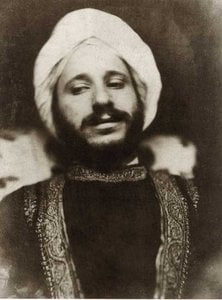
Simeone Solomon

Simeone Solomon

1840 - 1905 , Regno Unito

Informazioni rapide

  • Artistic Movement Or Style: Pre-Raphaelita
  • Artists Who Influenced This Artist:
    • Rossetti
    • Burne-Jones
  • Date Of Birth: 1840
  • Date Of Death: 1905
  • Full Name: Simeon Solomon
  • Nationality: Britannico
  • Notable Artworks:
    • Babilonia è...
    • Sofia e Agatodemo
    • Rut e Naomi
    • Sdrach, Meshach...
    • Nel Tempio di Venere
  • Place Of Birth: Londra, Regno Unito