Anteprima in scala reale Prova in AR Passa alle stampe Passa all'immagine digitale Condividi
Dettagli Guida stampabile Aggiungi ai preferiti Scarica Articoli simili Radiografia Slideshow Statistiche

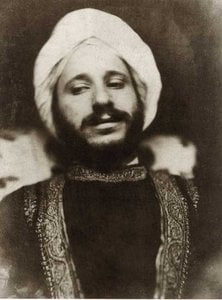
Self-Portrait

Detailed research reveals Solomon's significant influence within the Pre-Raphaelite movement, marked by explorations of Jewish identity and same-sex desire. His work is showcased at institutions like the V&A and Leighton House, cementing his legacy as a pivotal figure in Victorian art history.

Scopri Simeon Solomon: un artista pre-rafaelitico britannico noto per opere simboliste e temi audaci come l'amore omosessuale e la mitologia classica. Un talento unico nel contesto vittoriano.

Riproduzione a olio fatta a mano

Olio su tela dipinto a mano nelle tue dimensioni e con la tua cornice, realizzato su ordinazione dai nostri artisti. ( Passa alle stampe Passa all'immagine digitale)

Corner sample of the P118B picture frame: polistirene stampato, 5 cm wide and 3 cm thick
P118B 10
Corner sample of the P118H picture frame: polistirene stampato, 5 cm wide and 3 cm thick
P118H 10
Corner sample of the P118W picture frame: polistirene stampato, 5 cm wide and 3 cm thick
P118W 10
Corner sample of the P438Z picture frame: polistirene stampato, 5.5 cm wide and 3.5 cm thick
P438Z 10
Corner sample of the P508JH picture frame: polistirene stampato, 7 cm wide and 3.5 cm thick
P508JH 12
Corner sample of the P508YH picture frame: polistirene stampato, 7 cm wide and 3.5 cm thick
P508YH 12
Corner sample of the P805H picture frame: polistirene stampato, 5 cm wide and 3.5 cm thick
P805H 10
Corner sample of the P805Z picture frame: polistirene stampato, 5 cm wide and 3.5 cm thick
P805Z 10
Corner sample of the P919BZ picture frame: polistirene stampato, 7 cm wide and 3.5 cm thick
P919BZ 10
Corner sample of the P919G picture frame: polistirene stampato, 7 cm wide and 3.5 cm thick
P919G 10
Corner sample of the P919XJ picture frame: polistirene stampato, 7 cm wide and 3.5 cm thick
P919XJ 10
Corner sample of the P959ZH picture frame: polistirene stampato, 5 cm wide and 3 cm thick
P959ZH 10
Corner sample of the P968JZ picture frame: polistirene stampato, 6 cm wide and 4 cm thick
P968JZ 12
Corner sample of the W106C picture frame: legno massello, 5 cm wide and 3 cm thick
W106C 8
Corner sample of the W218G picture frame: legno massello, 5 cm wide and 3 cm thick
W218G 10
Corner sample of the W218JH picture frame: legno massello, 5 cm wide and 3 cm thick
W218JH 8
Corner sample of the W218Y picture frame: legno massello, 5 cm wide and 3 cm thick
W218Y 10
Corner sample of the W307PJ picture frame: legno massello, 6 cm wide and 3 cm thick
W307PJ 10
Corner sample of the W316G picture frame: legno massello, 6 cm wide and 3 cm thick
W316G 10
Corner sample of the W316PJ picture frame: legno massello, 6 cm wide and 3 cm thick
W316PJ 8
Corner sample of the W316Y picture frame: legno massello, 6 cm wide and 3 cm thick
W316Y 10
Corner sample of the W398PJ picture frame: legno massello, 5 cm wide and 3 cm thick
W398PJ 8
Corner sample of the W4111J picture frame: legno massello, 6.5 cm wide and 3.5 cm thick
W4111J 10
Corner sample of the W500HY picture frame: legno massello, 7 cm wide and 5 cm thick
W500HY 15
Corner sample of the W500JH picture frame: legno massello, 7 cm wide and 5 cm thick
W500JH 15
Corner sample of the W692G picture frame: legno massello, 8 cm wide and 4 cm thick
W692G 12
Corner sample of the W849H picture frame: legno massello, 5 cm wide and 3 cm thick
W849H 8
Corner sample of the W940BG picture frame: legno massello, 7.5 cm wide and 4.5 cm thick
W940BG 15
Corner sample of the W953PJ picture frame: legno massello, 6 cm wide and 3.5 cm thick
W953PJ 8

Standard
personalizzato
CM
INCH

Scegli tra le nostre dimensioni predefinite, che rispettano le proporzioni originali dell'opera d'arte.

larghezza
altezza

Inserisci la larghezza e l'altezza di cui hai bisogno, per adattarle alla tua cornice o alla tua parete. Trattandosi di un'opera dipinta a mano, in caso di dimensioni con una forma differente, l'artista può dipingere un po' più oltre i bordi dell'immagine o ritagliare leggermente — la scelta spetta a te. Ti invieremo un mockup digitale da approvare prima che la pittura abbia inizio. L'immagine mostrata in questa pagina non rappresenta il risultato reale — solo il mockup lo fa.

Esempi di personalizzazione: sostituire il volto con una foto del cliente; aggiungere un animale domestico (ad esempio, sostituire un gatto con un cane); inserire un messaggio nascosto nello sfondo; cambiare il paesaggio o gli elementi dello sfondo.
Dopo l'ordine, il team di WahooArt.com contatterà il cliente via e-mail per ricevere le istruzioni e fornirà un'anteprima del mockup

Consegna in tutto il mondo () in 3/4 settimane anziché nelle normali 5 settimane. (22 Ottobre). Nessun compromesso sulla qualità.

Spedizione espressa gratuita in tutto il mondo
Tela in lino di alta qualità
Assicurazione completa sulla spedizione
Garanzia di rimborso dei dazi doganali
Garanzia di perfetta fedeltà cromatica
Politica di reso entro 100 giorni (solo per difetti di fabbricazione)
Garanzia di rimborso al 100%
Sconto per acquisti multipli

Prezzo totale

€ 238

Self-Portrait

Tecnica di riproduzione

Dimensioni della riproduzione

-

Prezzo totale

€ 238

Dettagli rapidi

  • Year: 1859
  • Notable elements or techniques: Black and white drawing, pensive expression
  • Movement: Pre-Raphaelite
  • Artistic style: Victorian, Symbolism

Quiz d'arte

Per ogni domanda è presente una sola risposta corretta.

Domanda 1:
What artistic movement is Simeon Solomon associated with?
Domanda 2:
In what year was this self-portrait created?
Domanda 3:
What medium did Simeon Solomon use to create this artwork?
Domanda 4:
Where is this self-portrait currently housed?
Domanda 5:
What does the image description highlight about Solomon's artistic style?

A Glimpse into the Soul: The Introspective World of Simeon Solomon

In the quiet, monochromatic depths of Simeon Solomon’s 1859 Self-Portrait, we encounter more than just a mere likeness; we witness a profound moment of psychological vulnerability. This delicate drawing, rendered with the sensitive touch characteristic of the early Pre-Raphaent era, captures a figure lost in deep contemplation. The subject, possessing long, elegantly styled hair and a pensive gaze that drifts toward an unseen horizon, serves as a window into the artist's internal landscape. Through the masterful use of light and shadow in this black and white medium, Solomon invites the viewer to share in a private moment of introspection, where the boundaries between the creator and the creation begin to blur.

The composition is enriched by a subtle sense of place, featuring a window that frames the subject against a backdrop containing a hanging painting. This layering of imagery—a portrait within a portrait—adds a sophisticated depth to the work, suggesting the layers of identity that Solomon himself navigated throughout his complex life. The interplay between the physical setting and the emotional weight of the expression creates a tension that is both haunting and beautiful, making this piece an exquisite example of how Victorian artists utilized domestic intimacy to explore much larger, universal themes of longing and self-discovery.

Symbolism and the Pre-Raphaelite Spirit

To understand this work, one must look through the lens of the Pre-Raphaelite movement, a period defined by an intense devotion to detail and a fascination with symbolic truth. While Solomon’s later works became famous for their explorations of Jewish identity and classical mythology, this early self-portrait reveals the foundational seeds of his artistic preoccupation: the exploration of the "inner self." The soft textures of the hair and the flowing drapery of the dress are not merely decorative; they represent a tactile connection to the physical world that contrasts sharply with the ethereal, distant gaze of the subject.

For the discerning collector or interior designer, this piece offers a unique opportunity to introduce a sense of historical gravity and poetic melancholy into a space. The artwork functions as a focal point of quietude, perfect for a study, a library, or a gallery wall where conversation and reflection are encouraged. Its monochromatic palette ensures a timeless elegance, allowing it to integrate seamlessly into both classical and contemporary decor, providing a sophisticated touch of Victorian romanticism that transcends the passing trends of modern design.

A Timeless Legacy for the Modern Collector

Owning a reproduction of such a significant piece is an act of preserving a fragment of art history. Solomon’s life, marked by both immense brilliance and profound tragedy, imbues his work with an emotional resonance that remains palpable over a century later. This Self-Portrait stands as a testament to the power of the line and the depth of the human spirit. It is a piece that does not merely decorate a room but breathes life into it, offering a continuous dialogue between the nineteenth-century artist and the modern observer.

Whether you are drawn to the technical precision of the drawing or the evocative atmosphere of the Victorian era, this work serves as an enduring inspiration. It invites anyone who views it to pause, to look inward, and to find beauty in the quietest moments of existence.

Domande e risposte

Qual è la tonalità dominante di "Self-Portrait" di Simeone Solomon?

La tonalità dominante di "Self-Portrait" di Simeone Solomon è Golden Yellow Range. Tale tonalità costituisce il tono di fondo della tavolozza.

Posso vedere "Self-Portrait" di Simeone Solomon sotto diverse luci?

La vista a raggi X di "Self-Portrait" di Simeone Solomon è disponibile nella pagina Raggi X dell'opera: un esame interattivo dell'immagine attraverso undici strati ottici.

In che modo "Self-Portrait" di Simeone Solomon collega Pre-Raphaelite Revival al paese d'origine dell'artista?

"Self-Portrait" connette il movimento Pre-Raphaelite Revival con Regno Unito attraverso il luogo di nascita del suo creatore.


Biografia dell'artista

A Life Shrouded in Beauty and Scandal: The World of Simeon Solomon

Simeon Solomon, a name whispered with both reverence and regret within the annals of Victorian art, occupies a unique and often tragic position amongst the Pre-Raphaelites. Born in London on 9 October 1840, the last of eight children in an artistically-inclined middle class Jewish family – the eighth and final child of merchant Meyer Solomon and artist Kate Levy – his life was one of remarkable artistic promise tragically curtailed by societal prejudice and personal demons. He wasn't merely a painter; he was a cultural mirror reflecting the complexities of Victorian England, grappling with faith, desire, and identity in a rapidly changing world.

Early Influences and Artistic Development

Solomon’s artistic education began within his own family circle. His mother possessed an amateur talent for miniature painting, while his elder siblings, Abraham and Rebecca Solomon, were both established artists exhibiting at the Royal Academy. It was from them, particularly his brother Abraham, that Simeon received his initial training, learning the fundamentals of draftsmanship and composition. He formally studied at Carey’s Art Academy in 1852 before entering the prestigious Royal Academy Schools in 1856. This period proved pivotal, as it introduced him to the burgeoning Pre-Raphaelite Brotherhood through Dante Gabriel Rossetti. The encounter with Rossetti, along with friendships forged with Edward Burne-Jones and Algernon Charles Swinburne, profoundly shaped Solomon’s artistic sensibilities. He embraced their commitment to detailed realism, vibrant color palettes, and a fascination with literature, mythology, and religious narratives. Early works like *Isaac Offered* (1858) demonstrate this initial influence, showcasing a meticulous attention to detail and a dramatic narrative style characteristic of the Pre-Raphaelites. However, Solomon quickly began to forge his own path, infusing his paintings with a distinctly personal vision.

Themes of Faith, Desire, and Identity

Solomon’s artistic output was remarkably diverse, encompassing biblical scenes, classical mythology, and genre paintings depicting Jewish life and rituals. He found particular inspiration in the Hebrew Bible, creating works such as *Moses* (1860) and *Shadrach, Meshach, and Abednego* (1863), which resonated with his own cultural heritage. Yet, it was his exploration of classical themes that truly set him apart. Paintings like *In the Temple of Venus* (1863) and *Bacchus* (1867) reveal a fascination with sensuality and beauty, often imbued with an undercurrent of melancholy and longing. These works also hint at Solomon’s growing interest in same-sex desire, a theme he would explore more explicitly – and dangerously – throughout his career. His association with Algernon Charles Swinburne, whose poetry celebrated unconventional love and challenged Victorian morality, undoubtedly fueled this exploration. Solomon's art became a subtle yet powerful commentary on the constraints of Victorian society, hinting at hidden passions and unspoken desires. He was one of the first artists to openly depict homoerotic themes, albeit often veiled in classical allegory or biblical narrative.

Scandal, Decline, and Lasting Legacy

The year 1873 marked a devastating turning point in Solomon’s life. His arrest in a public urinal for attempting to commit sodomy brought swift and brutal consequences. Though he received a relatively light fine, the scandal shattered his reputation and effectively ended his career as a publicly exhibited artist. A subsequent arrest in Paris in 1874 led to a three-month prison sentence. Shunned by much of the art establishment, Solomon descended into alcoholism and poverty. However, despite his ostracization, he continued to create art, albeit often under difficult circumstances. He found support from a small circle of admirers – including Oscar Wilde, John Addington Symonds, and Walter Pater – who recognized his talent and collected his works in private. He spent time in the St Giles Workhouse, continuing to paint even amidst hardship. His death in 1905, resulting from complications related to alcoholism, went largely unnoticed by the wider public. In recent decades, however, there has been a growing reassessment of Solomon’s work and life. Retrospectives at the Birmingham Museum & Art Gallery (2005-6) and the Ben Uri Gallery in London (2006) have brought his art to a new audience, recognizing him as a significant figure within the Pre-Raphaelite movement and a pioneering artist who dared to challenge Victorian conventions. His paintings now reside in prominent collections such as the Victoria and Albert Museum, Wightwick Manor, and Leighton House, ensuring that his unique vision continues to inspire and provoke thought for generations to come. His story serves as a poignant reminder of the fragility of artistic freedom and the enduring power of art to transcend societal boundaries.
Simeone Solomon

Simeone Solomon

1840 - 1905 , Regno Unito

Informazioni rapide

  • Artistic Movement Or Style: Pre-Raphaelita
  • Artists Who Influenced This Artist:
    • Rossetti
    • Burne-Jones
  • Date Of Birth: 1840
  • Date Of Death: 1905
  • Full Name: Simeon Solomon
  • Nationality: Britannico
  • Notable Artworks:
    • Babilonia è...
    • Sofia e Agatodemo
    • Rut e Naomi
    • Sdrach, Meshach...
    • Nel Tempio di Venere
  • Place Of Birth: Londra, Regno Unito