Anteprima in scala reale Prova in AR Ordina la riproduzione dipinta a mano Passa all'immagine digitale Condividi
Dettagli Guida stampabile Aggiungi ai preferiti Scarica Articoli simili Radiografia Slideshow Statistiche

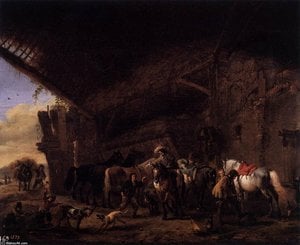
Path through the Dunes

Explore Philips Wouwerman's 'Path through the Dunes,' a serene landscape painting depicting a horseman traversing dunes under a dramatic cloudy sky, housed at Staatliche Museen Berlin.

Scopri Philips Wouwerman (1619-1668), maestro dell'età dell'oro olandese! Caccia, paesaggi e battaglie animate da scene equestri di grande maestria.

Giclée / Stampe d'arte

Stampa giclée o su tela di qualità museale, con produzione rapida e diverse opzioni di finitura. ( Ordina la riproduzione dipinta a mano Passa all'immagine digitale)

Corner sample of the P118B picture frame: polistirene stampato, 5 cm wide and 3 cm thick
P118B €10
Corner sample of the P118H picture frame: polistirene stampato, 5 cm wide and 3 cm thick
P118H €10
Corner sample of the P118W picture frame: polistirene stampato, 5 cm wide and 3 cm thick
P118W €10
Corner sample of the P438Z picture frame: polistirene stampato, 5.5 cm wide and 3.5 cm thick
P438Z €10
Corner sample of the P508JH picture frame: polistirene stampato, 7 cm wide and 3.5 cm thick
P508JH €12
Corner sample of the P508YH picture frame: polistirene stampato, 7 cm wide and 3.5 cm thick
P508YH €12
Corner sample of the P805H picture frame: polistirene stampato, 5 cm wide and 3.5 cm thick
P805H €10
Corner sample of the P805Z picture frame: polistirene stampato, 5 cm wide and 3.5 cm thick
P805Z €10
Corner sample of the P919BZ picture frame: polistirene stampato, 7 cm wide and 3.5 cm thick
P919BZ €10
Corner sample of the P919G picture frame: polistirene stampato, 7 cm wide and 3.5 cm thick
P919G €10
Corner sample of the P919XJ picture frame: polistirene stampato, 7 cm wide and 3.5 cm thick
P919XJ €10
Corner sample of the P959ZH picture frame: polistirene stampato, 5 cm wide and 3 cm thick
P959ZH €10
Corner sample of the P968JZ picture frame: polistirene stampato, 6 cm wide and 4 cm thick
P968JZ €12
Corner sample of the W106C picture frame: legno massello, 5 cm wide and 3 cm thick
W106C €8
Corner sample of the W218G picture frame: legno massello, 5 cm wide and 3 cm thick
W218G €10
Corner sample of the W218JH picture frame: legno massello, 5 cm wide and 3 cm thick
W218JH €8
Corner sample of the W218Y picture frame: legno massello, 5 cm wide and 3 cm thick
W218Y €10
Corner sample of the W307PJ picture frame: legno massello, 6 cm wide and 3 cm thick
W307PJ €10
Corner sample of the W316G picture frame: legno massello, 6 cm wide and 3 cm thick
W316G €10
Corner sample of the W316PJ picture frame: legno massello, 6 cm wide and 3 cm thick
W316PJ €8
Corner sample of the W316Y picture frame: legno massello, 6 cm wide and 3 cm thick
W316Y €10
Corner sample of the W398PJ picture frame: legno massello, 5 cm wide and 3 cm thick
W398PJ €8
Corner sample of the W4111J picture frame: legno massello, 6.5 cm wide and 3.5 cm thick
W4111J €10
Corner sample of the W500HY picture frame: legno massello, 7 cm wide and 5 cm thick
W500HY €15
Corner sample of the W500JH picture frame: legno massello, 7 cm wide and 5 cm thick
W500JH €15
Corner sample of the W692G picture frame: legno massello, 8 cm wide and 4 cm thick
W692G €12
Corner sample of the W849H picture frame: legno massello, 5 cm wide and 3 cm thick
W849H €8
Corner sample of the W940BG picture frame: legno massello, 7.5 cm wide and 4.5 cm thick
W940BG €15
Corner sample of the W953PJ picture frame: legno massello, 6 cm wide and 3.5 cm thick
W953PJ €8

Standard
personalizzato
CM
INCH

Scegli tra le nostre dimensioni predefinite, che rispettano le proporzioni originali dell'opera d'arte.

larghezza
altezza

Inserisci la larghezza e l'altezza desiderate, per adattarle alla tua cornice o alla tua parete. Una stampa può essere solo ritagliata, mai resa più grande dell'immagine originale; pertanto, un formato con una forma differente comporterà la perdita di una parte dell'opera. Ti invieremo un mockup digitale da approvare prima di procedere con la stampa. L'immagine mostrata in questa pagina non rappresenta il ritaglio reale — solo il mockup lo mostra.

Consegna in tutto il mondo () in 2 settimane invece delle normali 4/5 settimane. (24 Ottobre)

Spedizione espressa gratuita in tutto il mondo
Tela in lino di alta qualità
Assicurazione completa sulla spedizione
Garanzia di rimborso dei dazi doganali
Garanzia di perfetta fedeltà cromatica
Politica di reso entro 100 giorni (solo per difetti di fabbricazione)
Garanzia di rimborso al 100%
Sconto per acquisti multipli

Prezzo totale

€ 60

Path through the Dunes

Giclée / Stampe d'arte

Dimensioni della riproduzione

-

Prezzo totale

€ 60

Dettagli rapidi

  • Subject or theme: Dunes Landscape
  • Medium: Oil on oak wood
  • Artist: Philips Wouwerman
  • Influences: Frans Hals
  • Movement: Dutch Golden Age

Quiz d'arte

Per ogni domanda è presente una sola risposta corretta.

Domanda 1:
What is the medium used by Philips Wouwerman in ‘Path through the Dunes’?
Domanda 2:
Where is ‘Path through the Dunes’ currently housed?
Domanda 3:
Who painted ‘A Stream in the Dunes, with Two Bathers’?
Domanda 4:
What is a prominent characteristic of Philips Wouwerman’s artistic style?
Domanda 5:
The painting utilizes perspective to create a sense of ______, emphasizing the vastness of the dune landscape.

A Journey Through Golden Age Serenity

In the quiet expanse of Philips Wouwerman’s "Path through the Dunes," viewers are invited to step into a world where time seems to suspend itself within the rolling contours of the Dutch landscape. Painted during the height of the Dutch Golden Age, between approximately 1650 and 1668, this masterpiece is far more than a mere topographical record; it is an evocative window into a bygone era of tranquility. The composition centers on a winding path that meanders through sun-drenched dunes, acting as a visual guide that draws the eye deep into the heart of the scene. As one follows this trail, a solitary figure emerges—a subtle, human heartbeat within the vastness of nature—reminding us of our own small yet profound place within the grandeur of the earth.

The atmosphere of the painting is defined by a masterful interplay of light and shadow. Wouwerman, a virtuoso of the era, utilizes a dramatic sky filled with soft, drifting clouds to cast a shifting mosaic of light across the landscape. This luminosity breathes life into the textures of the dunes, where the artist’s loose, confident brushstrokes capture the tactile quality of sand, scrub, and wild vegetation. The horizon is graced by a tranquil body of water, reflecting the overcast heavens and providing a sense of infinite depth that expands the viewer's perspective far beyond the immediate foreground.

Mastery of Technique and Earthy Elegance

To behold this work is to witness the technical brilliance of one of Haarlem’s most celebrated sons. Wouwerman’s approach to the medium of oil on oak allows for a remarkable level of detail that remains grounded in a naturalistic realism. Unlike the more idealized landscapes of his contemporaries, Wouwerman embraced an earthy palette dominated by ochre yellows, deep browns, and muted greens. These tones do not merely represent the landscape; they embody its very essence, creating a harmonious visual experience that feels both organic and timeless.

The artist’s technique is particularly noteworthy in his ability to balance precision with movement. While he possesses a keen eye for the minute details of trees and shrubs, his brushwork remains fluid enough to convey the subtle dynamism of a coastal breeze. This duality creates a sense of "atmospheric perspective," where the distant horizon feels soft and ethereal, contrasting beautifully with the more textured, tangible elements of the path in the foreground. For the collector or interior designer, this painting offers a sophisticated balance of complexity and calm, making it an ideal centerpiece for spaces that require a touch of historical prestige and organic warmth.

An Invitation to Timeless Reflection

Beyond its technical merits, "Path through the Dunes" carries a profound emotional resonance. It evokes a sense of nostalgia for a simpler, more contemplative existence. The painting does not demand attention through loud colors or chaotic action; instead, it seduces the viewer through subtlety and grace. There is a certain melancholy in the solitary figure’s journey, yet it is balanced by the enduring peace of the landscape itself. It is a work that speaks to the soul, offering a sanctuary of stillness in an increasingly frenetic modern world.

For those seeking to adorn a curated collection or a refined living space, a high-quality reproduction of this Wouwerman classic serves as more than decoration. It acts as an invitation to pause, to breathe, and to wander through the dunes of history. Whether placed in a sunlit study or a grand gallery, the painting brings with it the enduring spirit of the Dutch Golden Age—a legacy of observation, emotion, and unparalleled artistic innovation.

Domande e risposte

A quale stile appartiene "Path through the Dunes"?

"Path through the Dunes" è un'opera di Dutch Golden Age. Il movimento indica la tradizione artistica di cui l'opera fa parte.

Posso vedere una vista ai raggi X di "Path through the Dunes" di Philips Wouwermans?

La vista a raggi X di "Path through the Dunes" di Philips Wouwermans è disponibile nella pagina Raggi X dell'opera: un esame interattivo dell'immagine attraverso undici strati ottici.

Quali tecnica e stile caratterizzano "Path through the Dunes" di Philips Wouwermans?

"Path through the Dunes" di Philips Wouwermans combina la tecnica Oil con lo stile Dutch Golden Age. La tecnica e il movimento descrivono la realizzazione e lo stile dell'opera.


Biografia dell'artista

Philips Wouwerman: Una Vita nell'Età dell'Oro Olandese

  • Nato: Haarlem, Paesi Bassi (1619)
  • Morto: 1668

Philips Wouwerman (battesimo il 24 maggio 1619 – morto il 19 maggio 1668) è stato un pittore olandese estremamente prolifico e versatile, rinomato per le sue rappresentazioni di scene di caccia, paesaggi e scene di battaglia. Si distingue come una figura significativa nel panorama artistico dell'Età dell'Oro Olandese.

Primi Anni e Formazione

Nato a Haarlem, nei Paesi Bassi, Philips Wouwerman era figlio di Pouwels Joostsz Wouwerman, anch’egli pittore, sebbene meno noto del figlio. I dettagli riguardanti la sua prima formazione artistica sono alquanto scarsi. Tuttavia, si ritiene che abbia studiato sotto Frans Hals (1581/85–1666), un importante ritrattista di Haarlem. Sebbene lo stile distintivo di Hals non abbia fortemente influenzato il lavoro maturo di Wouwerman, la formazione fondamentale ha probabilmente dimostrato essere preziosa. All'inizio della sua carriera, Wouwerman fu influenzato dalla tradizione dei *bamboccianti*, in particolare dalle opere di Pieter van Laer (1592/99–dopo il 1642), adottando la loro attenzione alla vita quotidiana e alle scene di genere.

Sviluppo Artistico e Stile

  • Prime Influenze: Inizialmente emulando i pittori *bamboccianti*, le prime opere di Wouwerman presentavano raffigurazioni della vita quotidiana.
  • Stile Emergente (Metà degli anni '40 del 1600): Emerse un elemento compositivo caratteristico: una pendenza diagonale del terreno spesso accompagnata da un albero che funge da repoussoir (un dispositivo utilizzato per creare profondità). Figure, frequentemente accompagnate da cavalli, popolavano queste scene.
  • Periodo Maturo (c. 1650-1660): Wouwerman sviluppò il suo stile individuale, ampliando notevolmente la sua materia artistica. Dipinse scene di genere, paesaggi con viaggiatori, battaglie di cavalleria, accampamenti militari e raduni festivi di contadini.
  • Maestria del Cavallo: Wouwerman è particolarmente celebrato per la sua eccezionale abilità nel raffigurare cavalli di varie razze in movimento dinamico. Il noto storico dell'arte Frederik J. Duparc lo ha definito "indubbiamente il pittore olandese più compiuto e di successo del XVII secolo nella rappresentazione dei cavalli."
  • Caratteristiche Distintive: I suoi dipinti sono caratterizzati da colori tenui, un’atmosfera fresca e una meticolosa attenzione ai dettagli, creando narrazioni argute e aneddotiche all'interno delle sue scene. Spesso combinava paesaggi immaginari del sud con un'ambientazione distintamente olandese.

Realizzazioni Importanti ed Eredità

Le opere di Wouwerman furono molto richieste durante la sua vita e continuarono a guadagnare popolarità nel XVIII secolo. I suoi dipinti trovarono posto in importanti collezioni in tutta Europa, comprese quelle delle case principesche di Dresda e San Pietroburgo, dimostrando un'ampia ammirazione per la sua arte.

  • Produzione Prolifica: Wouwerman era straordinariamente prolifico; i primi cataloghi elencavano circa 800 opere attribuite a lui, superando poi le 1200. Un catalogo ragionato più recente (Schumacher, 2006) identifica circa 570 opere autentiche, riconoscendo i numerosi seguaci e imitatori che hanno prodotto opere nel suo stile.
  • Famiglia di Artisti: I suoi fratelli, Jan (1629–1666) e Pieter (1623–1682), erano anch'essi pittori, spesso inizialmente attribuiti a Philips. Sebbene il lavoro di Pieter riflettesse chiaramente l’influenza di Philips, sviluppò uno stile distinto. Jan fu riconosciuto come un pittore paesaggista più autonomo.
  • Influenza su Artisti Successivi: Lo stile di Wouwerman influenzò numerosi artisti, tra cui Jan van Huchtenburgh (1647–1733), i fratelli Jan Frans e Joseph van Bredael (1688–1739) e Carel van Falens (1683–1733).
  • Appartenenza alla Gilda e Ruolo Civico: Era membro della Gilda di San Luca di Haarlem, ricoprendo diverse posizioni ufficiali al suo interno. Oltre alle sue attività artistiche, Wouwerman servì anche come agente immobiliare a Haarlem, riflettendo il suo coinvolgimento nella vita civica.

Significato Storico

Il contributo di Philips Wouwerman all'Età dell'Oro Olandese risiede nella sua capacità di catturare un’ampia gamma di scene – da vivaci mercati e spedizioni di caccia a campi di battaglia drammatici e paesaggi tranquilli – con notevole dettaglio e dinamismo. La sua maestria nel raffigurare i cavalli, combinata con il suo acuto occhio per la narrazione aneddotica, consolidò il suo posto come uno dei pittori più celebrati e influenti del suo tempo. Una retrospettiva a Kassel e L'Aia (2009/2010) ha ulteriormente evidenziato la sua eredità duratura.

Philips Wouwermans

Philips Wouwermans

1619 - 1668 , Paesi Bassi

Informazioni rapide

  • Artistic Movement Or Style: Età dell'Oro Olandese
  • Artists Or Movements Influenced By This Artist:
    • Jan van Huchtenburgh
    • Joseph van Bredael
    • Carel van Falens
  • Artists Who Influenced This Artist:
    • Pieter van Laer
    • Frans Hals
    • Jan Wijnants
  • Date Of Birth: 24 maggio 1619
  • Date Of Death: 19 maggio 1668
  • Full Name: Philips Wouwerman
  • Nationality: Olandese
  • Notable Artworks:
    • Due Cavalli
    • Cavalieri in un accampamento
    • Paesaggio con segnale
    • Mercato equestre
    • Lago con pietra di confine
  • Place Of Birth: Haarlem, Paesi Bassi
Esplora le opere d'arte organizzate per temi, stili e caratteristiche.