Anteprima in scala reale Anteprima in AR Passa alle stampe Passa all'immagine digitale Invia
Dettagli opera Guida Aggiungi ai preferiti Scarica Simili Radiografia Slideshow Statistiche

Autoritratto

Scopri l'Autoritratto di John Opie del 1789, capolavoro barocco con chiaroscuro ed emozione. Olio su tela, storia dell'arte cornica.

John Opie RA (1761-1807): pittore inglese noto per i suoi ritratti aristocratici e lo stile Rembrandt. Accademico reale e scrittore d'arte, considerato uno dei più importanti artisti britannici del suo tempo.

Riproduzione a olio fatta a mano

Olio su tela dipinto a mano nelle tue dimensioni e con la tua cornice, realizzato su ordinazione dai nostri artisti. ( Passa alle stampe Passa all'immagine digitale)

Corner sample of the P118B picture frame: polistirene stampato, 5 cm wide and 3 cm thick
P118B €10
Corner sample of the P118H picture frame: polistirene stampato, 5 cm wide and 3 cm thick
P118H €10
Corner sample of the P118W picture frame: polistirene stampato, 5 cm wide and 3 cm thick
P118W €10
Corner sample of the P438Z picture frame: polistirene stampato, 5.5 cm wide and 3.5 cm thick
P438Z €10
Corner sample of the P508JH picture frame: polistirene stampato, 7 cm wide and 3.5 cm thick
P508JH €12
Corner sample of the P508YH picture frame: polistirene stampato, 7 cm wide and 3.5 cm thick
P508YH €12
Corner sample of the P805H picture frame: polistirene stampato, 5 cm wide and 3.5 cm thick
P805H €10
Corner sample of the P805Z picture frame: polistirene stampato, 5 cm wide and 3.5 cm thick
P805Z €10
Corner sample of the P919BZ picture frame: polistirene stampato, 7 cm wide and 3.5 cm thick
P919BZ €10
Corner sample of the P919G picture frame: polistirene stampato, 7 cm wide and 3.5 cm thick
P919G €10
Corner sample of the P919XJ picture frame: polistirene stampato, 7 cm wide and 3.5 cm thick
P919XJ €10
Corner sample of the P959ZH picture frame: polistirene stampato, 5 cm wide and 3 cm thick
P959ZH €10
Corner sample of the P968JZ picture frame: polistirene stampato, 6 cm wide and 4 cm thick
P968JZ €12
Corner sample of the W106C picture frame: legno massello, 5 cm wide and 3 cm thick
W106C €8
Corner sample of the W218G picture frame: legno massello, 5 cm wide and 3 cm thick
W218G €10
Corner sample of the W218JH picture frame: legno massello, 5 cm wide and 3 cm thick
W218JH €8
Corner sample of the W218Y picture frame: legno massello, 5 cm wide and 3 cm thick
W218Y €10
Corner sample of the W307PJ picture frame: legno massello, 6 cm wide and 3 cm thick
W307PJ €10
Corner sample of the W316G picture frame: legno massello, 6 cm wide and 3 cm thick
W316G €10
Corner sample of the W316PJ picture frame: legno massello, 6 cm wide and 3 cm thick
W316PJ €8
Corner sample of the W316Y picture frame: legno massello, 6 cm wide and 3 cm thick
W316Y €10
Corner sample of the W398PJ picture frame: legno massello, 5 cm wide and 3 cm thick
W398PJ €8
Corner sample of the W4111J picture frame: legno massello, 6.5 cm wide and 3.5 cm thick
W4111J €10
Corner sample of the W500HY picture frame: legno massello, 7 cm wide and 5 cm thick
W500HY €15
Corner sample of the W500JH picture frame: legno massello, 7 cm wide and 5 cm thick
W500JH €15
Corner sample of the W692G picture frame: legno massello, 8 cm wide and 4 cm thick
W692G €12
Corner sample of the W849H picture frame: legno massello, 5 cm wide and 3 cm thick
W849H €8
Corner sample of the W940BG picture frame: legno massello, 7.5 cm wide and 4.5 cm thick
W940BG €15
Corner sample of the W953PJ picture frame: legno massello, 6 cm wide and 3.5 cm thick
W953PJ €8

Formato standard
su misura
CM
INCH

Scegli tra le nostre dimensioni predefinite, che rispettano le proporzioni originali dell'opera d'arte.

larghezza
altezza

Inserisci la larghezza e l'altezza desiderate, per adattarle alla tua cornice o alla tua parete. Trattandosi di un'opera dipinta a mano, in caso di dimensioni con un formato differente, l'artista può estendere leggermente il dipinto oltre i bordi dell'immagine o ritagliare una piccola parte — la scelta spetta a te. Ti invieremo un mockup digitale da approvare prima che la realizzazione abbia inizio. L'immagine mostrata in questa pagina non rappresenta il risultato finale — solo il mockup lo fa.

Esempi di ciò che può essere modificato: sostituire il volto con una foto del cliente; aggiungere un animale domestico (ad esempio, sostituire un gatto con un cane); inserire un messaggio nascosto nello sfondo; cambiare il paesaggio o gli elementi dello sfondo.
Dopo l'ordine, il team di WahooArt.com contatterà il cliente via e-mail per ricevere le istruzioni e fornirà un'anteprima del mockup

Consegna in tutto il mondo () in 3/4 settimane anziché nelle normali 5 settimane. (27 Ottobre). Nessun compromesso sulla qualità.

Spedizione espressa gratuita in tutto il mondo
Tela in lino di alta qualità
Assicurazione completa sulla spedizione
Garanzia di rimborso dei dazi doganali
Garanzia di fedeltà cromatica assoluta
Politica di reso entro 100 giorni (solo per difetti di fabbricazione)
Garanzia di rimborso al 100%
Offerta per acquisti multipli

Prezzo totale

€ 239

Autoritratto

Tecnica di riproduzione

Dimensioni riproduzione

-

Prezzo finale calcolato

€ 239

Informazioni rapide

  • Dimensioni: 70 x 60 cm
  • Influenze:
    • Caravaggio
    • Velazquez
  • Stile artistico: Ritrattistica, realistico
  • Soggetto o tema: Autoritratto
  • Movimento: Barocco

Quiz d'arte

Per ogni domanda è presente una sola risposta corretta.

Domanda 1:
Qual movimento artistico è più fortemente riflesso nell'"Autoritratto" di John Opie?
Domanda 2:
Lo sfondo scuro nell''Autoritratto" serve principalmente a:
Domanda 3:
Secondo il testo fornito, quale fu il percorso di carriera iniziale di John Opie prima di diventare un pittore?
Domanda 4:
In quale anno è nato John Opie?
Domanda 5:
Il testo menziona che il primo successo di Opie fu dovuto in gran parte alla mentorship di quale figura?

Lo Sguardo Enigmatico: Svelando l'Autoritratto di John Opie

L'“Autoritratto” di John Opie del 1789 non è una semplice somiglianza; è una finestra accuratamente costruita sull'anima di un talento artistico in ascesa. Dipinta a olio su tela, questa composizione ovale cattura immediatamente l'attenzione con il suo drammatico chiaroscuro – una magistrale manipolazione di luce e ombra che immerge lo spettatore in un'atmosfera di profonda introspezione. Il ritratto raffigura Opie stesso, non come una figura trionfante, ma come un uomo contemplativo, con lo sguardo fisso direttamente sull'osservatore, invitandoci a condividere i suoi pensieri e le sue emozioni. La scelta di questa particolare posa – una leggera torsione della testa, un sottile aggrottare della fronte – suggerisce una mente in lotta con le idee, un'intensità silenziosa che smentisce la nascente fama del giovane artista.
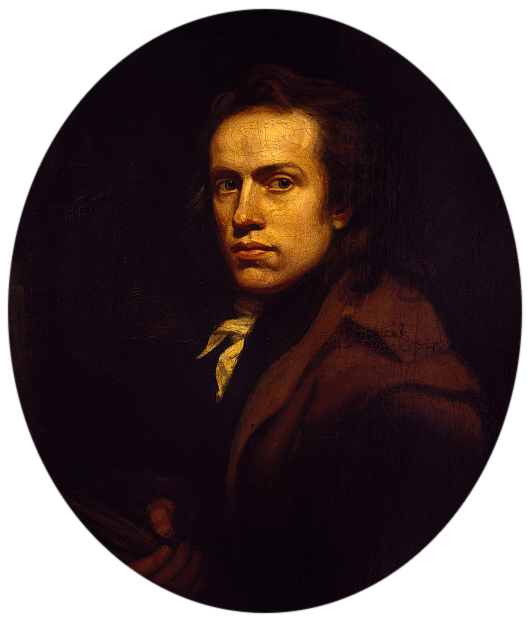
Self-Portrait by John Opie

Dramma Barocco e Radici Cornish

Lo stile di Opie è profondamente radicato nella tradizione barocca, un movimento noto per la sua teatralità, intensità emotiva e uso drammatico della luce. L'influenza di Caravaggio e Rembrandt – artisti maestri del chiaroscuro – è chiaramente evidente nell'opera di Opie. Il netto contrasto tra le aree illuminate del volto e dell'abbigliamento e le ombre profonde che avvolgono lo sfondo crea un senso di profondità e volume, attirando la nostra attenzione sulla figura centrale. Questa tecnica non era puramente estetica; era una scelta deliberata per trasmettere uno stato emotivo potente: in questo caso, una miscela di serietà, intelligenza e forse persino malinconia. Nato a Trevellas, in Cornovaglia, la sensibilità artistica di Opie fu profondamente plasmata dalla sua eredità cornish, evidente nella rudezza dei suoi lineamenti e nelle tonalità terrose che dominano la tavolozza.

Uno Studio di Forma e Texture

Oltre all'illuminazione drammatica, un esame più attento rivela la meticolosa attenzione di Opie per il dettaglio. L'artista impiega abilmente le linee per definire i contorni del viso, dei vestiti e dei capelli, creando un senso di solidità e forma. La stratificazione del colore – una tecnica nota come impasto – aggiunge consistenza alla superficie, in particolare nella resa del tessuto drappeggiato sulle sue spalle e nei delicati dettagli delle mani. Si notino le sottili variazioni di colore e tono che suggeriscono il gioco della luce su diverse superfici. Questa attenta osservazione ed esecuzione dimostrano l'impegno di Opie verso il realismo, un marchio distintivo del suo stile.

Simbolismo e la Ritrattistica della Mente

Il ritratto trascende la semplice somiglianza; è una rappresentazione simbolica del mondo interiore dell'artista. Lo sguardo diretto invita al coinvolgimento, suggerendo che Opie non stia semplicemente presentando se stesso, ma offrendo un invito a condividere i suoi pensieri. L'espressione seria – tratto distintivo di molti autoritratti di questo periodo – accenna all'intelligenza, all'introspezione e forse anche a un tocco di malinconia. Considerando il contesto storico – la fine del XVIII secolo era un'epoca di fermento intellettuale e cambiamento sociale – il ritratto di Opie può essere interpretato come un'esplorazione dell'identità in un mondo in rapida evoluzione. La scelta di ritrarre se stesso solo rafforza questo senso di riflessione interna, suggerendo che l'artista stia affrontando questioni profonde sul proprio posto nella società e sul suo ruolo di forza creativa.

Ulteriori Approfondimenti

Domande e risposte

Quali tecnica e stile caratterizzano "Autoritratto" di John Opie?

In "Autoritratto", la tecnica del Olio su tela incontra il movimento Barocco.

In che modo lo stile e l'epoca si incontrano in "Autoritratto" di John Opie?

"Autoritratto" appartiene al movimento Barocco, e il suo autore ha operato nell'epoca Età Moderna.

Con quale tecnica è realizzato "Autoritratto"?

"Autoritratto" è realizzata con Olio su tela.


Biografia dell'artista

John Opie (1761–1807): The Cornish Wonder and His Enduring Legacy

John Opie, born Mithian, nr. St Agnes, Cornwall in 1761, emerged as one of the most remarkable artistic figures of his generation—a testament to talent nurtured against considerable odds. His story is a compelling narrative of raw ability elevated by circumstance, rising from a carpenter’s son to become a celebrated portraitist and history painter, a Royal Academician, and an influential voice within the British art world. Opie's early life was characterized by an astonishing aptitude for both drawing and mathematics—a duality that perhaps informed his meticulous approach to composition and form. Even as a young boy, he demonstrated an independent spirit, establishing an evening school to teach reading, writing, and arithmetic to local children while simultaneously mastering Euclid’s geometry. This thirst for knowledge, coupled with his artistic inclination, was initially met with resistance from his father, who insisted on an apprenticeship in carpentry—a pragmatic decision that nevertheless acknowledged the burgeoning potential within his son's creative spirit.

Mentorship, London, and Royal Patronage

Fate intervened decisively when Dr. John Wolcot, a physician and satirist whose discerning eye recognized Opie’s extraordinary talent, entered into his life as a mentor. Wolcot—himself an amateur artist—recognized Opie’s innate gifts and championed him relentlessly, securing his release from the carpentry apprenticeship and transporting him to London where he established himself as a portrait painter with considerable success. Wolcot skillfully presented Opie as a self-taught prodigy (“The Cornish Wonder”), capturing the imagination of the London art scene and drawing comparisons to masters like Caravaggio and Velázquez—a judgment delivered by none other than Sir Joshua Reynolds, who lauded Opie’s mastery of chiaroscuro without ever having witnessed Rembrandt’s work. This initial endorsement propelled Opie's career forward with breathtaking speed. Commissions poured in from wealthy patrons eager to adorn their homes with portraits depicting themselves and their families—individuals whose likenesses Opie captured with remarkable sensitivity and accuracy. His residence on Castle Street became a hub of fashionable society, attracting artists, writers, and intellectuals alike—a crucible where Opie honed his craft and cultivated connections that would prove invaluable throughout his artistic life.

A Painter's Vision: From Cornish Rustic Scenes to Historical Grandeur

Opie’s artistic vision extended far beyond the confines of portraiture; he possessed an ardent desire to engage with grand historical narratives—a ambition that led him to explore history painting and ultimately culminated in monumental canvases like *The Assassination of James I* (1786) and *The Murder of Rizzio* (1787). The latter work, particularly, garnered immediate acclaim and propelled Opie into the spotlight as a leading figure within the Royal Academy—where he was elected an Associate in 1790 and full member in 1805. These historical paintings demonstrated a profound understanding of dramatic lighting—a technique heavily influenced by Rembrandt—and a commitment to conveying emotional intensity with breathtaking realism. Opie’s meticulous attention to detail, combined with his masterful command of composition, cemented his reputation as one of Britain's foremost painters and established him as an artist capable of capturing not only physical likeness but also the psychological complexities of his subjects.

A Legacy Forged in Light and Shadow

Opie’s later life was marked by both professional triumph and personal sorrow—his first marriage dissolving in 1796 amidst considerable heartache. However, he found solace and companionship with Amelia Alderson, a writer and abolitionist whom he married in 1798—a union that fostered mutual intellectual stimulation and provided him with unwavering support. Opie’s dedication to his craft continued unabated until his untimely death in April 1807 at the age of 46—leaving behind an astonishing oeuvre comprising over 500 portraits and 250 other paintings—a testament to a lifetime devoted to artistic excellence. His influence extended beyond his own creations; he championed the establishment of a national gallery—a visionary concept that would eventually materialize in London—and offered astute commentary on the evolving landscape of British art, shaping perceptions of artistic merit and advocating for the importance of visual culture. John Opie’s enduring legacy resides not merely in the beauty of his paintings but also in his unwavering belief in the transformative power of art—a conviction that continues to inspire artists and scholars alike.
John Opie

John Opie

1761 - 1807 , Regno Unito

Dettagli rapidi

  • Artistic Movement Or Style: Historical & Portraiture
  • Artists Who Influenced This Artist:
    • Sir Joshua Reynolds
    • Dr. John Wolcot (Peter Pindar)
  • Date Of Birth: 1761
  • Date Of Death: 1807
  • Full Name: John Opie
  • Nationality: British
  • Notable Artworks: ['Shakespeare Gallery works']
  • Place Of Birth: Trevellas, UK
Esplora le opere d'arte organizzate per temi, stili e caratteristiche.


































