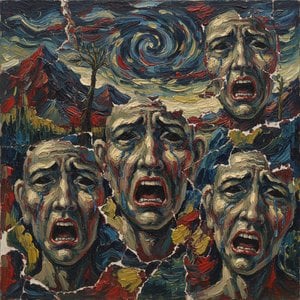
Acrobat XVI or Fighter di Georges Rouault, riproduzione di un dipinto a olio realizzato a mano da un maestro d'arte
Anteprima in scala reale Anteprima in AR Passa alle stampe Passa all'immagine digitale Invia
Dettagli opera Guida Aggiungi ai preferiti Scarica Simili Radiografia Slideshow Domande e risposte Scarica presentazione Statistiche

Acrobat XVI or Fighter Riproduzione di un dipinto a olio dipinto a mano

Experience Georges Rouault’s ‘Acrobat XVI,’ a dramatic Expressionist painting of a nude figure in thick impasto. Intense color & raw emotion capture vulnerability & struggle. Explore this unique 20th-century artwork.

Scopri Georges Rouault (1871-1958), pittore francese espressionista noto per temi religiosi, figure emarginate e tecnica ispirata alle vetrate. Un artista chiave del XX secolo!

L'opera d'arte visualizzata in questa pagina è protetta dalle leggi sul diritto d'autore, il che significa che non possiamo legalmente creare o vendere una riproduzione identica. Tale protezione è garantita da accordi internazionali quali la Convenzione di Berna e dalle leggi nazionali, incluse quelle stabilite da Legge sul copyright degli Stati Uniti - Titolo 17. Tutti i diritti riservati. Le immagini presenti su questo sito sono protette da copyright e non possono essere riprodotte o utilizzate senza l'autorizzazione scritta di WahooArt.com o dei rispettivi proprietari del copyright.

Come alternativa rispettosa e legale, offriamo opere d'arte personalizzate e dipinte a mano, ispirate all'originale. I nostri artisti esperti e professionisti studiano con cura lo stile, l'atmosfera e l'essenza artistica dell'opera originale per creare un pezzo nuovo e unico che evochi la stessa emozione, pur rimanendo una creazione originale a pieno titolo.

Questo metodo è pienamente conforme alle normative sul diritto d'autore poiché non prevede la copia o la duplicazione dell'opera protetta. Si tratta invece di una rielaborazione creativa: un nuovo dipinto che trae ispirazione dall'originale, senza tuttavia esserne identico.

Riproduzione a olio fatta a mano

Olio su tela dipinto a mano nelle tue dimensioni e con la tua cornice, realizzato su ordinazione dai nostri artisti. ( Passa alle stampe Passa all'immagine digitale)

Corner sample of the P118B picture frame: polistirene stampato, 5 cm wide and 3 cm thick
P118B €10
Corner sample of the P118H picture frame: polistirene stampato, 5 cm wide and 3 cm thick
P118H €10
Corner sample of the P118W picture frame: polistirene stampato, 5 cm wide and 3 cm thick
P118W €10
Corner sample of the P438Z picture frame: polistirene stampato, 5.5 cm wide and 3.5 cm thick
P438Z €10
Corner sample of the P508JH picture frame: polistirene stampato, 7 cm wide and 3.5 cm thick
P508JH €12
Corner sample of the P508YH picture frame: polistirene stampato, 7 cm wide and 3.5 cm thick
P508YH €12
Corner sample of the P805H picture frame: polistirene stampato, 5 cm wide and 3.5 cm thick
P805H €10
Corner sample of the P805Z picture frame: polistirene stampato, 5 cm wide and 3.5 cm thick
P805Z €10
Corner sample of the P919BZ picture frame: polistirene stampato, 7 cm wide and 3.5 cm thick
P919BZ €10
Corner sample of the P919G picture frame: polistirene stampato, 7 cm wide and 3.5 cm thick
P919G €10
Corner sample of the P919XJ picture frame: polistirene stampato, 7 cm wide and 3.5 cm thick
P919XJ €10
Corner sample of the P959ZH picture frame: polistirene stampato, 5 cm wide and 3 cm thick
P959ZH €10
Corner sample of the P968JZ picture frame: polistirene stampato, 6 cm wide and 4 cm thick
P968JZ €12
Corner sample of the W106C picture frame: legno massello, 5 cm wide and 3 cm thick
W106C €8
Corner sample of the W218G picture frame: legno massello, 5 cm wide and 3 cm thick
W218G €10
Corner sample of the W218JH picture frame: legno massello, 5 cm wide and 3 cm thick
W218JH €8
Corner sample of the W218Y picture frame: legno massello, 5 cm wide and 3 cm thick
W218Y €10
Corner sample of the W307PJ picture frame: legno massello, 6 cm wide and 3 cm thick
W307PJ €10
Corner sample of the W316G picture frame: legno massello, 6 cm wide and 3 cm thick
W316G €10
Corner sample of the W316PJ picture frame: legno massello, 6 cm wide and 3 cm thick
W316PJ €8
Corner sample of the W316Y picture frame: legno massello, 6 cm wide and 3 cm thick
W316Y €10
Corner sample of the W398PJ picture frame: legno massello, 5 cm wide and 3 cm thick
W398PJ €8
Corner sample of the W4111J picture frame: legno massello, 6.5 cm wide and 3.5 cm thick
W4111J €10
Corner sample of the W500HY picture frame: legno massello, 7 cm wide and 5 cm thick
W500HY €15
Corner sample of the W500JH picture frame: legno massello, 7 cm wide and 5 cm thick
W500JH €15
Corner sample of the W692G picture frame: legno massello, 8 cm wide and 4 cm thick
W692G €12
Corner sample of the W849H picture frame: legno massello, 5 cm wide and 3 cm thick
W849H €8
Corner sample of the W940BG picture frame: legno massello, 7.5 cm wide and 4.5 cm thick
W940BG €15
Corner sample of the W953PJ picture frame: legno massello, 6 cm wide and 3.5 cm thick
W953PJ €8

Formato standard
su misura
CM
INCH

Scegli tra le nostre dimensioni predefinite, che rispettano le proporzioni originali dell'opera d'arte.

larghezza
altezza

Inserisci la larghezza e l'altezza desiderate, per adattarle alla tua cornice o alla tua parete. Trattandosi di un'opera dipinta a mano, in caso di dimensioni con un formato differente, l'artista può estendere leggermente il dipinto oltre i bordi dell'immagine o ritagliare una piccola parte — la scelta spetta a te. Ti invieremo un mockup digitale da approvare prima che la realizzazione abbia inizio. L'immagine mostrata in questa pagina non rappresenta il risultato finale — solo il mockup lo fa.

Esempi di ciò che può essere modificato: sostituire il volto con una foto del cliente; aggiungere un animale domestico (ad esempio, sostituire un gatto con un cane); inserire un messaggio nascosto nello sfondo; cambiare il paesaggio o gli elementi dello sfondo.
Dopo l'ordine, il team di WahooArt.com contatterà il cliente via e-mail per ricevere le istruzioni e fornirà un'anteprima del mockup

Consegna in tutto il mondo () in 3/4 settimane anziché nelle normali 5 settimane. (8 Novembre). Nessun compromesso sulla qualità.

Spedizione espressa gratuita in tutto il mondo
Tela in lino di alta qualità
Assicurazione completa sulla spedizione
Garanzia di rimborso dei dazi doganali
Garanzia di fedeltà cromatica assoluta
Politica di reso entro 100 giorni (solo per difetti di fabbricazione)
Garanzia di rimborso al 100%
Offerta per acquisti multipli

Prezzo totale

€ 243

Acrobat XVI or Fighter

Tecnica di riproduzione

Dimensioni riproduzione

-

Prezzo finale calcolato

€ 243

Informazioni rapide

  • Artist: Georges Rouault
  • Artistic style: Dramatic
  • Location: Private Collection
  • Medium: Oil on Canvas
  • Movement: Expressionism

Quiz d'arte

Per ogni domanda è presente una sola risposta corretta.

Domanda 1:
What artistic movement is Georges Rouault's "Acrobat XVI or Fighter" primarily associated with?
Domanda 2:
Describe the dominant technique employed in creating this painting.
Domanda 3:
What is a key symbolic element conveyed by the dark background of "Acrobat XVI or Fighter"?
Domanda 4:
The artist's upbringing influenced his artistic style. Where was Georges Rouault born?
Domanda 5:
What is the primary focus of the figure’s pose and expression in “Acrobat XVI or Fighter”?

Georges Rouault’s Acrobat XVI: A Testament to Suffering and Spiritual Resilience

The painting “Acrobat XVI,” by Georges Rouault (1871-1958), stands as a hauntingly beautiful emblem of existential anguish and unwavering faith—a dichotomy that defines Rouault's artistic legacy. Born in Paris during the turbulent aftermath of the Commune, Rouault’s formative years instilled within him an acute awareness of human vulnerability and the pervasive presence of sorrow, sentiments he relentlessly pursued throughout his prolific career. This early exposure to societal upheaval profoundly influenced his artistic vision, shaping a style characterized by stark contrasts—dark contours embracing luminous color fields—a technique directly derived from his apprenticeship in stained glass. Rouault’s distinctive approach wasn't merely stylistic; it stemmed from a deeply rooted spiritual conviction. His mother, a devout Catholic, instilled within him a profound empathy for the downtrodden and afflicted, themes that would permeate his canvases with unwavering consistency. The painting itself depicts a nude male figure contorted in an acrobatic pose—a deliberate allusion to medieval iconography where acrobats symbolized Christ’s ascension into heaven, representing triumph over death despite suffering. This visual metaphor underscores Rouault's belief that even amidst despair and decay, divine grace persists. Technically masterful, “Acrobat XVI” employs thick impasto—a technique wherein paint is applied in heavy layers—creating a palpable textural surface that amplifies the emotional impact of the artwork. The artist’s deliberate use of dark contours delineates the figure's musculature and skin tones with intense reds, mirroring the dramatic chiaroscuro employed by Caravaggio and Rembrandt. These bold hues serve not merely to illuminate but also to heighten the sense of drama and torment—a characteristic element of Rouault’s oeuvre. The flattened perspective contributes to the painting’s immediacy, eschewing traditional depth cues in favor of conveying raw emotion unfiltered. Beyond its formal qualities lies a rich tapestry of symbolism. The acrobatic posture itself embodies resilience and defiance against adversity, mirroring the biblical narrative of Christ's crucifixion—a poignant reminder that beauty can emerge from pain. Rouault’s meticulous attention to detail—the clenched fists, the downward gaze—captures the psychological complexities inherent in human experience. He seeks not to portray idealized perfection but rather to confront viewers with unflinching honesty about the realities of suffering and mortality. Ultimately, “Acrobat XVI” transcends mere representation; it aspires to evoke a visceral response—a feeling of profound sorrow mingled with unwavering hope. It’s a painting that compels contemplation, prompting us to grapple with fundamental questions concerning faith, resilience, and the enduring power of artistic expression. Its enduring appeal lies in its ability to communicate universal truths about the human condition—a testament to Rouault's genius as both an artist and a humanist.

Domande e risposte

Dove dovrebbe essere appesa una riproduzione di "Acrobat XVI or Fighter" di Georges Rouault?

Con il suo formato Portrait, una riproduzione di "Acrobat XVI or Fighter" è ideale per un Living Room.

Qual è la luminosità di "Acrobat XVI or Fighter" di Georges Rouault?

I colori di "Acrobat XVI or Fighter" presentano una luminanza Dark.

Dove posso trovare le statistiche relative a "Acrobat XVI or Fighter" di Georges Rouault?

È disponibile una pagina Statistiche per "Acrobat XVI or Fighter", che illustra le visite mensili dell'opera e delle altre creazioni dell'artista, con dettagli relativi a paese e lingua.


Biografia dell'artista

La Primi Anni e la Formazione

Georges Henri Rouault, pittore, disegnatore e incisore francese, nacque a Parigi il 27 maggio 1871, in una famiglia modesta. Sua madre incoraggiò il suo amore per le arti e, all'età di 14 anni, iniziò un apprendistato come vetraio e restauratore, che durò fino al 1890. Questa esperienza precoce influenzò probabilmente il suo stile pittorico maturo, caratterizzato da contorni neri pesanti e colori brillanti, reminiscenti del vetro piombato.

La Carriera Artistica

Durante il suo apprendistato, Rouault frequentò corsi serali alla scuola di belle arti e successivamente entrò all'École des Beaux-Arts nel 1891, dove studiò sotto Gustave Moreau. I suoi primi lavori mostrano un simbolismo nell'uso del colore, riflettendo l'influenza di Moreau. Dopo la morte di Moreau nel 1898, Rouault fu nominato curatore del museo Moreau a Parigi.

Fauvismo ed Espressionismo

Rouault incontrò artisti importanti come Henri Matisse, Albert Marquet, Henri Manguin e Charles Camoin, il che lo portò al movimento Fauvista, con Matisse come leader. Il suo uso di contrasti netti ed emotività fu influenzato da Vincent van Gogh. Le sue caratterizzazioni di personalità grottesche enfatizzate ispirarono i pittori espressionisti.

Opere Notabili e Mostre

* Nel 1891, Rouault dipinse "La Via della Croce". * A partire dal 1895, partecipò a importanti mostre pubbliche, tra cui il Salon d'Automne, che contribuì a fondare. * Nel 1907, Rouault intraprese una serie di dipinti dedicati a cortigiane, clown e prostitute, interpretati come critica morale e sociale.

Eredità e Vita Successiva

Rouault si dedicò alla pittura dal 1917, con la fede cristiana che informava il suo lavoro. Creò disegni per il balletto "Il Figliol Prodigo" di Diaghilev nel 1929. Nel 1930, iniziò a esporre in paesi stranieri, principalmente a Londra, New York e Chicago. Rouault morì a Parigi il 13 febbraio 1958, lasciando dietro di sé un'eredità come uno dei più appassionati artisti cristiani del XX secolo. Importante: Alla fine della sua vita, Rouault bruciò 300 delle sue opere, stimate valere oltre cinquecento milioni di franchi oggi.
Georges Rouault

Georges Rouault

1871 - 1958 , Francia

Dettagli rapidi

  • Artisti Influenti:
    • Gustave Moreau
    • Vincent van Gogh
    • Henri Matisse
  • Artisti Influenzati: ['Espressionisti']
  • Data Di Nascita: 27 maggio 1871
  • Luogo Di Nascita: Parigi, Francia
  • Movimento Artistico: Espressionismo, Fauvismo
  • Nazionalità: Francese
  • Nome Completo: Georges Rouault
  • Opere Notevoli:
    • La via della calvario
    • Dame Du Haut-Quartier
Esplora le opere d'arte organizzate per temi, stili e caratteristiche.