Anteprima in scala realeAnteprima in scala reale Anteprima ARAnteprima AR Passa a Stampe Passa a StampeAcquista il dipinto realizzato a mano Acquista il dipinto realizzato a mano InviaInvia
Dettagli operaDettagli opera Aggiungi ai preferiti Aggiungi ai preferiti Scarica immagineScarica immagine SimiliSimili RadiografiaRadiografia SlideshowSlideshow StatisticheStatistiche

Death on a Pale Horse

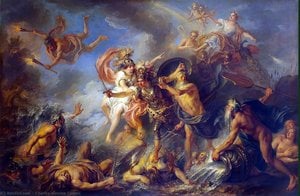
Benjamin West's 'Death on the Pale Horse' (1796) is a dramatic oil painting depicting an apocalyptic battle, showcasing sublime horror and complex symbolism from Revelation.

Scopri Benjamin West (1738-1820), artista americano pioniere e presidente della Royal Academy! Esplora i suoi dipinti storici, lo stile neoclassico e la sua eredità.

Acquista un'immagine digitale ad alta risoluzione e ottimizzata, di qualità nettamente superiore all'anteprima online.

Ogni file è meticolosamente preparato dai nostri specialisti interni attraverso l'uso di strumenti avanzati e un sapiente ritocco manuale. Garantiamo che ogni immagine presenti una chiarezza eccezionale, una precisione cromatica impeccabile e dettagli raffinati.

Il file finale viene consegnato via e-mail entro 72 ore, ottimizzato per un uso immediato in contesti professionali, editoriali e di stampa. Si tratta della stessa qualità affidata ai più prestigiosi studi di design, editori e gallerie d'arte.

Immagine Digitale

Scarica un file ad alta risoluzione per uso personale, per la stampa e per progetti creativi. (Passa a Stampe Passa a StampeAcquista il dipinto realizzato a mano Acquista il dipinto realizzato a mano)

Prezzo totale

$ 24,90

Incluso in ogni ordine di immagini digitali

Consegna digitale professionale e garantita

Quando scegli WahooArt.com, non riceverai solo un'immagine: riceverai un'opera d'arte digitale professionalmente ottimizzata, realizzata con la massima precisione e accompagnata da una garanzia di soddisfazione. Ecco tutto ciò che include il tuo ordine, automaticamente:

shipping_icon
Consegna rapida via email

Riceverai il file dell'immagine digitale ad alta risoluzione via email entro 72 ore dall'ordine, pronto per un uso immediato.

canvas_icon
File digitale ottimizzato dall'IA

La tua opera d'arte viene ottimizzata professionalmente attraverso l'uso di strumenti avanzati di intelligenza artificiale e una revisione manuale, garantendo il massimo livello di dettaglio, nitidezza e accuratezza cromatica.

insurance_icon
Riconsegna gratuita a vita

Hai eliminato o perso accidentalmente il tuo file? Non preoccuparti: te lo invieremo di nuovo in qualsiasi momento, gratuitamente.

tax_icon
Nessun costo di importazione, mai

Goditi la tua opera d'arte istantaneamente senza costi doganali, dazi o spese di spedizione: i download digitali sono sempre esenti da tasse.

color_icon
Garanzia di fedeltà cromatica

Garantiamo che la tua immagine digitale rifletta i colori originali con la massima fedeltà, grazie all'uso di strumenti professionali e a una gestione accurata del colore.

return_icon
Garanzia soddisfatti o rimborsati in 100 giorni

Se non sei soddisfatto della tua immagine digitale, la revisioneremo o ti rimborseremo il 100% entro 100 giorni, senza domande.

guarantee_icon
Garanzia di rimborso al 100%

Non sei soddisfatto? Ricevi un rimborso completo entro 100 giorni dal ricevimento del tuo file digitale, senza alcuna complicazione.

discount_icon
Sconti per ordini multipli

Acquista 3 immagini, risparmia il 10% - Acquista 5, risparmia il 15% - Acquista 10+, risparmia il 20%. Ideale per progetti creativi, gallerie e agenzie.

Informazioni rapide

  • Artistic style: Sublime, Dramatic lighting
  • Subject or theme: Death and Apocalypse
  • Title: Death on a Pale Horse
  • Movement: Neoclassicism
  • Year: 1796
  • Artist: Benjamin West
  • Influences: Dürer engraving

Quiz d'arte

Per ogni domanda è presente una sola risposta corretta.

Domanda 1:
What biblical book inspired Benjamin West’s ‘Death on a Pale Horse’?
Domanda 2:
In what year was ‘Death on a Pale Horse’ originally created (the first version)?
Domanda 3:
The pale horse in the painting symbolizes:
Domanda 4:
Benjamin West was known for his work in which artistic style?
Domanda 5:
Where is the original ‘Death on a Pale Horse’ painting currently housed?

The Genesis of Despair – Benjamin West’s “Death on the Pale Horse”

Benjamin West's "Death on a Pale Horse," painted in 1796, isn't merely a depiction of a biblical scene; it’s an immersive plunge into the heart of human anxiety and the sublime terror of impending doom. Born amidst the burgeoning intellectual currents of colonial America, West was a painter who defied easy categorization, seamlessly blending Neoclassical restraint with Romantic fervor. This particular work, one of three versions created around the same time, stands as a testament to his ability to capture not just outward appearances but also the profound emotional weight of historical and religious narratives. The painting’s genesis lies in the chilling verses of Revelation 6:7-8 – “And when he opened the fourth seal, I heard the voice of the fourth beast say, Come and see. And I looked, and behold a pale horse; and his name that sat on him was Death, and Hell followed with him.” West wasn’t simply illustrating scripture; he was grappling with the anxieties of his era – the turbulent political landscape of Europe, marked by revolution and war, and a growing sense of uncertainty about the future. The composition itself is deliberately chaotic, reflecting the apocalyptic imagery it portrays, yet grounded in a carefully constructed arrangement that draws the viewer into the maelstrom.

A Symphony of Darkness and Light – Technique and Style

West’s masterful technique elevates “Death on a Pale Horse” beyond a simple illustration. He employs a dramatic chiaroscuro—a stark contrast between light and shadow—to create an atmosphere thick with foreboding. The palette is dominated by deep, bruised purples, somber browns, and the sickly yellow of the pale horse itself, evoking a sense of decay and impending mortality. The figures are rendered with meticulous detail, their faces contorted in expressions of agony and despair, yet imbued with a haunting beauty. Notice particularly the angel on the left, his face etched with sorrow as he witnesses the carnage; his posture conveys both helplessness and profound grief. The use of loose brushstrokes in the background adds to the sense of movement and chaos, while more controlled strokes define the central figures, anchoring the scene within a framework of dramatic intensity. The painting’s scale—a monumental 447 cm x 764.5 cm—further amplifies its impact, enveloping the viewer in the horrifying spectacle.

Symbolism Woven into the Apocalypse – Horses, Angels, and Humanity

Beyond the immediate depiction of a battle between good and evil, “Death on a Pale Horse” is rich with symbolic meaning. The pale horse itself, ridden by Death, is the most potent symbol—a harbinger of destruction and decay. The accompanying figure of Hell, often depicted as a winged demon, reinforces this theme of ultimate annihilation. However, West doesn’t simply portray a passive victimhood; the painting also features angels engaged in fierce combat, representing the struggle between divine forces. The human figures scattered across the battlefield—some falling, some fleeing—represent humanity caught in the crossfire of cosmic conflict. The inclusion of various animals – horses, birds, and even a lion – adds layers of complexity to the symbolism, suggesting the indiscriminate nature of death and destruction. The overall effect is not merely a depiction of a single event but an exploration of universal themes of mortality, suffering, and the fragility of human existence.

A Legacy of Vision – Historical Context and Artistic Significance

“Death on the Pale Horse” emerged during a period of profound social and political upheaval in Europe. The French Revolution was raging, Napoleon’s armies were conquering vast territories, and anxieties about the future were widespread. West's painting reflects this atmosphere of uncertainty and fear, capturing the sense that order was collapsing and chaos reigned supreme. Furthermore, the work aligns with the broader artistic trends of the late 18th century, particularly the rise of the “Sublime”—a concept emphasizing awe-inspiring beauty combined with a sense of terror or dread. West’s painting exemplifies this aesthetic, evoking feelings of both fascination and horror in the viewer. It's considered one of his most significant works, alongside "The Death of General Wolfe" and "Benjamin Franklin Drawing Electricity from the Sky," solidifying his position as a pivotal figure in American art history. Reproductions of this powerful image continue to resonate with audiences today, reminding us of our shared vulnerability in the face of mortality.


Biografia dell'artista

Benjamin West: Un Pioniere dell'Arte Americana

  • Nato: 10 ottobre 1738, Springfield, Stati Uniti d'America
  • Morto: 11 marzo 1820

Primi Anni e Sviluppo Artistico

  • Benjamin West nacque in una famiglia modesta a Springfield, Pennsylvania. Suo padre gestiva un’osteria e la famiglia si trasferì successivamente a Newtown Square.
  • West dimostrò un talento artistico notevole fin da giovane, apprendendo presumibilmente tecniche pittoriche rudimentali dai nativi americani.
  • Ricevette una formazione scolastica limitata ma perseguì con passione il suo interesse artistico in modo indipendente.
  • La sua prima carriera si concentrò sulla ritrattistica in Pennsylvania.
  • Un momento cruciale fu l'incoraggiamento a dipingere "La Morte di Socrate", che differiva significativamente dalla calcografia originale e segnò una svolta nella sua carriera.
  • Nel 1760, viaggiò in Italia, studiando direttamente le opere dei maestri come Tiziano e Raffaello, e incontrando artisti neoclassici come Anton Rafael Mengs, Gavin Hamilton e Angelica Kauffmann.

Carriera a Londra e la Royal Academy

  • West si trasferì a Londra nel 1763 e divenne rapidamente una figura di spicco nella scena artistica britannica.
  • Fu eletto membro della Royal Academy e successivamente ne fu presidente dal 1792 fino alla sua morte nel 1820.
  • I suoi dipinti storici, come "La Partenza di Regolo", ottennero un notevole apprezzamento, guadagnandogli il soprannome di “l'Americana Raffaello”.
  • Promosse uno stile che incorporava abiti contemporanei nelle scene storiche, evidente soprattutto in "La Morte del Generale Wolfe", che sfidò le convenzioni artistiche tradizionali e suscitò dibattiti.

Stile Artistico e Opere Principali

  • Lo stile di West si evolse dalle prime influenze neoclassiche per incorporare elementi del Romanticismo più tardi nella sua carriera.
  • Opere notevoli includono:
    • La Morte del Generale Wolfe (1770) – Un'opera rivoluzionaria che fonde la narrazione storica con l'abbigliamento contemporaneo.
    • Teti Porta l'Armatura a Achille – Dimostra una padronanza dei temi classici e della composizione.
    • Le Tre Sorelle – Mostra la sua capacità di ritrarre soggetti allegorici.
    • La Paura di Astianatte – Una drammatica rappresentazione di una scena mitologica.
    • La Caverna della Disperazione – Esemplifica il suo stile romantico in evoluzione.
  • Il suo lavoro è caratterizzato dall'ambizione, dalla composizione dettagliata e dall'esplorazione di temi storici e mitologici.

Eredità e Significato Storico

  • Benjamin West lasciò un impatto duraturo sull'arte americana, aprendo la strada alla pittura storica e influenzando generazioni di artisti.
  • Svolse un ruolo cruciale nella definizione dell'identità dell'espressione artistica americana.
  • La sua presidenza della Royal Academy contribuì in modo significativo allo sviluppo dell'arte britannica.
  • L'eredità di West va oltre le sue singole opere; promosse un ambiente che incoraggiò e sostenne gli artisti americani emergenti che studiavano all'estero, tra cui Allston, Copley e Morse.
  • Il suo approccio innovativo alla pittura storica aprì la strada a futuri movimenti artistici e continua a ispirare artisti contemporanei e appassionati d'arte.
Benjamin West

Benjamin West

1738 - 1820 , Stati Uniti d'America

In sintesi

  • Artistic Movement Or Style: Neoclassicismo, pittura storica
  • Artists Or Movements Influenced By This Artist:
    • Edward William J. Savage
    • Copley
    • Allston
    • Morse
  • Artists Who Influenced This Artist:
    • Tiziano
    • Rafael
  • Date Of Birth: 10 ottobre 1738
  • Date Of Death: 11 marzo 1820
  • Full Name: Benjamin West
  • Nationality: Americano
  • Notable Artworks:
    • La Morte del Generale Wolfe
    • Tetide che porta l'armatura
    • Le Tre Sorelle
    • Lo Spavento di Astianatte
    • La Caverna della Disperazione
  • Place Of Birth: Springfield, USA