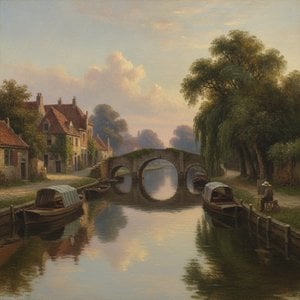
A Glimpse of Venetian Grandeur: The Giudecca, Venice by David Roberts
David Roberts’s “The Giudecca, Venice” isn't merely a depiction of a cityscape; it’s a carefully constructed tableau of light, atmosphere, and the enduring spirit of a city steeped in history. Painted in 1854, during his prolific period documenting the Near East and Europe, this work offers a remarkably intimate view of Venice from across the lagoon – a moment suspended between the bustling activity of the water and the dignified solidity of the island’s architecture. Roberts, a Scottish painter celebrated for his meticulous Orientalist scenes and pioneering lithographs, masterfully captures the unique character of Venice, imbuing it with a sense of both timeless beauty and vibrant life.
The painting immediately draws the eye to the shimmering expanse of the lagoon, rendered in layers of delicate blues and greens. The water isn’t simply a backdrop; it's an active participant in the scene, reflecting the light and subtly distorting the shapes of the buildings along the Giudecca peninsula. Roberts’s brushwork is remarkably controlled – precise yet fluid – creating a sense of depth and movement that belies the static nature of a painted image. Notice how he uses broken color to suggest the play of sunlight on the water's surface, mimicking the dappled effect of light filtering through the Venetian mist.
The Painter’s Eye: Technique and Style
Roberts was known for his exceptional technical skill, honed initially through an apprenticeship as a house painter. This foundational experience instilled in him a deep understanding of color mixing, perspective, and the application of paint – qualities that are evident throughout “The Giudecca.” He employed a technique often described as ‘plein air’ painting, working directly from observation to capture the fleeting effects of light and atmosphere. His palette is rich and nuanced, favoring subtle gradations of color rather than bold contrasts. The buildings themselves are rendered with remarkable detail – the weathered facades, the intricate window frames, and the delicate tracery of the arches all testify to Roberts’s meticulous attention to detail.
The painting's style leans towards Luminism, a movement emphasizing the effects of light and atmosphere. Roberts skillfully uses highlights and shadows to create a sense of volume and depth, drawing the viewer into the scene. The composition is carefully balanced, with the buildings arranged in a harmonious sequence that guides the eye across the canvas. There’s an almost photographic quality to the image – a testament to Roberts's keen observational skills and his ability to translate what he saw onto the canvas.
A Window into Victorian Venice
“The Giudecca, Venice” was created during a period of significant change in Europe. The Industrial Revolution was transforming society, while the rise of photography challenged traditional artistic practices. Roberts’s work reflects this dynamic environment – he embraced new techniques and approaches while remaining firmly rooted in the traditions of academic painting. His travels to the Middle East had profoundly influenced his artistic vision, imbuing his paintings with a sense of exoticism and cultural awareness.
The painting offers a valuable glimpse into Venice as it existed during the mid-19th century – a city grappling with the challenges of modernity while clinging fiercely to its rich history and traditions. The presence of numerous boats, including gondolas, speaks to the vital role that water played in Venetian life. The scene is alive with activity—merchants, laborers, and residents going about their daily routines. It’s a vibrant portrait of a city at the crossroads of East and West.
Symbolism and Emotional Resonance
Beyond its technical brilliance, “The Giudecca, Venice” possesses a subtle emotional resonance. The painting evokes a sense of nostalgia for a bygone era – a time when Venice was a powerful maritime republic and a center of trade and culture. There’s also an underlying feeling of melancholy—a recognition that this once-great city is now facing the challenges of tourism and environmental degradation. Yet, despite these concerns, Roberts's painting celebrates the enduring beauty and spirit of Venice, capturing its essence with remarkable clarity and grace.
Reproductions of “The Giudecca, Venice” offer a stunning way to bring this iconic image into your home or office. WahooArt’s high-quality reproductions faithfully capture the painting's rich colors and intricate details, allowing you to appreciate Roberts’s artistry for generations to come.



 Megtekintés
 Áttérés Nyomtatványra
 Küldés
 Megosztás
 Részletek

 Letöltés
 Hasonló darabok
 X-ray felvétel
 Diavetítés
 Statisztika


 Összes részlet megjelenítése






































 Az üvegkeretes opció csak 110 cm alatti méretben érhető el