Museolaatuisia giclée- tai kankaitaulun tulosteita nopealla tuotannolla ja joustavilla viimeistelyvaihtoehdoilla. ( Tilaa käsinmaalattu jäljennös Siirry digitaaliseen kuvaan)





























Valitse valmiista mitoistamme sellaiset, jotka vastaavat teoksen alkuperäisiä mittasuhteita.

Kirjoita tarvitsemasi leveys ja korkeus, jotta tuloste sopii kehyskokoon tai seinällesi. Tulostetta voidaan vain leikata, sitä ei voi koskaan tehdä suuremmaksi kuin alkuperäinen kuva, joten eri muotoinen koko aiheuttaa osan kuvasta katoamisen. Lähetämme sinulle digitaalisen mallikuvan hyväksyttäväksi ennen kuin aloitamme tulostuksen. Tällä sivulla näkyvä kuva ei näytä lopullista leikkausta — vain mallikuva näyttää sen.
Maailmanlaajuinen toimitus () 2 viikossa tavallisen 4–5 viikon sijaan. (27 lokakuu)
Lucretia
Replikaatin koko
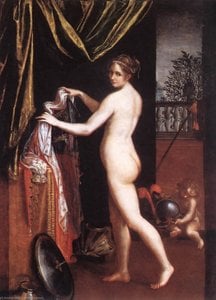
Lucas Cranach the Elder’s “Lucretia” stands as a cornerstone of German Renaissance art, embodying both exquisite craftsmanship and profound psychological insight. Painted around 1504 for Frederick III, Elector of Saxony—a patron deeply invested in humanist ideals—the artwork transcends mere visual representation to delve into themes of virtue, honor, and the devastating consequences of betrayal. The painting depicts Lucretia, wife of Sextus Tarquinius Superbus, Rome’s tyrannical king. Following a scandalous affair between Sextus and Lucretia's younger sister, Julia, Lucretia bravely took her own life to protect her honor after Sextus attempted to rape Julia.
Cranach meticulously captures the moment of Lucretia’s suicide—a woman draped in white linen, clutching a dagger—creating an image that is simultaneously serene and fraught with sorrow. The artist's masterful technique exemplifies the prevailing artistic sensibilities of his time. Executed on oak panel using oil paint, he employs chiaroscuro – dramatic contrasts between light and dark – to sculpt Lucretia’s form and imbue the scene with palpable emotion. The subtle shading highlights the delicate musculature of her torso and emphasizes the vulnerability conveyed by her gaze. Cranach's meticulous attention to detail extends beyond anatomy; he renders the drapery with remarkable realism, capturing folds and textures that contribute significantly to the painting’s overall atmosphere.
Beyond its technical brilliance, “Lucretia” resonates deeply with mythological symbolism rooted in Roman legend. Lucretia herself is a figure from Virgil's Aeneid, representing chastity and virtue—qualities deemed paramount by Renaissance humanists. The dagger symbolizes sacrifice and defiance against oppression, reflecting the moral dilemma faced by Lucretia as she chose honor over survival. The painting’s emotional impact remains powerfully felt centuries later. Cranach's portrayal of grief is understated yet profound, conveying a sense of tragic beauty that speaks to universal human experiences. “Lucretia” serves not merely as a depiction of an historical event but as a meditation on the enduring importance of moral integrity and the devastating repercussions of injustice.
The painting depicts a woman holding a sword in her hand. She appears to be wearing a necklace around her neck and is draped in white linen. The artwork is an oil on panel painting.
Lucas Cranach vanhempi:n "Lucretia" on tekijänoikeusvapaa – sen tekijänoikeussuoja on päättynyt. Tekijänoikeuden voimassaolo lasketaan taiteilijan kuolinvuodesta, joka oli 1553.
Lucas Cranach vanhempi:n "Lucretia" välittää Calm tunteen yleisessä Elegant tunnelmassa.
Teoksen Lucas Cranach vanhempi:n "Lucretia" tunnetila on määritelty olevan Calm. Se tiivistää teoksen välittämän tunnelman.


1472 - 1553 , Saksa

Explore the profound precision of German Renaissance art. From Albrecht Dürer’s intricate engravings to the soulful depth of Northern Renaissance portraiture, discover a masterclass in detail, humanism, and technical mastery for the true art enthusiast.

Explore the profound beauty of mythological figures through the lens of art history. From Renaissance masterpieces to custom oil reproductions, discover how legendary tales of heroism and divinity are immortalized in fine art for discerning collectors.

Embark on a sophisticated journey through the eternal allure of mythological art. Discover how master painters breathe life into ancient legends, from Greek deities to Baroque masterpieces, and learn to curate these timeless narratives within your own exquisite art collection.

 Katso seinällä
 Lähetä
 Jaa
Jaa
 Tarkemmat tiedot
 Opas
Opas

 Lataa kuva
 Samanlaisia kohteita
 Röntgenkuvaus
 Diaesitys
 Tilastot


 Lue lisää









 Lasivaihtoehto on saatavilla vain alle 110 cm kokoisille teoksille