

Käsinmaalattu öljyväri kankaalle haluamassasi koossa ja kehyksissä, taiteilijoidemme valmistamana tilauksesta. ( Vaihda tulosteeseen Siirry digitaaliseen kuvaan)





























Valitse valmiista mitoistamme sellaiset, jotka vastaavat teoksen alkuperäisiä mittasuhteita.

Voit syöttää omat mitat sopimaan tiettyyn kehykseen tai tilaan. Jos valitsemasi koko ei vastaa alkuperäisen kuvan mittasuhteita, rajaamme taideteoksen tai jatkamme maalausta käsin maalatuilla elementeillä. Digitaalinen esikatselu lähetetään hyväksyttäväksi ennen tuotannon aloittamista.
Huomioithan, että näytöllä oleva esikatselu ei vastaa todellista rajausta tai jatkamista. Vain digitaalinen mallikuva näyttää lopullisen sommittelun tarkasti.
Vaikka mittatilaustyöt ovat mahdollisia, suosittelemme valitsemaan mitan ennalta määritetystä listasta alkuperäisten mittasuhteiden säilyttämiseksi.
Maailmanlaajuinen toimitus () 3–4 viikossa tavallisen 5 viikon sijaan. (23 syyskuu). Laadusta ei tingitä.


Untitled (940)
Replikaatin koko
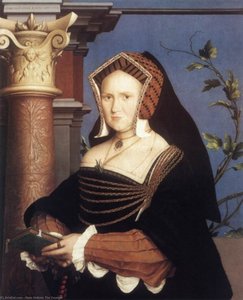
In the quiet presence of Hans Holbein the Younger’s Untitled (940), one does not merely observe a portrait; one enters a profound dialogue with history. This captivating work depicts a woman of dignified composure, her likeness rendered with that unmistakable Northern Renaissance precision that has captivated collectors for centuries. Set against a subtly textured backdrop, the composition is anchored by two stately columns and the organic silhouette of a prominent tree—elements that do more than frame the subject; they ground her within a carefully constructed universe of stability and growth. As you gaze upon her, there is an immediate sense of encountering a soul preserved in time, captured with a level of detail that feels startlingly modern even five centuries later.
The technical mastery on display is nothing short of breathtaking. Holbein, a titan of the 16th century, utilizes the medium of oil on canvas to achieve a luminous, almost breathing quality in the subject's skin tones. Through the meticulous layering of thin glazes, he captures the softest nuances of light and shadow, allowing the textures of her black dress and ruffled collar to emerge with tactile clarity. This technique creates a sense of depth that invites the eye to linger on the subtle folds of fabric and the delicate way she holds a book or piece of paper, suggesting an intellect as refined as her appearance. For the discerning interior designer, such a piece offers a focal point of unparalleled sophistication, bringing a sense of academic weight and timeless elegance to any curated space.
Beyond the surface beauty lies a rich tapestry of symbolic meaning, deeply rooted in the humanist spirit of the Tudor era. During his tenure at the English court under Henry VIII, Holbein became a master at embedding subtle narratives within his portraiture. Here, the architectural columns serve as emblems of authority and permanence, reflecting the social standing of a noblewoman within the rigid hierarchy of the period. In contrast, the inclusion of the tree introduces a vital element of nature, representing life, resilience, and an enduring beauty that transcends the fleeting moments of human existence. This duality between the man-made and the natural creates a balanced, harmonious composition that resonates with emotional depth.
The emotional impact of this masterpiece is found in its quietude. There is no grand gesture or dramatic movement; instead, Holbein relies on the woman's steady gaze to bridge the gap between the past and the present. Her expression, a delicate blend of inner contemplation and quiet grace, prompts the viewer to reflect on themes of dignity and perhaps even a hint of unspoken vulnerability. To possess a reproduction of this work is to bring more than just decoration into a home; it is to invite an atmosphere of intellectual curiosity and serene reflection. It remains a testament to Holbein’s unique ability to transform mere pigment into a profound human experience, making it an essential acquisition for those who value art that speaks to the heart as much as the eye.


1497 - 1543 , Saksa

Explore the captivating world of Angelo Chiacchio, a master of mid-century American illustration. Discover his evolution, signature style, and lasting impact on commercial art & design. Learn about his legacy at the Museum of American Illustration.

Tutustu 10 kuuluisimpaan mustasävyiseen mestariteokseen! Rembrandtista Manetiin, syvenny taiteen historiaan ja synkkiin tunnetiloihin. Laadukkaat taidevedokset sisustukseesi WahooArt.com:ssa. Tutustu kokoelmaamme verkossa!
Explore the captivating world of Edmund Dulac, a master of Golden Age illustration! Discover his enchanting fairy tales, Art Nouveau style, and lasting influence on art & design. Learn about *The Rubaiyat* and more.
Explore the captivating world of Victorian illustration! Discover Pre-Raphaelite influences, key artists like Rossetti & Stephens, and the era's rich narrative detail. A deep dive for art enthusiasts.

Explore the captivating world of Kay Rasmus Nielsen, a celebrated Golden Age illustrator renowned for his Art Nouveau fairy tale art & Disney contributions. Discover his unique style, enduring legacy, and how to collect his enchanting works.

 Katso seinällä
 Lähetä
 Jaa
Jaa
 Tarkemmat tiedot
 Opas
Opas

 Lataa kuva
 Samanlaisia kohteita
 Röntgenkuvaus
 Diaesitys
 Tilastot

 Lue lisää







 Lasivaihtoehto on saatavilla vain alle 110 cm kokoisille teoksille




![Jean de Dintevillen ja Georges de Selven kaksoismuotokuva (tunnetaan myös nimellä Suurlähetystöt) [yksityiskohta]](/media/artworks/images-thumb/42/81/42813dc49b2f72bce897aaf8b747ad5b.jpg)


