The Soul of Czech Expressionism: The Life and Vision of Michael Rittstein
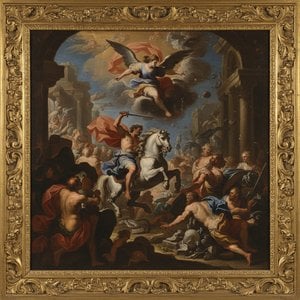
Born in the historic heart of Prague in 1949, Michael Rittstein emerged from a landscape shaped by the profound complexities of Soviet influence and a burgeoning intellectual curiosity for surrealist thought. His early years were not merely a period of growth but a deep immersion into the aesthetic traditions that would later define his unique visual language. Studying at the prestigious Academy of Fine Arts in Prague under the guidance of Arnošt Paderlík, Rittstein absorbed the monumental grandeur of Baroque aesthetics. This foundational training, centered on the dramatic storytelling found in classical frescoes, instilled in him a lifelong preoccupation with capturing fleeting, emotionally charged moments through ambitious and large-scale narratives.
The evolution of Rittstein’s style is a fascinating journey from the heavy shadows of the Old Masters to the ethereal realms of symbolic abstraction. In his formative stages, he found himself deeply moved by the theatrical compositions and emotive color palettes characteristic of the Baroque era. By meticulously studying the techniques of legends such as Caravaggio and Rembrandt, he mastered the delicate art of chiaroscuro and psychological realism, learning how to use light and shadow to pull the viewer into a state of introspection. However, Rittstein was never content with mere representation; he possessed a restless, surrealist impulse that drove him to push beyond the boundaries of the visible world.
Symbolism and the Mastery of Concept
As his career progressed, Rittstein underwent a transformative shift, moving away from purely representational art toward a more profound symbolic abstraction. This transition allowed him to explore the depths of the subconscious, utilizing fantastical narratives to challenge conventional perceptions of reality. His work became a playground for the imagination, where the boundaries between the tangible and the dreamlike began to blur. This period marked his emergence as a prominent figure in Czech figural painting, particularly through his involvement with the influential free grouping known as 15/15.
What distinguishes Rittstein’s oeuvre is his commitment to systematic conceptualization. For him, the act of painting is an intellectual struggle—a deliberate process of wrestling with complex ideas and distilling raw human emotions into potent visual metaphors. His creative methodology involves:
- Conceptual Distillation: The transformation of abstract thoughts into tangible imagery.
- Narrative Depth: Crafting stories that resonate far beyond the initial surface level of the canvas.
- Observational Nuance: Drawing inspiration from the rhythmic pulse of urban life and the quiet serenity of rural landscapes.
A Lasting Legacy in Contemporary Art
Throughout his decades of dedicated practice, Rittstein has maintained a remarkable ability to weave the intricacies of human relationships into his compositions. His paintings serve as a mirror to the human condition, reflecting both the chaos of modern existence and the profound intimacy of personal connection. By blending the dramatic weight of Baroque tradition with the limitless possibilities of surrealist symbolism, he has secured his place as a vital voice in Czech Expressionism.
Today, Rittstein’s work stands as a testament to the power of narrative art. His ability to observe the world with both a critical eye and an empathetic heart allows his paintings to breathe with a palpable sense of life. Whether exploring the quietude of a landscape or the psychological tension of a portrait, his legacy remains rooted in the belief that art should not only show us what we see but also reveal what we feel.