
Museum-quality giclée or canvas print with fast production and flexible finish options. ( Buy Hand Made Painting Switch to Digital Image)
Pick from our preset sizes that match the artwork's original proportions.

Type the width and the height you need, to fit your frame or your wall. A print can only be cut, never made bigger than the picture, so a size with a different shape loses a part of the image. We send you a digital mockup to approve before we print anything. The picture shown on this page does not show the real cut — only the mockup does.
Worldwide Delivery () in 2 weeks instead of standard 4/5 weeks. (23 October)
Benjamin Lay
Reproduction Size
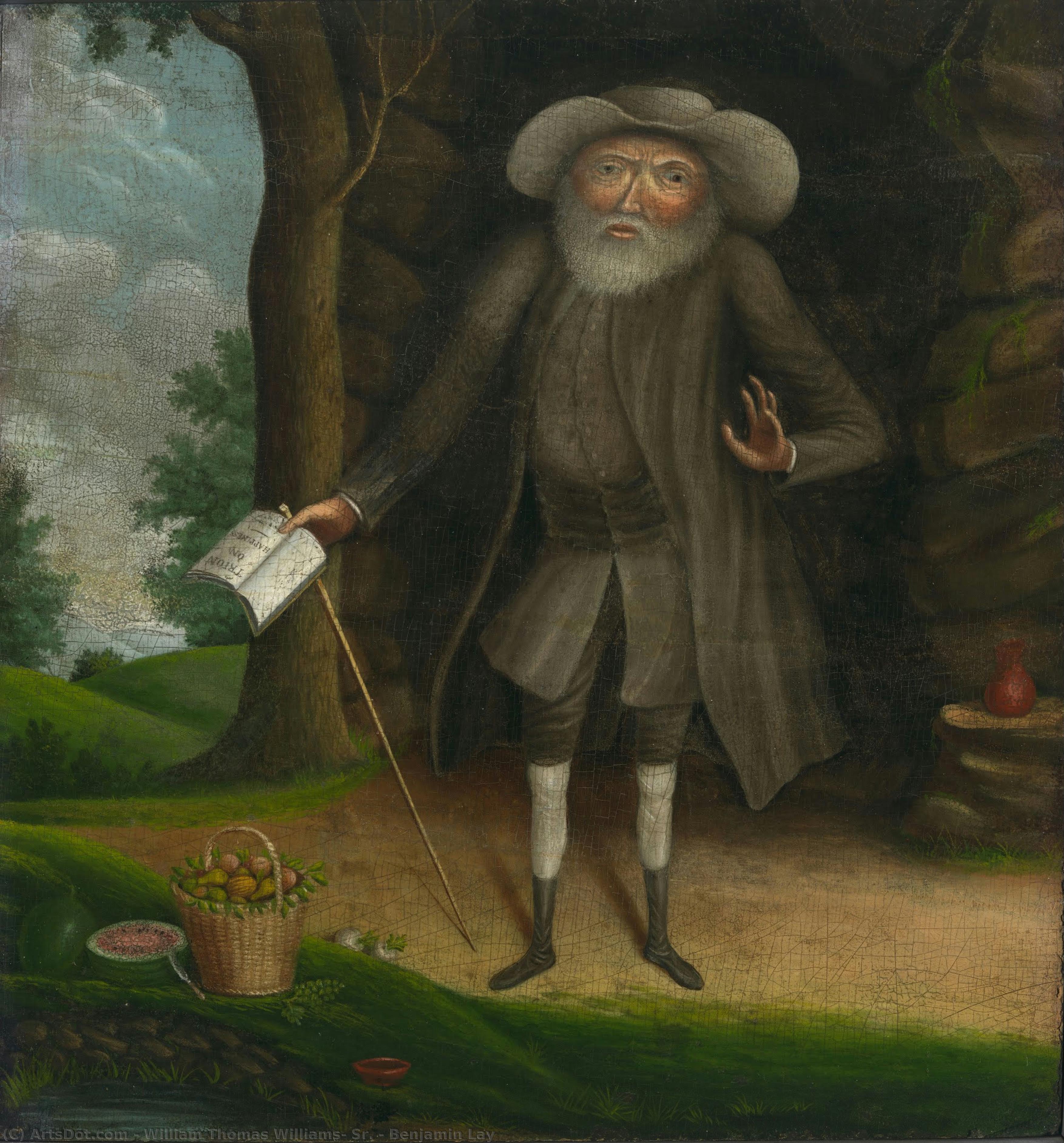
William Thomas Williams Sr.’s “Benjamin Lay” (1758) is more than just a portrait; it's a meticulously crafted visual narrative of moral conviction and quiet resistance. Painted during a turbulent period in American history, when the burgeoning antislavery movement wrestled with deeply ingrained societal norms, this work offers a poignant glimpse into the life of Benjamin Lay, a pivotal Quaker reformer who dedicated his existence to challenging the horrors of slavery. The painting’s power resides not just in its subject matter – Lay's unwavering commitment to abolition – but also in Williams’s masterful execution and the rich symbolism interwoven within the scene.
The scene itself is a carefully constructed tableau brimming with symbolic resonance. Lay stands before what appears to be a cave-like dwelling – a deliberate reference to his own humble existence, representing simplicity and spiritual retreat. The presence of the two bowls near the base of the painting could symbolize nourishment, both physical and spiritual, while the vase adds an element of decorative elegance, perhaps reflecting the Quaker emphasis on beauty and order. Most significantly, the apple in the lower-left corner is a potent symbol – a direct reference to the biblical story of Adam and Eve, suggesting that Lay’s struggle against slavery was a battle for humanity's redemption from original sin.
William Thomas Williams Sr.’s “Benjamin Lay” stands as a significant work within the context of 18th-century American portraiture and, crucially, as a powerful statement on social justice. Born in Bristol in 1727, Williams's seafaring past undoubtedly informed his artistic vision, lending a sense of ruggedness and authenticity to his subjects. His association with Benjamin West and his role in establishing Philadelphia’s early theater scene further solidify his place within the city’s vibrant cultural landscape. A hand-painted reproduction of “Benjamin Lay” offers an unparalleled opportunity to own a piece of this compelling history, capturing not only Williams's technical skill but also the profound moral message embedded within the artwork. The detail and fidelity of a WahooArt.com reproduction ensures that you experience the full emotional impact and symbolic richness of this remarkable portrait.
"Benjamin Lay" belongs to the Philadelphia Period of William Thomas Williams, Sr.'s career. This classification relates the work to the artist's development.
"Benjamin Lay" depicts quaker reformer, benjamin lay, abolitionism, portraiture, cave dwelling, thomas tryon, pennsylvania, while William Thomas Williams, Sr.'s recorded themes are quaker ideals, antislavery, religious society friends, benjamin franklin’s philadelphia”, “early american portraiture”, williams's literary focus"]}. Comparing the two shows how the work relates to the artist's usual subjects.
The guide to "Benjamin Lay" is the artwork's Guide page - a printable factsheet showing the artwork with its caption, credit line and identity table (artist, dates, medium, original size, collection).


1727 - 1791 , United Kingdom

Explore the life & work of Thomas Barker of Bath, a key figure in 19th-century English Romanticism. Discover his Parisian success, iconic paintings like 'The Bride of Death', and lasting artistic legacy. Learn more at WahooArt.

Explore the captivating world of Benjamin Haughton, Victorian genre painter. Discover his realistic depictions of daily life, social commentary, and enduring artistic legacy. Shop high-quality reproductions at WahooArt.

Journey through 18th century art! Explore 10 iconic paintings – from Rococo elegance to Neoclassical grandeur. Discover Fragonard, David & more. Find museum-quality reproductions and elevate your home decor on WahooArt.com.

Explore the captivating world of Benjamin Williams Leader's Victorian genre paintings. Discover his mastery of naturalism, social commentary & lasting influence on British art. Expert insights at WahooArt.

Explore the life & work of Thomas Hudson, a leading 18th-century British portraitist. Discover his mastery of the 'Grand Manner,' influential style, and lasting impact on British art. Learn about his notable portraits like Judge William Noel & Alexander Van Aken.

 Send
Send Share
Share
 Details
 Guide
Guide

 Download
 Similars
 Diaporama
 Stats
Stats


 Read More






































 Glass option is only available in size under 110 CM


