
x


 Acrylic On CanvasWallArtSpirit Photography
 1875
1875 9.0 x 5.0 cm
 J. Paul Getty Museum
Museum-quality giclée or canvas print with fast production and flexible finish options. ( Buy Hand Made Painting Buy Image)





























Pick from our preset sizes that match the artwork's original proportions.

You may enter your own dimensions to fit a specific frame or space. If your selected size does not match the original image's proportions, we will either crop the artwork or extend the image with a mirrored or solid-fill edge. A digital mockup will be sent for your approval before production begins.
Please note that the on-screen preview does not reflect the actual cropping or extension. Only the mockup will accurately show the final composition.
While custom sizes are available, we recommend selecting a dimension from the predefined list to preserve the original proportions.
Worldwide Delivery () in 2 weeks instead of standard 4/5 weeks. (30 August)


John J. Glover
Reproduction Size
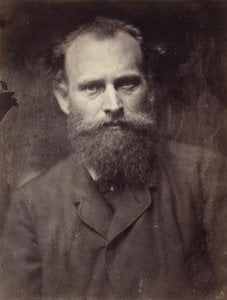
William H. Mumler’s “John J. Glover,” a remarkably intimate black-and-white photograph from 1875, transcends the simple portraiture of its era. It's not merely a depiction of a man seated in a chair; it’s a carefully constructed tableau brimming with Victorian sensibilities and an unsettling suggestion of the supernatural. The image captures a gentleman, formally dressed in a dark suit and tie, his hands clasped together in a gesture of quiet contemplation. His face, rendered with meticulous detail by Mumler's photographic technique, conveys a sense of seriousness – perhaps even melancholy – that draws the viewer into his gaze. Yet, it’s not just the subject’s appearance that commands attention; hovering subtly above him, partially obscured and imbued with an ethereal glow, is the faint apparition of another woman. This ghostly presence, often interpreted as Glover's deceased cousin, immediately elevates the photograph beyond a conventional likeness, plunging it into the realm of spirit photography – a phenomenon that captivated late 19th-century America.
The creation of “John J. Glover” coincided with a period of profound social and spiritual upheaval in the United States. Following the Civil War, many Americans grappled with immense grief and uncertainty about the fate of loved ones lost. Simultaneously, Spiritualism – a movement emphasizing communication with spirits through mediums – was experiencing a surge in popularity. Photography, still a relatively new technology, offered a tantalizing possibility: to capture evidence of the afterlife. William Mumler expertly exploited this confluence of anxieties and beliefs. He wasn’t simply a photographer; he was a master manipulator, employing techniques like double exposures and carefully staged lighting to create images that appeared to depict ghostly encounters. The photograph's success hinged on its ability to tap into the deeply held desire for connection with those who had passed beyond the veil – a desire fueled by both personal loss and the burgeoning fascination with the paranormal.
Despite the sensational claims surrounding spirit photography, William H. Mumler was a highly skilled technical innovator. He didn't rely on magic or trickery alone; he meticulously refined his photographic process to achieve startling results. His “Mumler Process,” involving carefully prepared plates and precise exposure times, allowed him to create images with remarkable clarity and detail – even when incorporating ghostly figures. The subtle gradations of tone, the sharp focus on Glover’s face, and the delicate rendering of the spectral form all demonstrate a sophisticated understanding of photographic principles. The photograph's small size (9 x 5 cm) further contributes to its intimacy and immediacy, inviting viewers to scrutinize every detail and contemplate the mystery at its heart.
“John J. Glover” is rich in symbolic meaning. The seated posture of the subject suggests introspection and perhaps a sense of mourning. His clasped hands could represent prayer, contemplation, or simply a desire for comfort. The ghostly presence above him embodies not just loss but also the enduring power of memory and love. It’s a poignant reminder that even after death, connections remain – albeit in an ethereal form. The photograph's emotional impact is profound; it evokes feelings of melancholy, curiosity, and a lingering sense of wonder about the mysteries beyond our mortal experience. It stands as a testament to Victorian anxieties surrounding mortality, the allure of the supernatural, and the enduring human need for connection.


1832 - 1884 , United States of America

Explore the profound artistry of black and white photography. From historical mastery to the interplay of light and shadow, discover how monochrome captures timeless emotion and form through a sophisticated lens of art history.

Explore the profound evolution of contemporary photography through a connoisseur's lens. From monochrome mastery to digital innovation, discover how modern photographic works shape fine art collections and define our cultural legacy.

Explore the profound evolution of documentary photography through a cultural lens. From early social realism to modern visual narratives, discover how photographers have captured history, labor, and the human condition to redefine fine art.

Explore the profound emotional depth of documentary photography art. Discover how collectors curate powerful historical narratives through museum-quality black and white prints and fine art reproductions that preserve humanity's most resilient moments.

Embark on a visual journey through the evolution of fashion photography. Discover how masters like Gianfranco Ferré blended geometry, surrealism, and texture to redefine high-fashion art for collectors and connoisseurs of luxury imagery.


Stay updated with the latest art news, exclusive offers, and decoration ideas.
Tell us about your project and our art experts will provide you with 3 personalized art suggestions.
Let Us Curate 3 Options Just for You - Free!

 Preview
 Send
Send Share
Share
 Details

 Download
 Similars
 X-Ray
X-Ray Diaporama
 Read More







 Glass option is only available in size under 110 CM




![[julia Jackson] — Julia Margaret Cameron, Victorian Photography](/media/artworks/images-thumb/38/f1/38f1667da1e9e5ced766b2acd175f4c6.jpg)


