x


Hand-painted oil on canvas in your size and frame, made to order by our artists. ( Buy Print Buy Image)





























Pick from our preset sizes that match the artwork's original proportions.

You may enter your own dimensions to fit a specific frame or space. If your selected size does not match the original image's proportions, we will either crop the artwork or extend the painting with additional hand-painted elements. A digital mockup will be sent for your approval before production begins.
Please note that the on-screen preview does not reflect the actual cropping or extension. Only the mockup will accurately show the final composition.
While custom sizes are available, we recommend selecting a dimension from the predefined list to preserve the original proportions.
Worldwide Delivery () in 3/4 weeks instead of standard 5 weeks. (25 August). No compromise on quality.


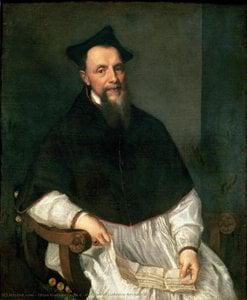
St Ambrose
Reproduction Size
Titian Ramsay Peale II's circular portrait of St. Ambrose is not merely a depiction of a religious figure; it’s an intimate encounter with faith, authority, and the enduring power of Renaissance artistry. The painting draws the viewer into a close-up world dominated by the serene yet commanding presence of the saint. Against a backdrop of deep shadow—a darkness that seems to both cradle and emphasize his form—St. Ambrose emerges as a beacon of spiritual strength. Peale’s masterful use of oil paint creates a rich tapestry of texture, particularly evident in the folds of Ambrose's robes and the delicate rendering of his beard. The impasto technique lends a tactile quality, inviting us to almost reach out and feel the weight of the fabric, the smoothness of the skin.
Peale II’s artistic lineage is clearly visible in this work. As the son of renowned American portraitist Charles Willson Peale, he inherited a dedication to realistic representation and meticulous detail. However, “St. Ambrose” reveals a distinct leaning towards the High Renaissance aesthetic—a style characterized by its harmonious compositions, idealized forms, and dramatic use of light and shadow. The artist’s skill in modeling forms through subtle gradations of tone creates a remarkable sense of depth within the limited space of the circular format. Light doesn't simply illuminate Ambrose; it sculpts him, highlighting his features and imbuing him with an almost palpable presence. The careful attention to detail—from the intricate design of his mitre (bishop’s hat) to the subtle expression on his face—speaks to Peale’s commitment to capturing not just a likeness, but the very essence of his subject.
The iconography within “St. Ambrose” is steeped in religious significance. St. Ambrose himself was a pivotal figure in early Christianity, known for his intellectual prowess, his defense of orthodox doctrine, and his influence on figures like Augustine of Hippo. His attire—the mitre and staff—are immediately recognizable symbols of his episcopal authority. The gesture of his hand, though subtle, likely conveys a blessing or a teaching pose, reinforcing his role as a spiritual leader. Beyond these explicit symbols, the circular format itself carries weight. Throughout art history, circles have often represented eternity, wholeness, and divine perfection – qualities perfectly suited to a depiction of a saint whose life was dedicated to faith. The painting isn’t simply *about* St. Ambrose; it aims to evoke the reverence and contemplation associated with his legacy.
Titian Ramsay Peale II remains somewhat overshadowed by his father's fame, but works like “St. Ambrose” are bringing renewed attention to his unique artistic contributions. While he also excelled as a naturalist and scientific illustrator—skills honed through expeditions across the American landscape and beyond—his paintings demonstrate a profound understanding of Renaissance principles and a refined aesthetic sensibility. He wasn’t merely replicating styles; he was internalizing them, adapting them to his own vision, and creating works that resonate with both technical mastery and emotional depth. This portrait stands as a testament to Peale II's ability to blend artistic tradition with personal expression, offering a compelling glimpse into the spiritual world of its subject and the artistic sensibilities of 19th-century America.


1799 - 1885

Explore the luminous mastery of Titian. Discover how the Venetian master revolutionized color and light through breathtaking Renaissance techniques, from Venus Anadyomene to profound allegories, and learn to bring this timeless brilliance into your private collection.
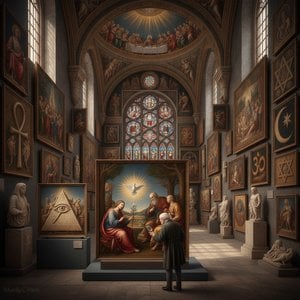
Explore the profound power of religious symbolism in art history. From Renaissance masterpieces to sacred iconography, uncover the hidden meanings behind divine details in a deep dive into classical art excellence.


Stay updated with the latest art news, exclusive offers, and decoration ideas.
Tell us about your project and our art experts will provide you with 3 personalized art suggestions.
Let Us Curate 3 Options Just for You - Free!

 Preview
 Send
Send Share
Share
 Details

 Download
 Similars
 X-Ray
X-Ray Diaporama


 Read More







 Glass option is only available in size under 110 CM