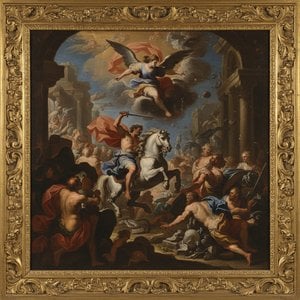
Discover Tintoretto (Jacopo Comin), a Venetian Renaissance master renowned for his dramatic compositions, bold brushwork ('Il Furioso'), and innovative use of light & perspective. Explore iconic works & his lasting legacy!
Titian (1488-1576): Venetian master of color & light, renowned for his portraits, mythological scenes, and innovative painting techniques. Explore a life of artistic brilliance.
A Beacon of Gratitude: The Enduring Legacy of Santa Maria della Salute
Rising from the waters of Venice like a shimmering mirage, the Basilica di Santa Maria della Salute is more than just a church; it’s a profound embodiment of resilience, faith, and artistic ambition. Its majestic dome dominates the Venetian skyline, a constant reminder of a city forever marked by both tragedy and deliverance. Commissioned in 1631 as a votive offering following the devastating plague of 1630 – an event that claimed nearly a third of Venice’s population – La Salute stands at the strategic confluence where the Grand Canal meets the Giudecca, a location chosen not only for its visibility but also for its symbolic positioning within the intricate network of Venetian life. The very foundations of this Baroque masterpiece are steeped in history, born from a collective desire to express gratitude for an end to suffering and a return to *salute* – health itself, in Italian. It’s a testament etched in stone, a prayer solidified into architectural form.
The Vision of Longhena: A Symphony in Stone and Light
The realization of this ambitious vision fell upon Baldassare Longhena, a Venetian architect whose genius shaped much of the city's Baroque landscape. He conceived La Salute not as a somber memorial to loss, but as a radiant celebration of life and divine intervention. The church’s octagonal plan is immediately striking, its form echoing both Byzantine influences and a desire for structural innovation – a bold departure from traditional designs. Longhena masterfully employed Istrian stone and *marmorino* plaster, creating a façade that shimmers in the Venetian light, appearing to almost float upon the water. The two bell towers flanking the main structure add to the sense of grandeur, while the soaring dome—an engineering marvel in itself—becomes a focal point visible from across the lagoon, beckoning pilgrims and visitors alike. The exterior isn’t merely decorative; it's a carefully orchestrated composition designed to inspire awe and reverence, a visual hymn to hope rising above despair. Inside, the vastness of the space is equally impressive, with intricate detailing adorning every surface, drawing the eye upwards towards the heavens, fostering a sense of spiritual elevation.
Treasures Within: Art Reflecting Faith and History
La Salute isn’t simply an architectural wonder; it's a repository of artistic treasures that further enrich its historical narrative. The church houses significant works by Venetian masters, most notably Titian’s poignant depiction of “Cain and Abel,” a powerful meditation on sin and redemption rendered with the artist’s characteristic mastery of color and emotion. Tintoretto’s contributions are equally compelling, including the monumental "Marriage at Cana," which dominates the sacristy with its dynamic composition and vibrant colors – a swirling panorama of figures that captures the energy and exuberance of the biblical scene. These paintings aren't merely aesthetic additions; they serve as visual testaments to the piety of Venice and the enduring power of faith in times of crisis. Many objects within the church subtly reference the Black Death, serving as poignant reminders of the plague’s impact on the city and the collective trauma that inspired La Salute’s creation. The artworks collectively weave a narrative of suffering, hope, and ultimately, renewal – a story told through brushstrokes and sculpted forms.
A Living Tradition: The Festa della Madonna della Salute
La Salute remains deeply embedded in Venetian life today, most notably through the annual *Festa della Madonna della Salute* held on November 21st. This vibrant celebration commemorates the end of the plague with a solemn procession from San Marco to La Salute, crossing the Grand Canal via a specially constructed pontoon bridge – a temporary pathway linking the heart of Venice with this beacon of hope. The festival is not merely a historical reenactment; it’s a deeply felt expression of gratitude and faith that continues to unite the city. The bridge itself becomes a symbol of connection—linking the civic center with the spiritual sanctuary. This annual event transforms La Salute from a static monument into a dynamic center of community, reaffirming its enduring relevance in the 21st century. The Festa is a powerful reminder that La Salute isn’t just *about* history; it *is* history, continually re-enacted and reinterpreted by each generation.
An Enduring Icon: Inspiration for Artists Through Time
For centuries, Santa Maria della Salute has captivated artists, becoming a recurring motif in paintings and sketches. From the meticulous cityscapes of Canaletto and Francesco Guardi to the atmospheric impressions of J.M.W. Turner and John Singer Sargent, La Salute’s majestic form has inspired countless interpretations. Sir Edward John Poynter's evocative "Santa Maria della Salute Venice Moonlight" exemplifies how the church’s silhouette transforms under different lighting conditions, becoming a symbol of romantic allure. These artistic representations not only document the changing perspectives on Venice but also underscore La Salute’s enduring power as an aesthetic and symbolic landmark. The basilica continues to draw visitors from around the globe, offering a profound experience of Venetian history, art, and architecture—a journey through time that resonates with both the soul and the senses.
By the WahooArt.com Editorial Team
Art Quiz
There is only one correct answer for each question.
Question 1:
What event primarily inspired the construction of Santa Maria della Salute?
Question 2:
Who was the primary architect responsible for designing Santa Maria della Salute?
Question 3:
What is the significance of the annual Festa della Madonna della Salute?
Question 4:
The basilica's architectural style is best described as:
Question 5:
Which artist created the monumental "Marriage at Cana" housed within Santa Maria della Salute?
Question 6:
Where is Santa Maria della Salute located in Venice?
Question 7:
What is the meaning of 'Salute' in Italian?
Question 8:
The basilica’s dome is an important addition to the Venice skyline and soon became emblematic of the city, appearing in artworks by which artists?
Question 9:
What materials were primarily used in the construction of Santa Maria della Salute?
Explore the breathtaking drama of the Baroque era. From the mastery of chiaroscuro to epic mythological narratives, discover a definitive guide to art's most powerful period of light, shadow, and emotion for the true classical art enthusiast.
Explore the breathtaking power of Baroque art. Delve into the dramatic interplay of light, shadow, and motion through the works of masters like Caravaggio. Discover how the era's intense emotional realism continues to inspire collectors and connoisseurs of classical grandeur.