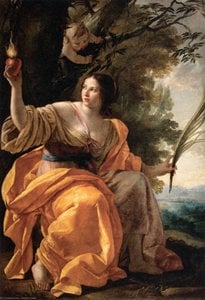
Acrylic On CanvasWallArtBaroque French Painting
 1630
1630 131.0 x 104.0 cm
 Cleveland Museum of Art
Purchase a high-resolution, enhanced digital image, far superior to the online preview.
Each file is meticulously prepared by our in-house specialists using advanced tools and expert manual retouching. We ensure every image has exceptional clarity, precise color accuracy, and fine detail.
The final file is delivered via email within 72 hours, optimized for immediate use in professional, editorial, and print environments. This is the same quality trusted by top-tier design studios, publishers, and galleries.
Download a high-resolution file for personal display, printing, and creative projects. ( Switch to Print Buy Hand Made Painting)
When you choose WahooArt.com, you're not just getting an image - you're receiving a professionally enhanced digital artwork, crafted with precision and backed by a satisfaction guarantee. Here's everything that comes with your order, automatically:

Your high-resolution digital image file will be emailed to you within 72 hours of ordering - ready for immediate use.

Your artwork is professionally optimized using advanced AI tools and manual editing, ensuring maximum detail, clarity, and color accuracy.

Accidentally deleted or lost your file? No worries - we'll resend it to you anytime, free of charge.

Enjoy your artwork instantly with zero customs, duties, or delivery fees - digital downloads are always tax-free.

We ensure your digital image reflects the original colors as closely as possible using professional tools and color management.

If you're not satisfied with your digital image, we'll revise it or refund 100% within 100 days - no questions asked.

Not satisfied? Get a full refund within 100 days of receiving your digital file - no questions asked.

Buy 3 images, save 10% - Buy 5, save 15% - Buy 10+, save 20%. Great for creative projects, galleries, and agencies.
Simon Vouet’s “The Penitent Magdalen,” painted around 1630, is more than just a portrait; it's a profound meditation on faith, repentance, and the enduring power of sorrow. Executed during a pivotal moment in French art history – the transition from Mannerism to the burgeoning Baroque style – this work encapsulates Vouet’s innovative approach, blending Italian influences with a distinctly French sensibility. The painting immediately draws the viewer into a scene of quiet contemplation, dominated by the figure of Mary Magdalene, rendered with an almost sculptural quality that speaks to both her physical presence and her spiritual weight.
Vouet, having spent formative years in Rome absorbing the dramatic lighting and emotional intensity of Caravaggio’s work, brought this Italian dynamism back to France. However, he didn't simply replicate these techniques; instead, he skillfully adapted them to suit the tastes of his royal patrons. Notice how the subdued palette – dominated by rich reds, deep blues, and earthy browns – creates a sense of solemnity and introspection. The lighting is carefully controlled, highlighting Magdalene’s face and hands while casting her figure in shadow, reinforcing the theme of penance and hidden suffering.
The composition itself is laden with symbolic meaning. Magdalene's posture – head bowed, hand resting on a book – immediately evokes images of prayer and devotion. The open book, often interpreted as representing scripture, suggests her ongoing journey toward redemption. Crucially, the presence of two birds—one perched on the left shoulder, the other near the upper right corner—adds layers of interpretation. Birds are frequently associated with freedom, hope, and the soul’s ascent to heaven; their inclusion here hints at Magdalene's potential for spiritual liberation through her remorse and piety.
The jar of ointment, a recurring motif in depictions of Magdalene, symbolizes her past sins—specifically, her betrayal of Christ. However, it also represents a willingness to offer amends and demonstrate genuine repentance. The careful rendering of the ointment’s texture and the subtle play of light on its surface further emphasize this duality – beauty born from sorrow.
Vouet’s mastery lies in his ability to seamlessly blend Italian realism with French elegance. He employs a technique known as “clai-obscure,” or chiaroscuro, which dramatically contrasts light and shadow to create depth and volume. This is particularly evident in Magdalene's face – the delicate modeling of her features, the subtle shading around her eyes, all contribute to an incredibly lifelike portrayal. Unlike the stark contrasts of Caravaggio, Vouet’s use of light is more diffused, lending a sense of grace and refinement to the scene.
Furthermore, Vouet's attention to detail—the folds of Magdalene’s dress, the texture of her hair, even the subtle imperfections in her hands—demonstrates his meticulous approach. This commitment to realism was highly valued by the French court, who sought artists capable of producing works that were both aesthetically pleasing and historically accurate.
"The Penitent Magdalen" is not merely a depiction of a biblical figure; it’s an exploration of human emotion—the pain of regret, the yearning for forgiveness, and the possibility of spiritual renewal. Vouet masterfully captures Magdalene's inner turmoil, inviting viewers to contemplate their own struggles with faith and redemption. The painting’s enduring appeal lies in its ability to resonate across centuries, offering a timeless meditation on the complexities of the human condition.
Reproductions of this powerful work offer an exceptional opportunity to bring this evocative scene into any space. Its rich colors, dramatic lighting, and profound symbolism create a focal point that speaks volumes about faith, sorrow, and ultimately, hope.

Simon Vouet was a pivotal figure in the transition of French painting from Mannerism to the Baroque style. Born into an artistic family – his father Laurent was a painter and his brother Aubin also pursued art – Vouet received early training that laid the foundation for his future success. His grandson, Ludovico Dorigny, would continue the family’s artistic legacy.
During his Italian sojourn, Vouet absorbed a diverse range of influences. He studied the dramatic lighting techniques pioneered by Caravaggio, embraced elements of Italian Mannerism, and meticulously analyzed the color palettes and di sotto in su (foreshortened perspective) employed by Paolo Veronese. He also drew inspiration from the works of Carracci, Guercino, Lanfranco, and Guido Reni, synthesizing these diverse styles into a unique artistic vision.
Simon Vouet's legacy rests on his pivotal role as a bridge between Italian and French art. He successfully imported the dynamism and grandeur of the Italian Baroque, transforming it into a style that resonated with the tastes of the French court and aristocracy. His influence is undeniable in the development of French painting during the 17th century, and his contributions continue to be recognized by art historians today.

1590 - 1649 , France

 Preview
 Send
Send Share
Share
 Details

 Download
 Similars
 X-Ray
X-Ray Diaporama
 Stats
Stats Read More