A Cinematic Encounter on the American Frontier
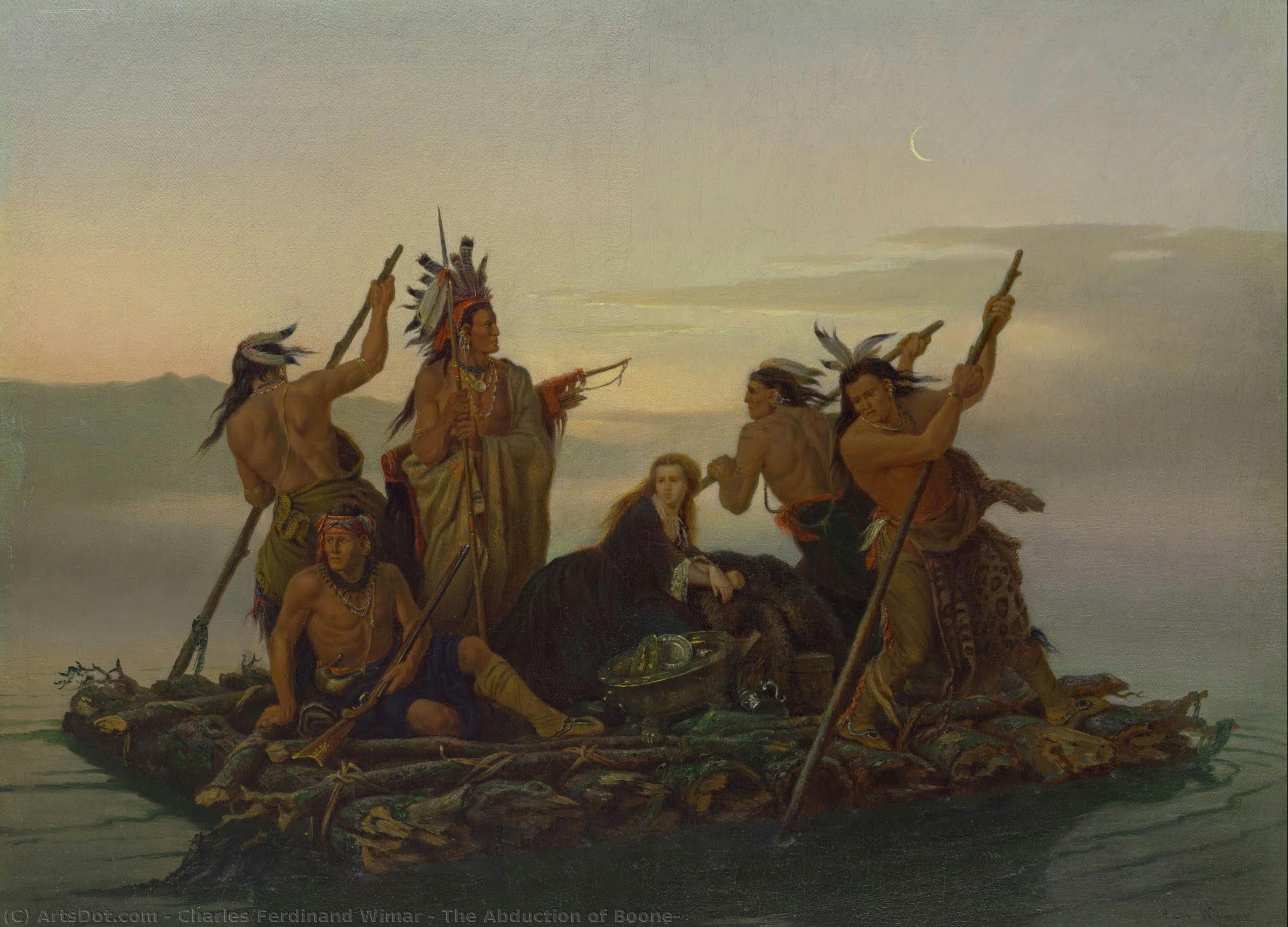
In the heart of the mid-19th century, as the American frontier expanded with both hope and profound violence, Charles Ferdinand Wimar captured a moment of breathless tension in his masterpiece, The Abduction of Boone. This evocative oil painting serves as a window into a period of intense colonial friction, transporting the viewer to a landscape where the boundaries between civilization and the untamed wilderness were being violently contested. The scene is thick with drama, centering on the harrowing confrontation between Boone and a group of Native American men. Wimar masterfully orchestrates a composition that feels less like a static portrait and more like a captured frame from an epic cinematic tragedy, where every pointed weapon and furrowed brow contributes to an overwhelming sense of impending doom.
The technical prowess of Wimar, shaped by his rigorous training at the Düsseldorf Academy under the legendary Emanuel Leutze, is on full display through his ability to manipulate light and shadow to heighten the narrative stakes. The artist employs a style that blends historical realism with a romanticized intensity, characteristic of the era's fascination with the "Wild West." Notice how the light catches the metallic sheen of firearms and the glint in the eyes of the dogs, adding a layer of visceral reality to the scene. His brushwork, while precise enough to render the textures of clothing and the ripples of the river, possesses a fluid energy that mirrors the chaotic movement within the frame. The presence of the boat in the mid-ground provides a structural anchor to the composition, yet its stillness only serves to contrast with the kinetic aggression of the figures surrounding Boone.
Symbolism and the Weight of History
Beyond the immediate spectacle of the abduction, The Abduction of Boone is rich with symbolic layers that speak to the complex identity of the American frontier. The dogs, positioned on either side of the central conflict, act as silent witnesses—symbols of domesticity and loyalty caught in the crossfire of a much larger, more primal struggle. The river, flowing through the center of the piece, represents both a lifeline for the emigrant trails and a treacherous barrier that separates different worlds. For the discerning collector, this painting is not merely a depiction of a historical incident; it is an exploration of the themes of displacement, survival, and the collision of cultures that defined the 1850s.
For interior designers and art enthusiasts looking to anchor a room with a sense of history and gravitas, this reproduction offers an unparalleled opportunity. The painting’s palette—earthy tones punctuated by the stark whites and deep shadows of the frontier landscape—makes it a versatile centerpiece for sophisticated spaces. Whether placed in a study filled with leather-bound books or as a conversation starter in a contemporary gallery-style living room, The Abduction of Boone commands attention. It invites the viewer to contemplate the rugged spirit of the past and brings a profound, narrative depth to any curated collection of fine art.



 Preview
 Buy Print
 Send
Send Share
Share
 Details

 Download
 Similars
 X-Ray
X-Ray Diaporama


 Read More






































 Glass option is only available in size under 110 CM