Portrait of Leon Piniński – A Study in Polish Realism
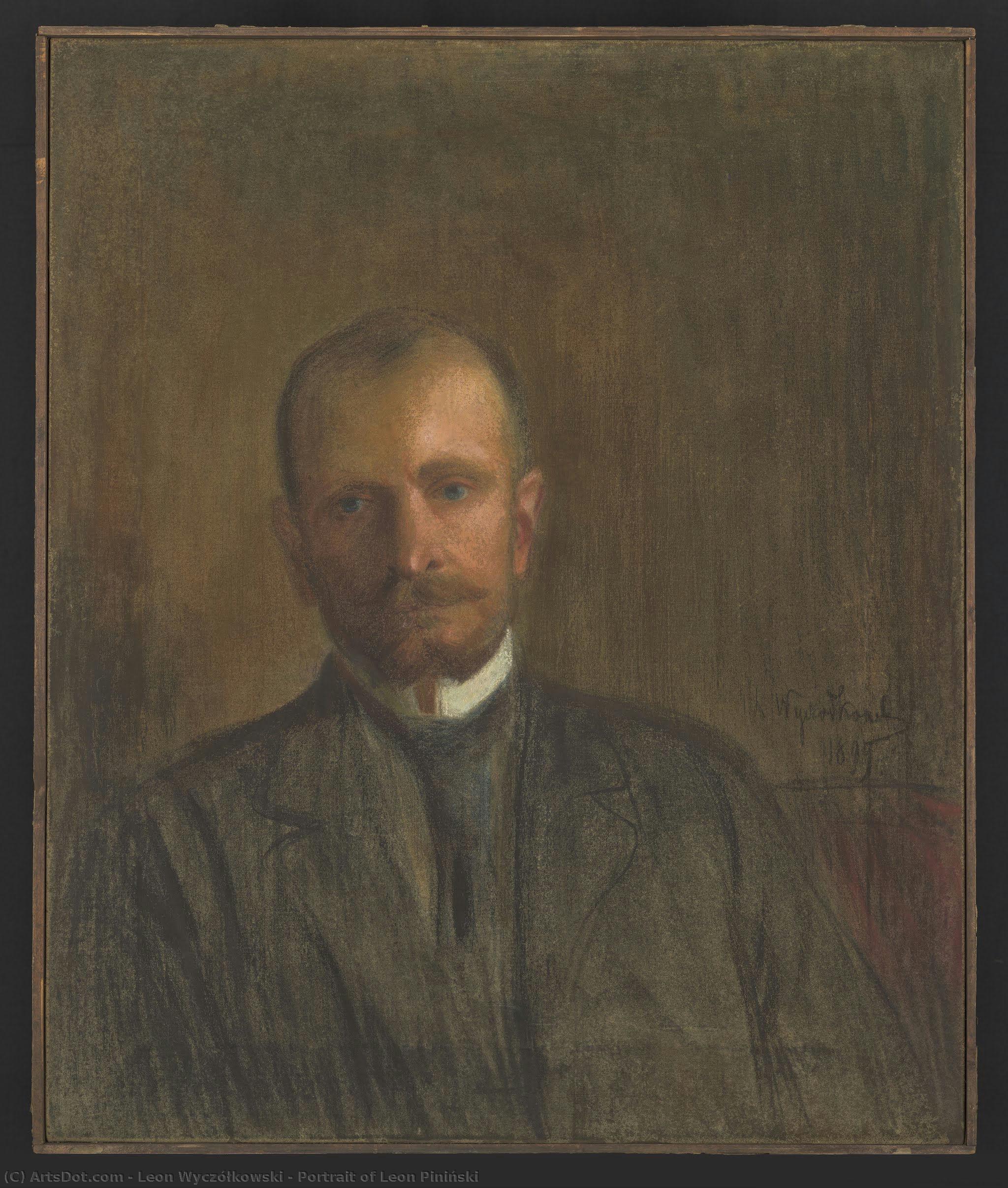
Leon Wyczółkowski’s “Portrait of Leon Piniński” is more than just a likeness; it's a carefully constructed tableau of 19th-century Polish identity, rendered with the meticulous detail and evocative lighting characteristic of the artist. Painted in 1899, this pastel masterpiece offers a glimpse into the world of a prominent scholar, diplomat, and art historian – Leon Piniński himself – capturing not just his physical appearance but also a sense of quiet dignity and intellectual depth.
Wyczółkowski’s style during this period leaned heavily towards Polish Realism, a movement that sought to depict everyday life with unflinching honesty and psychological insight. He moved away from the grand historical scenes favored by earlier generations, instead focusing on portraits that revealed the inner lives of his subjects. This portrait exemplifies that approach, eschewing theatrical poses or elaborate costumes in favor of a direct, almost confrontational gaze from Piniński’s eyes. The composition is remarkably restrained, emphasizing the subject's face and upper body against a subtly textured background – a simple chair suggesting both formality and domestic comfort.
The Impressionistic Touch
Despite his commitment to realism, Wyczółkowski was deeply influenced by the Impressionist movement, particularly in his use of light and color. Notice how he employs broken strokes and subtle gradations of tone to create a sense of atmospheric depth and luminosity. The soft, diffused light seems to emanate from an unseen source, casting gentle shadows across Piniński’s face and clothing. This technique wasn't merely decorative; it served to heighten the emotional impact of the portrait, conveying a feeling of introspection and quiet contemplation.
The pastel medium itself is crucial to Wyczółkowski’s vision. Pastels allow for an extraordinary level of detail and nuance, enabling him to capture the subtle textures of fabric, skin, and hair with remarkable precision. The delicate layering of color creates a shimmering effect, adding to the portrait's overall sense of richness and depth. The artist skillfully utilizes the pastel’s ability to blend seamlessly, creating soft transitions between tones and contributing to the painting’s dreamlike quality.
Historical Context and Symbolism
Painted during a period of significant social and political change in Poland – following the partitions of the country and the rise of Polish nationalism – “Portrait of Leon Piniński” reflects the anxieties and aspirations of the era. Piniński, as a prominent figure in Lwów’s intellectual and political circles, represented the enduring spirit of Polish culture and scholarship. The portrait can be interpreted as a celebration of Polish identity and a testament to the importance of education and civic engagement.
The inclusion of the simple chair is also noteworthy. It suggests Piniński's role as a scholar immersed in his work, yet it’s not overly formal or imposing. This subtle detail hints at a man of quiet dignity and intellectual pursuits, reflecting the values of the Polish intelligentsia.
A Legacy Preserved
Today, “Portrait of Leon Piniński” resides within the collection of the National Museum in Kraków, a testament to Wyczółkowski’s enduring legacy. The painting's meticulous detail, evocative lighting, and profound psychological insight continue to captivate viewers, offering a poignant glimpse into the life and character of a remarkable Polish figure. Reproductions of this iconic work provide an accessible way to experience the beauty and depth of Wyczółkowski’s artistic vision, bringing a touch of timeless elegance to any space.



 Preview
 Buy Print
 Send
Send Share
Share
 Details

 Download
 Similars
 X-Ray
X-Ray Diaporama


 Read More






































 Glass option is only available in size under 110 CM





