Preview AR preview Buy Hand Made Painting Switch to Digital Image Send
Details Guide Add to favorites Download Similars X-Ray Diaporama Q&A Stats

The Prodigal Son

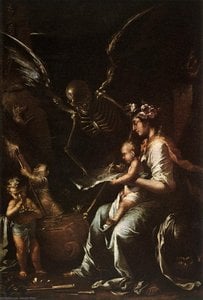
Salvator Rosa’s "The Prodigal Son" (1651) is a dramatic Baroque masterpiece depicting repentance & faith. Explore this iconic oil painting's rich symbolism & dynamic composition.

Explore the dramatic Baroque landscapes & philosophical paintings of Salvator Rosa (1615-1673). Italian painter, poet & printmaker known for his rebellious spirit and influence on artists like Luca Giordano. Discover his masterpieces!

Giclée / Art Print

Museum-quality giclée or canvas print with fast production and flexible finish options. ( Buy Hand Made Painting Switch to Digital Image)

Corner sample of the P118B picture frame: moulded polystyrene, 5 cm wide and 3 cm thick
P118B $10
Corner sample of the P118H picture frame: moulded polystyrene, 5 cm wide and 3 cm thick
P118H $10
Corner sample of the P118W picture frame: moulded polystyrene, 5 cm wide and 3 cm thick
P118W $10
Corner sample of the P438Z picture frame: moulded polystyrene, 5.5 cm wide and 3.5 cm thick
P438Z $10
Corner sample of the P508JH picture frame: moulded polystyrene, 7 cm wide and 3.5 cm thick
P508JH $12
Corner sample of the P508YH picture frame: moulded polystyrene, 7 cm wide and 3.5 cm thick
P508YH $12
Corner sample of the P805H picture frame: moulded polystyrene, 5 cm wide and 3.5 cm thick
P805H $10
Corner sample of the P805Z picture frame: moulded polystyrene, 5 cm wide and 3.5 cm thick
P805Z $10
Corner sample of the P919BZ picture frame: moulded polystyrene, 7 cm wide and 3.5 cm thick
P919BZ $10
Corner sample of the P919G picture frame: moulded polystyrene, 7 cm wide and 3.5 cm thick
P919G $10
Corner sample of the P919XJ picture frame: moulded polystyrene, 7 cm wide and 3.5 cm thick
P919XJ $10
Corner sample of the P959ZH picture frame: moulded polystyrene, 5 cm wide and 3 cm thick
P959ZH $10
Corner sample of the P968JZ picture frame: moulded polystyrene, 6 cm wide and 4 cm thick
P968JZ $12
Corner sample of the W106C picture frame: solid wood, 5 cm wide and 3 cm thick
W106C $8
Corner sample of the W218G picture frame: solid wood, 5 cm wide and 3 cm thick
W218G $10
Corner sample of the W218JH picture frame: solid wood, 5 cm wide and 3 cm thick
W218JH $8
Corner sample of the W218Y picture frame: solid wood, 5 cm wide and 3 cm thick
W218Y $10
Corner sample of the W307PJ picture frame: solid wood, 6 cm wide and 3 cm thick
W307PJ $10
Corner sample of the W316G picture frame: solid wood, 6 cm wide and 3 cm thick
W316G $10
Corner sample of the W316PJ picture frame: solid wood, 6 cm wide and 3 cm thick
W316PJ $8
Corner sample of the W316Y picture frame: solid wood, 6 cm wide and 3 cm thick
W316Y $10
Corner sample of the W398PJ picture frame: solid wood, 5 cm wide and 3 cm thick
W398PJ $8
Corner sample of the W4111J picture frame: solid wood, 6.5 cm wide and 3.5 cm thick
W4111J $10
Corner sample of the W500HY picture frame: solid wood, 7 cm wide and 5 cm thick
W500HY $15
Corner sample of the W500JH picture frame: solid wood, 7 cm wide and 5 cm thick
W500JH $15
Corner sample of the W692G picture frame: solid wood, 8 cm wide and 4 cm thick
W692G $12
Corner sample of the W849H picture frame: solid wood, 5 cm wide and 3 cm thick
W849H $8
Corner sample of the W940BG picture frame: solid wood, 7.5 cm wide and 4.5 cm thick
W940BG $15
Corner sample of the W953PJ picture frame: solid wood, 6 cm wide and 3.5 cm thick
W953PJ $8

Standard
custom
CM
INCH

Pick from our preset sizes that match the artwork's original proportions.

width
height

Type the width and the height you need, to fit your frame or your wall. A print can only be cut, never made bigger than the picture, so a size with a different shape loses a part of the image. We send you a digital mockup to approve before we print anything. The picture shown on this page does not show the real cut — only the mockup does.

Worldwide Delivery () in 2 weeks instead of standard 4/5 weeks. (31 October)

Free Worldwide Express Shipping
High-Quality Linen Canvas
Full Shipping Insurance
Customs Tax Refund Guarantee
True Color Matching Guarantee
100-Day Return Policy (Defects Only)
100% Money-Back Guarantee
Bulk Discount Offer

Total Price

$ 69

The Prodigal Son

Giclée / Art Print

Reproduction Size

-

Total Price

$ 69

Quick Facts

  • Influences:
    • Ribera
    • Poussin
  • Year: 1651
  • Location: Metropolitan Museum of Art
  • Title: The Prodigal Son
  • Notable elements: Dynamic composition

Art Quiz

There is only one correct answer for each question.

Question 1:
What is the primary religious theme depicted in Salvator Rosa’s ‘The Prodigal Son’?
Question 2:
The stormy sky in the painting is most likely intended to symbolize:
Question 3:
Salvator Rosa’s style in ‘The Prodigal Son’ is best described as:
Question 4:
What technique is most evident in the rendering of the cattle in the painting?
Question 5:
The diagonal composition of the painting primarily serves to:

Salvator Rosa’s Dramatic Depiction of Repentance: “The Prodigal Son”

Salvator Rosa's "The Prodigal Son," painted in 1651, is not merely a religious scene; it’s a visceral portrayal of human fallibility and the transformative power of divine forgiveness. This oil-on-canvas masterpiece immediately commands attention with its dramatic chiaroscuro – the stark contrast between light and shadow – characteristic of the Baroque period. Rosa masterfully employs diagonal lines, originating from the kneeling figure at the heart of the composition, to draw the viewer’s eye directly into the scene, creating a dynamic sense of movement and urgency. The stormy sky above, rendered in turbulent browns and ochres, mirrors the turmoil within the young man's soul, hinting at the struggle between earthly desires and spiritual longing.

The painting centers on a youth, clad in humble garments, kneeling in supplication amidst a herd of cattle – a potent symbol of his former life of luxury and indulgence. The setting is deliberately rural, emphasizing the stark contrast between the prodigal son’s past and his present state of humility. Rosa's meticulous technique is evident in every detail: the rough texture of the man’s skin, the shaggy coats of the cattle, and the intricate foliage of the background trees are all rendered with remarkable realism. The loose brushstrokes, however, prevent the work from feeling static, contributing to a sense of raw emotion and immediacy. Rosa's use of color is restrained yet powerful, dominated by earthy tones that evoke a somber atmosphere, punctuated by flashes of light highlighting the central figure – a deliberate focus on his vulnerability and plea for redemption.

A Baroque Masterpiece: Style and Technique

Salvator Rosa’s style defies easy categorization. While undeniably rooted in the Baroque tradition—known for its theatricality, emotional intensity, and dramatic lighting—Rosa injected a distinctly personal element into his work. He drew inspiration from both the naturalism of artists like Peter Paul Rubens and the classical ideals of Nicolas Poussin, yet he refused to be bound by any single movement or style. This resulted in a unique visual language characterized by a heightened sense of drama, an interest in capturing fleeting moments of human experience, and a willingness to depict subjects from unconventional perspectives. Rosa’s skill as a printmaker also informed his painting; the same attention to detail and dramatic composition found in his etchings are evident here.

The perspective employed is particularly noteworthy. The cattle and trees receding into the distance appear smaller and less defined, creating a sense of depth and drawing the viewer’s eye towards the central figure. This technique not only enhances the realism of the scene but also reinforces the idea of the prodigal son's journey from worldly possessions to spiritual humility. Rosa’s masterful use of light and shadow further emphasizes this transition, highlighting the man’s face and body while plunging the background into darkness – a visual metaphor for his past sins.

Symbolism and Spiritual Depth

Beyond its immediate visual impact, “The Prodigal Son” is rich in symbolic meaning. The kneeling posture of the young man represents submission to God and a recognition of his wrongdoing. The cattle, traditionally associated with wealth and earthly possessions, serve as a stark reminder of the prodigal son’s former life of extravagance. The stormy sky symbolizes the spiritual struggle he faces – the conflict between his desires and his conscience. Crucially, the father's immediate embrace upon seeing his son is not merely an act of familial love; it represents God’s boundless mercy and forgiveness—a central tenet of Christian faith.

Rosa’s choice to depict the moment *after* the son has returned – after the initial plea for forgiveness – is particularly poignant. It suggests that redemption is not simply a matter of acknowledging one's sins but also of experiencing God’s unconditional love and acceptance. The painting, therefore, offers a powerful meditation on themes of repentance, forgiveness, and the enduring hope found in faith.

WahooArt Reproductions: Bringing “The Prodigal Son” to Life

WahooArt is proud to offer meticulously crafted hand-painted reproductions of Salvator Rosa’s "The Prodigal Son." Each reproduction captures the painting's dramatic intensity, rich textures, and profound symbolism with unparalleled accuracy. Whether you are an art collector, interior designer seeking a statement piece, or simply an admirer of Baroque art, our high-quality reproductions provide a beautiful and authentic way to experience this iconic masterpiece. Explore our range of sizes and framing options to find the perfect addition to your home or office – a timeless testament to human redemption and divine grace.

Questions & Answers

How is the mood of "The Prodigal Son" by Salvator Rosa described?

"The Prodigal Son" has a dramatic atmosphere.

Is "The Prodigal Son" available as a fine art print?

A print of "The Prodigal Son" by Salvator Rosa can be ordered directly on its Fine Art Print page: a fine art print on cotton canvas or archival canvas paper.

Which room is "The Prodigal Son" by Salvator Rosa recommended for, given its colors?

With its earthy palette, "The Prodigal Son" by Salvator Rosa is recommended for a living room. The colors are part of the reason for this suggestion.


Artist Biography

**early life and training**

salvator rosa, an italian baroque painter, poet, and printmaker, was born in arenella, naples, on either june 20 or july 21, 1615. his mother, giulia greca rosa, was a member of one of the greek families of sicily. despite his father's wishes for him to become a lawyer or priest, salvator showed a preference for the arts from an early age.

**artistic career**

salvator rosa's artistic career was marked by his unorthodox and extravagant style, which set him apart from his contemporaries. he was active in naples, rome, and florence, and his work was influenced by the naturalism of ribera and the classicism of poussin. however, he refused to be tied down by any particular style or movement.
  • pythagoras emerging from the underworld (kimbell art museum, fort worth, united states), one of his most famous works, showcases his unique blend of philosophical and artistic themes.
  • his the baptism of the eunuch (chrysler museum of art, norfolk, united states) demonstrates his ability to infuse high drama into even minor bible stories.

**influences and legacy**

salvator rosa's work had a significant impact on the development of baroque art. his influence can be seen in the works of later artists, such as luca giordano, who continued to push the boundaries of artistic expression. **important links:** salvator rosa's profile on WahooArt wikipedia: salvator rosa pythagoras emerging from the underworld on WahooArt

**conclusion**

salvator rosa's life and work continue to fascinate art lovers and historians alike. his unorthodox style and perpetual rebellion against the norms of his time have cemented his place in the annals of baroque art. as a painter, poet, and printmaker, he remains an enigmatic figure, and his work continues to inspire new generations of artists and art enthusiasts. kimbell art museum, chrysler museum of art (museum names)
Salvator Rosa

Salvator Rosa

1615 - 1673 , Italy

Quick Facts

  • Full Name: Salvator Rosa
  • Nationality: Italian
  • Date Of Birth: 1615
  • Date Of Death: 1673
  • Place Of Birth: Arenella, Italy
  • Notable Artworks:
    • View of the Gulf of Salerno
    • Study for 'Il Genio di Rosa
    • Grotto with Cascades
  • Artistic Movement Or Style: Baroque art
  • Artists Who Influenced This Artist: ['José de Ribera']
  • Artists Or Movements Influenced By This Artist: ['Luca Giordano']
Explore artworks organized by themes, styles, and characteristics.