
FREE ART CONSULTATION

x
Buy print Buy printBuy Painting Buy Painting SendSend
DetailsDetails Add to favorites Add to favorites DownloadDownload SimilarsSimilars X-RayX-Ray DiaporamaDiaporama

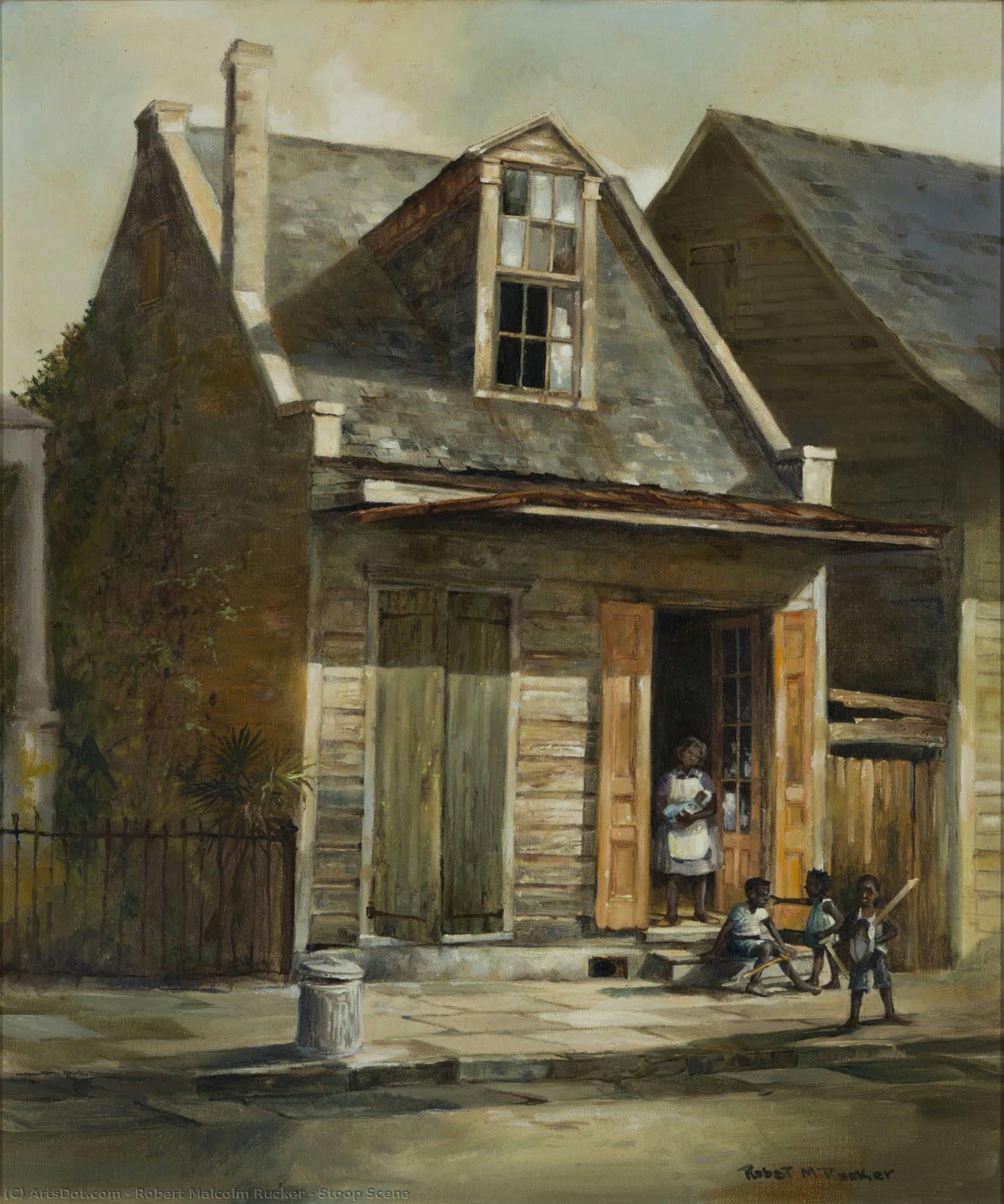
Stoop Scene

Explore Robert Malcolm Rucker’s ‘Stoop Scene,’ a 1970 oil painting of rural Creole life. Admire its realistic style, muted colors & rich textures depicting everyday community.

Discover the impressionistic art of Robert Malcolm Rucker, a Louisiana legend known for vibrant landscapes & cultural heritage. Explore his legacy.

Purchase a high-resolution, enhanced digital image, far superior to the online preview.

Each file is meticulously prepared by our in-house specialists using advanced tools and expert manual retouching. We ensure every image has exceptional clarity, precise color accuracy, and fine detail.

The final file is delivered via email within 72 hours, optimized for immediate use in professional, editorial, and print environments. This is the same quality trusted by top-tier design studios, publishers, and galleries.

Digital Image

Download a high-resolution file for personal display, printing, and creative projects.

Total Price

$9.99

Included in Every Digital Image Order

Expert Digital Delivery, Guaranteed

When you choose WahooArt.com, you're not just getting an image - you're receiving a professionally enhanced digital artwork, crafted with precision and backed by a satisfaction guarantee. Here's everything that comes with your order, automatically:

shipping_icon
Fast Email Delivery

Your high-resolution digital image file will be emailed to you within 72 hours of ordering - ready for immediate use.

canvas_icon
AI-Enhanced Digital File

Your artwork is professionally optimized using advanced AI tools and manual editing, ensuring maximum detail, clarity, and color accuracy.

insurance_icon
Free Lifetime Re-Delivery

Accidentally deleted or lost your file? No worries - we'll resend it to you anytime, free of charge.

tax_icon
No Import Fees - Ever

Enjoy your artwork instantly with zero customs, duties, or delivery fees - digital downloads are always tax-free.

color_icon
Color Accuracy Guarantee

We ensure your digital image reflects the original colors as closely as possible using professional tools and color management.

return_icon
60-Day Satisfaction Guarantee

If you're not satisfied with your digital image, we'll revise it or refund 100% within 60 days - no questions asked.

guarantee_icon
100% Money-Back Guarantee

Not satisfied? Get a full refund within 60 days of receiving your digital file - no questions asked.

discount_icon
Bulk Order Discounts

Buy 3 images, save 10% - Buy 5, save 15% - Buy 10+, save 20%. Great for creative projects, galleries, and agencies.


Artist Biography

Richard Kemble: A Quiet Master of Woodcuts

Richard Kemble, born in Erie, Pennsylvania in 1932 and passing away in 2007, wasn’t a name that frequently echoed through the halls of grand museums or dominated art headlines. Yet, within his deceptively simple woodcut prints and pastel landscapes lies a profound quietude and an understated mastery of line and texture – qualities that have earned him a devoted following among collectors and a deserved recognition as a significant figure in American printmaking. His life was one dedicated to teaching and creating, culminating in over 350 print editions, primarily woodcuts, crafted during the latter half of his career, largely at his residences in Key West, Florida, and Nantucket, Massachusetts. Kemble’s journey wasn't defined by dramatic pronouncements or radical departures; instead, it was a slow, deliberate cultivation of a unique visual language rooted in observation and a deep appreciation for the natural world.

Early Life and Artistic Foundations

Kemble’s early life provided a grounding in both artistic principles and pedagogical practice. He began his formal training at the State University at Buffalo, where he taught for nearly two decades, shaping generations of students with a patient and insightful approach. Later, he found a new home as a professor at Pratt Institute in New York City, further expanding his influence within the art community. Crucially, it was during this period that Kemble received a prestigious fellowship from the National Endowment for the Arts – a pivotal moment that allowed him to dedicate himself fully to his artistic pursuits. This recognition underscored the value he placed on craftsmanship and the importance of sustained creative exploration. His early exposure to the works of realist painters like Edgar Degas, Edward Hopper, and Thomas Eakins profoundly influenced his approach to depicting the world around him, instilling a meticulous attention to detail and an ability to capture fleeting moments of beauty and stillness.

The Development of a Distinctive Style

Kemble’s artistic style evolved gradually over time, reflecting both his technical skill and his evolving aesthetic sensibilities. Initially, he produced prints that were closely aligned with the traditions of wood engraving, characterized by sharp lines and precise rendering. However, as he gained experience and honed his technique, he began to experiment with looser, more expressive approaches. He developed a distinctive squeegee technique – using a tool to push and scrape paint across the canvas – which created a textured surface that added depth and richness to his prints. This method, combined with his careful selection of subjects—primarily landscapes and scenes of everyday life—resulted in works that possessed a remarkable sense of immediacy and intimacy. His later work shifted towards more abstract compositions, exploring the interplay of color and line in ways that were both subtle and evocative. The influence of Japanese *emakimono* (woodblock prints) is evident in his use of layered colors and simplified forms, demonstrating an appreciation for traditional techniques while forging a distinctly personal style.

Themes and Influences

Kemble’s work is often characterized by its quiet contemplation and understated beauty. He rarely addressed overtly political or social themes, instead focusing on capturing the essence of his subjects—the changing seasons, the textures of nature, and the simple pleasures of everyday life. The influence of photography is palpable in his meticulous attention to detail and his ability to render light and shadow with remarkable accuracy. However, unlike photorealist painters who sought to replicate photographs exactly, Kemble used photography as a starting point for his own creative explorations, transforming images into works of art through the process of printmaking. The legacy of European landscape painting—particularly the work of Impressionists like Monet and Pissarro—is also evident in his use of color and his emphasis on capturing the fleeting effects of light.

Legacy and Significance

Richard Kemble’s contribution to American printmaking may not be widely celebrated, but it is nonetheless significant. His quiet dedication to craft, his masterful technique, and his understated aesthetic have earned him a devoted following among collectors and art enthusiasts. His work stands as a testament to the power of observation, the beauty of simplicity, and the enduring appeal of traditional printmaking techniques. While he avoided the spotlight, Kemble’s prints—characterized by their quiet elegance and profound sense of stillness—continue to resonate with viewers today, offering a moment of respite from the complexities of modern life. His legacy lies not in grand pronouncements or revolutionary gestures, but in the subtle beauty and enduring quality of his woodcut prints – a testament to a lifetime spent quietly observing and translating the world onto paper.
robert malcolm rucker

robert malcolm rucker

1932 - 2001 , United States of America

Quick Facts

  • Artistic Movement Or Style: Photorealism
  • Artists Or Movements Influenced By This Artist:
    • Chuck Close
    • Photorealism movement
  • Artists Who Influenced This Artist:
    • Edgar Degas
    • Edward Hopper
    • Thomas Eakins
  • Date Of Birth: May 14, 1932
  • Full Name: Richard Estes
  • Nationality: American
  • Notable Artworks:
    • Telephone Booths
    • Cityscapes
    • Van Gogh portraits
  • Place Of Birth: New York City, USA
