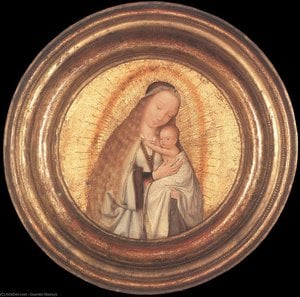
Oil On PanelWallArtNorthern Renaissance
 1507Renaissance
 224.0 x 219.0 cm
 Musées Royaux des Beaux-Arts
Hand-painted oil on canvas in your size and frame, made to order by our artists. ( Switch to Print Switch to Digital Image)





























Pick from our preset sizes that match the artwork's original proportions.

You may enter your own dimensions to fit a specific frame or space. If your selected size does not match the original image's proportions, we will either crop the artwork or extend the painting with additional hand-painted elements. A digital mockup will be sent for your approval before production begins.
Please note that the on-screen preview does not reflect the actual cropping or extension. Only the mockup will accurately show the final composition.
While custom sizes are available, we recommend selecting a dimension from the predefined list to preserve the original proportions.
Worldwide Delivery () in 3/4 weeks instead of standard 5 weeks. (22 September). No compromise on quality.


St Anne Altarpiece (left wing)
Reproduction Size
In the quiet, contemplative corner of the St Anne Altarpiece, specifically its left wing, we encounter a moment of profound spiritual intimacy that has captivated viewers for over five centuries. Painted in 1507 by the Flemish master Quentin Massys, this work serves as a breathtaking window into the soul of the Northern Renaissance. The scene is anchored by the figure of St Anne, depicted with a poignant realism that eschews the idealized perfection of the Italian masters in favor of a deeply human vulnerability. As she kneels in humble supplication, her hands raised toward the heavens, the viewer is not merely an observer of a religious event but a participant in her prayerful silence. The painting captures the very essence of piety, inviting anyone who gazes upon it to pause and reflect on the weight of devotion.
The composition is masterfully balanced by celestial messengers that bridge the gap between the earthly and the divine. To the left, an angel holds a delicate scroll inscribed with the words “Ave Maria,” a powerful proclamation of Mary's divine motherhood that resonates with the theological heart of the era. Opposite this, another angel presents a pristine lily, a timeless symbol of purity and virginity. These figures are rendered with a classical grace, their wings and gestures adding a sense of movement to the otherwise still and solemn atmosphere. For the collector or designer, this interplay of sacred figures creates a focal point that is both intellectually stimulating and visually harmonious, making it an ideal centerpiece for spaces dedicated to tranquility and thought.
What truly distinguishes Massys as the pioneer of the Antwerp School is his unparalleled ability to manipulate light and texture to create a sense of tangible reality. Through a sophisticated use of chiaroscuro, he sculpts the figures out of the shadows, lending them a three-dimensional presence that feels almost sculptural. The way light catches the heavy folds of St Anne's robes or illuminates the subtle wrinkles of her skin demonstrates a technical virtuosity that was revolutionary for its time. This meticulous attention to detail extends to the background, where a serene landscape of rolling hills and distant architecture provides a sense of infinite depth.
For those seeking to incorporate fine art into a sophisticated interior, the tactile quality of this piece offers immense inspiration. The artist’s ability to render the sheen of fabric and the soft textures of nature creates a sensory experience that transcends the flat surface of the panel. A high-quality reproduction of this masterpiece allows the subtle nuances of Massys' brushwork—the way he captures the weathered texture of age alongside the ethereal glow of angelic light—to breathe life into a room. It is a work that does not merely decorate a wall; it transforms an environment, infusing it with the historical grandeur and the quiet, enduring beauty of the Northern Renaissance.

In the vibrant, burgeoning landscape of the sixteenth-century Low Countries, few names resonate with as much foundational importance as Quentin Massys. Often heralded as the pioneer of the Antwerp School, Massys was a painter who bridged the gap between the meticulous, spiritual devotion of the Early Netherlandish tradition and the burgeoning humanism of the Northern Renaissance. Born around 1466 in Leuven, Belgium, his early life remains a tapestry of legend and historical fragments. It is widely whispered in art history that before he ever grasped a fine brush, he was trained as an ironsmith—a detail that lends a profound, tactile weight to his later mastery of texture and material. This background in metalworking likely instilled in him a unique reverence for the physical world, allowing him to render the sheen of silk, the cold glint of coin, and the weathered skin of humanity with unparalleled precision.
As he transitioned from the academic atmosphere of Leuven to the bustling commercial hub of Antwerp around 1490, Massys began to weave his own distinct thread into the fabric of Flemish art. His early training, potentially under the guidance of Dirk Bouts, connected him to the lineage of masters like Hans Memling and Rogier van der Weyden. From these predecessors, he inherited a devotion to verisimilitude—the pursuit of truth in representation. Yet, Massys was far from a mere imitator. While he maintained the exquisite detail characteristic of his ancestors, he infused his work with a new, burgeoning vitality and a willingness to explore the complexities of the human condition through both religious solemnity and biting social commentary.
The brilliance of Massys lies in his remarkable ability to navigate two seemingly disparate worlds: the sacred and the profane. On one hand, his religious compositions serve as profound meditations on faith. In works such as Christ on the Cross with Donors, he captures the raw, emotional gravity of the crucifixion, utilizing a High Renaissance sensibility to present a scene that is both deeply moving and technically flawless. His ability to depict the divine through the lens of human suffering allowed his religious subjects to resonate with a visceral intimacy, making the spiritual palpable to the viewer.
Conversely, Massys was a master of the satirical genre, using his brush to hold a mirror up to the shifting social morals of his era. He possessed a keen eye for the foibles of humanity, often creating scenes that blended realism with a subtle, mocking wit. This duality is perhaps most evident in his approach to portraiture and genre painting, where he could pivot from the serene beauty of a Virgin and Child to the more complex, morally layered depictions of contemporary life. His work often explored themes of greed, vanity, and the tension between material wealth and spiritual purity, making him a precursor to the great genre painters who would follow in the centuries to come.
The historical significance of Quentin Massys cannot be overstated; he was the catalyst for an artistic revolution in Antwerp. By introducing new motifs and techniques while remaining anchored in the rich traditions of his homeland, he provided the blueprint for a school of painting that would dominate Flanders throughout the sixteenth century. His influence can be traced through the evolution of Northern European art, as he paved the way for a more expressive, observational style that embraced the complexities of the modernizing world.
Today, we remember Massys not just as a craftsman, but as a storyteller who captured the soul of an era. His legacy is preserved in the enduring power of his imagery:

1466 - 1530 , Belgium

Discover the enduring allure of oil on canvas. Explore how master techniques like impasto and glazing create the depth, texture, and emotional resonance found in the world's greatest masterpieces. An essential guide for fine art enthusiasts and discerning collectors.

Discover the profound allure of oil on canvas. Explore the mastery of impasto textures, the science of pigment longevity, and expert guides to selecting museum-quality reproductions that elevate your collection with timeless elegance and tactile depth.

Discover the enduring legacy of oil on board painting. Explore how historical techniques, rich impasto textures, and structural durability create timeless masterpieces that bridge Renaissance grandeur with modern art collecting excellence.

Explore the profound secrets of classical oil painting. From the delicate mastery of glazing to the dramatic depth of chiaroscuro, discover the timeless techniques used by Old Masters to create enduring, museum-quality masterpieces that capture light and emotion.

 Preview
 Send
Send Share
Share
 Details
 Guide
Guide

 Download
 Similars
 X-Ray
X-Ray Diaporama
 Stats
Stats Read More







 Glass option is only available in size under 110 CM


![Legend Of St Francis - [23] - St Francis Mourned By St Clare — Giotto Di Bondone, Gothic](/media/artworks/images-thumb/17/1c/171c284c41dc3ef8bca83e51c1e1e531.jpg)