

 Oil On CanvasWallArtBaroque
 1637Early Modern
 260.0 x 178.0 cm
 National Gallery
Museum-quality giclée or canvas print with fast production and flexible finish options. ( Buy Hand Made Painting Switch to Digital Image)





























Pick from our preset sizes that match the artwork's original proportions.

You may enter your own dimensions to fit a specific frame or space. If your selected size does not match the original image's proportions, we will either crop the artwork or extend the image with a mirrored or solid-fill edge. A digital mockup will be sent for your approval before production begins.
Please note that the on-screen preview does not reflect the actual cropping or extension. Only the mockup will accurately show the final composition.
While custom sizes are available, we recommend selecting a dimension from the predefined list to preserve the original proportions.
Worldwide Delivery () in 2 weeks instead of standard 4/5 weeks. (10 September)


Cardinal Richelieu
Reproduction Size
In the grand theater of the seventeenth century, few figures commanded as much reverence and fear as Armand Jean du Plessis, the Cardinal Richelieu. When Philippe de Champaigne set brush to canvas in 1637, he was not merely recording a likeness; he was constructing an icon of absolute authority. This masterpiece stands as a quintessential triumph of the Baroque era, a period defined by its ability to overwhelm the senses and stir the soul through dramatic tension and opulent detail. As one gazes upon the portrait, the immediate impact is one of profound gravity. The subject does not merely sit for a painter; he presides over the viewer, his presence anchored by the weight of both his office and his immense political intellect.
The technical brilliance of de Champaigne is most evident in his masterful use of chiaroscuro. By orchestrating a deliberate interplay between deep, swallowing shadows and piercing highlights, the artist sculpts Richelieu’s features with a sculptural precision that feels almost tactile. The light falls strategically across the Cardinal’s face, illuminating the determination etched into his expression, while simultaneously catching the lustrous sheen of his crimson robes. This technique creates a breathtaking sense of three-dimensionality, pulling the subject forward from the dark, enigmatic backdrop of heavy drapery and distant, shadowed foliage. It is a visual language designed to evoke awe, making the figure appear to emerge from the very fabric of history itself.
Every element within this composition serves a higher narrative purpose, weaving a complex web of symbolism that would have been instantly legible to the contemporary elite. The vibrant red of the Cardinal’s vestments—the famous Éminence Rouge—is far more than a display of wealth; it is a potent signifier of his high ecclesiastical rank and the fiery political influence he wielded over France. De Champaigne renders these fabrics with such meticulous care that one can almost sense the heavy, luxurious texture of the silk and velvet, a testament to the artist's Flemish-influenced training under masters like Rubens.
Beyond the tactile splendor, the composition utilizes spatial illusions to reinforce the subject's status. The subtle glimpse of an arched doorway and verdant greenery in the background suggests a world that extends far beyond the frame, hinting at the vast reach of Richelieu’s dominion. Even the way the Cardinal holds his book—a symbol of wisdom, spiritual guidance, and the intellectual rigor required to govern a nation—adds a layer of contemplative depth to his formidable persona. For the collector or the interior designer, this painting offers more than mere decoration; it provides a focal point of intellectual and historical weight, capable of anchoring a room with its commanding, regal energy.
To possess a reproduction of this caliber is to invite the spirit of the French Baroque into one's personal sanctuary. The painting’s ability to balance intense realism with dramatic artifice makes it a versatile masterpiece, equally at home in a traditional library filled with leather-bound volumes or as a sophisticated statement piece in a modern, minimalist gallery setting. It captures a moment in time when art was the ultimate tool of statecraft and identity.
For those seeking to curate an environment of sophistication and depth, de Champaigne’s Cardinal Richelieu offers an unparalleled opportunity. It is a work that rewards repeated viewing, revealing new nuances in its shadows and textures with every encounter. Whether you are drawn to the historical drama of the Bourbon era or the technical mastery of seventeenth-century oil painting, this portrait remains a timeless testament to the enduring power of the human spirit and the transformative magic of fine art.


1602 - 1674 , Netherlands
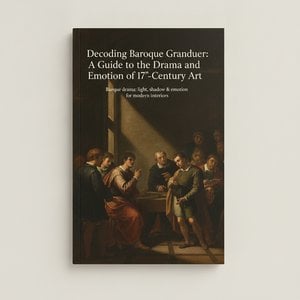
Explore the breathtaking drama of 17th-century Baroque art. Our expert guide decodes the use of chiaroscuro, emotional intensity, and historical grandeur to help you appreciate and curate timeless masterpieces for your collection.

Explore the captivating world of Baroque Classicism! Discover its history, key artists like Caravaggio & Rubens, and defining characteristics. Expert insights & high-quality reproductions at WahooArt.
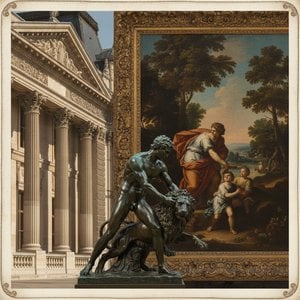
Explore the profound elegance of Baroque Classicism. Discover how 17th-century masters synthesized dramatic emotion with classical order through the lens of the Counter-Reformation and the works of legends like Carlo Maratta and Andrea Sacchi.

Discover our story! We bring world-class art into your life through expert curation, personalized creations, and free previews. Trusted by individuals and businesses since 2000.

Delve into the world of Francisco Goya with WahooArt. Explore 25 iconic paintings – from 'The Third of May' to his haunting Black Paintings. Discover the stories, techniques & emotions behind these Spanish masterpieces. Find museum-quality art reproductions for your home at WahooArt.com!

 Preview
 Send
Send Share
Share
 Details

 Download
 Similars
 X-Ray
X-Ray Diaporama
 Stats
Stats Read More







 Glass option is only available in size under 110 CM


