x
PreviewPreview AR previewAR preview Buy Print Buy PrintBuy Image Buy Image SendSend
DetailsDetails Add to favorites Add to favorites DownloadDownload SimilarsSimilars X-RayX-Ray DiaporamaDiaporama

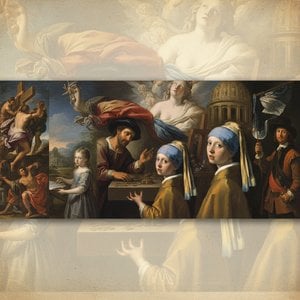
The Supper at Emmaus

Experience 'The Supper at Emmaus' by Philippe de Champaigne! This powerful Baroque painting depicts the post-resurrection encounter of Jesus with his disciples, brimming with spiritual depth and artistic mastery.

Discover Philippe de Champaigne (1602-1674), a leading French Baroque painter renowned for his powerful portraits of Cardinal Richelieu & deeply spiritual religious works. Explore his legacy!

Hand Made Oil Reproduction

Hand-painted oil on canvas in your size and frame, made to order by our artists. (Buy Print Buy PrintBuy Image Buy Image)

P118B $10
P118H $10
P118W $10
P438Z $10
P508JH $12
P508YH $12
P805H $10
P805Z $10
P919BZ $10
P919G $10
P919XJ $10
P959ZH $10
P968JZ $12
W106C $8
W218G $10
W218JH $8
W218Y $10
W307PJ $10
W316G $10
W316PJ $8
W316Y $10
W398PJ $8
W4111J $10
W500HY $15
W500JH $15
W692G $12
W849H $8
W940BG $15
W953PJ $8

Standard
custom
CM
INCH

Pick from our preset sizes that match the artwork's original proportions.

width
height

You may enter your own dimensions to fit a specific frame or space. If your selected size does not match the original image's proportions, we will either crop the artwork or extend the painting with additional hand-painted elements. A digital mockup will be sent for your approval before production begins.
Please note that the on-screen preview does not reflect the actual cropping or extension. Only the mockup will accurately show the final composition.
While custom sizes are available, we recommend selecting a dimension from the predefined list to preserve the original proportions.

Examples of what can be changed: Replace face with customer photo; Add pet (e.g., replace cat with dog); Include hidden message in background; Change background landscape or elements.
After order, WahooArt.com team will email client for instructions and provide a mockup preview

Worldwide Delivery () in 3/4 weeks instead of standard 5 weeks. (27 August). No compromise on quality.

why_choose_icon
Free Worldwide Express Shipping
why_choose_icon
High-Quality Linen Canvas
why_choose_icon
Full Shipping Insurance
why_choose_icon
Customs Tax Refund Guarantee
why_choose_icon
True Color Matching Guarantee
why_choose_icon
60-Day Return Policy (Defects Only)
why_choose_icon
100% Money-Back Guarantee
why_choose_icon
Bulk Discount Offer

Total Price

$ 272

reproduction

The Supper at Emmaus

Reproduction Medium

Reproduction Size

-

Total Price

$ 272

Quick Facts

  • Medium: Oil on canvas
  • Artist: Philippe de Champaigne
  • Location: Musée des Beaux-Arts d'Agen
  • Dimensions: 217 x 226 cm
  • Artistic style: Baroque
  • Subject or theme: Religious scene

Art Quiz

There is only one correct answer for each question.

Question 1:
What is the primary subject depicted in "The Supper at Emmaus"?
Question 2:
Who is credited as the artist of "The Supper at Emmaus"?
Question 3:
According to the description, what is a prominent feature of the painting's atmosphere?
Question 4:
In what century was Philippe de Champaigne active as a painter?
Question 5:
The description mentions that Champaigne was associated with which artistic movement?

Artwork Description

A Moment of Revelation: Philippe de Champaigne’s “The Supper at Emmaus”

Philippe de Champaigne's "The Supper at Emmaus," a monumental oil painting from around 1654-1655, isn’t merely a depiction of a biblical scene; it’s a profound meditation on faith, recognition, and the transformative power of encountering the divine. Born in Brussels during the turbulent years of the Habsburg Netherlands, Champaigne's artistic journey led him to Paris, where he honed his skills under the tutelage of Nicolas Poussin, absorbing the master’s meticulous draftsmanship and classical ideals. Yet, unlike Poussin’s often idealized forms, Champaigne imbues his work with a palpable sense of humanity – a vulnerability and earnestness that resonates deeply within the viewer. This particular painting transcends simple narrative illustration; it's a carefully constructed drama of spiritual awakening.

  • Compositional Drama: The scene unfolds with remarkable dynamism, drawing the eye into the heart of the interaction. Champaigne masterfully employs diagonal lines – the table itself, the road receding into the distance – to create a sense of movement and immediacy, as if we are witnesses to this pivotal moment in the Gospel story.
  • Light and Shadow: The artist’s use of chiaroscuro—the dramatic contrast between light and dark—is particularly striking. It doesn't simply illuminate the figures; it sculpts them, emphasizing their faces and gestures, imbuing them with a sense of weight and presence. The soft glow emanating from Jesus subtly highlights his role as the catalyst for understanding.
  • Psychological Depth: Champaigne’s portraits are renowned for capturing not just physical likeness but also inner states. Here, we see the disciples' initial confusion and doubt mirrored in their postures and expressions – a subtle shift towards recognition as they grasp the identity of their resurrected companion.

Baroque Grandeur and Spiritual Intensity

“The Supper at Emmaus” firmly establishes itself within the context of French Baroque painting, a period characterized by dramatic intensity, opulent color palettes, and a fervent embrace of religious subject matter. Champaigne’s work aligns with this trend while retaining a distinctly personal style—a blend of Poussinian precision and a more emotionally charged approach. The painting's scale – measuring 217 x 226 cm – further contributes to its imposing presence, reflecting the Baroque tradition of creating works that command attention and inspire awe. The choice of materials—rich pigments and finely rendered textures—underscores the importance placed on visual splendor within this artistic movement.

Historical Context:

Painted during the mid-17th century, a time of significant religious upheaval in Europe, “The Supper at Emmaus” reflects the Counter-Reformation’s emphasis on personal faith and direct experience with God. The Catholic Church utilized art as a powerful tool for evangelization, seeking to inspire devotion and reaffirm belief amidst challenges posed by Protestantism. Champaigne's work exemplifies this strategy, offering a visually compelling narrative of redemption and spiritual enlightenment.

Symbolic Layers: Bread, Light, and the Road

Beyond its biblical subject matter, “The Supper at Emmaus” is rich in symbolic detail. The central element—the loaf of bread—is a potent symbol of Christ’s body, offered as sustenance for both the physical and spiritual needs of his followers. The light emanating from Jesus acts as a divine beacon, illuminating the path to understanding and dispelling the darkness of doubt. Furthermore, the road itself represents the journey of faith – a process of seeking, questioning, and ultimately arriving at a deeper truth. The inclusion of subtle details like the cat symbolizes immortality, adding another layer of meaning to the scene.

A Timeless Reflection on Faith

“The Supper at Emmaus” remains a profoundly moving work of art, offering viewers an opportunity to contemplate fundamental questions about faith, recognition, and the nature of divine presence. Champaigne’s masterful composition, dramatic use of light and shadow, and psychologically astute portrayal of his subjects combine to create a truly unforgettable experience. It's a painting that invites repeated viewing, revealing new layers of meaning with each encounter—a testament to the enduring power of art to illuminate the human spirit.


Artist Biography

A Life Etched in Light and Shadow

Philippe de Champaigne, born in Brussels in 1602, emerged as a pivotal figure within the French Baroque landscape, though his origins lay outside the kingdom’s borders. His journey began not amidst privilege, but within a modest family, where an early artistic inclination was nurtured by initial studies under Jacques Fouquieres, a landscape painter who provided foundational skills. This grounding proved crucial when, in 1621, the young artist ventured to Paris – a city poised to become both his adopted home and the canvas for his burgeoning talent. There, he apprenticed with Nicolas Poussin, an encounter that indelibly shaped his understanding of composition and draftsmanship. The Palais du Luxembourg became an early proving ground, as de Champaigne contributed to its decoration under Nicolas Duchesne, a formative experience that set the course for his artistic trajectory. It was a period of absorbing influences, laying the groundwork for a style that would eventually blend Baroque drama with a uniquely French sensibility.

The Brushstrokes of Power and Piety

De Champaigne’s name became synonymous with both religious painting and portraiture – twin pillars reflecting the dominant currents of his era. His canvases weren't merely depictions; they were statements, imbued with emotional intensity and a masterful command of chiaroscuro, that dramatic interplay of light and shadow which defined Baroque aesthetics. Works like Saint Jerome in the Wilderness, Portrait of Omer Talon, and Moses Holding the Tablets of the Law stand as testaments to his skill, each brushstroke revealing a profound understanding of human form and spiritual weight. He wasn’t confined to smaller works either; numerous paintings for Notre Dame Cathedral showcased his ability to conceive and execute large-scale compositions with intricate detail. However, it was his series of portraits of Cardinal Richelieu that cemented his place in history. Eleven distinct portrayals of the powerful statesman – each capturing a different facet of his authority – were commissioned, reflecting not only de Champaigne’s artistic prowess but also a close relationship with one of France's most influential figures. These weren’t simply likenesses; they were carefully constructed images designed to project power and control.

A Founding Father of French Art

De Champaigne wasn’t merely a painter; he was an architect of the French art world itself. As a founding member of the Académie royale de peinture et de sculpture, he played a vital role in formalizing artistic training and establishing standards of excellence within the Kingdom. This institution became the cornerstone of French artistic identity, fostering a distinctive style that balanced Baroque dynamism with classical restraint – a blend to which de Champaigne significantly contributed. His influence extended far beyond his own lifetime, paving the way for subsequent generations of French artists who would build upon the foundations he helped lay. Today, his works grace prestigious museums worldwide, including the Louvre and Notre Dame Cathedral, ensuring his legacy continues to inspire awe and admiration. The impact of his dedication to artistic rigor is still felt in art education today.

Evolving Visions and Spiritual Depths

Throughout his career, de Champaigne’s style underwent a subtle yet significant evolution. His later works reveal an increasing somberness and introspection, particularly evident in his religious paintings. Biblical scenes were no longer simply narratives; they became vehicles for profound spiritual contemplation, imbued with a sense of quiet reverence. This shift was partly influenced by the theological currents of Jansenism – a Catholic movement emphasizing divine grace and human depravity – which found expression in the mood and subject matter of some of his most compelling pieces. He explored themes of humility, sacrifice, and the search for redemption, creating images that resonated with a growing sense of religious fervor within French society. Even within his portraits, a new level of psychological depth emerged, revealing not just outward appearances but also the inner lives of his subjects. The artistic journey of Philippe de Champaigne was one of continuous refinement, culminating in works that spoke to both the intellect and the soul. His son, Jean-Baptiste de Champaigne, followed in his footsteps as a painter, continuing the family’s commitment to artistic pursuits and ensuring the continuation of their creative legacy.
Philippe de Champaigne

Philippe de Champaigne

1602 - 1674 , Netherlands

Quick Facts

  • Artistic Movement Or Style: Baroque
  • Artists Or Movements Influenced By This Artist: ['French School']
  • Artists Who Influenced This Artist: ['Nicolas Poussin']
  • Date Of Birth: 1602
  • Date Of Death: 1674
  • Full Name: Philippe de Champaigne
  • Nationality: French
  • Notable Artworks:
    • Saint Jerome in the Wilderness
    • Portrait of Omer Talon
    • Moses Holding the Tablets
    • Cardinal Richelieu
    • Ex Voto
    • Annunciation
  • Place Of Birth: Brussels, Netherlands
Explore artworks organized by themes, styles, and characteristics.