x


Hand-painted oil on canvas in your size and frame, made to order by our artists. ( Buy Print Buy Image)
Pick from our preset sizes that match the artwork's original proportions.

You may enter your own dimensions to fit a specific frame or space. If your selected size does not match the original image's proportions, we will either crop the artwork or extend the painting with additional hand-painted elements. A digital mockup will be sent for your approval before production begins.
Please note that the on-screen preview does not reflect the actual cropping or extension. Only the mockup will accurately show the final composition.
While custom sizes are available, we recommend selecting a dimension from the predefined list to preserve the original proportions.
Worldwide Delivery () in 3/4 weeks instead of standard 5 weeks. (25 August). No compromise on quality.


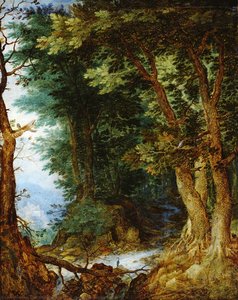
The forest path
Reproduction Size

Peder Mørk Mønsted stands as a cornerstone of Danish realism, an artist whose unwavering dedication to meticulous observation and masterful technique cemented his legacy as one of the foremost landscape painters of his era. Born on December 10, 1859, in the pastoral surroundings of Balle Mølle near Grenå, Denmark, Mønsted’s formative years were shaped by a sense of familial prosperity and a deep-rooted connection to the Danish countryside. This nurturing environment instilled within him an aesthetic sensibility that would define his entire oeuvre, fostering a profound intimacy with the natural world that he would later translate onto canvas with unparalleled precision.
His artistic journey began in earnest at the Aarhus Art School in 1875, where he honed his foundational skills under the guidance of Andries Fritz. This early training provided the essential building blocks of form and composition, but it was his subsequent enrollment at the Royal Danish Academy of Fine Arts from 1875 to 1879 that truly forged his academic identity. Under the tutelage of masters such as Niels Simonsen and Julius Exner, Mønsted absorbed the principles of traditional painting, developing a sophisticated understanding of color theory and compositional balance. His education was further enriched by exposure to the Impressionistic nuances of Peder Severin Krøyer, an influence that subtly breathed a sense of luminous vitality into his increasingly refined realist style.
Mønsted was not merely a student of the academy but a true wanderer whose palette was enriched by the diverse landscapes of the world. His travels took him far beyond the familiar borders of Scandinavia, leading him through the sun-drenched vistas of North Africa and the Middle East, as well as the historic art hubs of Paris and Munich. In 1889, his visit to Algeria introduced him to the dramatic chiaroscuro effects of desert light, a stark yet beautiful contrast to the soft, diffused atmospheres of his homeland. These international excursions allowed him to blend the rigorous academic naturalism of his training with an almost photorealistic approach to light and texture, creating works that felt both monumental and intimately real.
The essence of Mønsted’s greatness lies in his ability to capture the ephemeral qualities of nature—the way sunlight filters through a dense forest canopy, the stillness of a mountain pond, or the crystalline clarity of a winter morning. His favorite motifs often revolved around:
As his career progressed, Mønsted became a celebrated figure in the international art scene, regularly exhibiting his works in the prestigious salons of Paris and Munich. His ability to marry the grandeur of the landscape with an incredible level of accurate detail allowed him to create a poetic view of nature that resonated far beyond Denmark. While his technique was rooted in the traditions of the Danish Golden Age, his work possessed a modern clarity and a sense of atmospheric realism that felt timeless.
Today, the historical significance of Peder Mørk Mønsted is preserved in some of the world's most esteemed institutions. His paintings serve as vital windows into the natural beauty of the nineteenth-century Scandinavian landscape, offering a serene sanctuary for the modern viewer. From the Hirschsprung Collection in Copenhagen to museums in Taiwan and New York, his legacy continues to inspire awe through its technical perfection and its profound, quiet celebration of the earth's enduring beauty. He passed away in Fredensborg, Denmark, on June 20, 1941, leaving behind a body of work that remains a definitive standard for landscape realism.
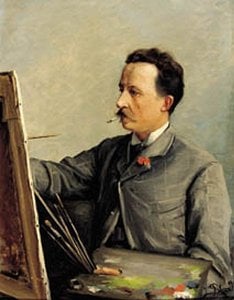
1859 - 1941 , Denmark

Explore the ethereal beauty of Impressionist landscapes. Discover how masters like Monet captured fleeting light through color and texture, and learn to curate these timeless, luminous masterpieces for your home collection.

Embark on a visual journey through the golden hour. Discover how master painters capture the ethereal glow of sunsets, from Monet's Impressionism to the Hudson River School. Explore timeless techniques and bring the magic of twilight into your home with exquisite fine art reproductions.


Stay updated with the latest art news, exclusive offers, and decoration ideas.
Tell us about your project and our art experts will provide you with 3 personalized art suggestions.
Let Us Curate 3 Options Just for You - Free!

 Preview
 Send
Send Share
Share
 Details

 Download
 Similars
 X-Ray
X-Ray Diaporama
 Read More




































 Glass option is only available in size under 110 CM