Museum-quality giclée or canvas print with fast production and flexible finish options. ( Buy Hand Made Painting Switch to Digital Image)





























Pick from our preset sizes that match the artwork's original proportions.

You may enter your own dimensions to fit a specific frame or space. If your selected size does not match the original image's proportions, we will either crop the artwork or extend the image with a mirrored or solid-fill edge. A digital mockup will be sent for your approval before production begins.
Please note that the on-screen preview does not reflect the actual cropping or extension. Only the mockup will accurately show the final composition.
While custom sizes are available, we recommend selecting a dimension from the predefined list to preserve the original proportions.
Worldwide Delivery () in 2 weeks instead of standard 4/5 weeks. (22 September)


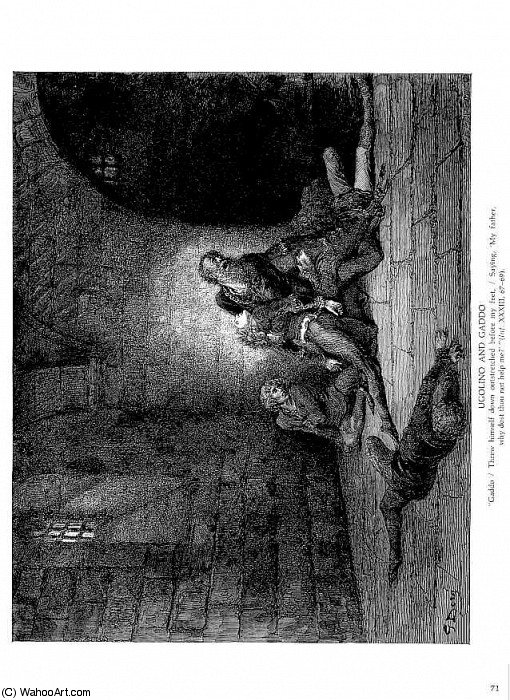
Ugolino and Gaddo
Reproduction Size
Gustave Doré’s “Ugolino and Gaddo” is a chilling depiction of despair and resilience, plucked directly from Dante Alighieri's Inferno—specifically Canto IX. This monochrome engraving captures the agonizing final moments of Ugolino della Gherardesca and his son Gaddo, imprisoned in a tower by Florentine Guelphs after a failed siege against Genoa. Doré’s masterful technique elevates this biblical tale into an unforgettable visual experience.
The composition is deliberately claustrophobic; the tower walls dominate the frame, emphasizing the prisoners’ confinement and mirroring their psychological imprisonment. Diagonal lines dissecting the scene contribute to instability and urgency, reflecting Ugolino and Gaddo's desperate struggle for survival. Doré’s masterful use of perspective—achieved through overlapping forms and diminishing size—further enhances the illusion of depth within the dungeon.
Beyond its technical brilliance, “Ugolino and Gaddo” resonates deeply with symbolic meaning. The clinging figures represent the primal instinct for survival against insurmountable odds, mirroring Dante’s depiction of human beings battling demons in Hell. Ugolino's gaze—fixed upward—suggests a yearning for divine mercy amidst utter darkness. Doré’s portrayal captures not merely a historical event but also the enduring power of human emotion and the inescapable confrontation with mortality.
This artwork is more than just an image; it's a conduit for confronting existential anxieties and appreciating the artistry of Romanticism. Its enduring power lies in Doré’s ability to translate Dante’s harrowing narrative into a visually arresting testament to human resilience and despair.


1832 - 1883 , France

Delve into the breathtaking Pre-Raphaelite Revolution. Explore the vivid colors, intricate details, and romantic symbolism of masters like Rossetti and Millais in this authoritative journey through 19th-century art history for true enthusiasts.

Explore the profound emotional power of Romantic landscape art. Discover how masters like Friedrich captured the sublime through breathtaking nature, and learn to curate these evocative masterpieces for your luxury interior collection.

Discover the profound beauty of Romantic Realism. Explore how 19th-century masters blended exquisite technical detail with deep emotional narratives, from poignant genre scenes to breathtaking landscapes, and learn to bring this timeless artistry into your personal collection.

 Preview
 Send
Send Share
Share
 Details
 Guide
Guide

 Download
 Similars
 X-Ray
X-Ray Diaporama
 Stats
Stats
 Read More







 Glass option is only available in size under 110 CM