x


 Acrylic On CanvasWallArtRomantic Landscape Painting
 1863
1863 145.0 x 198.0 cm
 Museo de Arte de Ponce
Hand-painted oil on canvas in your size and frame, made to order by our artists. ( Buy Print Buy Image)





























Pick from our preset sizes that match the artwork's original proportions.

You may enter your own dimensions to fit a specific frame or space. If your selected size does not match the original image's proportions, we will either crop the artwork or extend the painting with additional hand-painted elements. A digital mockup will be sent for your approval before production begins.
Please note that the on-screen preview does not reflect the actual cropping or extension. Only the mockup will accurately show the final composition.
While custom sizes are available, we recommend selecting a dimension from the predefined list to preserve the original proportions.
Worldwide Delivery () in 3/4 weeks instead of standard 5 weeks. (29 August). No compromise on quality.


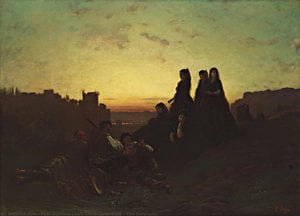
The Serenade
Reproduction Size
Paul Gustave Doré's "The Serenade," completed in 1863, transcends mere depiction; it embodies a profound exploration of human connection and the melancholic beauty inherent in fleeting moments. Painted during the twilight years of Romanticism, this artwork stands as a testament to Doré’s unparalleled ability to capture emotion and atmosphere with meticulous detail—a skill honed through decades of experience transforming literary narratives into breathtaking visual representations.
The painting centers around a hillside gathering of nine individuals bathed in the golden hues of sunset. These figures engage in animated conversation, their postures conveying both intimacy and contemplation. Two birds soar gracefully overhead, symbolizing freedom and harmony—elements deliberately interwoven into the landscape to reinforce the overarching theme of serenity. Doré’s masterful compositional choices guide the viewer's eye across the canvas, establishing a balanced yet dynamic arrangement that draws attention to the central group while simultaneously immersing them in the expansive surroundings.
"The Serenade" exemplifies Romantic precision—a stylistic hallmark of Doré’s oeuvre. Unlike Impressionists who sought to capture ephemeral sensations, Doré meticulously rendered textures and forms with a level of realism that would have astonished contemporaries. He employed a combination of oil paints and watercolor washes, layering colors to achieve luminous gradations and conveying subtle nuances of light and shadow. The artist's painstaking attention to detail—evident in the expressive faces of the figures and the intricate rendering of foliage—underscores his commitment to portraying reality with uncompromising accuracy.
Doré’s work emerged from a period defined by Romantic ideals – an embrace of emotion, imagination, and individualism. The movement reacted against Enlightenment rationalism, prioritizing subjective experience over objective observation. “The Serenade” reflects this spirit through its depiction of human relationships amidst the grandeur of nature—a deliberate counterpoint to the sterile formalism favored by some artistic circles of the time. Furthermore, Doré’s illustrations for *Paradise Lost* and other literary classics cemented his reputation as a storyteller who could transform words into unforgettable images.
Beyond its aesthetic qualities, “The Serenade” is laden with symbolic significance. The hillside itself represents stability and grounding—a refuge from the anxieties of urban life. The birds symbolize aspiration and spiritual enlightenment, mirroring the contemplative mood of the scene. Perhaps most powerfully, however, is the suggestion of remembrance – a quiet acknowledgment of passing time and the enduring beauty found in shared experiences. Doré’s deliberate use of color and light contributes to this emotional resonance, evoking feelings of warmth, nostalgia, and profound peace.
"The Serenade" lingers in the viewer's mind long after encountering it—a testament to Doré’s ability to tap into universal human emotions. The painting invites contemplation on themes of friendship, beauty, and mortality, prompting reflection on the significance of fleeting moments and the importance of savoring life’s simple pleasures. It serves as a poignant reminder that true artistry resides not merely in technical virtuosity but also in conveying profound truths about the human condition—a legacy that continues to inspire artists and collectors alike.


1832 - 1883 , France

Explore the ethereal beauty of Impressionist landscapes. Discover how masters like Monet captured fleeting light through color and texture, and learn to curate these timeless, luminous masterpieces for your home collection.

Discover the ethereal beauty of Impressionist art. Explore how masters like Claude Monet captured light and color through revolutionary techniques, and learn to bring this timeless elegance into your home with museum-quality reproductions.

Embark on a visual journey through the golden hour. Discover how master painters capture the ethereal glow of sunsets, from Monet's Impressionism to the Hudson River School. Explore timeless techniques and bring the magic of twilight into your home with exquisite fine art reproductions.


Stay updated with the latest art news, exclusive offers, and decoration ideas.
Tell us about your project and our art experts will provide you with 3 personalized art suggestions.
Let Us Curate 3 Options Just for You - Free!

 Preview
 Send
Send Share
Share
 Details

 Download
 Similars
 X-Ray
X-Ray Diaporama
 Read More







 Glass option is only available in size under 110 CM