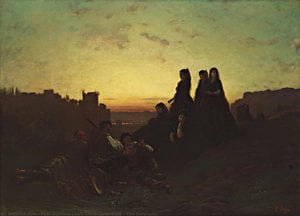
Museum-quality giclée or canvas print with fast production and flexible finish options. ( Buy Hand Made Painting Switch to Digital Image)





























Pick from our preset sizes that match the artwork's original proportions.

You may enter your own dimensions to fit a specific frame or space. If your selected size does not match the original image's proportions, we will either crop the artwork or extend the image with a mirrored or solid-fill edge. A digital mockup will be sent for your approval before production begins.
Please note that the on-screen preview does not reflect the actual cropping or extension. Only the mockup will accurately show the final composition.
While custom sizes are available, we recommend selecting a dimension from the predefined list to preserve the original proportions.
Worldwide Delivery () in 2 weeks instead of standard 4/5 weeks. (23 September)


the judecca lucifer
Reproduction Size
To encounter Gustave Doré’s “The Judecca Lucifer” is to step beyond the threshold of the known world and descend into a realm where light is a forgotten memory. Created in 1867 as part of his legendary series illustrating Dante Alighieri’s Inferno, this masterful engraving serves as more than a mere illustration; it is a visceral, immersive experience that captures the very essence of Romantic dread. Doré does not simply depict a scene from literature; he constructs a landscape of eternal despair, inviting the viewer to witness the chilling heart of the ninth circle of Hell. In this frozen wasteland known as Judecca, the artist presents a panoramic vision of cosmic punishment, where the boundaries between the physical and the metaphysical dissolve into a swirling vortex of shadow and ice.
The composition is a masterclass in controlled chaos, designed to disorient and overwhelm the senses. Dominating the lower right corner, the colossal figure of Lucifer emerges from the gloom, a monumental presence that anchors the frantic energy of the piece. He is not alone in his isolation; he is besieged by a multitude of demonic entities, their forms intertwined in a desperate, agonizing struggle for existence. Doré utilizes a dynamic, swirling arrangement of figures to convey an overwhelming sense of scale, making the viewer feel small and vulnerable against the backdrop of such immense, infernal power. The jagged, angular rock formations that pierce the darkness provide a sharp, structural contrast to the fluid, grotesque shapes of the tormented souls, creating a visual tension that mirrors the psychological torment depicted within the frame.
Technically, “The Judecca Lucifer” represents the pinnacle of 19th-century wood engraving. Doré’s virtuosity lies in his ability to manipulate a monochrome palette to suggest infinite depth and texture. Through the meticulous application of dense cross-hatching and fine, rhythmic lines, he achieves an astonishing range of tones—from the blinding, stark whites of reflected ice to the impenetrable, velvety blacks of the deepest abyss. This interplay of light and shadow, often referred to as chiaroscroll, is not merely a stylistic choice but a narrative tool used to sculpt form out of nothingness. The texture of the engraving is so profound that one can almost feel the biting cold of the frozen lake and the rough, weathered surfaces of the demonic flesh.
For the discerning collector or interior designer, this artwork offers a profound sense of drama and intellectual depth. It is a piece that demands attention, acting as a powerful focal point in any curated space. Whether placed in a library filled with classical literature or used to add a sophisticated, gothic edge to a contemporary gallery setting, Doré’s work brings an unparalleled atmosphere of mystery and grandeur. The emotional impact of the piece—a complex blend of awe, terror, and melancholy—resonates deeply, offering a window into the human struggle against darkness. Owning a high-quality reproduction of this masterpiece is an opportunity to possess a fragment of literary history, a timeless testament to the power of the imagination to traverse even the most harrowing of landscapes.


1832 - 1883 , France

Explore the captivating world of Gustave Doré, master of Romantic realism & iconic illustrator. Discover his dramatic wood engravings, paintings, and sculptures – a legacy shaping art history. Learn more at WahooArt.

Journey through 10 Romantic landscape masterpieces by Friedrich, Turner & Cole. Explore emotional art, sublime nature scenes & iconic 19th-century paintings. Find museum-quality reproductions for your home at WahooArt.com – discover the full collection online!

Journey through John Constable's 25 most celebrated landscapes. Explore Romanticism, Dedham Vale & his masterful use of light in iconic paintings like 'Hay Wain'. Find museum-quality art reproductions and elevate your home decor on WahooArt.com.
Journey through art history with our Top 10 Legendary Engravings! Explore masterpieces by Dürer, Rembrandt & Goya. Discover the stories behind these iconic prints and find museum-quality reproductions for your home at WahooArt.com.

Explore the rich history of landscape art with WahooArt. Discover renowned artists, movements like Impressionism & Romanticism, and expert guidance for collecting timeless pieces. Find your perfect serene escape today!

 Preview
 Send
Send Share
Share
 Details
 Guide
Guide

 Download
 Similars
 X-Ray
X-Ray Diaporama
 Stats
Stats

 Read More







 Glass option is only available in size under 110 CM