Oil On CanvasWallArtRomanticism
 187819th Century
 169.0 x 109.0 cm
Museum-quality giclée or canvas print with fast production and flexible finish options. ( Buy Hand Made Painting Switch to Digital Image)





























Pick from our preset sizes that match the artwork's original proportions.

Type the width and the height you need, to fit your frame or your wall. A print can only be cut, never made bigger than the picture, so a size with a different shape loses a part of the image. We send you a digital mockup to approve before we print anything. The picture shown on this page does not show the real cut — only the mockup does.
Worldwide Delivery () in 2 weeks instead of standard 4/5 weeks. (23 October)
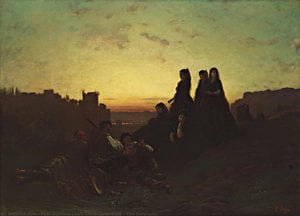
A Canyon
Reproduction Size
“A Canyon” by Gustave Doré isn’t merely a depiction of a landscape; it’s an immersive experience, a testament to the Romantic movement’s fascination with nature’s raw power and sublime beauty. Painted in 1878, this artwork transports the viewer to a world dominated by towering geological formations, a turbulent river carving its path through the valley floor, and a sky pregnant with impending storm. Doré's masterful use of dark tones and atmospheric perspective creates an almost palpable sense of drama, inviting contemplation on humanity’s place within the vastness of the natural world.
Doré’s technique is characterized by a deliberate blend of realism and expressive brushwork. The oil painting on canvas reveals layers of paint, meticulously applied to build up the rugged textures of the mountains and the swirling movement of the clouds. Notice the impasto – areas where the paint is thickly applied – particularly around highlights like sunlit peaks and the crests of waves in the river. This technique isn’t about photographic accuracy; instead, it's a deliberate choice to convey emotion and energy. The linear elements defining the mountain contours are skillfully interwoven with looser, more expressive brushstrokes that capture the dynamism of the storm, moving away from strict academic representation towards a style deeply rooted in Romantic sensibilities.
The composition itself is laden with symbolic meaning. The imposing mountains represent strength, resilience, and perhaps even an ancient wisdom – qualities often associated with the divine. Conversely, the storm embodies chaos, destruction, and the unpredictable forces of nature. This duality—the beauty and terror inherent in the natural world—is a core theme of Romanticism. The river’s flow symbolizes both life and change, constantly reshaping the landscape. The foreshortened perspective draws the viewer into the scene, creating a sense of scale that emphasizes the insignificance of human presence against the backdrop of this monumental geological formation. It's a powerful meditation on our relationship with nature – one of awe, respect, and perhaps even a touch of fear.
Painted in 1878, “A Canyon” reflects the artistic currents of its time. Following the rise of Realism, Romanticism continued to champion emotion, imagination, and the grandeur of nature. Gustave Doré was a pivotal figure in this movement, renowned for his illustrations for works by Shakespeare, Dante, and Milton. His ability to translate complex narratives into visually arresting images cemented his place as one of the most influential artists of the 19th century. His work continues to resonate today, demonstrating the enduring power of Romantic ideals and Doré’s unparalleled skill in capturing the sublime.
The creation of "A Canyon" by Paul Gustave Doré is dated 1878.
"A Canyon" by Paul Gustave Doré is in the public domain - its copyright has expired. Copyright duration runs from the artist's death, which occurred in 1883.
The popularity level recorded for "A Canyon" by Paul Gustave Doré is recognized.


1832 - 1883 , France

Explore the profound emotional power of Romantic landscape art. Discover how masters like Friedrich captured the sublime through breathtaking nature, and learn to curate these evocative masterpieces for your luxury interior collection.

 Preview
 Send
Send Share
Share
 Details
 Guide
Guide

 Download
 Similars
 X-Ray
X-Ray Diaporama
 Stats
Stats Read More









 Glass option is only available in size under 110 CM